

ISO
9001:2015 Certified

10K+
Exp in Machining Parts

±0,002 mm
Tolerance achievable

5-day
Fast lead time
Des entreprises nous font confiance


CNC Machining Services for Custom Parts
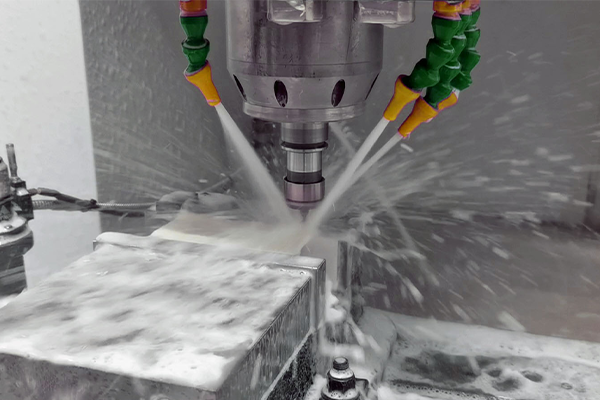
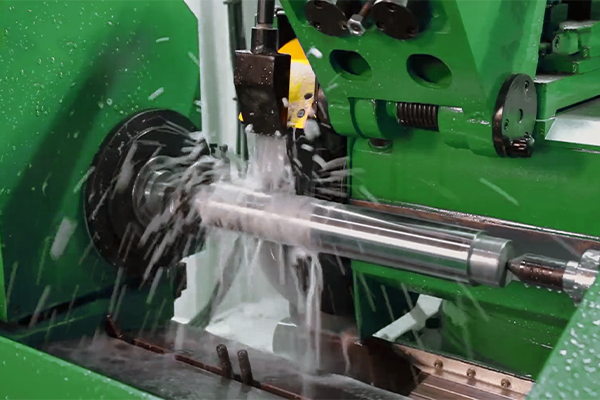
Great Ceramic manufactures custom ceramic components designed for precision-fit applications, electrical insulation, wear-resistant contact, and thermal management. Our in-house capabilities include 3-axis, 4-axis, and 5-axis CNC milling, as well as CNC turning, drilling, and precision grinding. These processes can achieve tolerances of ±0.01 mm under optimal conditions.
We specialize in rapid machining and prototype CNC services, providing both small- and large-batch manufacturing solutions for engineers, product developers, and OEMs across a wide range of industries.
CNC Machining Services for Custom Parts
We are always ready to handle complex CNC-machined parts with demanding specifications. Our advanced manufacturing capabilities support projects from initial prototypes through full-scale production with consistent quality and reliability.
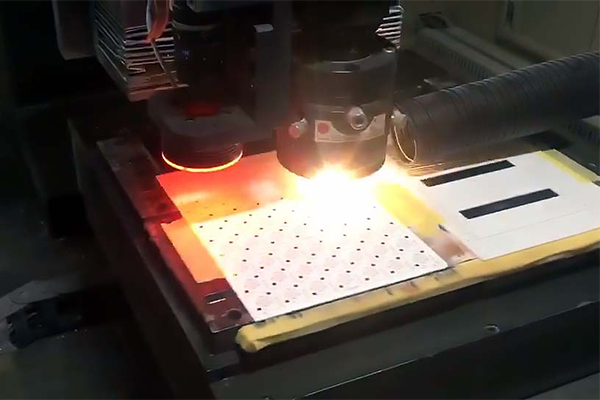
Precision Machining Capability & Tolerance Matrix
Our CNC machining services deliver precise, consistent results. Tighter tolerances are available upon request based on your technical drawings.
| Paramètres d'usinage | Precision Standard | General Standards | Technical Notes & Material Dependencies |
|---|---|---|---|
| Linear Dimension Tolerance | ±0.002 mm (±0.0001 in) | ISO 2768-mK | Achievable on selected ground OD/ID and flat planes (Alumina/Zirconia/MGC) |
| Outer Diameter (OD) | Ø1.0 mm to Ø450 mm | - | Max length up to 1000 mm depending on aspect ratio & centerless support |
| Inner Diameter (ID) | from Ø0.50 mm | from Ø0.20 mm (Laser) | High-precision internal diamond grinding & ultrasonic micro-boring |
| Flatness & Parallelism | 0.005 mm / 100 mm | 0.02 mm / 100 mm | Double-sided precision lapping; verified on Grade 00 granite surface plate |
| Roundness & Cylindricity | 0,002 mm | 0,01 mm | High-precision cylindrical grinding for rotating shafts & dynamic valve spools |
| Rugosité de surface (Ra) | Ra 0.02 – 0.10 µm | Ra 0.60 – 1.20 µm | Lapped/polished mirror finish on contact surfaces; Ra 0.4 µm as ground baseline |
| Maximum Flat Work Envelope | Up to 600 × 400 × 80 mm | - | Available for selected 95%/96% Alumina and machinable ceramic plates |
| Minimum Wall Thickness | 0.50 mm (0.020 in) | 0.80 – 1.0 mm | Requires uniform structural support; aspect ratio L/W should remain ≤ 4:1 |
| Micro-Hole Diameters | Ø0.20 mm | Ø0.50 mm | Laser drilled or ultrasonic micro-machined; aspect depth ratio up to 5:1 |
| Multi-Axis CNC Capability | Simultaneous 5-Axis CNC | 3-Axis & 4-Axis Milling | High-rigidity vertical and horizontal spindles with PCD & electroplated tooling |
CNC Machining Ceramics Materials
Choose from over 10 types of ceramic materials for CNC machining to meet the functional and aesthetic requirements of your project. From oxide to nitride ceramics, we provide high-quality materials for your custom CNC-machined ceramic parts.
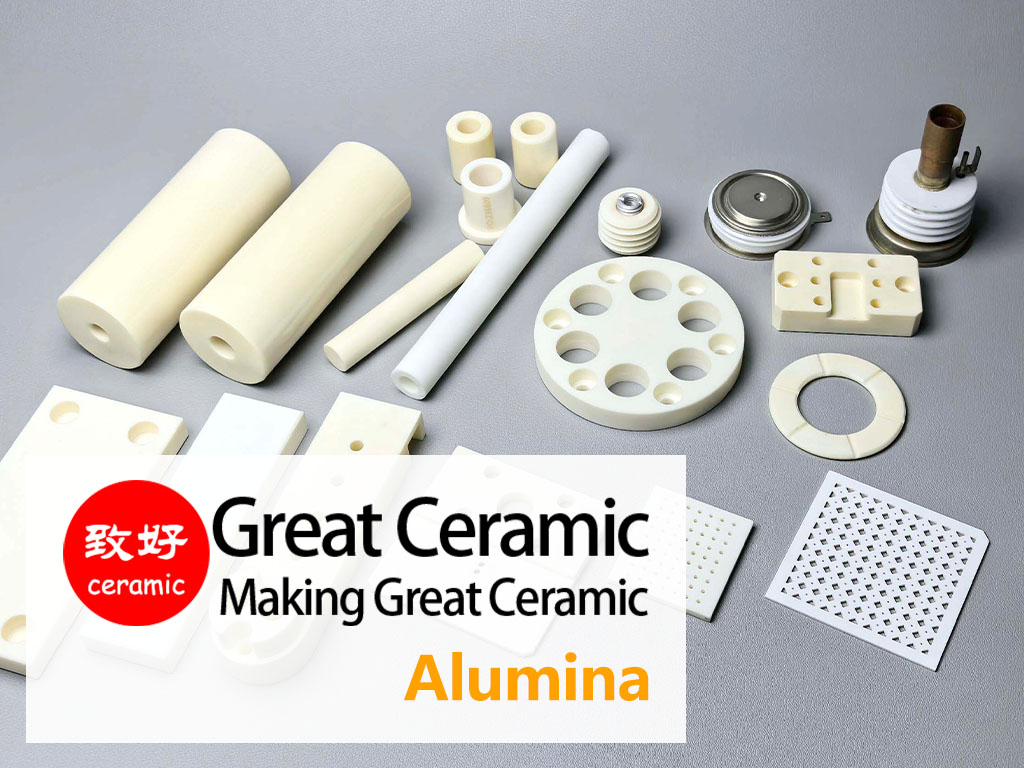
Alumine (Al₂O₃)
Alumina is a versatile ceramic for custom industrial components, offering an economical starting point for electrical insulation and wear-resistant parts.
Material advantages: High hardness and compressive strength, resistance to many chemicals, and good dimensional stability in demanding equipment.
Available grades: 95%, 96%, 99.5% and 99.9% alumina for general-purpose and high-purity parts.
Typical components: Insulating sleeves, spacers, guide blocks, valve components and wear rings.
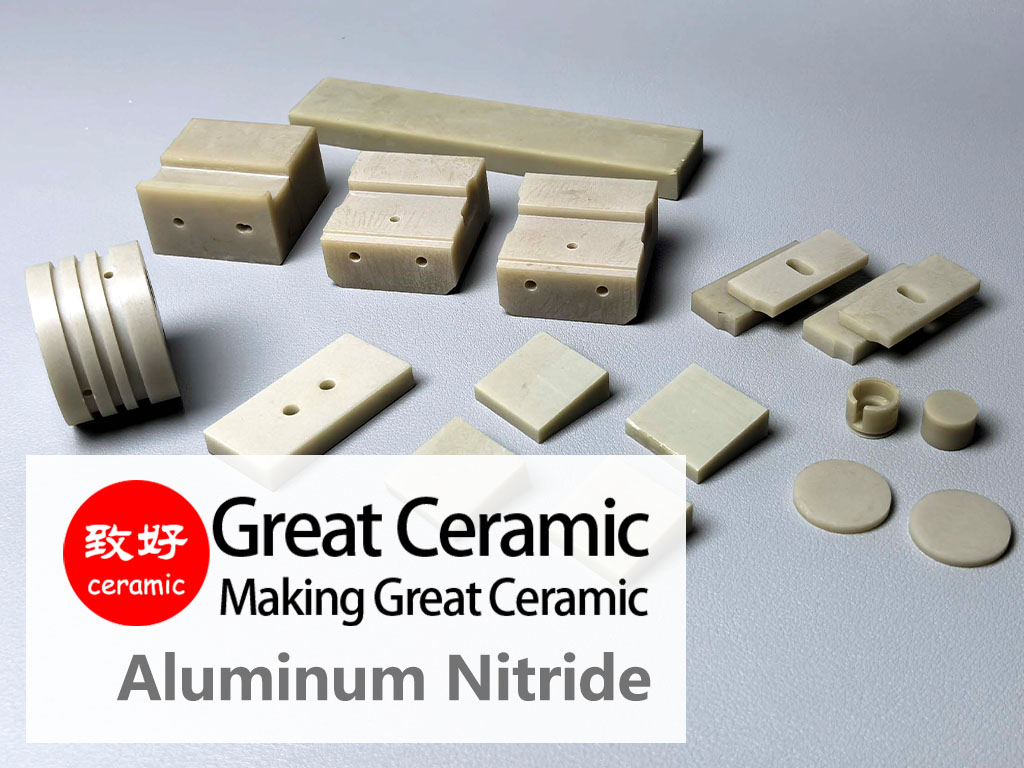
Nitrure d'aluminium (AlN)
Aluminum nitride is a heat-spreading ceramic for custom electrical components that need efficient heat transfer without creating an electrically conductive path.
Material advantages: High thermal conductivity, electrical insulation and relatively low thermal expansion; mounting-face flatness and interface contact also influence heat transfer.
Available grades: Thermal-conductivity classes of 170, 200 and 230 W/(m·K) at 25°C, with substrate and bulk-component options.
Typical components: Heat spreaders, insulating plates, laser submounts, washers and thermal-management blocks.
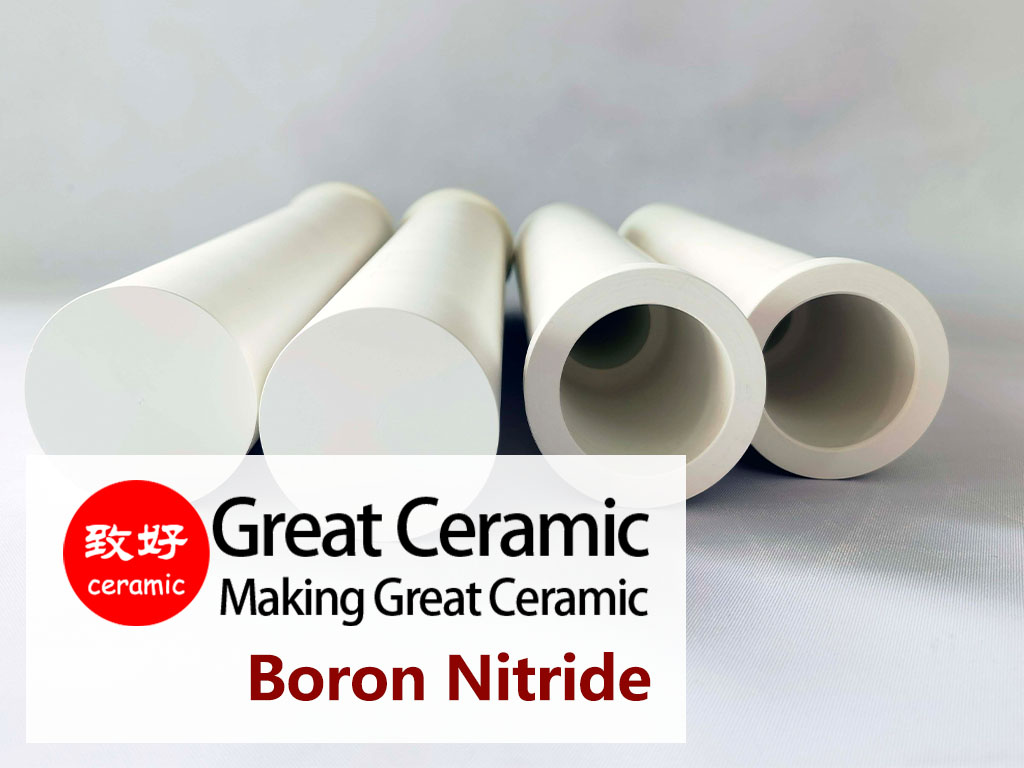
Nitrure de bore (BN)
Boron nitride is a machinable ceramic for custom high-temperature insulating parts, furnace fixtures and selected molten-metal handling components.
Material advantages: Electrical insulation, thermal-shock resistance and lubricity; many hot-pressed grades are readily machined, with performance dependent on binder, pressing direction and atmosphere.
Available grades: Binder-free and binder-containing hot-pressed hexagonal BN (hBN), plus BN–AlN composite grades.
Typical components: Nozzles, crucibles, insulating blocks, furnace spacers and induction-coil supports.
Oxyde de béryllium (BeO)
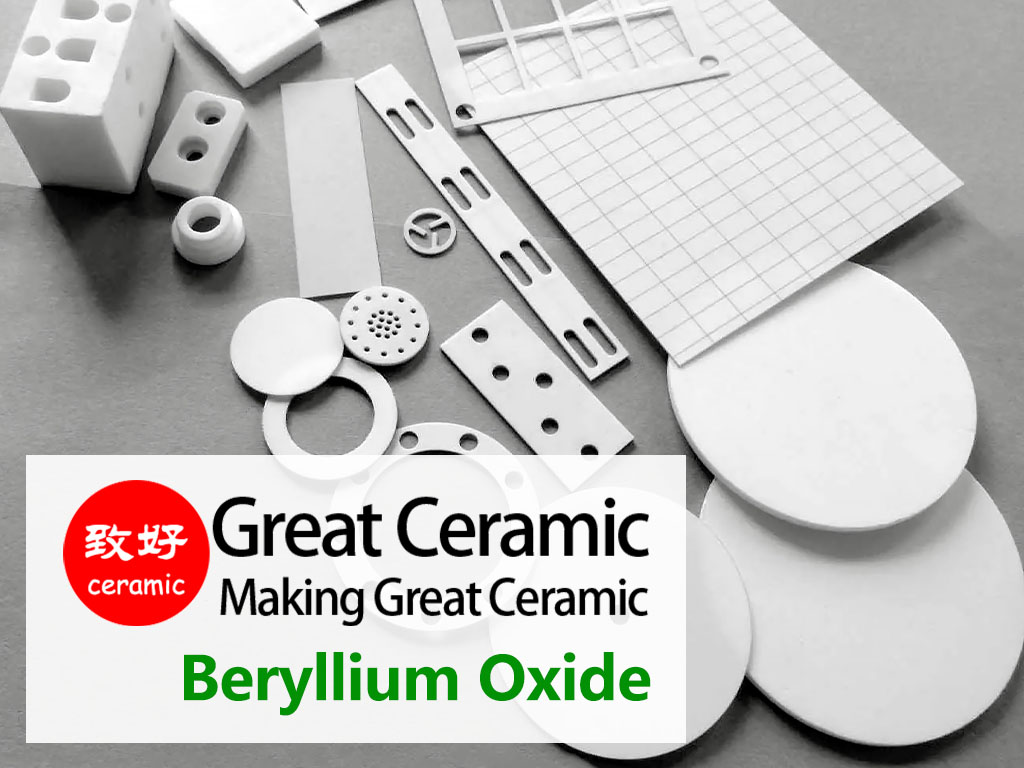
Beryllium oxide is a specialist ceramic for heat-dissipating electrical components in high-power and RF equipment, supplied on a project basis.
Material advantages: Very high thermal conductivity, electrical insulation and a relatively low dielectric constant; machining and rework require specialist controls for hazardous beryllium dust.
Available grades: 99.5% and 99.7% BeO options for specialist sourcing projects.
Typical components: Heat-spreading insulators, electronic-package components, RF supports and laser-equipment components.
Céramique de verre usinable (MGC)
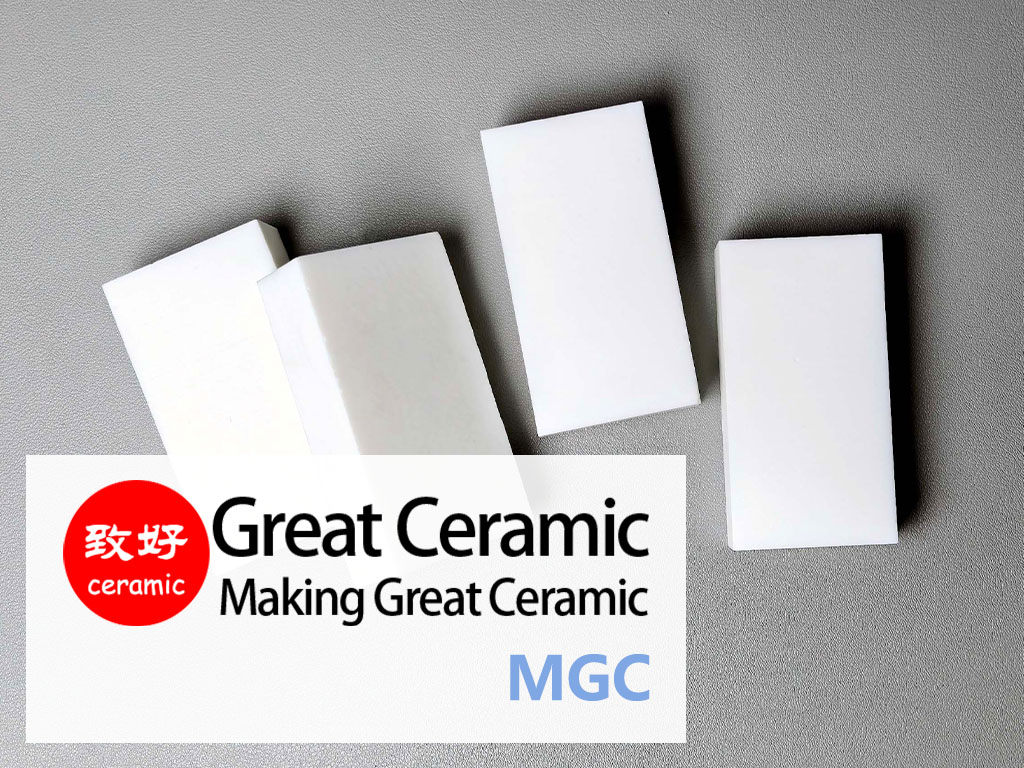
Machinable glass ceramic suits intricate insulating prototypes and small batches, including custom parts with threads, pockets and multiple holes.
Material advantages: Electrical insulation, low thermal conductivity and conventional-tool machinability, without post-machining sintering; strength and service limits depend on the formulation.
Available grades: General-purpose mica-based machinable glass ceramic; specify MACOR® by name when that branded material is required.
Typical components: Coil formers, sensor holders, threaded insulators, test fixtures and thermal spacers.
Nitrure de silicium (Si₃N₄)
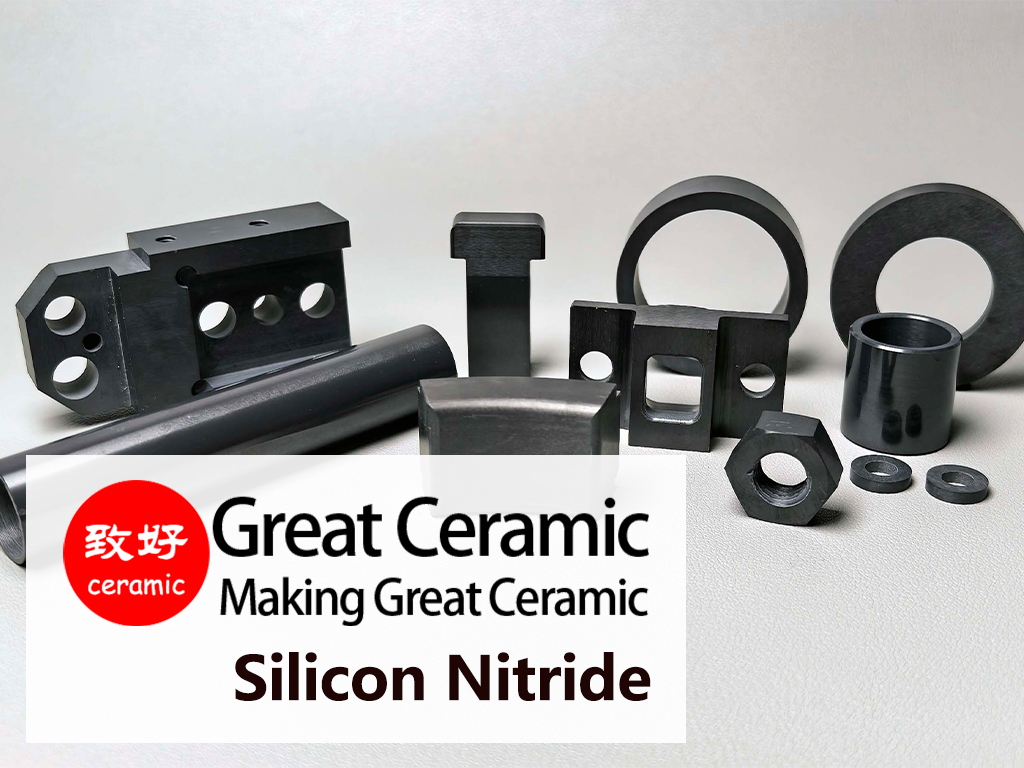
Silicon nitride is a lightweight structural ceramic for custom mechanical components exposed to repeated loading, wear and rapid temperature changes.
Material advantages: High strength relative to weight, good fracture toughness, wear resistance and thermal-shock resistance; properties vary with sintering route and additives.
Available grades: Dense gas-pressure-sintered (GPSN) and hot-pressed (HPSN) structural grades.
Typical components: Precision shafts, rollers, locating pins, bearing elements and high-temperature fixtures.
Carbure de silicium (SiC)
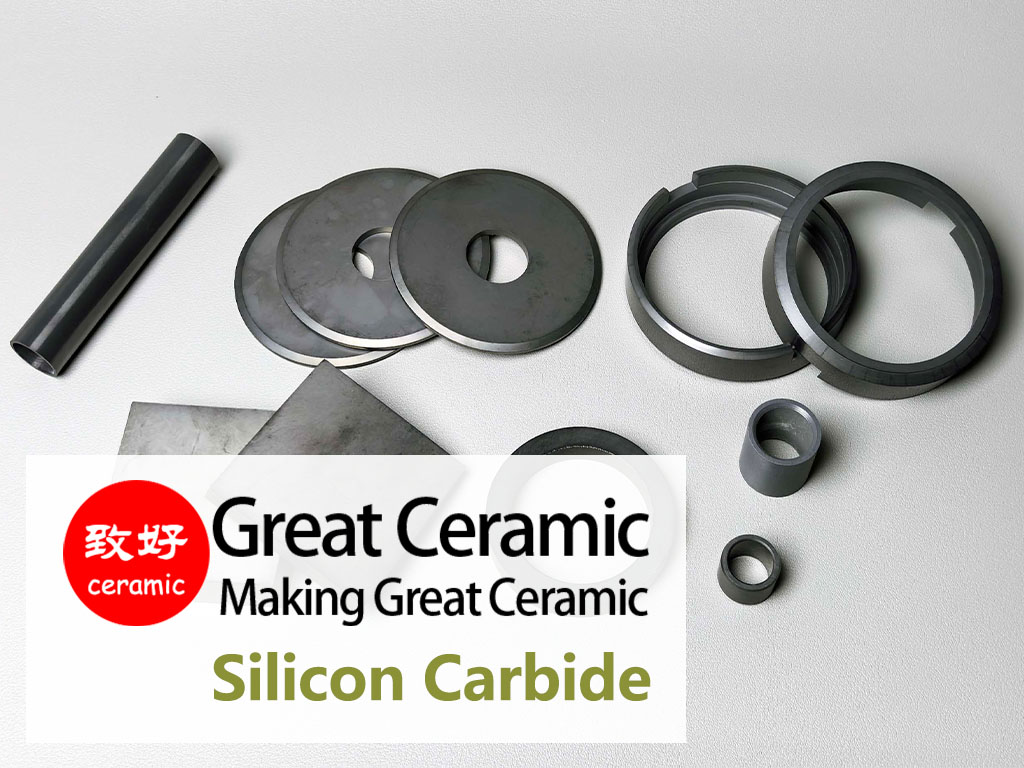
Silicon carbide is a hard ceramic for custom pump, seal and flow-control parts operating in abrasive, corrosive or thermally demanding service.
Material advantages: Very high hardness, wear resistance, thermal conductivity and low thermal expansion; chemical compatibility and temperature limits differ between grades.
Available grades: Pressureless-sintered silicon carbide (SSiC) and reaction-bonded, silicon-infiltrated silicon carbide (RBSiC/SiSiC).
Typical components: Mechanical seal rings, sleeves, nozzles, valve components and pump wear parts.
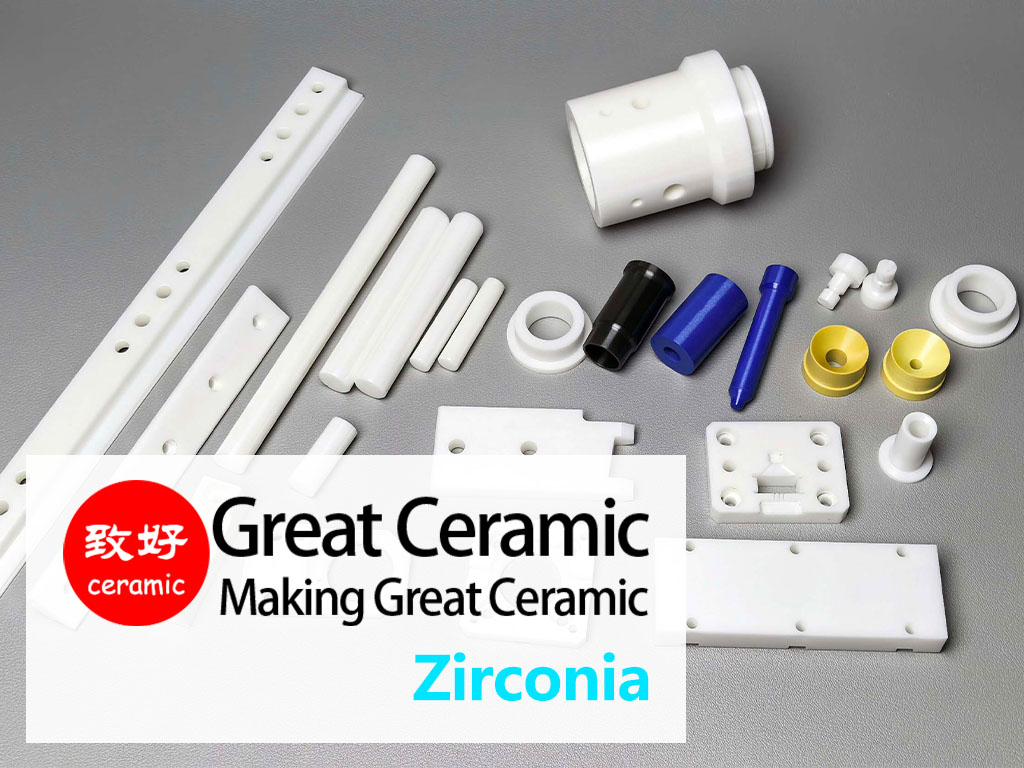
Yttria-Stabilized Zirconia (Y-PSZ)
Yttria-stabilized zirconia is a tough structural ceramic for precision contact parts where fracture resistance and a smooth wear surface are important.
Material advantages: High fracture toughness for a technical ceramic, good wear resistance and low thermal conductivity; warm-water or steam service requires grade-specific aging evaluation.
Available grades: 3 mol% yttria-stabilized tetragonal zirconia (3Y-TZP), including HIP-densified options for demanding mechanical parts.
Typical components: Precision pins, shafts, guide rollers, plungers and wear sleeves.

Zirconia-Toughened Alumina (ZTA)
Zirconia-toughened alumina is an alumina-based composite for custom wear parts that need a different balance of hardness and fracture resistance than conventional alumina.
Material advantages: Combines an alumina matrix with zirconia toughening; hardness, strength and fracture resistance depend on composition, grain structure and processing.
Available grades: Alumina-matrix ZTA with nominal 20 wt% zirconia, with other composition requirements considered for custom projects.
Typical components: Wear sleeves, guide components, valve seats, seal rings and structural spacers.
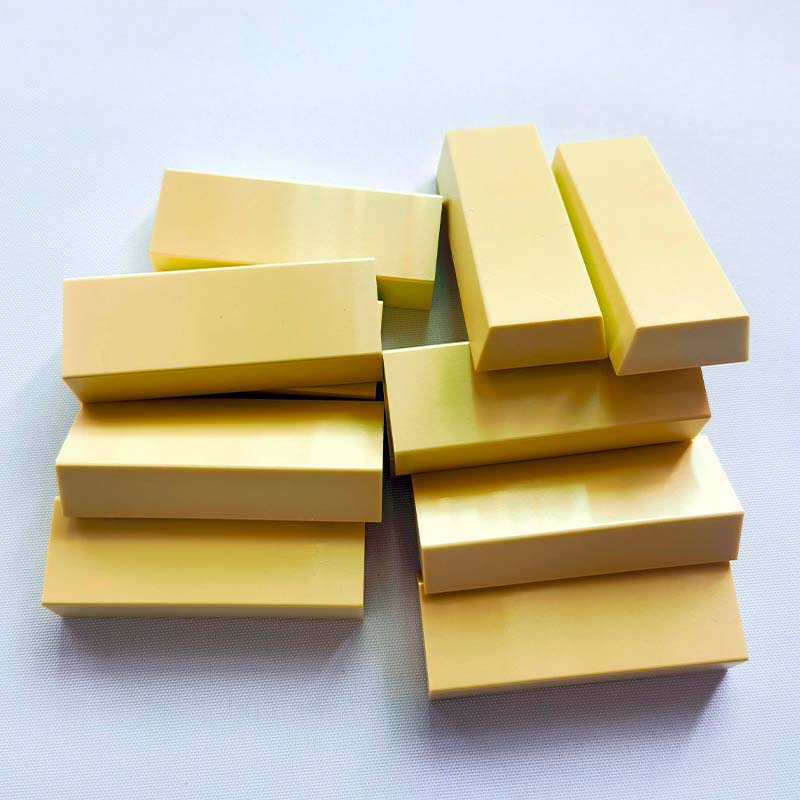
Magnesia Partially Stabilized Zirconia (Mg-PSZ)
Magnesia partially stabilized zirconia is a structural ceramic for mechanically demanding wear parts, offered through project-specific material sourcing.
Material advantages: Good fracture toughness, compressive strength and wear resistance, with low thermal conductivity; performance depends on the formulation and heat treatment.
Available grades: MgO-partially stabilized zirconia in standard and enhanced-toughness structural formulations.
Typical components: Pump plungers, valve seats, wear sleeves, rollers and flow-control components.
Flexible Turnaround & Capacity Scaling
No blanket production MOQs. Transparent schedules from 1-piece R&D evaluation to multi-thousand batch contracts:
| Program Phase | Order Quantity | Standard Lead Time | Supported Deliverables |
|---|---|---|---|
| R&D Rapid Prototyping | 1 to 10 pieces | 7–10 Days (MGC/BN) 15–20 Days (Alumina/ZrO2) |
Full DFM report, material test cert, 1-piece evaluation without MOQ |
| Pilot Production & Testing | 20 to 100 pieces | 15–25 Business Days | Pre-production dimensional verification, fixture tuning, FAI report |
| Scheduled Batch Production | 200 to 5,000+ pieces | 20–35 Business Days | Blanket PO scheduled releases, buffer stock agreements, volume tiers |
All lead times are typical and confirmed in the quotation. They start once requirements, order terms and material are locked, and exclude shipping and customs. First reply within 1 working day; a complete drawing quote in 1–2 working days, complex requirement reviews 3–5 working days.
CNC Machining Order Process
For parts with simple dimensions, a standard 5-day delivery turnaround is available. Upload your part to see if it qualifies.
01
Téléverser un fichier CAO
Submit CAD/3D files for your part, with specs, tolerances, and notes to ensure accurate production.

02
Devis et analyse de conception
Our DFM analysis identifies issues early, optimizing wall thickness and tolerances to reduce costs and ensure parts are manufactured right the first time.

03
Production & QC
Upon approval, parts are machined per ISO 9001:2015, with in-process and final inspections; reports available on request.

04
China Global Delivery
Lead times vary based on part complexity, material availability, and order quantity.

Precision Ceramics CNC Machining Quality Assurance
Reliable part quality comes from a controlled manufacturing process.
Certified Quality System
We operate under an ISO 9001:2015 certified quality management system. Material certifications, inspection reports, and Certificates of Conformance (CoC) are available to verify product requirements and manufacturing standards.
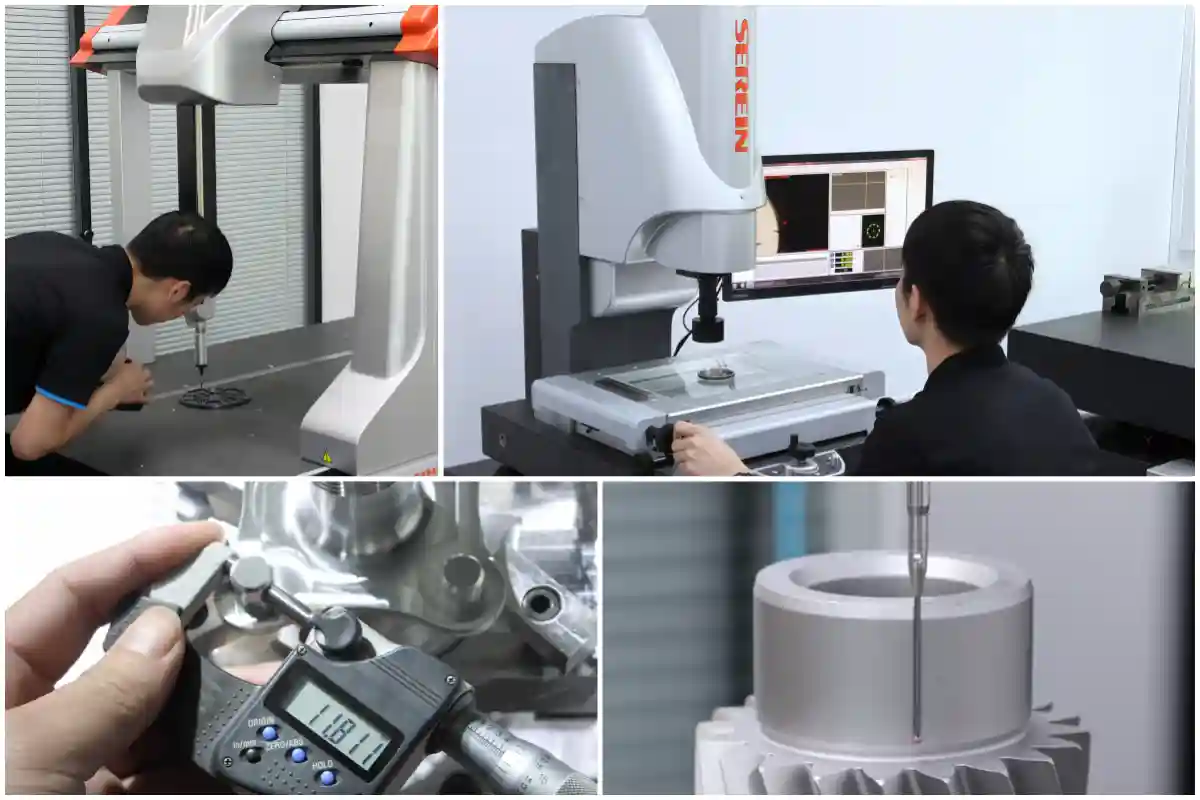
Professional Inspection Equipment
We are equipped with a variety of precision inspection tools, ensuring that every machined part undergoes reliable quality control.
Full Process Traceability
From raw materials to final delivery, every project follows documented quality checks. Complete inspection records provide clear traceability and confidence in every CNC machined component.