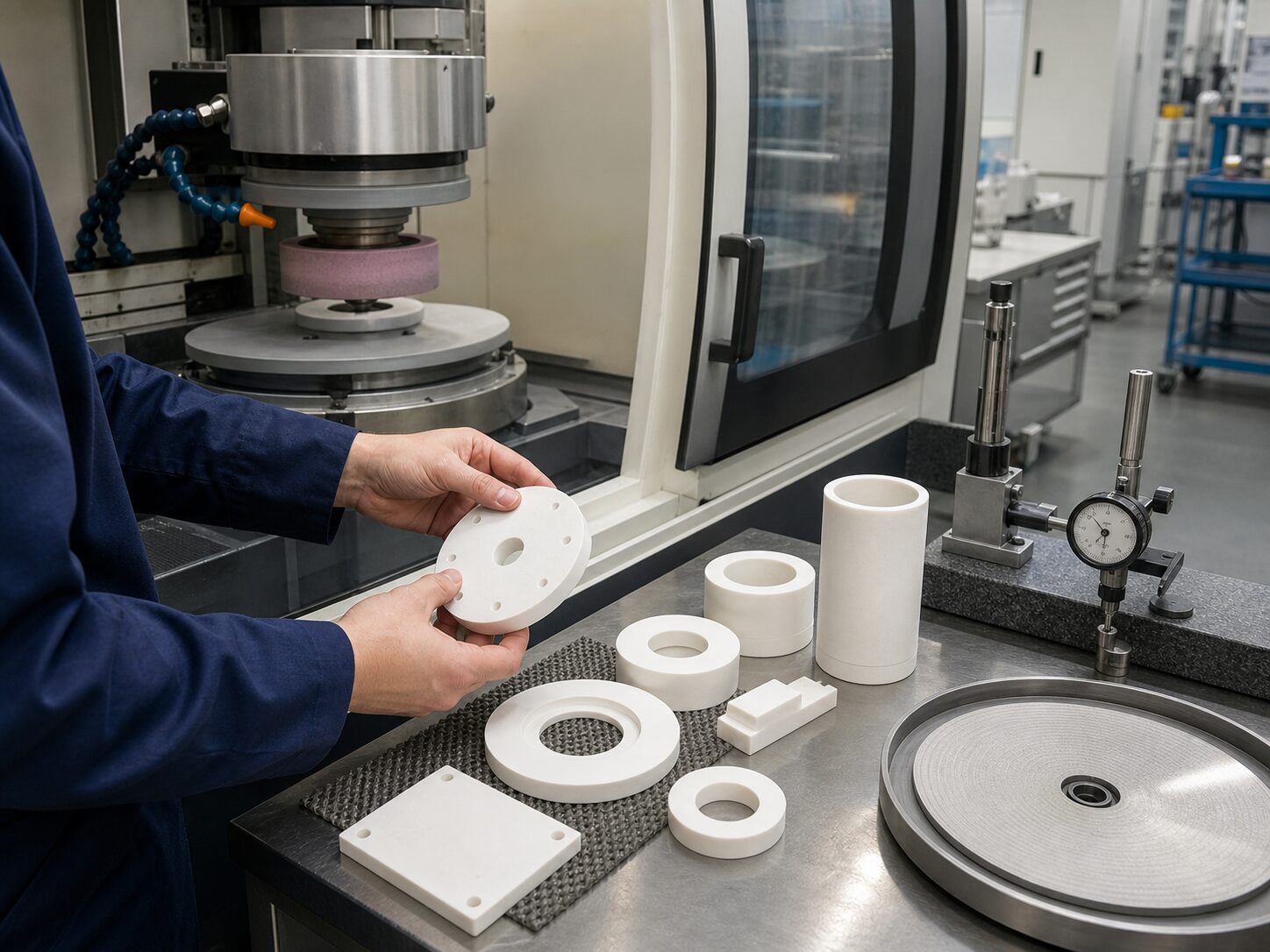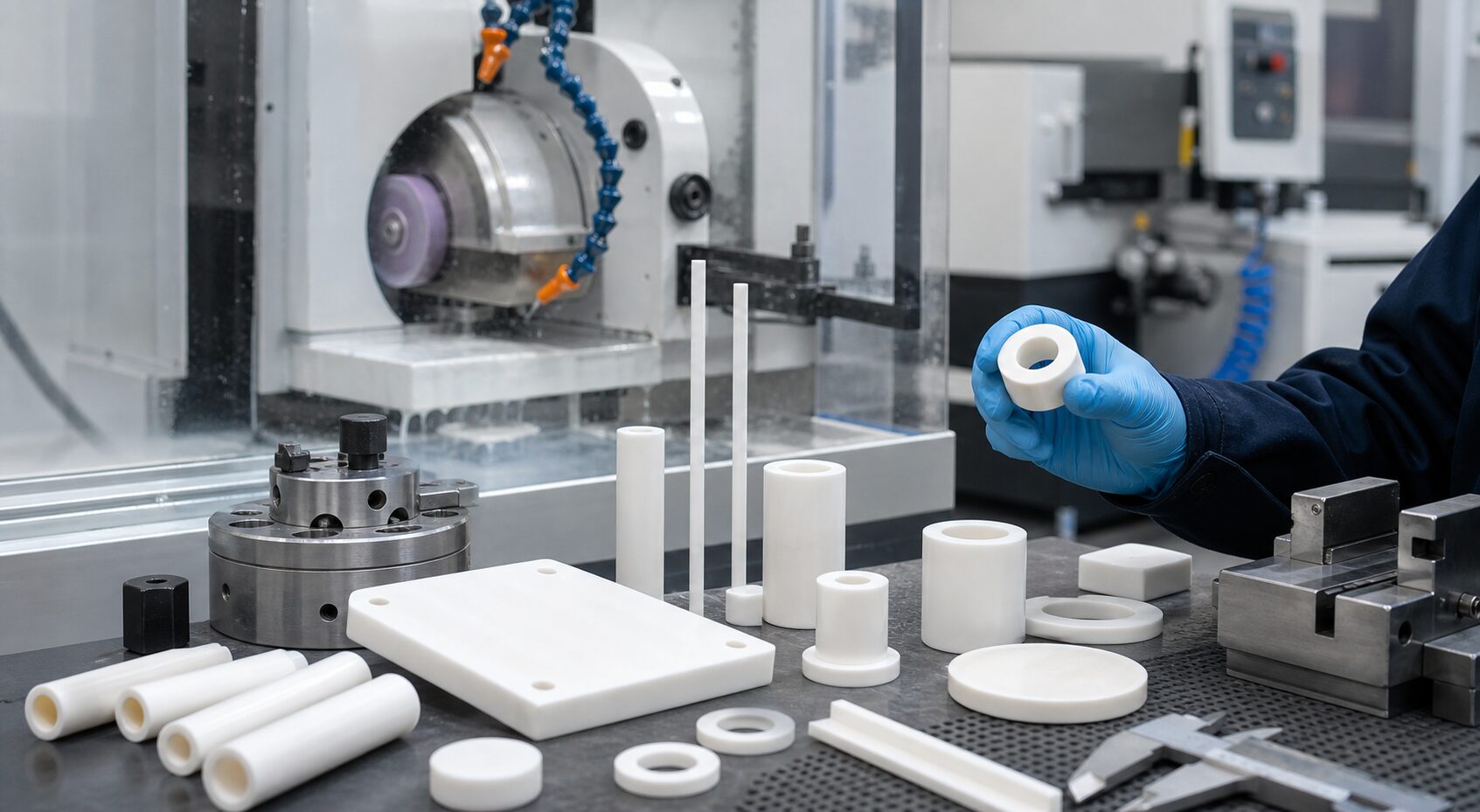







Advanced ceramic material selection
Advanced Ceramic Materials for Technical Ceramic Components
Advanced ceramic materials are used when metals, plastics, or traditional ceramics cannot provide the required wear resistance, electrical insulation, thermal performance, corrosion resistance, dimensional stability, or high-temperature capability.
Great Ceramic helps engineers, OEM teams, and industrial buyers compare technical ceramics and select materials for custom ceramic components. We support parts made from alumina, zirconia, silicon carbide, silicon nitride, aluminum nitride, boron nitride, boron carbide, beryllium oxide, machinable glass ceramic, ZTA, SSIC, and other engineering ceramics selected for real operating conditions.
Definition
What Are Advanced Ceramic Materials?
Advanced ceramic materials, also called technical ceramics or engineering ceramics, are inorganic, non-metallic materials designed for demanding industrial and technical applications. Compared with traditional ceramics, they are selected for controlled properties such as hardness, wear resistance, electrical insulation, thermal conductivity, thermal shock behavior, corrosion resistance, and dimensional stability.
Common advanced ceramic material families include oxide ceramics, non-oxide ceramics, machinable ceramics, and composite or specialty ceramics. Each group has different strengths and limitations, so material selection should be matched to the part function rather than chosen by a single property.
Material families
Advanced Ceramic Material Families
Use this table to narrow the first material direction before reviewing grade, drawing, process route, and application conditions.
| Material family | Common materials | Typical strengths | Common design considerations | Great Ceramic path |
|---|---|---|---|---|
| Oxide ceramics | Alumina, zirconia, ZTA, beryllium oxide | Electrical insulation, wear resistance, corrosion resistance, toughness options, thermal stability | Brittleness, edge design, sintering shrinkage, machining cost after firing | Compare alumina, zirconia, ZTA, and beryllium oxide |
| Non-oxide ceramics | Silicon carbide, silicon nitride, boron nitride, boron carbide | High-temperature performance, wear resistance, thermal shock resistance, thermal conductivity, non-wetting behavior depending on material | Processing route, oxidation behavior, cost, machinability, joining method | Review SiC, Si3N4, BN, and B4C options |
| Machinable ceramics | Machinable glass ceramic, boron nitride grades | Faster machining, prototype support, electrical insulation, thermal insulation in selected grades | Lower strength than many fired ceramics, application temperature limits, edge strength | Use for prototypes, insulation parts, fixtures, and low-volume precision parts |
| Composite and specialty ceramics | ZTA, SSIC, metallized ceramics, ceramic-to-metal assemblies | Property balance, joining support, wear or thermal performance tailored to application | Requires review of material, process, tolerance, and assembly design together | Use when one base ceramic does not meet all requirements |
Selection table
Ceramic Material Selection by Requirement
The best material depends on the property that controls the failure risk or performance target. Use the table below as a starting point for a drawing review.
| Requirement | Materials often considered | Why they may fit | Questions to confirm |
|---|---|---|---|
| Electrical insulation | Alumina, aluminum nitride, boron nitride, machinable glass ceramic | Strong insulation behavior with different thermal and machining profiles | Voltage, dielectric requirement, temperature, geometry, surface finish |
| Wear resistance | Alumina, zirconia, silicon carbide, silicon nitride, boron carbide | High hardness and good abrasion resistance compared with many metals | Sliding wear or impact wear, load, mating material, lubrication, particles |
| Thermal management | Aluminum nitride, beryllium oxide, silicon carbide, boron nitride | Useful when heat transfer matters and electrical behavior must be controlled | Thermal conductivity need, insulation need, heat source, assembly method |
| High temperature use | Alumina, silicon carbide, silicon nitride, boron nitride, zirconia | Different materials handle heat, thermal cycling, and atmosphere differently | Maximum temperature, continuous or intermittent use, air/vacuum/inert gas, thermal shock |
| Chemical and corrosion resistance | Alumina, silicon carbide, zirconia, selected boron nitride grades | Useful in pumps, seals, nozzles, sleeves, and chemical equipment | Chemical media, concentration, temperature, pressure, cleaning process |
| Toughness and mechanical load | Zirconia, silicon nitride, ZTA | Better fracture toughness or strength than many other ceramics | Load direction, impact risk, wall thickness, sharp corners, assembly stress |
| Machinability and prototypes | Machinable glass ceramic, boron nitride, green-machined or fired-machined ceramics | Good for design trials, fixtures, and fast-turn precision parts | Quantity, tolerance, final strength requirement, working temperature |
| Ceramic-to-metal joining | Metallized alumina, metallized aluminum nitride, brazed assemblies | Supports electrical, vacuum, feedthrough, and assembly requirements | Metal type, braze area, leak requirement, thermal cycle, dimensional control |
Material portfolio
Great Ceramic Material Portfolio
Use the material pages below to move from broad ceramic material selection into a specific custom component path.
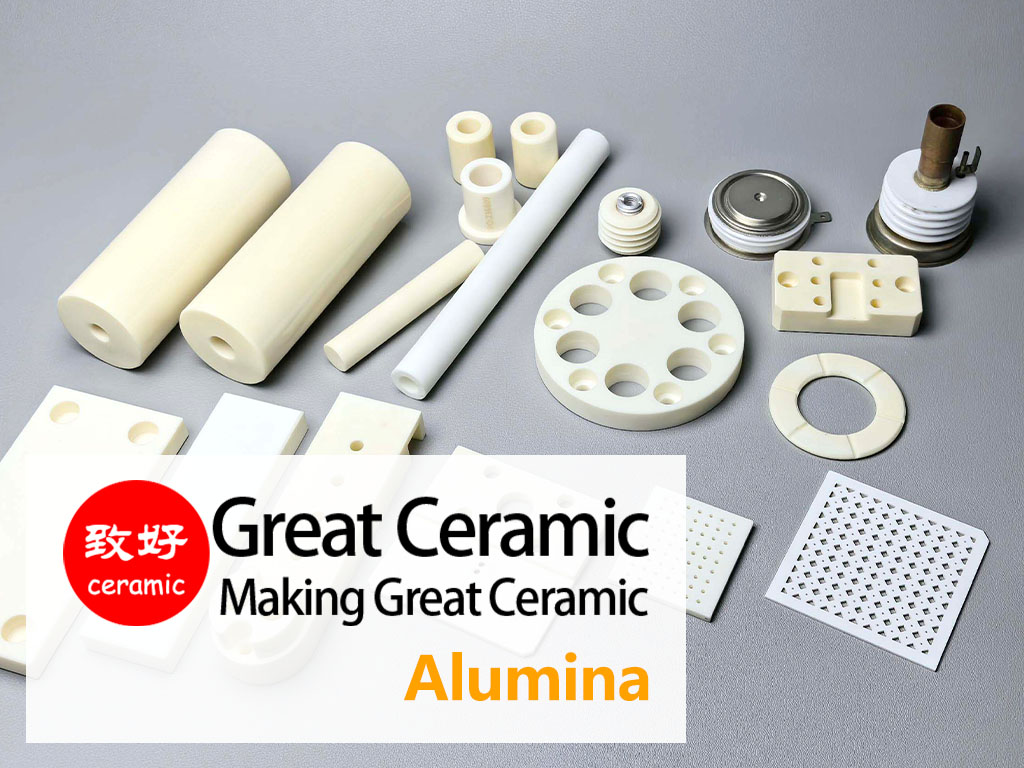
Widely used for electrical insulation, wear resistance, corrosion resistance, and industrial ceramic components such as tubes, rods, plates, substrates, sleeves, and spacers.
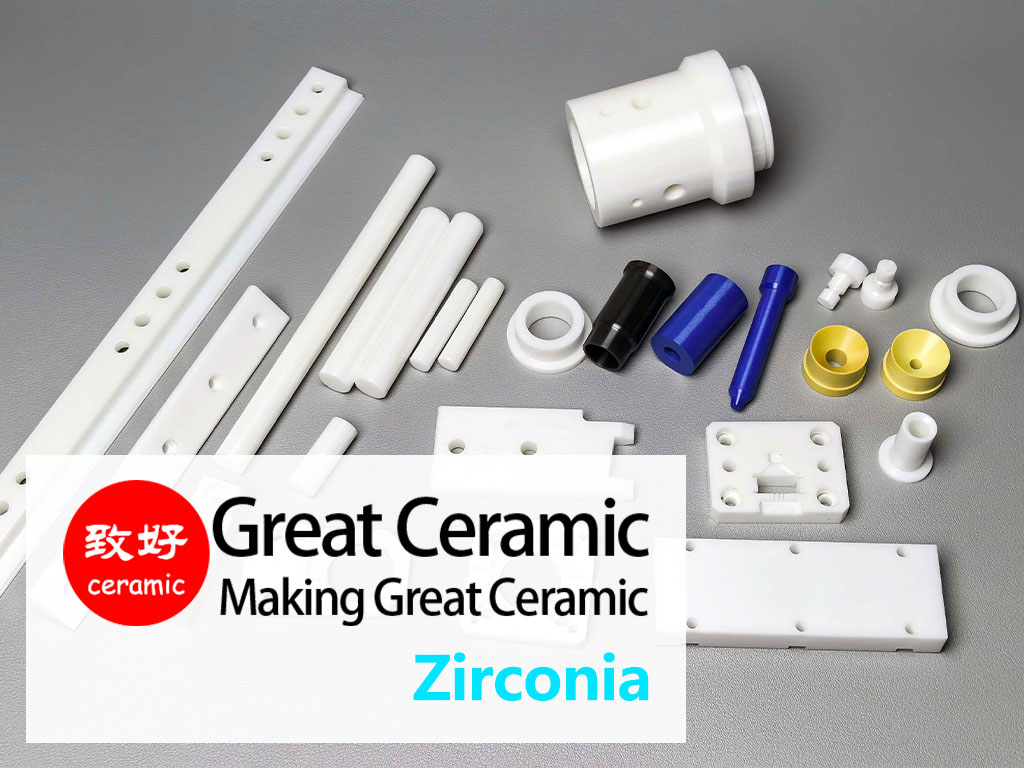
Often selected when a ceramic component needs higher toughness, good wear behavior, and strong mechanical performance.
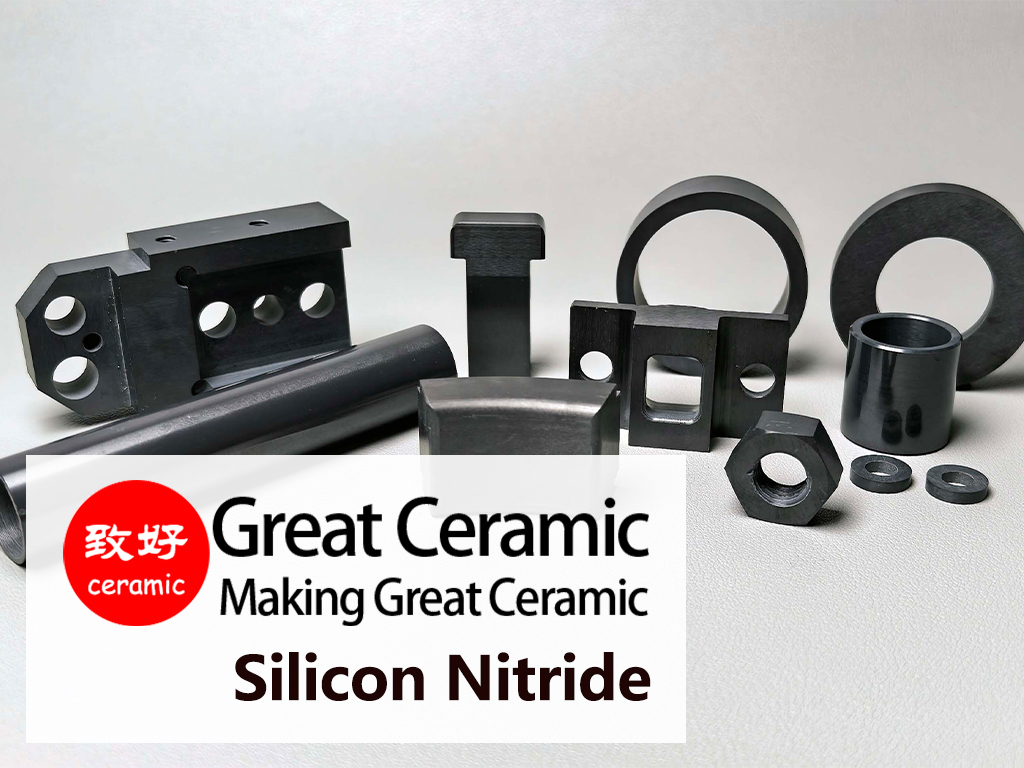
Combines high strength, thermal shock resistance, and good mechanical behavior for rollers, balls, pins, wear parts, and high-stress ceramic components.
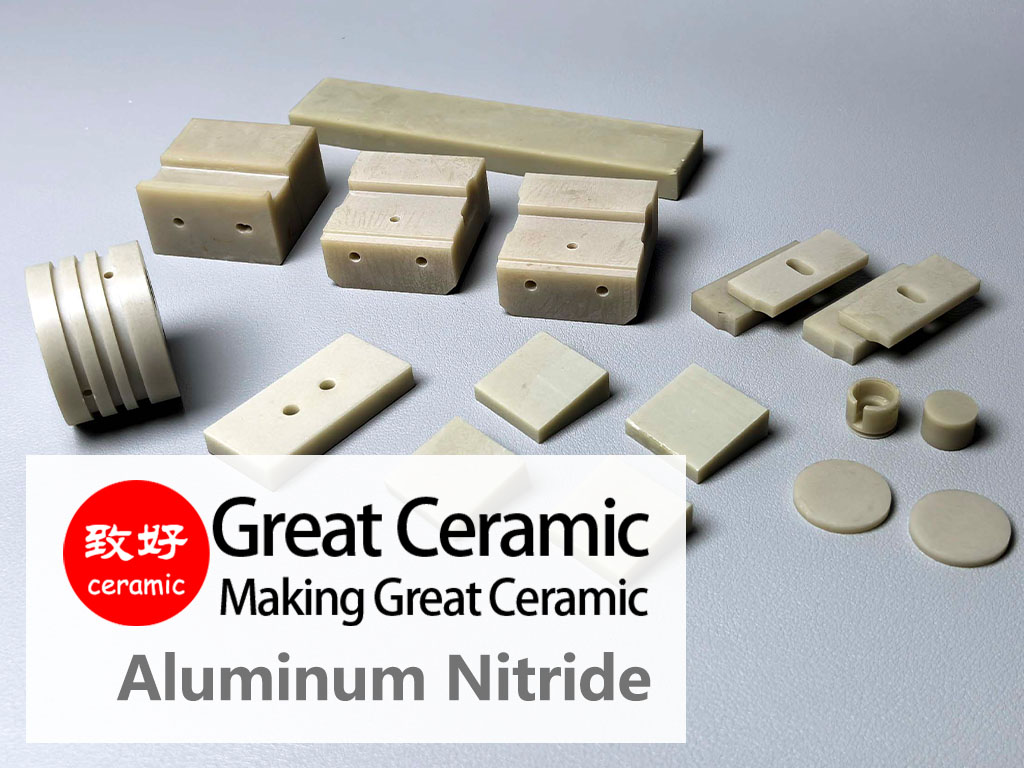
Used where thermal conductivity and electrical insulation are required together, including substrates, heat spreaders, and power electronics parts.
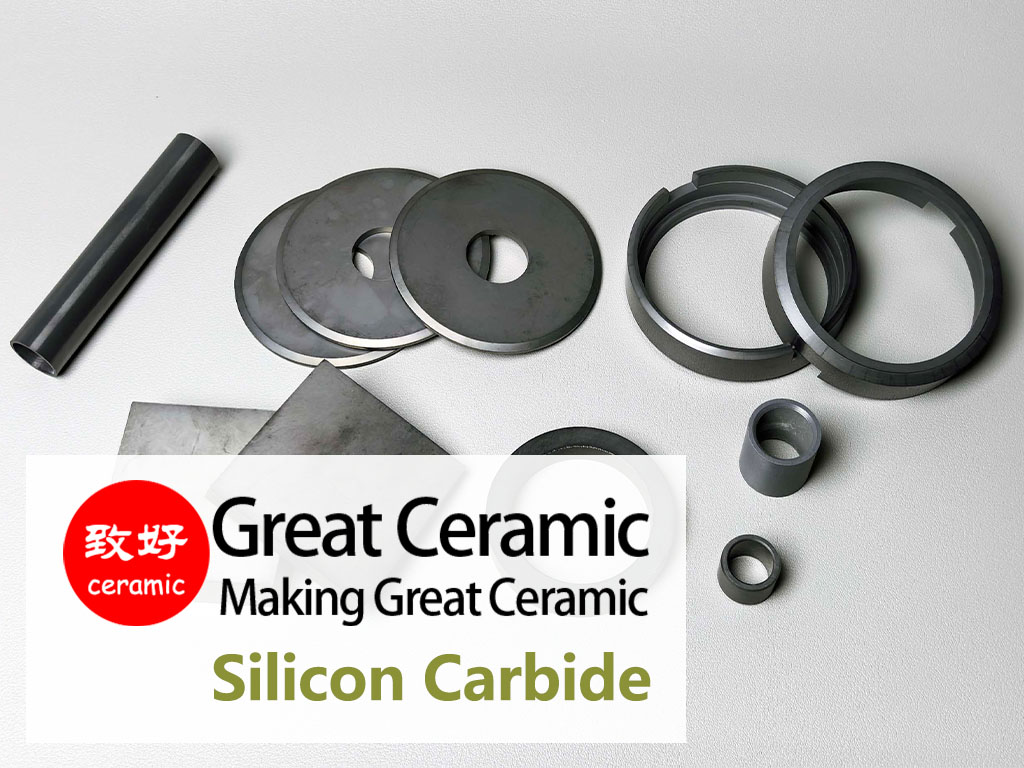
Considered for wear, corrosion, high-temperature, and thermal performance in seal rings, sleeves, nozzles, pump parts, and abrasive conditions.
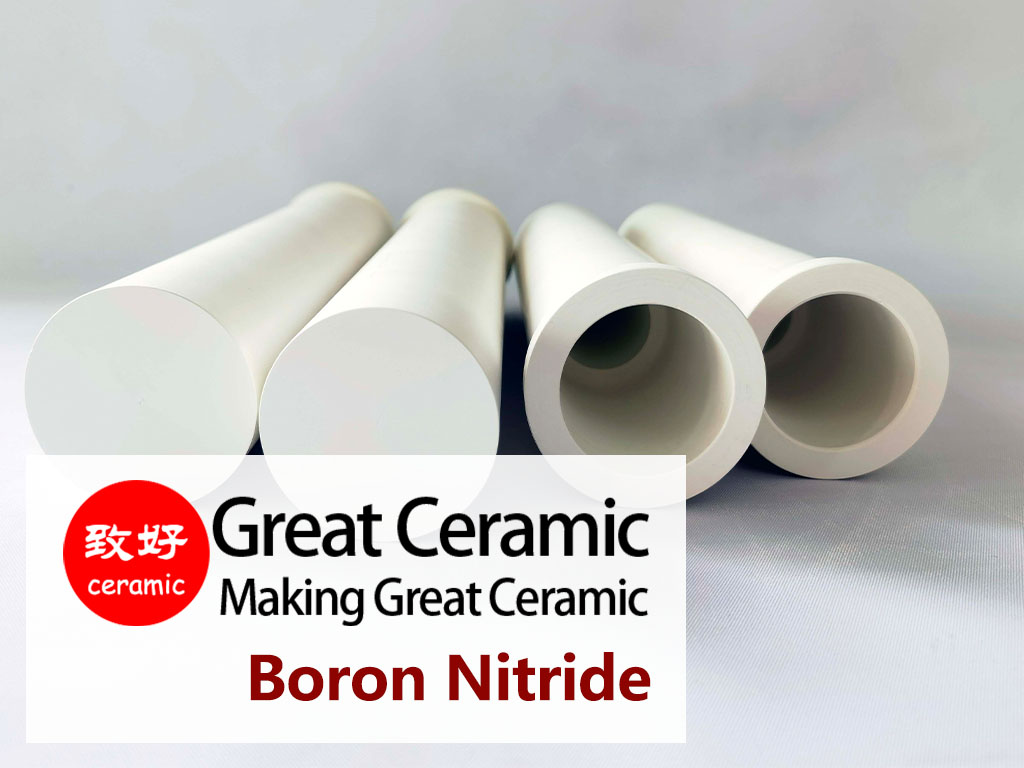
Selected for machinability, thermal shock behavior, insulation, and non-wetting behavior in selected molten metal or high-temperature environments.
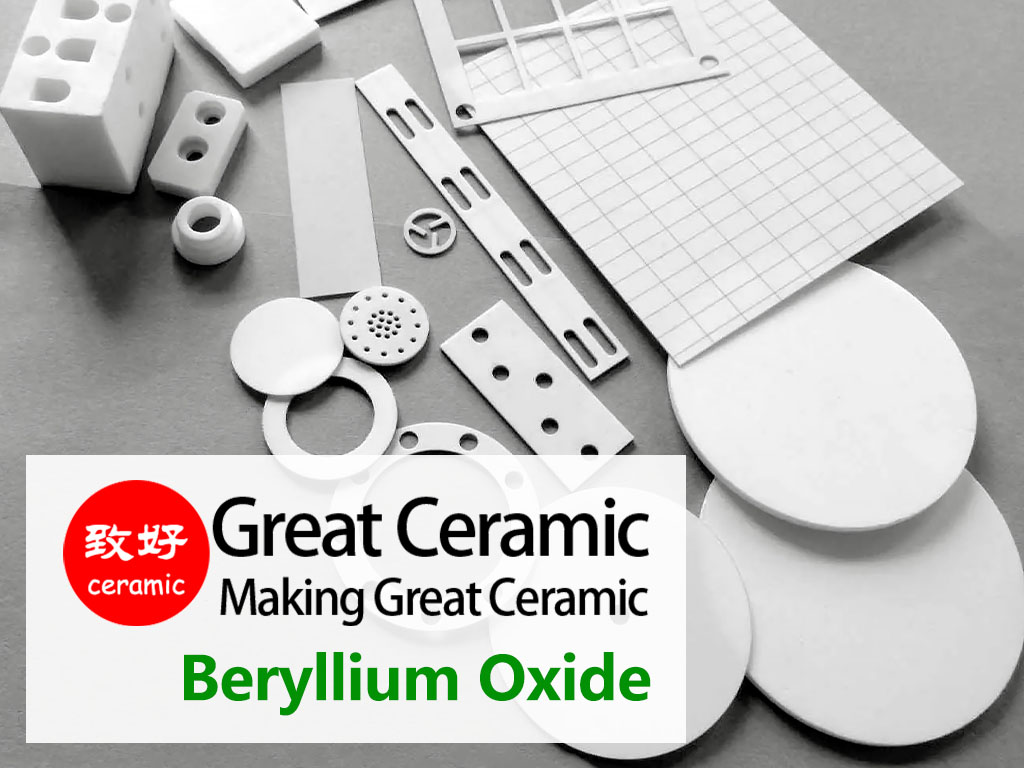
Specialty ceramics may be considered where thermal conductivity, electrical insulation, or specific performance combinations are required.
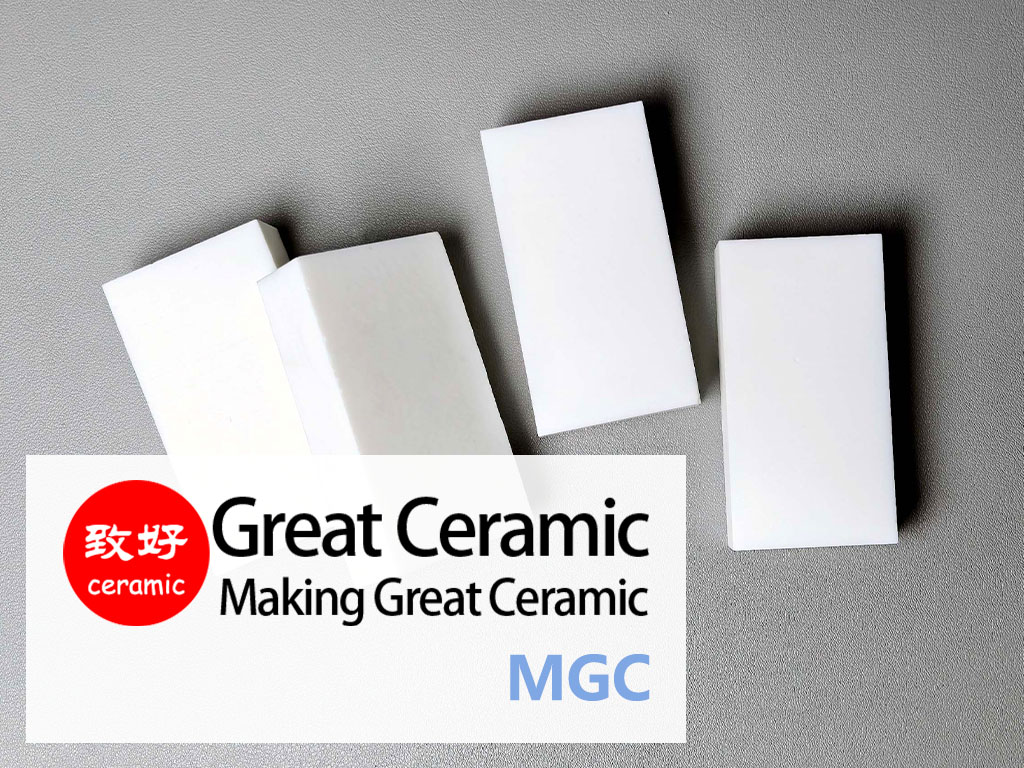
Useful for prototypes, fixtures, insulating parts, and precision components that benefit from machining without full fired-ceramic grinding routes.
Review drawings, material requirements, tolerance needs, and manufacturing route options for custom ceramic components.
Design properties
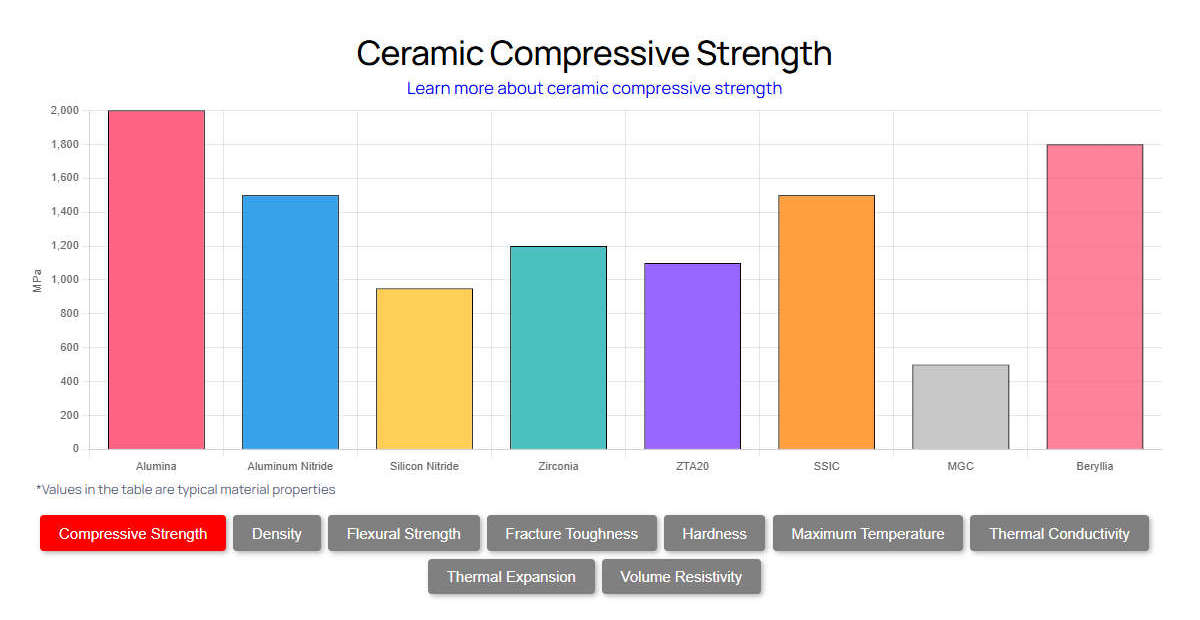
Ceramic Material Properties That Matter for Design
Material data should be used as a selection tool, not as a guarantee for every geometry. Final part performance depends on material grade, forming method, firing or sintering, machining route, surface finish, edge design, and assembly stress.
Manufacturing review
From Material Selection to Custom Ceramic Components
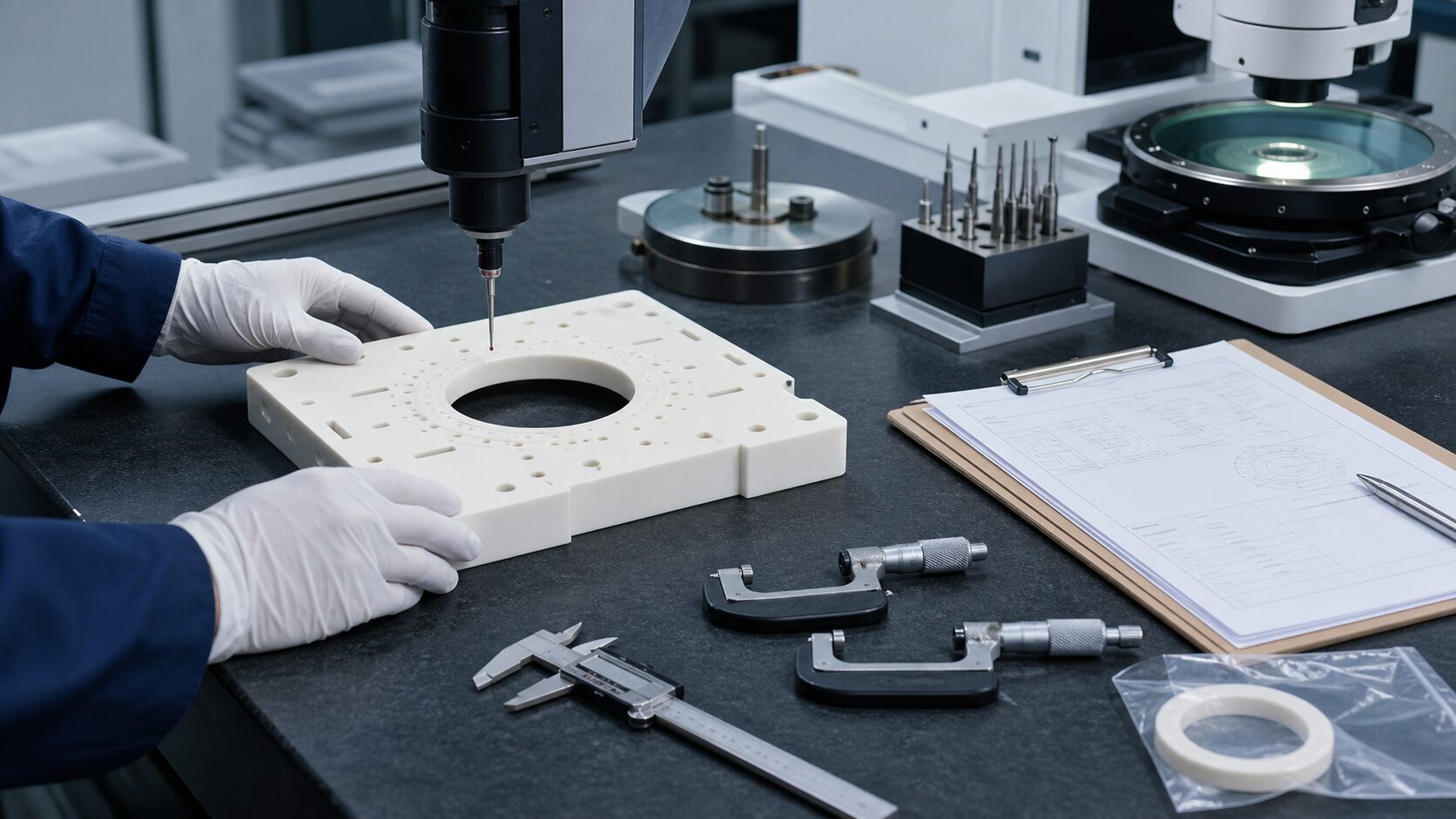
After the material family is selected, the next step is manufacturability review. Advanced ceramic components often need different process routes than metal or plastic parts.
Great Ceramic can review material choice, drawing geometry, tolerance, green machining, fired machining, grinding, polishing, lapping, holes, slots, thin walls, surface finish, prototype needs, production needs, ceramic metallization, brazing, and ceramic-to-metal assembly requirements.
Applications
Application Examples
| Application need | Common component examples | Materials to review |
|---|---|---|
| Electrical insulation | Insulators, spacers, substrates, washers, sleeves | Alumina, aluminum nitride, boron nitride, machinable glass ceramic |
| Wear and abrasion | Guides, liners, plungers, sleeves, seal faces, nozzles | Alumina, zirconia, silicon carbide, silicon nitride, boron carbide |
| Thermal management | Substrates, heat spreaders, insulating thermal parts | Aluminum nitride, beryllium oxide, silicon carbide, boron nitride |
| High temperature fixtures | Setters, supports, nozzles, furnace and process parts | Alumina, silicon carbide, boron nitride, zirconia, silicon nitride |
| Mechanical precision | Pins, rollers, shafts, balls, positioning parts | Zirconia, silicon nitride, alumina |
| Chemical processing | Pump parts, valve parts, seal rings, tubes, sleeves | Silicon carbide, alumina, zirconia |
| Ceramic-to-metal assembly | Metallized rings, feedthrough parts, brazed assemblies | Alumina, aluminum nitride, selected metallizable ceramics |
RFQ checklist
What to Send for Material Selection
To help Great Ceramic review the correct technical ceramic material, send as much of the following information as possible.
| RFQ input | Why it matters |
|---|---|
| Drawing or sketch | Confirms geometry, holes, edges, wall thickness, and tolerance |
| Target material if known | Helps compare the requested material with practical alternatives |
| Operating temperature | Determines high-temperature and thermal shock requirements |
| Electrical or thermal requirement | Helps select insulation, dielectric, or thermal management materials |
| Wear, load, or pressure condition | Helps evaluate hardness, toughness, strength, and fracture risk |
| Chemical exposure | Helps select corrosion-resistant ceramics |
| Surface finish and tolerance | Affects machining route, cost, and feasibility |
| Quantity and use stage | Separates prototype, trial batch, and production planning |
| Assembly details | Important for press fits, bonding, brazing, metallization, and mating parts |
FAQ