








“http
The Definitive Guide to Цирконий Ceramic Hardness: Engineering Properties and Machining Solutions
In the realm of advanced materials, zirconia (Zirconium Dioxide, ZrO2) stands out as a “ceramic steel.” This moniker is not granted lightly. it reflects the material’s unique combination of high hardness, exceptional fracture toughness. And wear resistance. For engineers and manufacturers sourcing components from Great Ceramic, understanding zirconia ceramic hardness is critical for ensuring component longevity in extreme environments. This technical guide explores the science behind zirconia’s hardness, its comparison to other technical ceramics. And how these properties dictate the CNC machining process.
1. Understanding the Science of Zirconia Ceramic Hardness
Hardness is generally defined as a material’s resistance to localized plastic deformation, such as indentation or scratching. In technical ceramics, hardness is primarily determined by the strength of the interatomic bonds. Zirconia’s hardness arises from its crystalline structure, but unlike many other ceramics, its hardness is inextricably linked to its “toughness.”
The Role of Phase Transformation
Pure zirconia undergoes phase changes as temperature fluctuates: Monoclinic at room temperature, Tetragonal at high temperatures. And Cubic at very high temperatures. To make it useful for engineering, stabilizers like Yttria (Y2O3), Magnesia (MgO), or Ceria (CeO2) are added. Yttria-Stabilized Tetragonal Zirconia Polycrystal (Y-TZP) is the most common grade used when high hardness and strength are required. The “transformation toughening” mechanism allows zirconia to resist crack propagation. This indirectly supports its surface integrity and functional hardness under stress.
Measuring Hardness: Vickers vs. Mohs
In technical specifications, zirconia ceramic hardness is most commonly measured using the Vickers scale (HV) or the Rockwell A scale (HRA). On the Mohs scale, zirconia typically sits between 8 and 8.5, making it significantly harder than steel (which ranges from 4 to 7 depending on heat treatment) and nearly as hard as sapphire.
2. Technical Property Tables
The following tables provide a comparative analysis of zirconia grades and their mechanical properties, specifically focusing on how hardness correlates with other vital metrics.
Table 1: Mechanical Properties of Common Zirconia Grades
| Недвижимость | Y-TZP (3 mol% Yttria) | Mg-PSZ (Magnesia Partially Stabilized) | ZTA (глинозем/”>Zirconia Toughened Alumina) |
|---|---|---|---|
| Hardness (Vickers, HV10) | 1200 – 1350 kg/mm² | 1000 – 1100 kg/mm² | 1600 – 1800 kg/mm² |
| Вязкость разрушения (K1c) | 8 – 12 MPa·m½ | 10 – 15 MPa·m½ | 4 – 6 MPa·m½ |
| Плотность (г/см³) | 6.05 | 5.75 | 4.1 – 4.5 |
| Прочность на сжатие (МПа) | 2100 | 1800 | 2500 |
Table 2: Hardness Comparison: Zirconia vs. Other Engineering Materials
| Материал | Твердость по Виккерсу (HV) | Твердость по Моосу | Ключевое преимущество |
|---|---|---|---|
| Цирконий (Y-TZP) | 1300 | 8.2 | High toughness and wear resistance |
| Alumina (99.5% Al2O3) | 1600 | 9.0 | Higher hardness, lower cost |
| Карбид кремния (SiC) | 2500 | 9.5 | Extreme hardness, thermal stability |
| Hardened Tool Steel | 700 – 850 | 6.5 – 7.0 | Ductility and ease of machining |
3. Factors Affecting Zirconia Ceramic Hardness
While the chemical composition is the primary driver, several manufacturing factors influence the final hardness of a zirconia component produced by Great Ceramic.
Sintering Temperature and Duration
The sintering process involves heating the “green” (unfired) zirconia to temperatures between 1400°C and 1600°C. If the temperature is too low, the material will not reach its full theoretical density, leading to lower hardness and porosity. Conversely, over-sintering can cause grain growth. Smaller grain sizes generally contribute to higher hardness and better mechanical properties due to the Hall-Petch relationship.
Пористость
Hardness is highly sensitive to the presence of pores. Even a 1% increase in porosity can lead to a significant drop in Vickers hardness. High-quality zirconia parts must be processed to near-theoretical density (often >99.5%) to ensure the hardness remains consistent across the entire surface of the part.
Stabilizer Concentration
The amount of Yttria significantly alters the crystal structure. For example, 3mol% Yttria (3Y-TZP) results in a tetragonal phase that is optimized for strength and hardness. Increasing Yttria to 8mol% produces a fully stabilized cubic zirconia. This, while more stable at high temperatures and optically clear, actually possesses lower mechanical hardness and toughness compared to the tetragonal variety.
4. Industry Applications of High-Hardness Zirconia
The extreme hardness of zirconia, combined with its biocompatibility and low thermal conductivity, makes it indispensable across various high-tech sectors.
Медицина и стоматология
Zirconia is the material of choice for dental crowns and bridges because its hardness allows it to withstand the significant occlusal forces of chewing, while its wear resistance ensures it doesn’t degrade over decades of use. In orthopedics, zirconia-toughened components are used in hip joint replacements to minimize wear debris.
Oil and Gas
In the subsea and extraction environments, components are subjected to sand slurry erosion. Zirconia’s hardness prevents the “sandblasting” effect from destroying valve seats, liners. And bushings. Its resistance to chemical corrosion further extends the life of these critical parts.
Precision Instrumentation
Because zirconia maintains its dimensions under stress and resists scratching, it is used for precision gauges, fiber optic ferrules. And high-pressure pump plungers. In these applications, the material’s hardness ensures that the high-tolerance fit between components is maintained even after thousands of cycles.
5. CNC Machining Specifics for Hard Zirconia
Machining a material with a Vickers hardness of 1300 HV presents significant challenges. Standard carbide or high-speed steel (HSS) tools are ineffective, as the ceramic will simply wear the tool away within seconds. At Great Ceramic, we employ specialized strategies to handle zirconia’s hardness.
Green State vs. Sintered Machining
To optimize costs, much of the machining is performed in the “green” or “bisque” state. In this state, the zirconia powder is held together by a binder and has a consistency similar to chalk.
- Зеленая обработка: Standard CNC tools can be used to create complex geometries. However, the engineer must account for a 20-30% shrinkage factor that occurs during final sintering.
- Fully Sintered Machining: When ultra-high precision (tolerances of +/- 0.005mm) is required, machining must occur after the material has reached its full hardness. This is known as “hard machining.”
Diamond Grinding and Tooling
Hard machining of zirconia requires diamond-coated or polycrystalline diamond (PCD) tools. The process is more akin to grinding than traditional cutting.
- Speeds and Feeds: High spindle speeds combined with very low feed rates are necessary to prevent thermal shock and micro-cracking.
- Coolant Management: Flood cooling is essential. The friction generated between the diamond tool and the hard zirconia surface produces intense local heat. Rapid temperature fluctuations can cause “heat checks” or surface cracks in the ceramic.
- Rigidity: The CNC machine must be exceptionally rigid. Any vibration (chatter) can lead to catastrophic failure of the brittle ceramic workpiece.
Advanced Machining Techniques
Beyond traditional grinding, Great Ceramic utilizes advanced methods for intricate hard zirconia components:
- Ultrasonic Machining (USM): High-frequency vibrations combined with abrasive slurry can create holes and cavities in hard zirconia.
- Лазерная обработка: Used for micro-drilling and surface texturing, though careful control is needed to manage the Heat Affected Zone (HAZ).
6. Maintenance and Wear Resistance
The hardness of zirconia ceramic translates directly into its abrasive wear resistance. In industrial settings, wear is often the primary cause of equipment failure. Zirconia’s ability to maintain its surface finish under contact with abrasive particles means that maintenance intervals can be extended by 5x to 10x compared to metal alloys.
However, it is important to note that while zirconia is hard, it is also brittle. It does not “dent” like steel. it chips or fractures if subjected to high-impact point loads. Design engineers should avoid sharp internal corners (use radii instead) to mitigate stress concentrations.
7. Frequently Asked Questions (FAQ)
Is zirconia harder than diamond?
No. Diamond is the hardest known material with a Mohs hardness of 10 and a Vickers hardness of approximately 7000-10000 HV. Zirconia, at 1300 HV, is much softer than diamond but significantly harder than most metals.
Does temperature affect zirconia’s hardness?
Yes. Like most materials, zirconia’s hardness decreases as temperature increases. However, it retains a significant portion of its mechanical strength up to 1000°C, making it suitable for high-heat applications where plastics and most metals would fail.
Can zirconia be EDM machined?
Standard zirconia is an electrical insulator, so it cannot be machined via Electrical Discharge Machining (EDM). However, some specialized conductive zirconia composites are available that can be EDM machined, though they may have different hardness profiles.
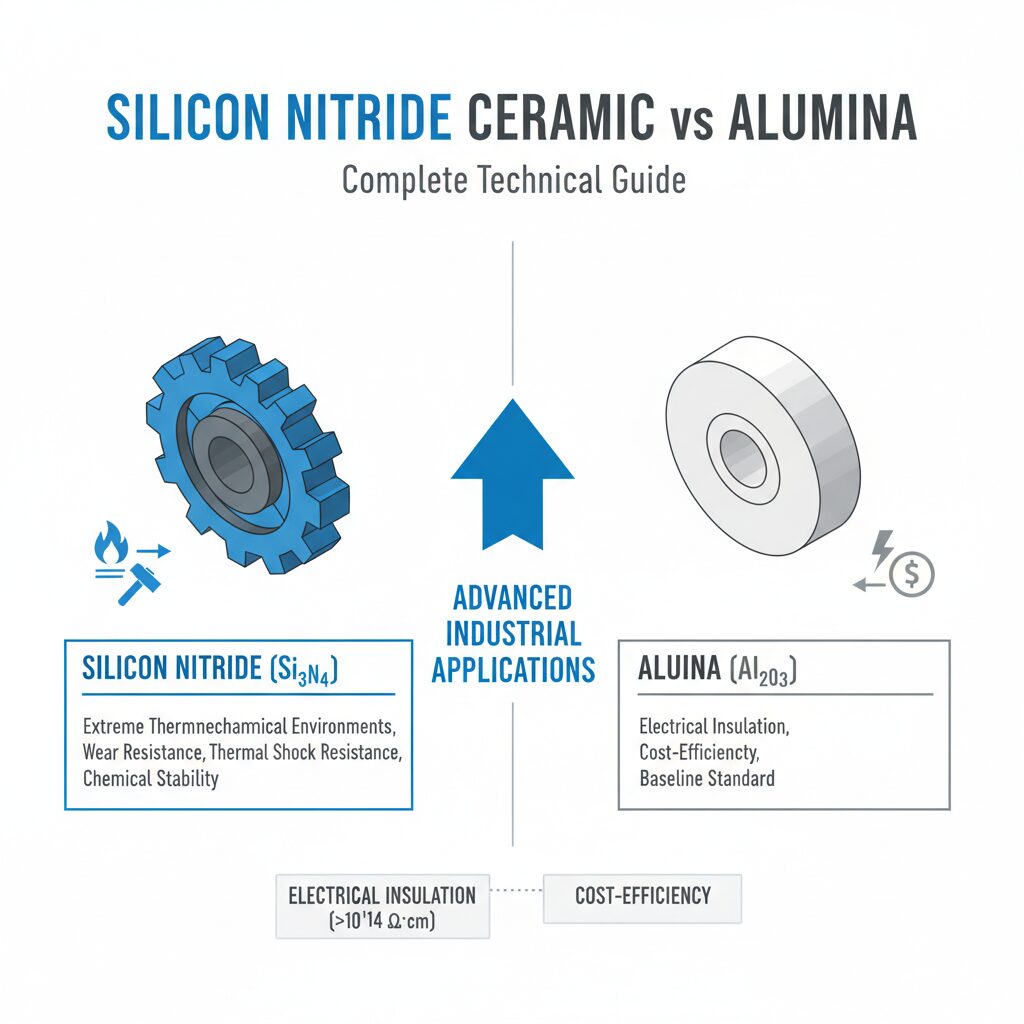
Why choose Zirconia over Alumina if Alumina is harder?
While Alumina (Al2O3) is harder (1600 HV), it is also much more brittle. Zirconia’s high fracture toughness makes it more reliable for structural parts that may experience some level of impact or tension, where Alumina would likely shatter.
8. Conclusion
Zirconia ceramic hardness is a cornerstone of modern material science, offering a unique solution for industries that demand the ultimate in wear resistance and structural integrity. By selecting the correct grade of stabilized zirconia and employing advanced CNC machining techniques, manufacturers can produce components that outperform metals in almost every measurable category of durability.
Whether you are designing a high-pressure valve for a chemical plant or a precision component for a medical device, understanding the nuances of zirconia’s mechanical properties is the first step toward a successful product.
Обратитесь в компанию Great Ceramic, чтобы заказать обработка керамики решения, разработанные специально для вашего применения. Our team of experts specializes in navigating the challenges of high-hardness materials to deliver precision-engineered components that meet your exact specifications.
zirconia ceramic hardness is widely used in advanced ceramic applications.
Узнайте больше о Zirconia Ceramic Hardness и наши услуги по прецизионной обработке керамики.