






Machinable Glass Ceramic Hardness: Complete Guide
In the realm of advanced materials, machinable glass ceramics (MGCs) occupy a unique niche. For engineers and designers working with high-performance components, the primary challenge often lies in the trade-off between the superior thermal/electrical properties of ceramics and the ease of fabrication offered by metals. Machinable glass ceramic, most notably represented by brands like Macor®, solves this dilemma. Central to its utility is the specific profile of machinable glass ceramic hardness, a property that allows it to be worked with conventional metalworking tools while maintaining the integrity of a technical ceramic.
Great Ceramic specializes in the precision fabrication of these materials. Understanding the nuances of hardness in these ceramics is essential for predicting tool wear, surface finish. And the long-term durability of the component in demanding environments like semiconductors, aerospace. And medical imaging.
The Science Behind Machinable Glass Ceramic Hardness
Unlike traditional ceramics such as Глинозем (Al2O3) or Карбид кремния (SiC). This possess extreme hardness (often exceeding 1500 HV on the Vickers scale), machinable glass ceramics are engineered to be “soft” enough for cutting but “hard” enough for structural stability. This is achieved through a unique microstructure.
Most MGCs consist of a glass matrix embedded with a high volume percentage of fluorophlogopite mica crystals. These mica platelets are randomly oriented and possess a “cleavage plane” that allows for microscopic fractures to be localized. When a cutting tool interacts with the material, the mica crystals deflect and arrest the growth of micro-cracks, causing the material to flake off in tiny chips rather than shattering. This localized fracturing is what defines its unique hardness profile and exceptional machinability.
Hardness Metrics and Comparisons
To understand where machinable glass ceramics sit in the material hierarchy, we must look at various hardness scales, including Vickers (HV) and the Mohs scale. While traditional ceramics are often too hard to be measured accurately on the Rockwell C scale, MGCs sit comfortably in a range comparable to high-grade cast iron or certain aluminum alloys.
| Тип материала | Твердость по Виккерсу (HV) | Твердость по Моосу | Machinability Grade |
|---|---|---|---|
| Machinable Glass Ceramic (Macor) | 250 kg/mm² | 7 (approx.) | Excellent (HSS/Carbide) |
| Shapal™ Hi-M Soft | 480 kg/mm² | - | Good (Carbide/Cubic Boron Nitride) |
| 99% Глинозем | 1500 – 1800 kg/mm² | 9 | Extremely Difficult (Diamond only) |
| Stainless Steel (316) | 200 kg/mm² | 5-6 | Standard |
| Нитрид кремния | 1400 – 1600 kg/mm² | 9+ | Diamond Grinding Only |
Technical Property Tables: Macor vs. Competitive MGCs
While “machinable glass ceramic hardness” is a vital search term for engineers, it is rarely the only factor considered. Hardness must be balanced with thermal and electrical properties. Below is a comprehensive look at the mechanical and thermal properties of the most common machinable ceramics processed by Great Ceramic.
Table 1: Mechanical and Physical Properties
| Недвижимость | Единицы | Macor® | Shapal™ Hi-M Soft |
|---|---|---|---|
| Плотность | г/см³ | 2.52 | 2.90 |
| Твердость (Виккерс) | kg/mm² | 250 | 480 |
| Модуль упругости | ГПа | 66.9 | 190 |
| Прочность на изгиб | МПа | 94 | 300 |
| Прочность на сжатие | МПа | 345 | 1200 |
| Вязкость разрушения | МПа-м½ | 1.53 | 3.0 |
Table 2: Thermal and Electrical Properties
| Недвижимость | Единицы | Macor® | Shapal™ Hi-M Soft |
|---|---|---|---|
| Max Use Temp (No Load) | °C | 1000 (800 continuous) | 1900 (inert) / 1000 (air) |
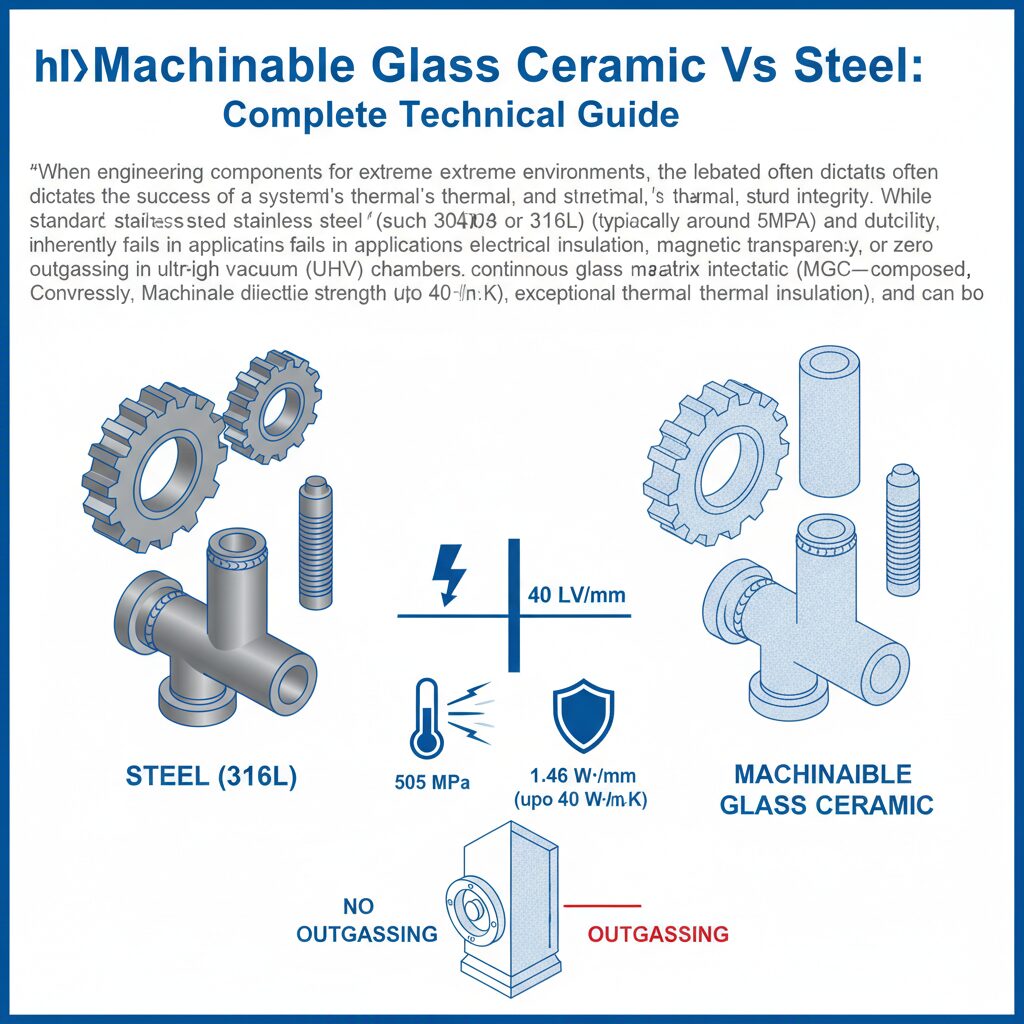
| Теплопроводность | Вт/м-К | 1.46 | 92 |
| CTE (25-800°C) | 10-⁶/°C | 12.6 | 4.8 |
| Диэлектрическая прочность | кВ/мм | 40 | >30 |
How Hardness Impacts Industry Applications
The specific hardness of machinable glass ceramics makes them indispensable across several high-tech industries. Because the material does not “creep” or deform under stress like plastics, but isn’t as brittle as standard glass, it provides a stable platform for precision components.
1. Semiconductor Manufacturing
In the semiconductor industry, components are often exposed to plasma and high-voltage environments. The 250 HV hardness of MGCs ensures that parts remain dimensionally stable during the thermal cycling of wafer processing. It is frequently used for ion beam equipment insulators, plasma shields. And wafer probes where intricate geometries are required but traditional ceramics would be too expensive to machine.
2. Aerospace and Defense
Aerospace applications require materials that can withstand vacuum environments without outgassing. The hardness of MGCs allows for the creation of lightweight, high-strength spacers and insulators for satellite systems. Because the material can be machined to tolerances of ±0.01mm, it is used in guidance systems where thermal expansion must be precisely managed.
3. Medical Imaging and Devices
In MRI and CT scanners, non-magnetic materials with high dielectric strength are mandatory. The hardness of machinable ceramics allows for the threading of small holes and the creation of complex cooling channels that would be impossible to cast or mold. Its biocompatibility also makes it suitable for specialized surgical instrumentation.
4. Ultra-High Vacuum (UHV) Environments
One of the standout features related to MGC hardness and porosity (which is zero) is its performance in UHV. It does not absorb water or gases. The material’s ability to be polished to a high surface finish (thanks to its fine-grained hardness) ensures minimal surface area for gas molecules to cling to.
CNC Machining Specifics for Machinable Glass Ceramics
The “machinability” in machinable glass ceramic hardness comes with specific rules. Even though you can use metalworking tools, the technique differs significantly from machining steel or aluminum. At Great Ceramic, we employ specific CNC protocols to ensure the material does not chip or suffer from thermal shock.
Tooling Selection
While High-Speed Steel (HSS) can be used for short runs, Tungsten Carbide tooling is the industry standard for MGCs. Carbide tools maintain their sharp edge longer against the abrasive mica crystals. Diamond-coated tools are rarely necessary for Macor but may be utilized for Shapal™ or when extremely high volumes are required to maintain tolerances.
Speeds, Feeds. And Coolants
- Cutting Speeds: Generally lower than those used for aluminum. For Macor, a surface speed of 30-50 meters per minute (SFM 100-150) is typical.
- Feeds: Moderate feed rates are essential. If the feed is too slow, the tool will rub and generate heat. if too fast, it will cause excessive chipping at the exit points of the cut.
- Coolant: This is non-negotiable. While the material can be machined dry, a water-soluble coolant is highly recommended to wash away the abrasive ceramic powder (which acts like sandpaper on the machine’s ways) and to prevent thermal localized stress.
The “Chipping” Phenomenon
Because the hardness of the material is tied to its mica cleavage planes, chipping at the edges of a cut is a known risk. To mitigate this, Great Ceramic engineers often use a “climb milling” approach and may suggest chamfering edges in the design phase to remove potential stress risers. During drilling, it is common practice to use a backing plate or to “peck drill” to clear the powder and reduce pressure.
Comparing Machinable Glass Ceramic to Traditional Alumina
Engineers often ask: “Why choose an MGC over a harder ceramic like Alumina?” The answer lies in the total cost of ownership and the complexity of the design.
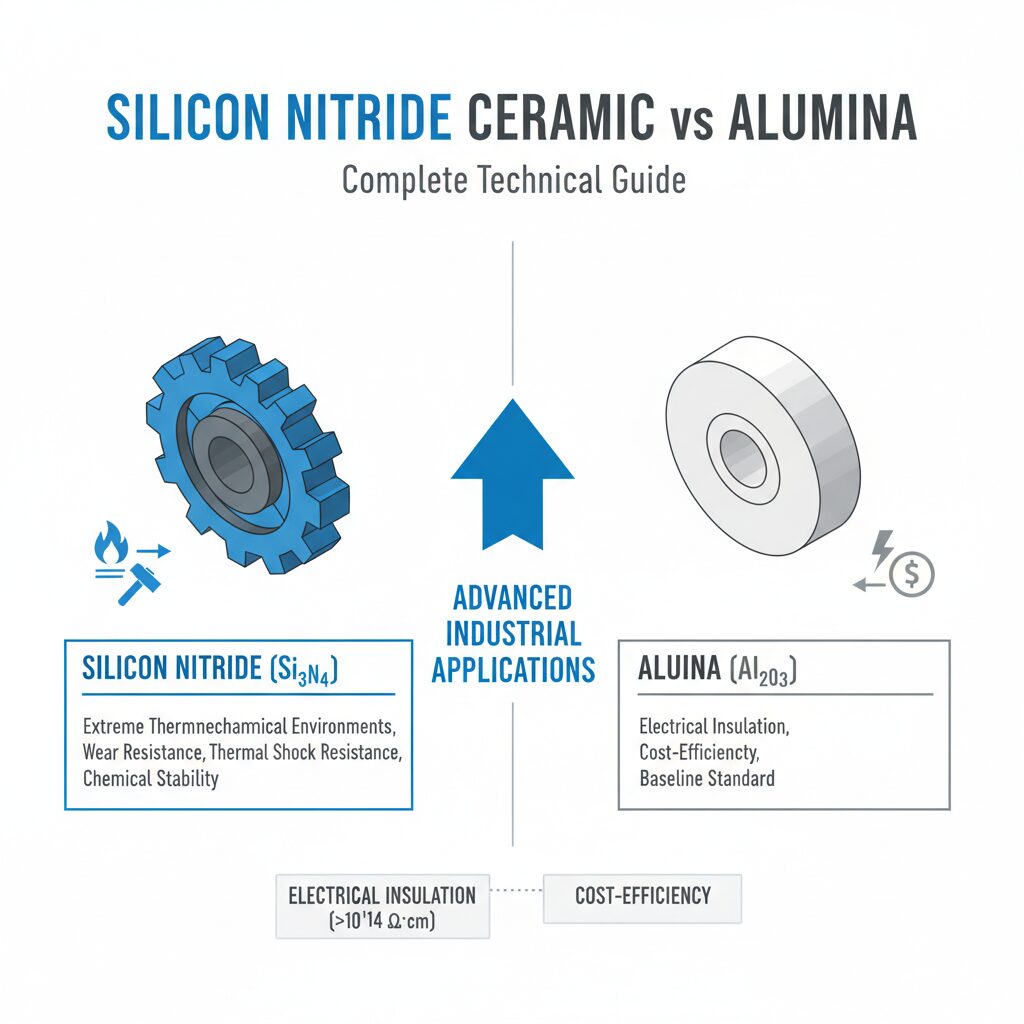
Alumina (Al2O3): With a Vickers hardness of 1500+, Alumina is vastly more wear-resistant. However, it cannot be machined after it is fired (sintered). Any adjustment must be done via diamond grinding. This is incredibly slow and expensive. If your part requires internal threads, deep blind holes, or complex undercuts, Alumina is often cost-prohibitive.
Machinable Glass Ceramic: With its lower hardness (250 HV), parts can be designed with the same complexity as metal parts. You can tap holes, mill slots. And turn thin-walled tubes. This allows for rapid prototyping and faster production cycles. While less wear-resistant than Alumina, it is more than sufficient for 90% of electrical and thermal insulation applications.
Technical Considerations for Design Engineers
When designing for machinable glass ceramic hardness, keep the following technical constraints in mind to optimize for both performance and manufacturability:
1. Толщина стенки
Despite its stability, MGCs are brittle compared to metals. We recommend a minimum wall thickness of 0.5mm for small components, though 1.0mm is safer for structural parts. The material’s hardness allows it to hold these thin sections without deforming, but they are susceptible to impact.
2. Threading and Tapping
Unlike most ceramics, MGCs can be tapped. However, due to the material’s grain structure, it is advisable to use a 50-60% thread depth rather than the standard 75% used in metals. This reduces the risk of shearing the ceramic threads while providing ample pull-out strength.
3. Surface Finish
As-machined, MGCs typically have a surface finish of approximately 0.5–1.0 μm Ra. Because of the material’s hardness and fine grain, it can be polished to a mirror finish (< 0.05 μm Ra) for high-vacuum seals or optical applications.
FAQ: Machinable Glass Ceramic Hardness
Is machinable glass ceramic harder than glass?
It depends on the glass. Standard soda-lime glass has a Mohs hardness of about 5.5 to 6, while Macor (a common MGC) is around 7. However, MGCs are significantly tougher and more resistant to thermal shock than standard glass, making them much “harder” in terms of practical durability in engineering environments.
Does the hardness change with temperature?
One of the primary benefits of MGCs is their stability. Machinable glass ceramic hardness remains relatively constant up to its continuous use temperature (approx. 800°C for Macor). Unlike plastics that soften or metals that may anneal, MGC maintains its structural integrity at high temperatures.
Can I machine it with standard HSS tools?
Yes, you can. However, for precision work and better surface finishes, Tungsten Carbide is preferred. The hardness of the mica crystals will dull HSS tools much faster than they would dull when cutting brass or aluminum.
How does the hardness affect its dielectric properties?
There is no direct correlation between hardness and dielectric strength, but the dense, non-porous nature of MGCs (which contributes to their consistent hardness) ensures there are no pathways for electrical discharge, making them excellent high-voltage insulators.
Is “Machinable Ceramic” the same as “Machinable Glass Ceramic”?
Not necessarily. “Machinable Ceramic” is a broad category that includes phosphate-bonded ceramics and Boron Nitride. “Machinable Glass Ceramic” specifically refers to materials like Macor that use a glass-mica composition. MGCs generally offer better vacuum compatibility and mechanical strength than phosphate-bonded alternatives.
Conclusion: Choosing Great Ceramic for Your Precision Needs
Navigating the complexities of material selection requires a deep understanding of physical properties like machinable glass ceramic hardness. Whether you are developing a prototype for a fusion reactor or a batch of insulators for a medical device, the material’s ability to balance hardness with workability is its greatest asset.
At Great Ceramic, we bring years of expertise in handling technical ceramics. We understand how the mica microstructure responds to various cutting forces. And we use that knowledge to deliver components that meet the strictest tolerances. Our state-of-the-art CNC facility is optimized for the unique dust and cooling requirements of glass ceramics, ensuring your parts are produced efficiently and accurately.
When your application demands the thermal stability of a ceramic but the complexity of a machined metal part, look no further than our expert team. We provide end-to-end support, from material selection advice to final inspection reports.
Обратитесь в компанию Great Ceramic, чтобы заказать обработка керамики решения, разработанные специально для вашего применения.
Summary Property Checklist for Engineers:
- Hardness: 250 kg/mm² (Vickers)
- Max Operating Temp: 1000°C
- Thermal Conductivity: 1,46 Вт/м-К
- Key Advantage: Zero porosity, no outgassing, high precision.
- Common Trade Name: Macor®
By prioritizing the right balance of hardness and thermal performance, you can significantly increase the lifespan and reliability of your high-tech components. Trust Great Ceramic to be your partner in advanced material fabrication.
“`
machinable glass ceramic hardness is widely used in advanced ceramic applications.
Узнайте больше о Machinable Glass Ceramic Hardness и наши услуги по прецизионной обработке керамики.