









Zircónia Ceramic Ring for Electronics: Technical Properties, Precision CNC Machining. And Industrial Applications
In the rapidly evolving landscape of electronic manufacturing, the demand for materials that can withstand extreme environments while providing superior electrical insulation has led to the widespread adoption of advanced ceramics. Among these, the zirconia ceramic ring stands out as a critical component. Often referred to as “ceramic steel” due to its exceptional fracture toughness and mechanical strength, Zirconia (Zirconium Dioxide, ZrO2) has become the gold standard for high-performance electronic applications. Great Ceramic specializes in the precision engineering of these components, ensuring they meet the stringent tolerances required by the semiconductor and consumer electronics industries.
The Material Science of Zirconia in Electronics
Zirconia is a crystalline oxide of zirconium. While it occurs in several phases (monoclinic, tetragonal. And cubic), the electronics industry primarily utilizes Yttria-Stabilized Tetragonal Zirconia Polycrystal (Y-TZP). By adding yttrium oxide (Y2O3) as a stabilizer, the material maintains its tetragonal phase at room temperature. This leads to a phenomenon known as transformation toughening. When a crack begins to form, the stress triggers a phase transformation from tetragonal to monoclinic. This involves a volume expansion that effectively “clamps” the crack shut, preventing further propagation.
For electronic components like rings, this property is vital. Electronic assemblies often undergo thermal cycling and mechanical vibration. A zirconia ceramic ring can withstand these stresses far better than traditional alumina or glass components, reducing the risk of catastrophic failure in the field.
Technical Property Comparison: Zirconia vs. Alumina
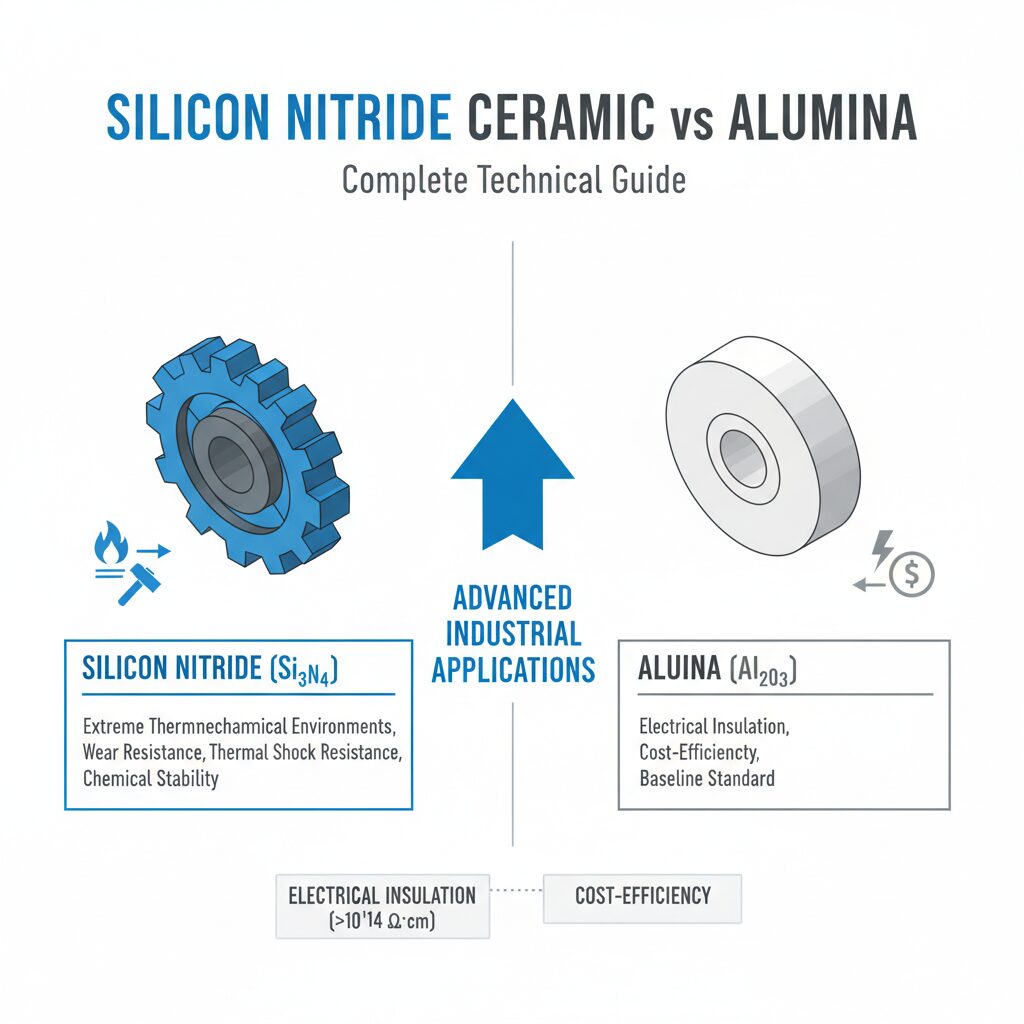
To understand why zirconia ceramic rings are preferred for specific electronic applications, it is essential to compare them with high-purity alumina (Al2O3), another common ceramic in the industry.
| Imóveis | Y-TZP (Zirconia) | 99,5% Alumina | Unidade |
|---|---|---|---|
| Densidade | 6.05 | 3.95 | g/cm³ |
| Dureza (Vickers) | 1200 – 1300 | 1500 – 1650 | HV |
| Resistência à fratura | 8 – 10 | 3.5 – 4.5 | MPa-m½ |
| Resistência à flexão | 900 – 1200 | 350 - 450 | MPa |
| Condutividade térmica | 2.2 | 30 | W/m-K |
| Rigidez dielétrica | 10 – 15 | 15 - 20 | kV/mm |
| Coeficiente de expansão térmica | 10.5 | 8.1 | 10-⁶/°C |
The table highlights two critical factors: Zirconia has significantly higher fracture toughness and a thermal expansion coefficient that more closely matches stainless steel. This makes the zirconia ceramic ring an ideal choice for ceramic-to-metal assemblies used in electronic housings and connectors.
Applications of Zirconia Ceramic Rings in the Electronics Industry
The versatility of zirconia allows it to serve in various capacities across the electronics value chain, from semiconductor fabrication equipment to high-end consumer devices.
1. Semiconductor Processing Equipment
In the manufacture of silicon wafers, the environment is often chemically aggressive and high-temperature. Zirconia ceramic rings are used as wafer guides, spacers. And plasma etch rings. Their chemical inertness ensures that they do not contaminate the ultra-pure semiconductor environment, while their wear resistance ensures a long service life even when exposed to abrasive slurries or high-energy plasma.
2. High-Frequency Insulators
Electronic circuits operating at high frequencies require insulators that minimize signal loss. Zirconia rings provide excellent dielectric properties, ensuring that high-voltage or high-frequency signals are contained within the intended paths. Their high mechanical strength allows for thinner ring walls. This is essential for the miniaturization of modern electronic components.
3. Sensor Housings and Protection
In industrial electronics, sensors often operate in harsh environments. A zirconia ceramic ring can serve as a protective housing or a structural reinforcement for pressure and temperature sensors. Its non-magnetic nature ensures that it does not interfere with electromagnetic sensors or Hall effect devices.
4. Consumer Electronics and Wearables
In recent years, zirconia has entered the consumer market, particularly in smartwatches and high-end smartphones. Zirconia rings are used for camera lens surrounds, buttons. And decorative structural elements. Beyond its aesthetics (it can be polished to a mirror finish), its scratch resistance is superior to most metals, keeping devices looking new for longer.
Precision CNC Machining of Zirconia Ceramic Rings
Manufacturing a zirconia ceramic ring for electronics is a complex multi-stage process. Because zirconia is extremely hard and brittle, traditional machining techniques used for metals are insufficient. Great Ceramic utilizes advanced CNC (Computer Numerical Control) machining specifically tailored for technical ceramics.
The Machining Process Flow
- Maquinação verde: Before the zirconia is fired (sintered), it is in a “green” or “bisque” state. In this state, the material is soft enough to be machined using carbide tools. We perform bulk material removal here, but we must account for a 20-30% shrinkage factor that occurs during sintering.
- Sintering: The green part is heated in a high-temperature kiln (up to 1500°C). This densifies the material, giving the zirconia ceramic ring its final hardness and strength.
- Hard Machining (Diamond Grinding): After sintering, the material can only be machined using diamond-tipped tools. This is where Great Ceramic achieves the final precision. We use CNC grinding machines to reach tolerances as tight as +/- 0.001mm.
- Lapidação e polimento: For electronics applications requiring specific surface finishes (Ra < 0.1μm), we employ diamond lapping and polishing techniques.
Technical Challenges and Solutions
Machining zirconia rings presents unique challenges, particularly regarding edge chipping and thermal shock. If the machining speed is too high, the heat generated can cause localized thermal expansion, leading to micro-cracks. Great Ceramic uses high-precision spindles and specialized cooling systems to mitigate these risks. Our CNC programmers optimize tool paths to minimize mechanical stress on the ring’s geometry, especially for thin-walled rings common in electronic connectors.
Considerações de conceção para engenheiros
When specifying a zirconia ceramic ring for an electronic project, several design principles should be followed to ensure manufacturability and cost-effectiveness:
1. Wall Thickness
While zirconia is strong, extremely thin walls (under 0.5mm) can be fragile during the machining and handling process. For most electronic insulators, a wall thickness of 1.0mm to 3.0mm is ideal for balancing strength and space constraints.
2. Radii and Fillets
Sharp internal corners are stress concentrators. Whenever possible, designers should include a radius or fillet. This not only increases the strength of the ring but also makes it easier to machine with standard diamond grinding bits.
3. Surface Finish Requirements
While a mirror finish looks impressive, it adds significant cost. Engineers should specify high-polish finishes only for functional surfaces (e.g., where a seal is formed) and use standard ground finishes for non-critical surfaces.
4. Tolerances
Zirconia components can be held to very tight tolerances, but this requires extended CNC time. Evaluate whether a standard tolerance of +/- 0.01mm is sufficient before requesting +/- 0.002mm.
Quality Assurance in Ceramic Machining
At Great Ceramic, quality control is integrated into every step of the zirconia ceramic ring production. We utilize coordinate measuring machines (CMM) and optical comparators to verify dimensions. For electronic components, we also perform insulation resistance testing and dielectric strength verification upon request. This ensures that every ring delivered meets the electrical and mechanical specifications required for high-reliability electronics.
Advanced Zirconia Variations for Electronics
While standard Y-TZP is the most common, other variations of zirconia are used in niche electronic applications:
- Black Zirconia: Used extensively in consumer electronics for its aesthetic appeal and high-contrast appearance. It retains all the mechanical properties of white zirconia.
- Ceria-Stabilized Zirconia (Ce-TZP): Offers even higher toughness and resistance to hydrothermal degradation, useful for electronics used in humid or underwater environments.
- Conductive Zirconia: While usually an insulator, certain dopants can make zirconia semi-conductive. This is useful for ESD (Electrostatic Discharge) sensitive environments where controlled dissipation is needed.
Perguntas frequentes (FAQ)
What is the lead time for custom zirconia ceramic rings?
Typically, custom maquinagem de cerâmica takes 3 to 6 weeks. This includes the time for green machining, sintering (which can take several days). And final precision diamond grinding.
Can zirconia ceramic rings be brazed to metal parts?
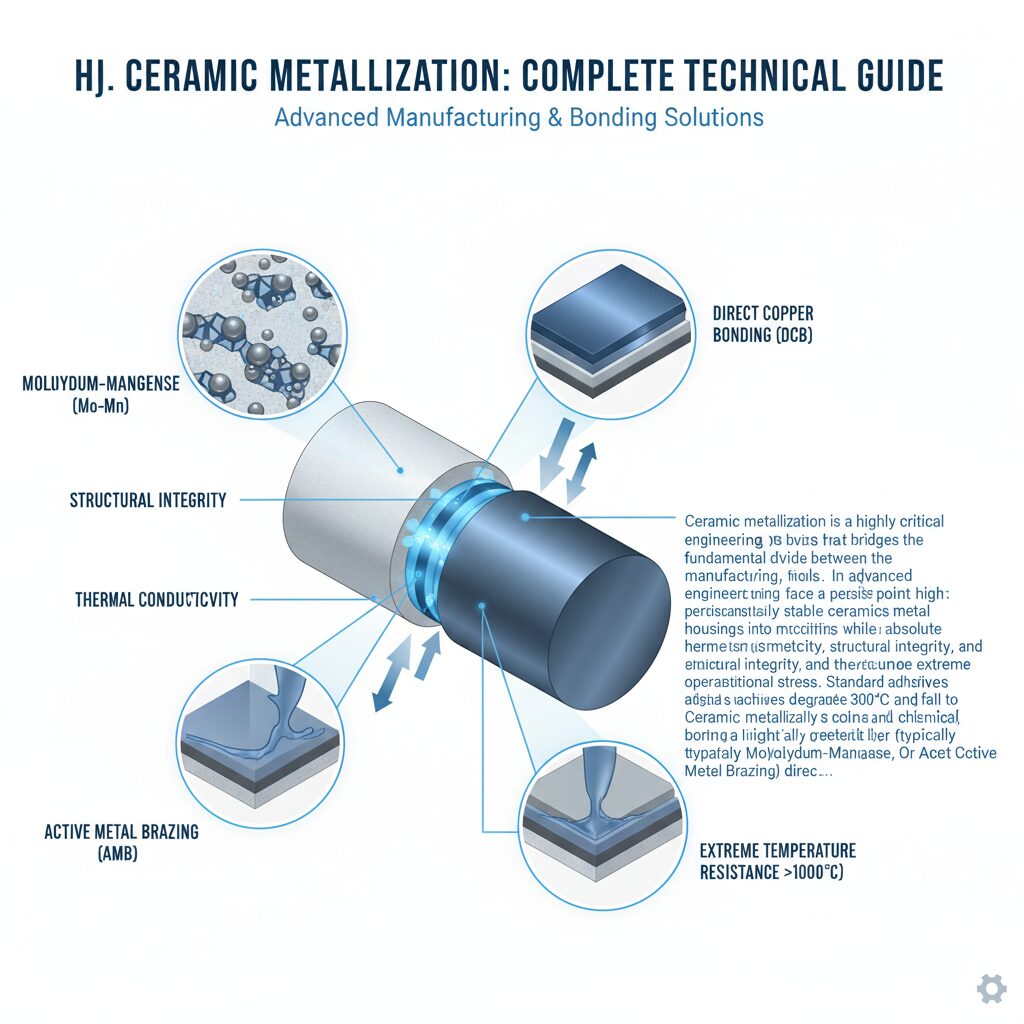
Yes. Zirconia can be metallized (usually with a thin layer of molybdenum-manganese or gold/nickel) and then brazed to metal components like Kovar or stainless steel. Its thermal expansion coefficient makes it particularly suitable for these hermetic seals.
Is zirconia more expensive than alumina?
Yes, zirconia raw material is generally more expensive than alumina. And it is more difficult to machine. However, its superior toughness often leads to lower total cost of ownership due to reduced breakage and longer component life.
What are the maximum and minimum sizes available?
Great Ceramic can produce zirconia rings as small as 1mm in diameter for micro-electronics and up to 300mm for industrial semiconductor processing equipment.
Does zirconia interfere with RF signals?
No, zirconia is a non-conductive, non-magnetic ceramic. It is transparent to RF signals. This is why it is often used for antenna covers and RF insulators in wireless communication devices.
Porquê escolher o Great Ceramic?
Great Ceramic is a leader in the technical ceramic industry, providing end-to-end solutions from material selection to final precision machining. We understand the unique requirements of the electronics sector, including the need for high purity, tight tolerances. And consistent material performance. Our state-of-the-art CNC facility is equipped to handle both prototyping and high-volume production of zirconia ceramic rings.
Whether you are developing a new semiconductor processing tool or designing the next generation of wearable electronics, our team of engineers is ready to assist you in optimizing your ceramic components for performance and manufacturability.
Contacte a Great Ceramic para obter soluções personalizadas de maquinagem de cerâmica, adaptadas à sua aplicação.
zirconia ceramic ring for electronics is widely used in advanced ceramic applications.
Saiba mais sobre Anel de cerâmica de zircónio para eletrónica e os nossos serviços de maquinagem de precisão em cerâmica.