








Dielectric Constant of Advanced Ceramics
O constante dieléctrica, also known as relative permittivity (εr), is a measure of how well a material can store electrical energy in an electric field. It represents the ratio of a material’s permittivity to the permittivity of vacuum (ε₀). A higher dielectric constant implies greater capacity to store charge, which is critical in capacitors, insulators, and high-frequency electronic components.
Advanced ceramic materials are widely used in high frequency, high power, microwave, radar and packaging fields due to their different dielectric properties. When selecting, companies should evaluate the optimal material combination based on comprehensive factors such as operating frequency, thermal management, mechanical structure and dimensional accuracy.
Ir para
Importance of Dielectric Constant in Ceramics
Ceramic materials are widely used in electronics and electrical insulation due to their:
The dielectric constant plays a pivotal role in RF components, substrates, capacitors, antennas, e semiconductor packaging. Selecting the correct ceramic material with a suitable dielectric constant ensures optimal performance, especially in high-frequency and high-temperature environments.
Factors Affecting the Dielectric Constant of Ceramics
Dielectric Loss & Frequency Stability
While εr determines charge storage ability, dielectric loss (tan δ) measures energy dissipation. Materials like PTFE or h-BN have very low tan δ, making them suitable for high-frequency RF designs.
Another factor is frequency dependence. Some ceramics like zirconia have higher dielectric constants but exhibit greater loss and instability at GHz ranges, whereas AlN and Si₃N₄ remain more stable.
Dielectric Constants of Common Ceramic Materials
| Material cerâmico | Constante dieléctrica (εr) | Caraterísticas |
|---|---|---|
| Alumina (Al₂O₃) | 9-10 | Low loss, stable structure, cost-effective |
| Zircónio (ZrO₂) | 18–25 | High strength, high thermal expansion |
| ZTA20 (Zirconia Toughened Alumina) | 12-15 | Combines strength and dielectric properties |
| Nitreto de silício (Si₃N₄) | 7–8 | High strength, low dielectric loss |
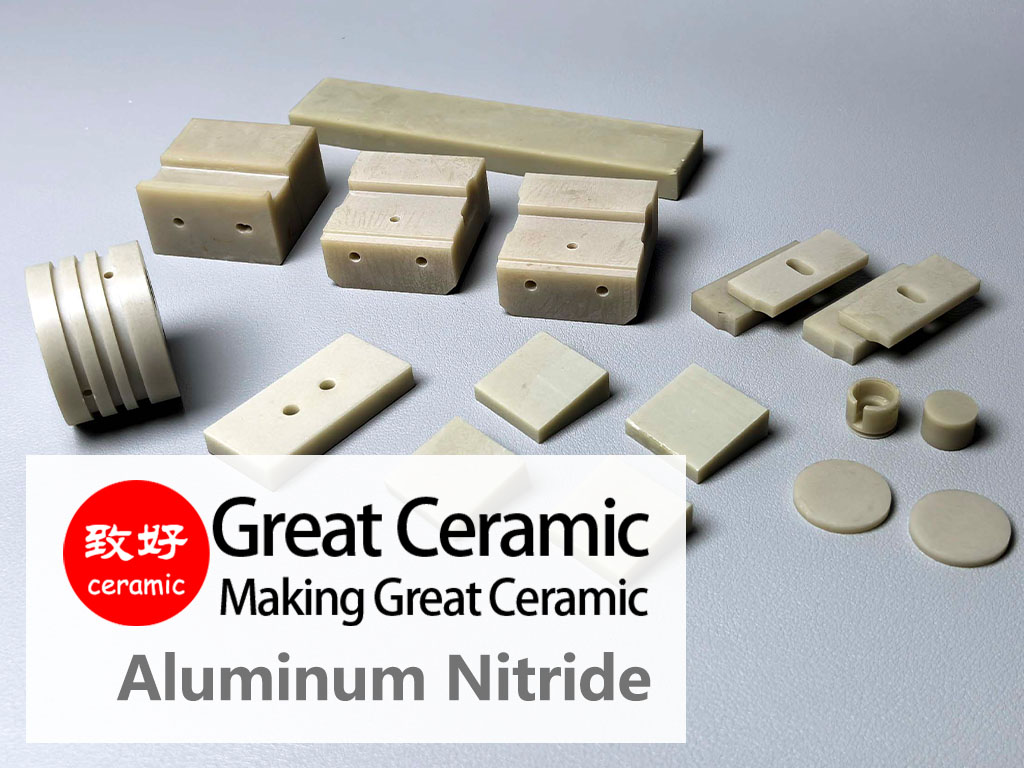
| Nitreto de alumínio (AlN) | 8.5–9 | High thermal conductivity, low dielectric loss |
| Carbureto de silício (SiC) | 9.7–10.2 | Excellent high-frequency stability |
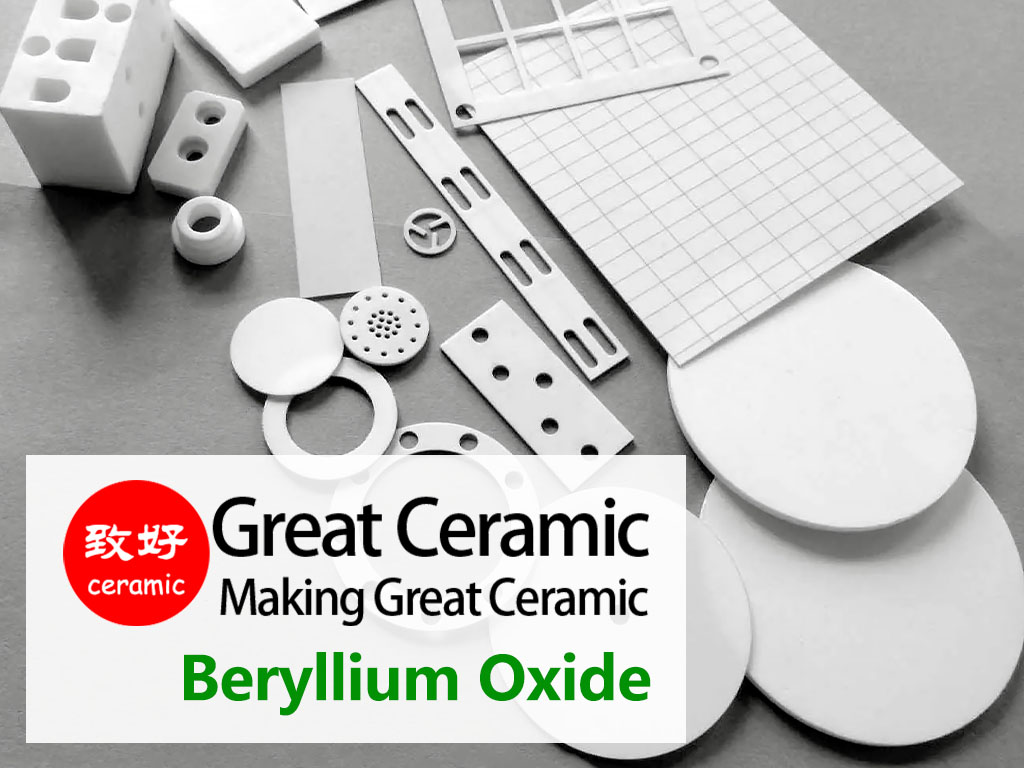
| Óxido de berílio (BeO) | 6.5-7.5 | High thermal conductivity, low εr |
| Nitreto de Boro Hexagonal (h-BN) | ~4 | Very low εr, excellent thermal stability |
| MGC (Cerâmica de vidro maquinável) | 5.6 | CNC machinable, ideal for microwave structures |
*Os dados são apenas para referência.
Material Selection Guide: Choosing Ceramics Based on Dielectric Constant
| Application Direction | Recommended Materials | Reason |
|---|---|---|
| High-frequency/Low-loss | AlN, BeO, h-BN | Low εr + low loss + high thermal conductivity |
| Power Packaging/Cooling | AlN, Al₂O₃ | Moderate εr + excellent heat dissipation |
| Radar Dome/Antenna Cover | MGC, BeO | Good machinability + low εr |
| High-frequency Capacitors | ZrO₂, ZTA | High εr + good mechanical strength |
| Microwave Structures | MGC | Easy to machine + stable dielectric performance |
Precisa de ajuda para escolher a cerâmica certa?
Understanding the dielectric properties of advanced ceramics is critical to selecting the right materials for use in electrical and electronic applications. Whether it’s RF components, power electronics, or thermal management systems, our materials deliver industry-leading performance, durability, and precision.
For custom ceramic processing and component design, Great Ceramic offers precision manufacturing solutions tailored to your material and dielectric performance needs.
Dielectric Constant: Ceramics vs Other Materials
To help you understand the advantages of ceramic dielectric constant in material selection, the following chart compares ceramic materials with common insulator materials, electronic industry materials and polymer plastics:
*Os dados são apenas para referência.