









Silicon Carbide Ceramic vs Silicon Nitride: Complete Technical Guide
When engineering components for extreme thermo-mechanical environments, the decision between carboneto de silício ceramic vs nitreto de silício represents one of the most critical material selection challenges. Both advanced ceramics offer exceptional covalent bonding structures, resulting in high mechanical strength, excellent wear resistance. And the ability to operate in environments exceeding 1,000°C. However, their distinct microstructural properties—specifically regarding thermal conductivity, fracture toughness. And oxidation resistance—dictate vastly different performance outcomes in real-world applications. A miscalculation in material selection can lead to catastrophic brittle failure, excessive thermal degradation, or unnecessary procurement costs. This comprehensive technical guide provides a data-driven comparison of both materials, engineered to assist R&D teams and procurement managers in optimizing their designs. For components requiring exact specifications, integrating these materials with maquinagem de precisão em cerâmica guarantees that tight tolerances (up to ±0.005mm) are consistently achieved without compromising structural integrity.
Propriedades do material
The fundamental performance differences between silicon carbide (SiC) and silicon nitride (Si3N4) stem from their atomic structures and primary consolidation mechanisms. Silicon carbide relies on highly rigid, tetrahedrally coordinated Si-C bonds, granting it extreme hardness and exceptionally high thermal conductivity via phonon transport. Conversely, silicon nitride develops an interlocking microstructure of elongated beta-phase (β-Si3N4) grains during liquid-phase sintering. This specific acicular grain morphology facilitates crack deflection, crack bridging. And grain pull-out, giving silicon nitride its legendary fracture toughness. Below is a comparative breakdown of their baseline engineering properties.
| Imóveis | Value (SiC / Si3N4) | Unidade |
|---|---|---|
| Densidade | 3.15 / 3.20 – 3.30 | g/cm³ |
| Dureza | 2,500 – 2,800 / 1,500 – 1,800 | HV |
| Resistência à flexão | 400 – 450 / 800 – 1,000 | MPa |
| Resistência à fratura | 4.0 – 4.5 / 6.0 – 8.0 | MPa-m½ |
| Condutividade térmica | 120 – 150 / 20 – 30 | W/m-K |
| Resistividade eléctrica | 10² – 10⁶ / >10¹⁴ | Ω-cm |
| Temperatura máxima de funcionamento | 1,600 / 1,200 | °C |
Analyzing these parameters reveals the functional divergence between the two technical ceramics. With a Vickers hardness ranging from 2,500 to 2,800 HV, carboneto de silício is significantly harder than silicon nitride, making it the superior choice for high-friction tribological applications such as mechanical seal faces. However, this extreme hardness comes at the cost of brittleness, indicated by a relatively low fracture toughness of 4.0 to 4.5 MPa·m½. In stark contrast, nitreto de silício boasts a flexural strength that can reach or exceed 1,000 MPa, coupled with a fracture toughness of up to 8.0 MPa·m½. This makes it highly resilient against impact forces and mechanical shock.
Thermally, silicon carbide excels with a conductivity of up to 150 W/m·K, effectively dissipating heat in high-power semiconductor applications. While silicon nitride has a lower thermal conductivity (typically 20-30 W/m·K), its extraordinarily low coefficient of thermal expansion (CTE) of 3.2 x 10⁻⁶ /°C combined with high mechanical strength provides it with an unsurpassed thermal shock resistance among advanced structural ceramics. Understanding these quantified differences is the first step in aligning material properties with rigorous operational demands.
Comparação com outras cerâmicas
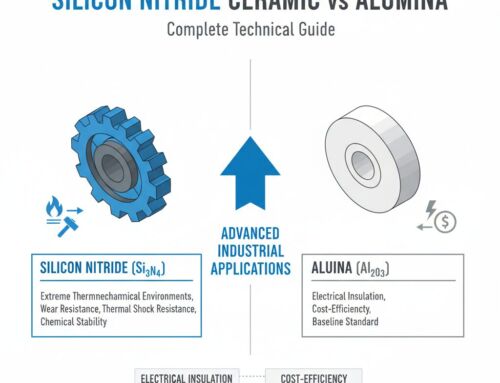
To fully contextualize the performance of silicon carbide and silicon nitride, it is necessary to compare them against other industry-standard technical ceramics. While oxide ceramics like alumina/”>alumina and zircónia are ubiquitous due to their ease of manufacture and ambient-temperature performance, non-oxide ceramics (carbides and nitrides) dominate in extreme engineering environments.
| Imóveis | Carbureto de silício | Alumina (99,5%) | Zircónio (Y-TZP) | Nitreto de silício |
|---|---|---|---|---|
| Condutividade térmica (W/m-K) | 150 | 30 | 2.5 | 30 |
| Dureza (HV) | 2,800 | 1,500 | 1,200 | 1,600 |
| Resistência à fratura (MPa-m½) | 4.5 | 4.0 | 10.0 | 7.5 |
| Cost / Machinability Difficulty | Elevado | Baixa | Médio | Highest |
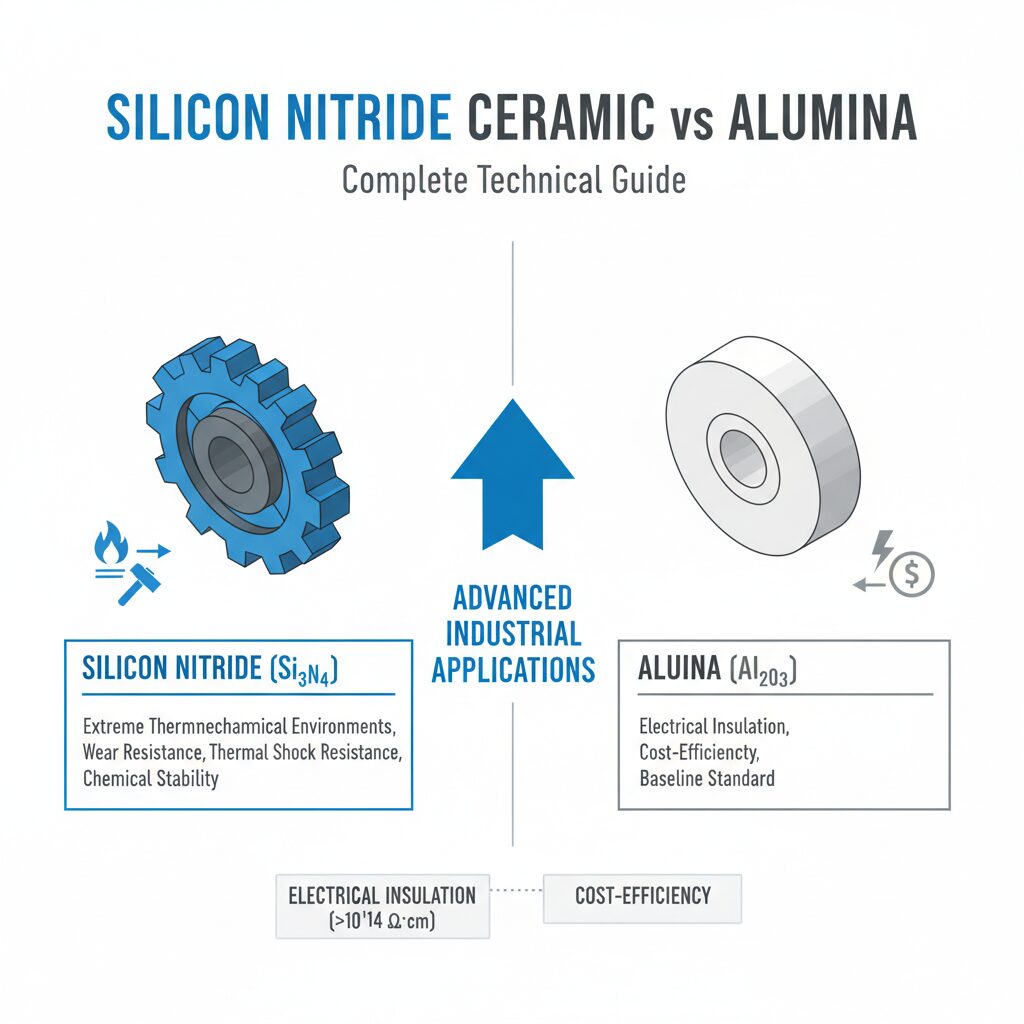
When evaluated against oxide ceramics, the superiority of the non-oxides becomes apparent under stress. Alumina is the standard workhorse for general electrical insulation and moderate wear components, but its mechanical strength sharply degrades above 1,000°C. And its thermal shock resistance is notoriously poor. Zirconia offers the highest fracture toughness (up to 10.0 MPa·m½) due to its phase-transformation toughening mechanism. however, this mechanism begins to reverse at temperatures exceeding 500°C, rendering zirconia highly unsuitable for high-temperature structural applications. Zirconia is also a profound thermal insulator (2.5 W/m·K). This traps heat and can lead to localized thermal degradation in high-speed mechanical applications.
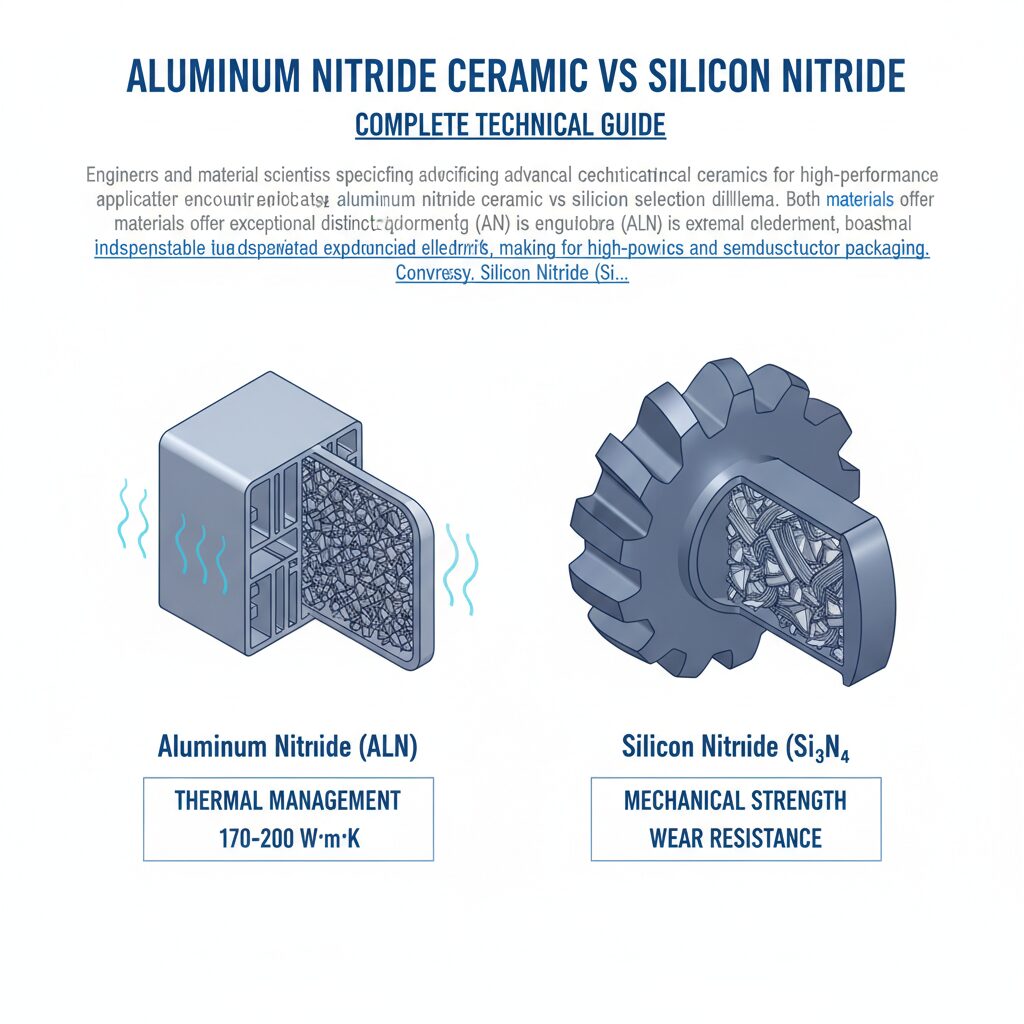
In thermal management applications, engineers often weigh silicon carbide against nitreto de alumínio. While aluminum nitride offers superior thermal conductivity (170-230 W/m·K) and excellent dielectric strength, it lacks the mechanical rigidity, hardness. And chemical inertness of silicon carbide. Conversely, if machinability is the absolute highest priority and mechanical loads are negligible, a soft ceramic like nitreto de boro might be considered. However, for applications demanding a combination of structural integrity, wear resistance. And high-temperature survivability, the selection invariably narrows down to the robust mechanical frameworks provided by silicon carbide and silicon nitride.
Aplicações
The divergent microstructural characteristics of silicon carbide and silicon nitride dictate their integration into vastly different industrial sectors. Below is a detailed technical breakdown of primary applications for these advanced ceramics.
- Semiconductor Wafer Processing Equipment: Silicon carbide is the material of choice for wafer chucks, susceptors. And dummy wafers in Rapid Thermal Processing (RTP) and Chemical Vapor Deposition (CVD) equipment. The material’s high thermal conductivity (150 W/m·K) ensures uniform heat distribution across the 300mm wafer surface, preventing thermal gradients that cause wafer warpage. Additionally, SiC’s ultra-high purity prevents heavy metal contamination during high-vacuum operations at 1,200°C.
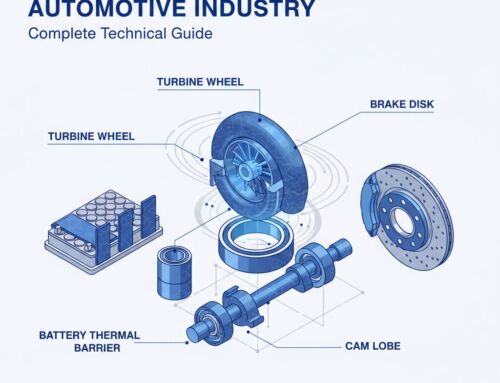
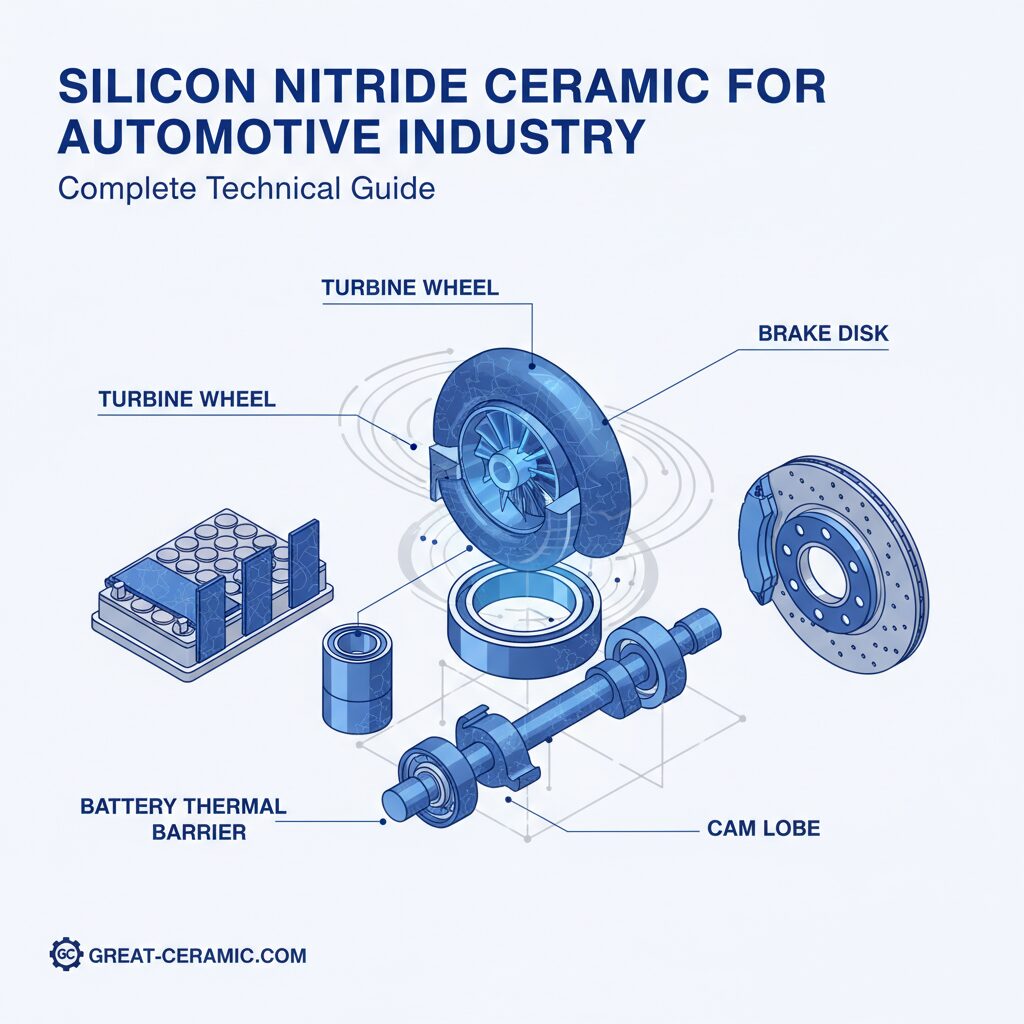
- Automotive Turbocharger Rotors and Engine Valves: Silicon nitride dominates this sector due to its unparalleled low mass-to-strength ratio and high fracture toughness (7.5 MPa·m½). A Si3N4 turbocharger rotor is approximately 60% lighter than its metal counterpart (Inconel). This drastically reduces rotational inertia, virtually eliminating “turbo lag.” Furthermore, the interlocking needle-like grains of silicon nitride prevent catastrophic failure when subjected to the extreme centrifugal forces of operating at speeds exceeding 150,000 RPM at 900°C exhaust gas temperatures.
- High-Performance Mechanical Seal Faces: In centrifugal pumps handling highly corrosive or abrasive chemical slurries, silicon carbide is specifically selected for dynamic mechanical seals. Operating under boundary lubrication conditions, SiC’s exceptional hardness (2,800 HV) resists particulate abrasion, while its superior thermal conductivity draws frictional heat away from the seal interface, preventing localized thermal cracking (heat checking) that would otherwise destroy standard oxide ceramics.
- Molten Non-Ferrous Metal Handling: Silicon nitride is extensively utilized for thermocouple protection tubes, heater tubes. And stalk tubes in aluminum die-casting foundries. Unlike metallic components or silicon carbide, silicon nitride is highly resistant to chemical attack and exhibits non-wetting properties against molten aluminum. It can endure aggressive thermal cycling—from ambient air temperature to a 750°C molten bath—thousands of times without suffering thermal shock degradation, owing to its extremely low CTE and high tensile strength.
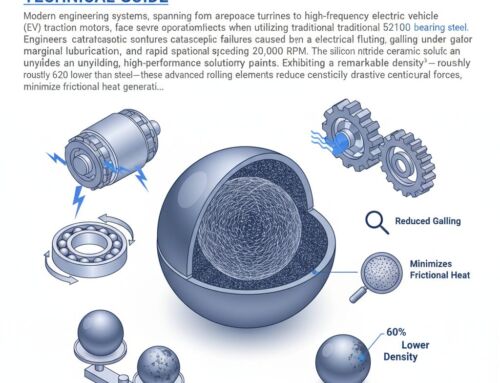
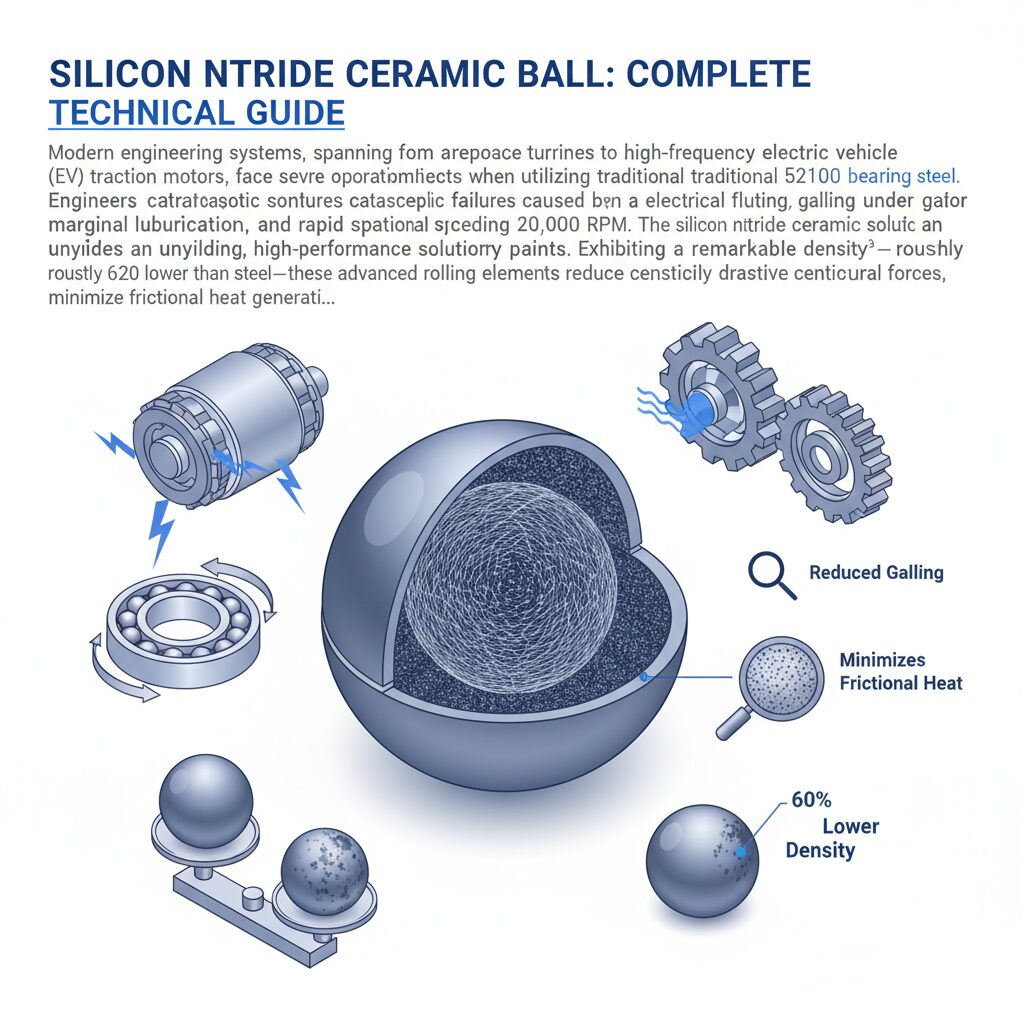
- Ultra-Precision Bearings and Roller Elements: Hybrid ceramic bearings (steel races with ceramic balls) heavily utilize silicon nitride. The density of Si3N4 (3.2 g/cm³) is less than half that of bearing steel, reducing centrifugal forces on the outer race at high spindle speeds (up to 40,000 RPM) by 40%. The material’s fracture toughness prevents spalling. And its non-magnetic, electrically insulating nature prevents electrical arcing erosion (fluting) in electric motor bearing applications.
Processo de fabrico
The synthesis, consolidation. And densification of both silicon carbide and silicon nitride require sophisticated, energy-intensive metallurgical processes. Because both materials possess strong covalent bonds and low self-diffusion coefficients, they cannot be densified using conventional solid-state sintering without the aid of extreme temperatures and carefully selected sintering additives (such as yttria, alumina, or boron).
Métodos de moldagem
- Prensagem isostática a frio (CIP): Used for creating complex, near-net-shape billets. The sub-micron ceramic powder is loaded into a flexible elastomeric mold and subjected to uniform hydrostatic fluid pressure (typically between 200 MPa and 300 MPa). This ensures isotropic green density, minimizing differential shrinkage during the sintering phase.
- Dry Pressing and Slip Casting: Uniaxial dry pressing (at 50-100 MPa) is utilized for high-volume, flat geometries like seal rings or armor tiles. Slip casting involves suspending the ceramic powder in an aqueous slurry and pouring it into porous plaster molds. This draw out the liquid via capillary action. This is the preferred method for forming thin-walled tubes and complex hollow geometries.
Sinterização
The sintering profile fundamentally differentiates the material grades. For silicon carbide, Sintered Silicon Carbide (SSiC) is achieved via solid-state sintering at roughly 2,100°C in an argon atmosphere, utilizing boron and carbon as densification aids. This yields a monolithic microstructure with near-zero porosity. Alternatively, Reaction Bonded Silicon Carbide (RBSC) involves infiltrating a porous carbon/SiC preform with liquid silicon at 1,500°C, resulting in extremely low shrinkage (<1%) but leaving residual free silicon.
For silicon nitride, Gas Pressure Sintering (GPS) is the industry standard. The material is heated to 1,800°C – 1,900°C in a nitrogen atmosphere pressurized to 10 MPa (100 bar). The high nitrogen overpressure prevents the thermodynamic decomposition of Si3N4 into silicon and nitrogen gas at elevated temperatures. During this phase, additives like Y2O3 and Al2O3 form a liquid silicate phase that promotes the dissolution of alpha-Si3N4 and the subsequent precipitation of the tough, interlocking beta-Si3N4 grains.
Maquinação final
Upon cooling, both ceramics achieve their full mechanical hardness, making conventional machining methods impossible. Final dimensions, geometric tolerances. And surface finishes must be achieved via subtractive precision diamond grinding. This involves multi-axis CNC machines equipped with resin-bonded and metal-bonded diamond abrasive wheels. Achieving tight tolerances (±0.005mm) requires precise control over wheel speeds, feed rates. And depth of cut to prevent sub-surface micro-cracking.
Vantagens e limitações
Vantagens
- Superior Thermal Properties (SiC): Silicon carbide offers an incredible thermal conductivity of 150 W/m·K and retains its structural integrity at sustained oxidation temperatures up to 1,600°C, making it indispensable for high-temperature furnace furniture.
- Unmatched Fracture Toughness (Si3N4): With toughness values peaking at 8.0 MPa·m½, silicon nitride can absorb significant mechanical shock and impact, eliminating the catastrophic brittle failure associated with traditional ceramics.
- Extreme Tribological Wear Resistance: The 2,800 HV hardness of SiC ensures virtually zero wear in abrasive environments, drastically extending the Mean Time Between Failures (MTBF) for mechanical seals and pump components.
- Exceptional Thermal Shock Resistance (Si3N4): The mathematical combination of high tensile strength, high thermal conductivity. And a very low coefficient of thermal expansion allows silicon nitride to survive rapid temperature drops (ΔT > 600°C) without initiating thermal stress cracks.
Limitações
- Inherent Brittleness of SiC: Despite its hardness, silicon carbide’s low fracture toughness means it is highly susceptible to impact damage. Dropping a SiC component or subjecting it to severe point-loading will cause rapid crack propagation and failure.
- Manufacturing Costs and Machining Difficulty: Both materials, but particularly silicon nitride, are exceptionally expensive to produce. The high cost of raw sub-micron powders, the requirement for high-pressure/high-temperature furnace time. And the extreme diamond tool wear during the final machining phase result in components that represent a significant capital investment.
Considerações sobre maquinagem
The physical properties that make silicon carbide and silicon nitride so desirable to engineers—extreme hardness and chemical inertness—also make them notoriously difficult to machine. Conventional cutting tools, including tungsten carbide and high-speed steel, will instantly degrade upon contact with these materials. Precision ceramic machining is restricted exclusively to diamond abrasive grinding, honing, lapping. And ultrasonic machining.
| Parâmetro de maquinagem | Standard Value / Requirement | Impact on Component |
|---|---|---|
| Abrasive Material | Synthetic Diamond (D15 – D126 grit) | Required to penetrate 1500+ HV surface |
| Velocidade do fuso | 20,000 – 40,000 RPM | Ensures optimal surface speed (m/s) for material removal |
| Depth of Cut (Finishing) | 0.002 mm – 0.005 mm per pass | Prevents subsurface micro-cracking and chipping |
| Pressão do líquido de arrefecimento | > 50 Bar, heavily directed | Clears abrasive swarf, prevents severe thermal shock to the tool |
When machining silicon carbide, the primary challenge is mitigating edge chipping and sub-surface damage. Because of its low fracture toughness, aggressive feed rates will induce micro-cracks that propagate below the surface, drastically reducing the component’s flexural strength. To achieve a surface finish of Ra 0.1 µm and geometric tolerances of ±0.005mm, machinists must utilize multi-stage grinding operations, stepping down from coarse metal-bonded diamond wheels to ultra-fine resin-bonded wheels with infinitesimally small stepovers.
Silicon nitride presents a different machining challenge. While its higher fracture toughness makes it less prone to edge chipping, it induces significantly higher tool wear. The toughness requires higher cutting forces. This generates immense frictional heat at the cutting zone. High-pressure, through-spindle coolant systems are mandatory to flush ceramic swarf and maintain thermal equilibrium. Great Ceramic leverages advanced 5-axis CNC grinding centers, specialized diamond tooling kinematics. And proprietary workholding solutions to reliably deliver defect-free, tightly toleranced components in both materials.
FAQ
What is silicon carbide ceramic vs silicon nitride?
Silicon carbide (SiC) and silicon nitride (Si3N4) are advanced, non-oxide structural ceramics renowned for their high-temperature stability and mechanical strength. The primary difference lies in their atomic bonds and microstructures. Silicon carbide features rigid covalent bonding, resulting in extreme hardness (2,800 HV) and high thermal conductivity (150 W/m·K). Silicon nitride features an interlocking needle-like grain structure. This yields exceptional fracture toughness (up to 8.0 MPa·m½) and superior thermal shock resistance. While SiC is preferred for heat dissipation and wear resistance, Si3N4 is chosen for structural durability and impact resistance under extreme thermal stress.
What are the main applications of silicon carbide vs silicon nitride?
Silicon carbide is predominantly used in applications requiring extreme wear resistance and thermal management, such as mechanical seal faces in chemical pumps, semiconductor wafer chucks, extreme high-temperature furnace furniture (up to 1,600°C). And armor ballistics. Silicon nitride is utilized where mechanical reliability and thermal shock resistance are paramount, including automotive turbocharger rotors, high-speed hybrid bearing balls, molten aluminum handling equipment (such as thermocouple protection tubes). And cutting tool inserts for machining cast iron.
Como é que o carboneto de silício se compara a outras cerâmicas?
Compared to standard oxide ceramics like alumina and zirconia, silicon carbide offers vastly superior high-temperature mechanical retention, thermal conductivity. And hardness. While alumina loses significant strength above 1,000°C, silicon carbide maintains its structural integrity up to 1,600°C. Against zirconia. This has high ambient-temperature toughness but acts as a thermal insulator, silicon carbide acts as an excellent thermal conductor. However, silicon carbide is significantly more brittle than zirconia and silicon nitride, requiring careful design considerations to avoid point-loading and impact.
What are the advantages of silicon carbide and silicon nitride?
The core advantage of silicon carbide is its unparalleled combination of high thermal conductivity, low thermal expansion. And extreme hardness, making it highly resistant to abrasive wear and thermal deformation. It is also chemically inert to almost all acids and alkalis. The main advantage of silicon nitride is its high fracture toughness and flexural strength. Its unique interlocking microstructure allows it to absorb mechanical shocks that would shatter other ceramics. And its low thermal expansion coefficient gives it the best thermal shock resistance of any structural ceramic.
How is silicon carbide and silicon nitride machined?
Because both materials possess hardness levels far exceeding traditional metals, they cannot be machined using standard cutting tools. They are shaped in their “green” (unsintered) state using conventional methods, but once sintered to full density, final dimensions must be achieved through precision diamond grinding, honing. And lapping. This requires rigid, high-speed CNC machinery, copious amounts of specialized coolant. And extremely shallow depths of cut (0.002mm – 0.005mm per pass) to prevent sub-surface micro-cracking. Great Ceramic utilizes state-of-the-art 5-axis machining centers to deliver highly complex geometries with tolerances as tight as ±0.005mm.
Need custom silicon carbide or silicon nitride parts? Contactar Great Ceramic para serviços de maquinagem de precisão com tolerâncias apertadas, ou envie um e-mail para [email protected].
silicon carbide ceramic vs silicon nitride is widely used in advanced ceramic applications.
Learn more about Silicon Carbide Ceramic Vs Silicon Nitride and our precision ceramic machining services.