









The Comprehensive Guide to Silicon Carbide Ceramic Rods for Medical Applications
The medical industry demands materials that surpass the performance of traditional metals and polymers. As surgical procedures become more precise and diagnostic equipment more sensitive, the role of advanced ceramics has shifted from the periphery to the core of medical device engineering. Among these materials, the carboneto de silício ceramic rod for medical applications stands out as a premier solution for high-stress, high-purity. And chemically aggressive environments. Silicon Carbide (SiC) offers a unique combination of extreme hardness, thermal stability. And biocompatibility, making it indispensable for modern healthcare technology.
At Great Ceramic, we specialize in the precision machining and supply of high-purity silicon carbide components. This technical guide explores the properties, applications. And manufacturing nuances of SiC rods in the medical sector, providing engineers and procurement specialists with the data needed to make informed material selections.
Understanding Silicon Carbide (SiC) in a Medical Context
Silicon carbide is a synthetic material produced through the electrochemical reaction of silica sand and carbon. In its technical grade form, it is a covalently bonded ceramic. This translates to incredible structural integrity. For medical applications, SiC is typically used in its Sintered (SSiC) or Reaction Bonded (RBSiC) forms, depending on the required purity and mechanical load.
Unlike metals. This may corrode in the presence of bodily fluids or harsh sterilization chemicals, silicon carbide is virtually inert. A silicon carbide ceramic rod for medical use provides a surface that does not leach ions, maintains its dimensional stability under heat. And resists the abrasive wear common in surgical cutting tools and mechanical pumps for fluid delivery.
Technical Properties of Silicon Carbide Ceramic Rods
To understand why SiC is preferred over alumina or zirconia in specific medical contexts, one must look at the quantitative data. Below is a detailed property table for medical-grade Sintered Silicon Carbide (SSiC).
| Imóveis | Unidade | Typical Value (SSiC) |
|---|---|---|
| Densidade | g/cm³ | 3.10 – 3.15 |
| Dureza (Knoop) | kg/mm² | 2500 – 2800 |
| Resistência à flexão (temperatura ambiente) | MPa | 380 – 550 |
| Módulo de elasticidade | GPa | 400 – 430 |
| Condutividade térmica | W/m-K | 120 – 200 |
| Coeficiente de expansão térmica | 10-⁶/°C | 4.0 |
| Maximum Operating Temperature (Inert) | °C | 1600 |
| Coeficiente de Poisson | – | 0.14 – 0.17 |
The high elastic modulus ensures that silicon carbide ceramic rods remain rigid under pressure, a critical factor for precision surgical instruments. Furthermore, the high thermal conductivity allows for rapid heat dissipation. This is vital in high-speed power tools or laser-guided surgical components where heat buildup could damage surrounding biological tissue.
Key Advantages for Medical Engineering
1. Biocompatibility and Chemical Inertness
Silicon carbide is chemically stable across the entire pH scale. In medical environments, components are frequently exposed to saline solutions, acidic cleaning agents. And high-pressure steam. SiC rods do not oxidize or degrade, ensuring that the integrity of the medical device remains uncompromised over thousands of cycles. Its non-toxic nature makes it a candidate for short-term and long-term contact with human tissue.
2. Extreme Wear Resistance
With a hardness second only to diamond and boron carbide, a silicon carbide ceramic rod for medical tools offers unparalleled wear resistance. This is particularly important for orthopedic rasps, drills. And components in blood pumps where friction could lead to material shedding—a catastrophic failure mode in medical implants and fluid handling.
3. MRI Compatibility and Non-Magnetism
Unlike stainless steel or titanium, silicon carbide is non-metallic and non-magnetic. As MRI (Magnetic Resonance Imaging) becomes the standard for intraoperative guidance, surgical tools made from SiC rods do not create artifacts in the imaging field and are not affected by the powerful magnetic fields of the MRI suite.
4. Sterilization Endurance
Medical components must undergo rigorous sterilization, including autoclaving, gamma radiation. And ethylene oxide (EtO) gas. SiC’s low thermal expansion and high thermal shock resistance mean it can withstand rapid temperature shifts without cracking or losing its surface finish.
Primary Medical Industry Applications
Surgical Tooling and Instrumentation
Precision is the hallmark of modern surgery. Silicon carbide ceramic rods are machined into handles, shafts. And cutting tips for minimally invasive surgery (MIS). Their rigidity allows for thinner tool profiles without the risk of bending. This is essential for laparoscopic and endoscopic procedures.
Diagnostic Imaging Equipment
In X-ray and CT scanners, SiC components serve as structural supports and insulation. Because of its low atomic number compared to metals, it offers favorable radiolucency in specific thicknesses, allowing for clearer imaging in certain diagnostic frameworks.
Laboratory and Analytical Instruments
The rods are used in high-performance liquid chromatography (HPLC) pumps and mass spectrometry equipment. The chemical purity of the silicon carbide ceramic rod for medical lab use ensures that no trace elements contaminate the samples being analyzed, maintaining the high sensitivity of the diagnostic tests.
Prosthetics and Bearings
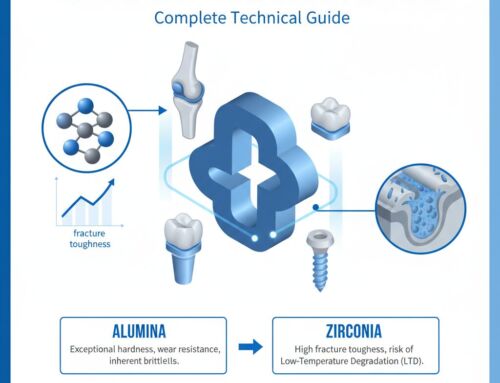
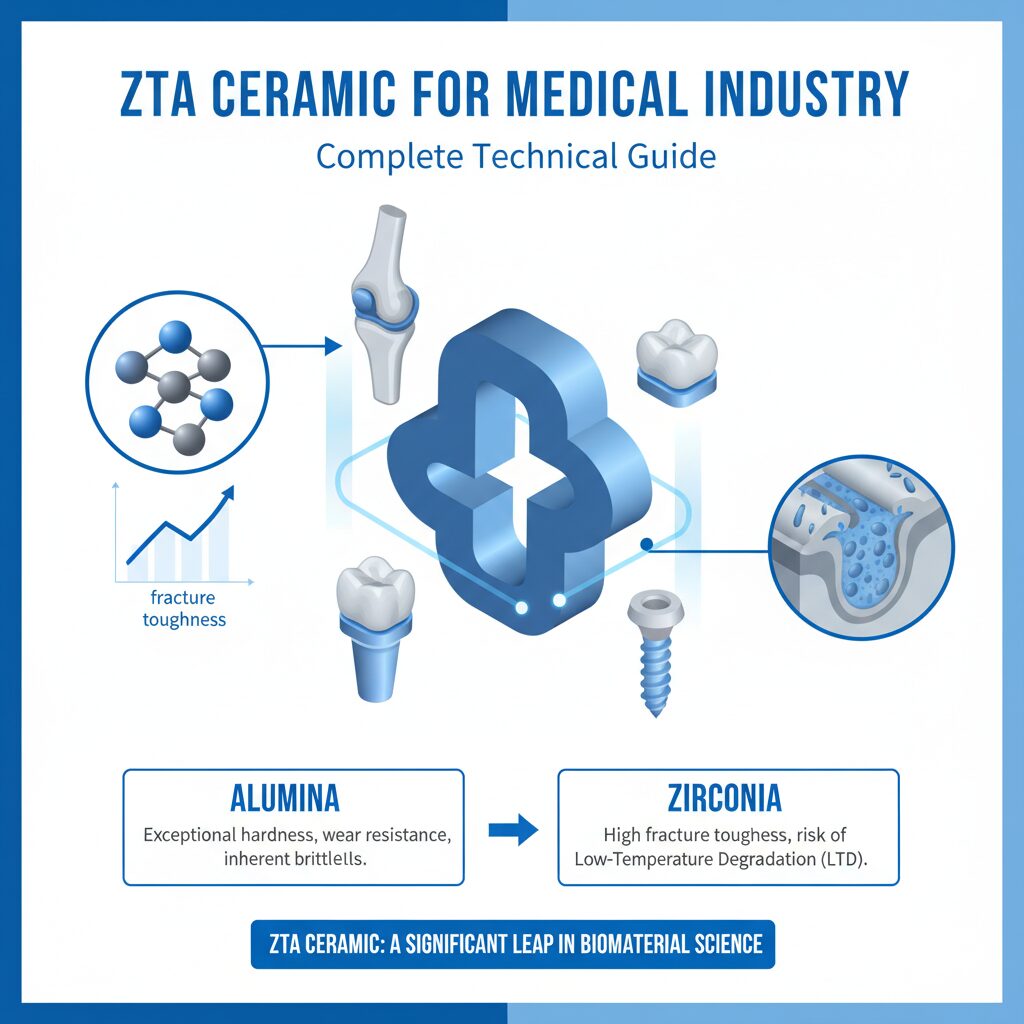
While zirconia-toughened alumina is common in joint replacements, SiC is increasingly researched and applied in specialized bearings for mechanical heart pumps (LVADs). The low friction coefficient and high hardness prevent the generation of wear debris, extending the life of life-sustaining implants.
CNC Machining Specifics for Silicon Carbide Rods
Machining a silicon carbide ceramic rod for medical use is a specialized process. Due to its extreme hardness and brittleness, SiC cannot be machined using conventional metal-turning tools. At Great Ceramic, we utilize advanced CNC technologies to achieve the micron-level tolerances required by the medical sector.
Esmerilagem com diamante
The primary method for shaping SiC rods is CNC diamond grinding. Using high-grade synthetic diamond wheels, we remove material through a controlled abrasion process. This allows for the creation of precise diameters, chamfers. And steps on the ceramic rod.
Ultrasonic Machining (USM)
For complex internal features or delicate holes that diamond grinding cannot reach, ultrasonic machining is employed. This process uses high-frequency vibrations and an abrasive slurry to erode the ceramic, ensuring that no thermal stresses are introduced into the rod. This preserves its structural integrity.
Surface Finishing and Polishing
Medical applications often require a specific surface roughness (Ra) to prevent bacterial adhesion or to reduce friction. We can achieve mirror-like finishes (Ra < 0.1 µm) through multi-stage lapping and polishing. This is critical for rods used in valve components or seals within medical fluid systems.
Tolerâncias e controlo de qualidade
In the medical field, a deviation of a few microns can result in device failure. Our CNC processes are capable of maintaining tolerances as tight as +/- 0.001mm. Every silicon carbide ceramic rod for medical use undergoes rigorous inspection using CMM (Coordinate Measuring Machines) and laser micrometers to ensure compliance with ISO 13485 standards.
Considerações de conceção para engenheiros
When designing a component involving a silicon carbide ceramic rod, engineers should keep the following factors in mind:
- Evite cantos internos agudos: Ceramics are sensitive to stress concentrations. Design parts with generous radii to distribute loads evenly.
- Brittleness: While SiC is incredibly strong in compression, it is brittle. Design for compressive loads and minimize tensile or impact forces.
- Material Selection: Sintered SiC (SSiC) is best for the highest purity and chemical resistance, while Reaction Bonded SiC (RBSiC) may offer better dimensional control for very large or complex shapes before final firing.
- Assembly: Consider using medical-grade adhesives or mechanical interference fits with careful consideration of the different coefficients of thermal expansion (CTE) between the ceramic rod and metal housings.
Comparison: Silicon Carbide vs. Other Technical Ceramics
While Alumina (Al2O3) and Zircónia (ZrO2) are staples in the medical industry, SiC offers distinct advantages in specific scenarios:
- Vs. Alumina: SiC has higher thermal conductivity and better thermal shock resistance. It is also significantly harder, offering better wear performance in abrasive environments.
- Vs. Zircónio: While Zirconia has higher fracture toughness, SiC maintains its properties at much higher temperatures and is more chemically resistant in highly acidic or alkaline cleaning cycles. SiC is also lighter. This is beneficial for handheld surgical instruments.
Perguntas frequentes (FAQ)
Is silicon carbide safe for long-term implants?
Silicon carbide is highly biocompatible and has been used in various FDA-approved devices. However, its use as a load-bearing long-term implant (like a hip stem) is less common than zirconia-toughened alumina due to its lower fracture toughness. It is most commonly used in specialized components of implants, such as bearings in heart pumps.
Can SiC rods be joined to metals?
Yes, silicon carbide ceramic rods can be joined to metals through active metal brazing, shrink-fitting, or using medical-grade epoxy. Because SiC has a much lower CTE than most metals, the joint must be designed to accommodate the differential expansion during sterilization or operation.
What is the maximum length of a silicon carbide ceramic rod for medical use?
The maximum length depends on the diameter and the manufacturing method (extrusion vs. isostatic pressing). Generally, we can produce rods up to 500mm in length, though maintaining extreme straightness over long spans requires specialized precision grinding.
Does SiC interfere with radiofrequency (RF) signals?
SiC is a semiconductor. And its electrical conductivity can be tuned. However, for most medical applications, it does not interfere significantly with RF signals compared to metals, making it useful in electrosurgical environments.
How do I clean and sterilize SiC components?
SiC is compatible with all standard medical sterilization methods. It can be autoclaved, treated with gamma radiation, or cleaned with hydrogen peroxide plasma without any degradation of its physical or chemical properties.
Why Choose Great Ceramic for Your SiC Medical Components?
Great Ceramic understands the zero-tolerance nature of the medical industry. Our production facility is equipped with the latest CNC grinding and machining centers specifically calibrated for technical ceramics. We provide full material traceability and rigorous quality documentation to support your regulatory filings.
Whether you are in the R&D phase of a new surgical tool or require high-volume production of precision ceramic rods for diagnostic equipment, our team of ceramic engineers is ready to assist. We help you navigate the complexities of material selection, design for manufacturability (DFM). And final finishing to ensure your product performs flawlessly in the clinical environment.
The silicon carbide ceramic rod for medical applications represents the pinnacle of material science in healthcare. Its adoption continues to grow as medical device manufacturers seek to push the boundaries of what is possible in surgery, diagnostics. And patient care.
Contactar o Great Ceramic para obter informações personalizadas maquinagem de cerâmica soluções adaptadas à sua aplicação.
silicon carbide ceramic rod for medical is widely used in advanced ceramic applications.
Saiba mais sobre Haste de cerâmica de carboneto de silício para medicina e os nossos serviços de maquinagem de precisão em cerâmica.