









Machinable Glass Ceramic for Chemical Industry: The Complete Engineering Guide
In the highly demanding chemical manufacturing sector, material failure is not an option. Engineers are constantly seeking materials that offer the inertness of glass, the strength and thermal stability of advanced ceramics. And the manufacturing flexibility of metals. Enter vidro cerâmico maquinável for chemical industry applications—a revolutionary material that bridges the gap between high-performance technical ceramics and rapid prototyping.
Em Great Ceramic, we specialize in the precision CNC machining of these advanced materials. In this comprehensive guide, we will explore the microstructure, chemical resistance, applications. And machining parameters of machinable glass ceramics (MGC), such as Macor® and its equivalents, specifically tailored for chemical engineering environments.
What is Machinable Glass Ceramic (MGC)?
From a materials engineering perspective, machinable glass ceramic is a unique composite consisting of a borosilicate glass matrix heavily populated with interlocking, two-dimensional fluorophlogopite mica crystals (approximately 55% fluorophlogopite and 45% borosilicate glass).
It is this highly engineered microstructure that gives MGC its unique properties. When a cutting tool interacts with the material, the cleavage planes of the mica crystals arrest microscopic fracture propagation. Instead of shattering like traditional glass or requiring diamond-grinding like Alumina (Al2O3), the material shears at the microscopic level. This allows it to be milled, turned. And drilled using standard metalworking tools.
Why the Chemical Industry Relies on Machinable Glass Ceramics
The chemical industry presents severe operational challenges, including corrosive agents, high-vacuum environments. And extreme temperature fluctuations. MGC is uniquely positioned to handle these due to three critical factors:
1. Exceptional Chemical Inertness
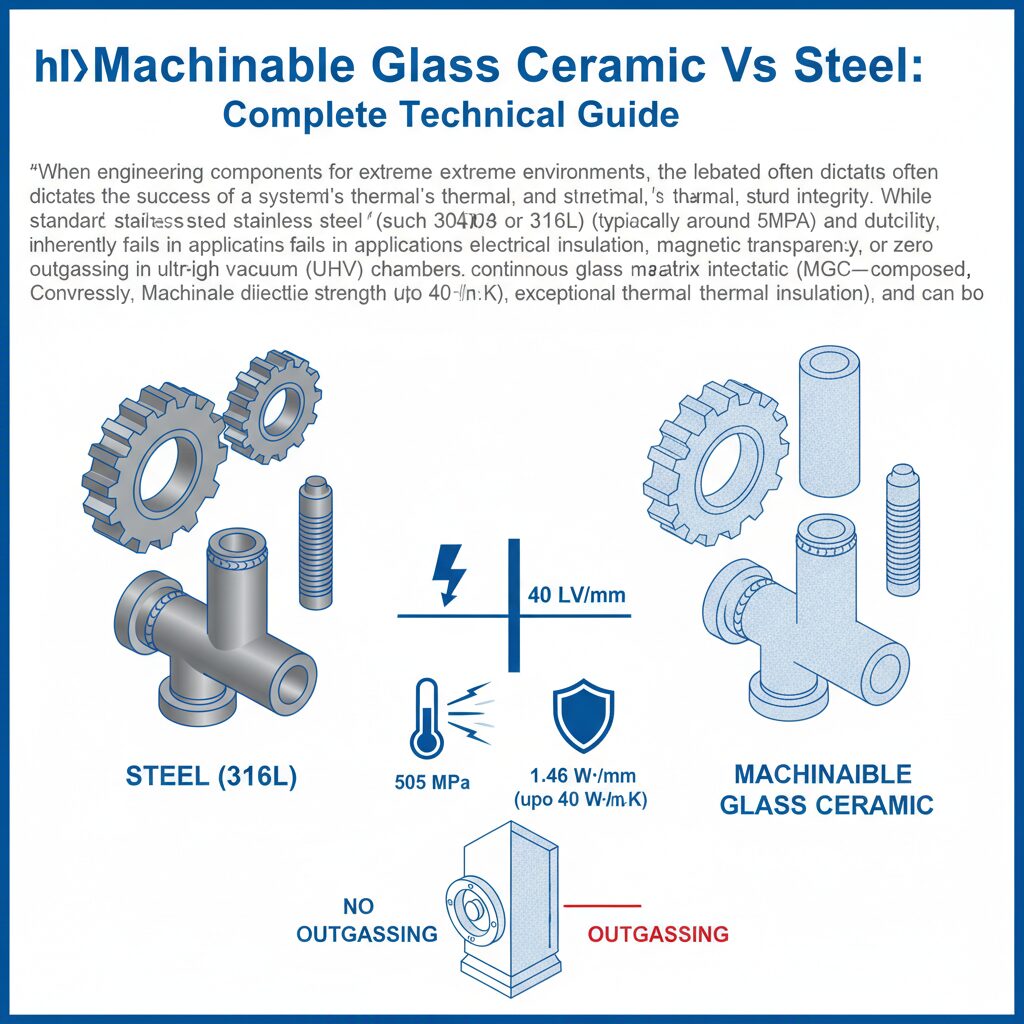
Machinable glass ceramics are highly resistant to chemical corrosion. They exhibit excellent stability when exposed to a wide range of strong acids (with the exception of hydrofluoric acid) and alkaline environments. This prevents material degradation and ensures that no metallic or polymer contaminants are leached into sensitive chemical reactions.
2. Zero Porosity and Zero Outgassing
Unlike sintered ceramics that may retain micro-porosity, MGC is completely dense and non-porous (0% porosity). This is vital for the chemical industry because it prevents the entrapment of chemical residues, eliminating the risk of cross-contamination between batches. Furthermore, it exhibits zero outgassing in high-vacuum environments, making it ideal for analytical chemistry equipment like mass spectrometers.
3. Superior Thermal Shock Resistance
Chemical processing often involves rapid heating and cooling. MGC can withstand continuous operating temperatures up to 800°C and peak temperatures of 1000°C. Its relatively low coefficient of thermal expansion (CTE) matches many metals and sealing glasses, providing excellent dimensional stability and resistance to thermal shock.
Technical Properties of Machinable Glass Ceramics
Below is a comprehensive technical data table detailing the mechanical, thermal. And electrical properties of standard machinable glass ceramics used at Great Ceramic.
| Imóveis | Unidade | Valor típico |
|---|---|---|
| Densidade | g/cm³ | 2.52 |
| Porosidade | % | 0 (Fully Dense) |
| Continuous Operating Temperature | °C | 800 |
| Maximum Peak Temperature | °C | 1,000 |
| Coefficient of Thermal Expansion (20-300°C) | 10⁻⁶ / °C | 9.3 |
| Thermal Conductivity (at 25°C) | W/m-K | 1.46 |
| Resistência à compressão | MPa | 345 |
| Resistência à flexão | MPa | 94 |
| Hardness (Knoop, 100g) | kg/mm² | 250 |
| Rigidez dielétrica | kV/mm | 40 |
Applications of Machinable Glass Ceramic in the Chemical Industry
Because MGC does not require post-machining firing or sintering, it retains tight tolerances (up to ±0.0005 inches) directly off the CNC machine. This makes it the material of choice for the following chemical industry applications:
- High-Vacuum Feedthroughs and Insulators: Used in chemical vapor deposition (CVD) and physical vapor deposition (PVD) chambers due to its zero outgassing properties.
- Chemical Reactor Components: Nozzles, sensor housings. And viewing ports that must endure aggressive chemical slurries without degrading.
- Analytical Chemistry Instrumentation: Supports, spacers. And electrical insulators in mass spectrometers, gas chromatographs. And electron microscopes.
- Corrosive Fluid Control: Valve seats, seals. And pump components handling aggressive solvents or halogens where PTFE or metal alloys would fail.
- High-Temperature Sensor Probes: Housings for thermocouples monitoring exothermic chemical reactions.
Machining Considerations for Glass Ceramics
While MGC is designed to be machinable, treating it exactly like steel or aluminum will result in chipping, edge breakout, or catastrophic part failure. At Great Ceramic, our engineers utilize highly optimized parameters to yield flawless components. Key machining considerations include:
- Tooling Selection: We utilize micro-grain tungsten carbide tools. While High-Speed Steel (HSS) can be used for short runs, carbide provides superior tool life and surface finish.
- Coolant Application: Copious amounts of water-soluble coolant are mandatory. The coolant serves primarily to flush away the abrasive glass-ceramic dust, preventing it from packing into the cutting flutes and causing tool failure.
- Velocidades e feeds: Spindle speeds are generally kept low to moderate, with very conservative feed rates. For milling, cutting speeds of 20-35 surface feet per minute (SFM) with a chip load of 0.002 inches per tooth are standard.
- Clearance Angles: Tools require sharp cutting edges with positive rake angles and secondary clearance angles to ensure the material is sheared cleanly rather than crushed.
- Breakout Prevention: When drilling through-holes or facing edges, backing plates (like sacrificial brass or acrylic) are used to prevent edge chipping as the tool exits the material.
Why Choose Great Ceramic for Your Machined Components?
Designing the perfect part is only half the battle. manufacturing it to exacting specifications is the other. Great Ceramic is a premier manufacturer of precision technical ceramics. With state-of-the-art 5-axis CNC machining centers, proprietary tooling geometries. And a deep understanding of ceramic material science, we transform raw machinable glass ceramic into complex, tight-tolerance components ready for direct integration into your chemical processes.
Perguntas frequentes (FAQ)
Does machinable glass ceramic require firing after machining?
No. One of the greatest advantages of MGC is that it is fully dense and entirely pre-fired. The dimensions you machine are the final dimensions, eliminating the 15-20% shrinkage rates associated with traditional sintered ceramics like Alumina or Zirconia.
Is machinable glass ceramic resistant to all acids?
MGC is highly resistant to a vast majority of industrial acids and bases. However, like most glass and silica-based materials, it will be severely attacked and dissolved by Hydrofluoric Acid (HF). If your chemical process involves HF, alternative materials like PTFE or specific grades of Sapphire should be considered.
How does MGC compare to Alumina (Al2O3) for chemical applications?
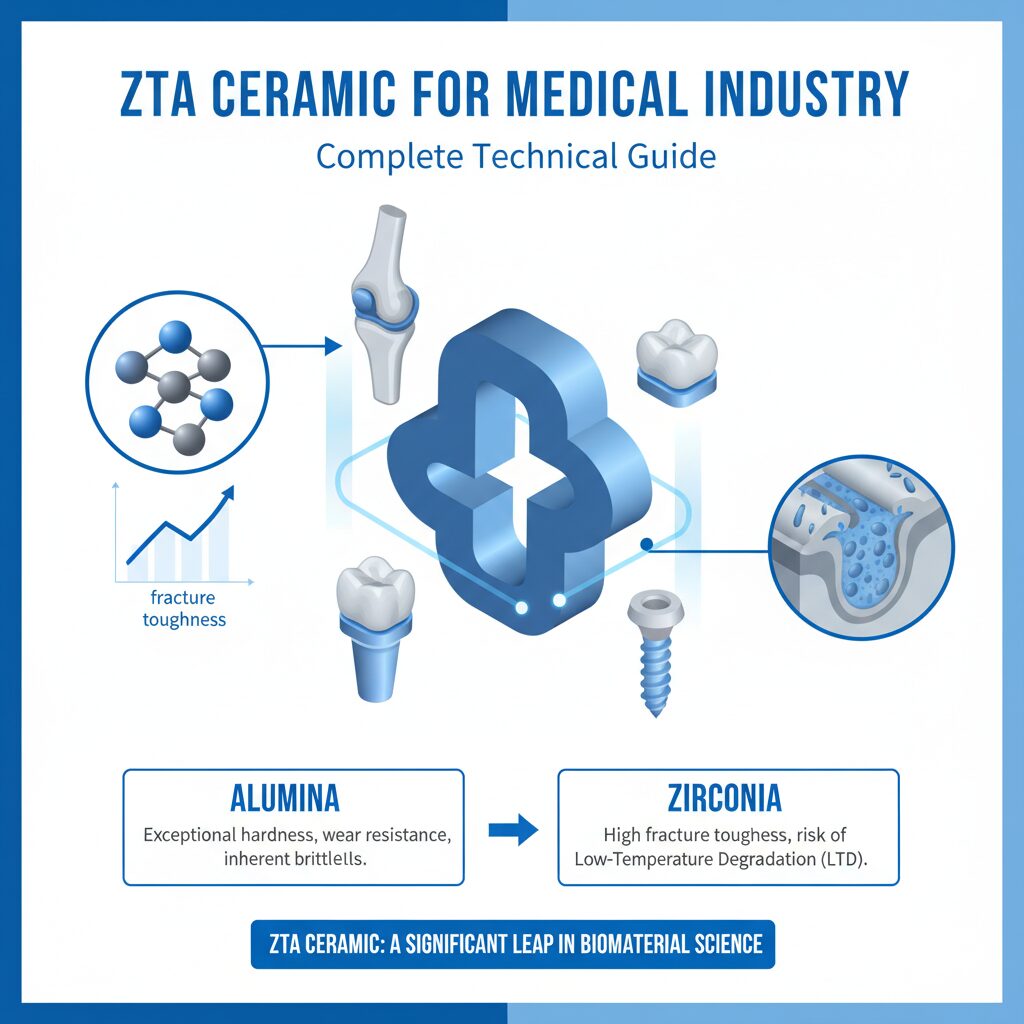
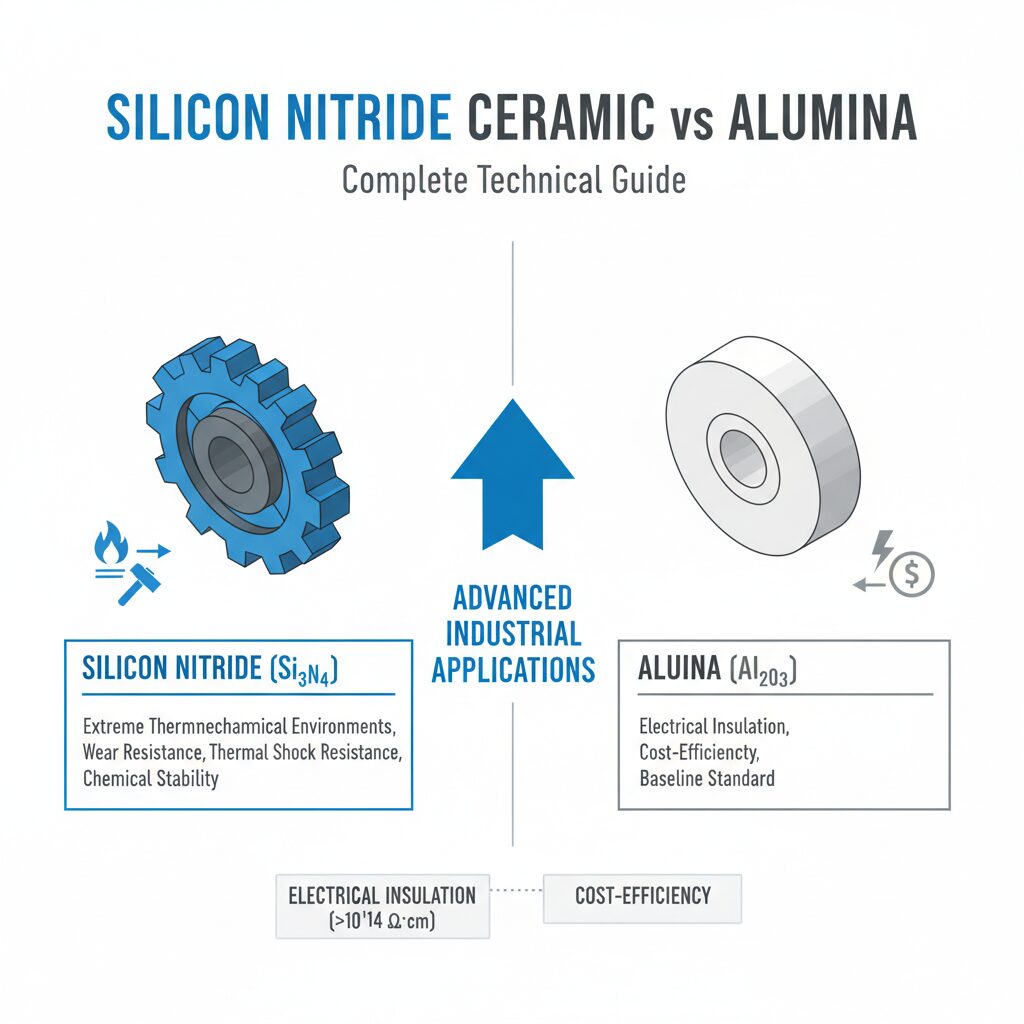
Alumina has a higher maximum operating temperature (up to 1700°C) and superior hardness/wear resistance. However, Alumina is incredibly difficult to machine, requiring expensive diamond grinding. MGC is much faster and cheaper to prototype and manufacture into highly complex geometries, while still offering excellent chemical resistance and an 800°C continuous temperature limit.
Can MGC be polished?
Yes. MGC can be lapped and polished to a highly reflective surface finish (less than 0.5 µin Ra). This is exceptionally useful for sealing applications or high-vacuum flange mating surfaces in chemical apparatuses.
machinable glass ceramic for chemical industry is widely used in advanced ceramic applications.
machinable glass ceramic for chemical industry is widely used in advanced ceramic applications.
Saiba mais sobre Cerâmica de vidro maquinável para a indústria química e os nossos serviços de maquinagem de precisão em cerâmica.