









High-Performance Alumina Ceramic Components for Electronics: A Technical Guide
In the rapidly evolving landscape of modern electronics, the demand for materials that can withstand high temperatures, provide superior electrical insulation. And maintain structural integrity under stress has never been higher. Alumina ceramic (Aluminum Oxide, Al2O3) has emerged as the definitive material of choice for high-performance electronic components. From semiconductor manufacturing to power electronics and telecommunications, alumina ceramic components for electronics provide the reliability and precision required for next-generation technology. At Great Ceramic, we specialize in the precision machining of these advanced materials to meet the rigorous standards of the global electronics industry.
Understanding Alumina Ceramic in Electronic Design
Alumina is a technical ceramic material characterized by its high hardness, excellent thermal stability. And exceptional electrical resistivity. In the electronics sector, it is most commonly used in purities ranging from 92% to 99.9%. The specific purity chosen often depends on the required thermal conductivity and the dielectric properties needed for the application. Higher purity alumina (99% and above) offers better corrosion resistance and higher dielectric strength, making it ideal for the most demanding vacuum and high-voltage environments.
The transition from traditional organic substrates to ceramic-based components is driven by the need for better heat dissipation. As electronic devices shrink in size while increasing in power density, the thermal management capabilities of alumina become critical. Unlike polymers, alumina does not degrade at high temperatures, ensuring that components remain operational and safe over long lifecycles.
Technical Properties of Alumina Ceramics
To design effective electronic systems, engineers must understand the physical and chemical characteristics of the ceramic grades they specify. Below is a comprehensive table detailing the typical properties of the most common alumina grades used in electronic component manufacturing.
| Imóveis | Unidade | 96% Alumina | 99,5% Alumina | 99,8% Alumina |
|---|---|---|---|---|
| Densidade | g/cm³ | 3.72 | 3.90 | 3.96 |
| Condutividade térmica | W/m-K | 24-28 | 30-35 | 35-40 |
| Rigidez dielétrica | kV/mm | 15-18 | 18-20 | 20+ |
| Constante dieléctrica (1 MHz) | – | 9.0 | 9.8 | 10.1 |
| Resistência à flexão | MPa | 300 | 350 | 380 |
| Dureza (HV) | GPa | 14 | 16 | 18 |
| Max Operating Temp | °C | 1500 | 1650 | 1750 |
Thermal Management Capabilities
Thermal management is perhaps the most significant reason for the widespread use of alumina ceramic components for electronics. While its thermal conductivity (approx. 25-35 W/m·K) is lower than that of Aluminum Nitride (AlN), it is significantly higher than FR-4 and other epoxy-based materials. For many mid-range power applications, alumina provides an optimal balance between cost and performance. It effectively draws heat away from active semiconductor junctions, preventing thermal runaway and extending the mean time between failures (MTBF).
Electrical Insulation and Dielectric Properties
Alumina acts as a near-perfect electrical insulator. Its high dielectric strength ensures that it can prevent electrical breakdown even in high-voltage environments. Furthermore, its low dielectric loss at high frequencies makes it an excellent substrate for RF (Radio Frequency) and microwave applications. This is vital for the development of 5G infrastructure, where signal integrity is paramount.
Key Alumina Ceramic Components for Electronics
Alumina is utilized in various forms throughout the electronics supply chain. Each component relies on a specific property of the material to function correctly.
1. Ceramic Substrates
Alumina substrates are the foundation for thick-film and thin-film circuits. These flat plates provide a stable platform for the deposition of conductive traces. Because alumina has a Coefficient of Thermal Expansion (CTE) that closely matches that of silicon and gallium arsenide, it reduces the mechanical stress on solder joints during thermal cycling.
2. Power Module Insulators
In IGBT (Insulated-Gate Bipolar Transistor) and MOSFET modules, alumina plates serve as the electrical isolation layer between the circuit and the heatsink. These components must withstand high voltages while allowing heat to pass through to the cooling system. Alumina’s high breakdown voltage is essential here.
3. Vacuum Feedthroughs and Insulators
In vacuum electronics and specialized laboratory equipment, alumina is used to create airtight seals and electrical standoffs. Its low outgassing rate and ability to be metallized (brazed) to metal components make it the industry standard for vacuum-tight electronic assemblies.
4. LED Heatsinks and Substrates
High-power LEDs generate significant heat at the chip level. Alumina ceramic components are used as sub-mounts for LED dies to dissipate heat quickly, ensuring the LED maintains its color consistency and brightness over time.
5. Resistor Cores and Potentiometer Bases
Due to its high mechanical strength and resistance to thermal shock, alumina is frequently used as the core material for wire-wound resistors and the base for variable resistors. It provides a rigid, non-conductive structure that can survive the heat generated by electrical resistance.
Advanced CNC Machining of Alumina Ceramic
Manufacturing alumina ceramic components for electronics requires specialized processes. Unlike metals, ceramics are brittle and cannot be machined using traditional turning or milling techniques without specialized equipment. At Great Ceramic, we employ a variety of advanced manufacturing methods to achieve the micron-level tolerances required by the electronics industry.
Green Machining
Before the ceramic is fired (sintered) in a kiln, it is in a “green” or “bisque” state. In this state, the material is relatively soft and can be machined using conventional CNC tools. Green machining allows for the removal of large amounts of material and the creation of complex geometries. However, engineers must account for the significant shrinkage (typically 15-20%) that occurs during the subsequent sintering process.
Precision Diamond Grinding
For components requiring extreme dimensional accuracy (±0.005mm or better) and high-quality surface finishes, post-sintering diamond grinding is necessary. Since sintered alumina is one of the hardest materials known, only diamond-tipped tools can effectively shape it. This process is used to achieve flat surfaces for substrates, precise hole diameters for insulators. And smooth finishes for friction-sensitive parts.
Laser Machining and Drilling
Laser technology is often used for cutting thin alumina substrates or drilling micro-vias (holes) for high-density electronic circuits. Lasers provide high speed and precision without the mechanical stress associated with physical grinding tools. This reduces the risk of micro-cracking in the ceramic matrix.
Surface Finishing and Metallization
The surface of alumina can be polished to a mirror finish (Ra < 0.1 μm) for thin-film applications. Additionally, alumina components can undergo metallization—a process where a layer of metal (like Tungsten, Molybdenum-Manganese, or Silver) is fired onto the ceramic. This allows the ceramic to be soldered or brazed to metal components, creating a robust electromechanical assembly.
Industry-Specific Applications
The versatility of alumina ceramic components for electronics allows them to be used across a diverse range of sectors.
Semiconductor Processing
In wafer processing equipment, alumina is used for end effectors, vacuum chucks. And gas distribution plates (showerheads). Its resistance to plasma erosion and chemical stability ensures that it does not contaminate the semiconductor wafers during deposition or etching processes.
Eletrónica automóvel
With the rise of Electric Vehicles (EVs), alumina is increasingly used in battery management systems (BMS), onboard chargers. And power inverters. Its ability to operate reliably in the harsh, high-vibration environment of a vehicle makes it superior to organic alternatives.
Aeroespacial e Defesa
In aerospace, electronics are subjected to extreme temperature fluctuations. Alumina’s low thermal expansion and high-temperature resistance make it ideal for engine sensors, radar components. And flight control systems.
Telecommunications
Microwave dielectric resonators and high-frequency circuit boards in cellular base stations rely on the stable dielectric properties of alumina. As we push toward 6G and beyond, the consistency of ceramic materials becomes even more vital for signal clarity.
Considerações de conceção para engenheiros
When specifying alumina ceramic components for electronics, there are several design principles to keep in mind to ensure manufacturability and cost-effectiveness:
- Evite cantos internos agudos: Sharp corners create stress concentrators that can lead to cracking. Use radii wherever possible.
- Espessura da parede: Maintain uniform wall thickness to prevent warping during the sintering process.
- Tolerances: Be realistic about tolerances. As-fired ceramics have wider tolerances. if precision is needed, specify diamond grinding, but be aware it increases cost.
- Thermal Shock: While alumina has high-temperature resistance, rapid temperature changes can cause thermal shock. Consider the rate of heating and cooling in the application.
Perguntas frequentes (FAQ)
1. What is the difference between 96% and 99% Alumina for electronics?
96% Alumina is the standard grade for thick-film substrates due to its excellent adhesion properties with conductive pastes. 99% and higher purities are used when better thermal conductivity, higher mechanical strength, or superior chemical resistance is required, especially in thin-film applications.
2. Can alumina ceramic be joined to metal?
Yes. Through a process called metallization (often using Mo-Mn or thin-film deposition), a metallic layer is applied to the ceramic. This allows the component to be brazed or soldered to metals like Kovar, copper, or stainless steel.
3. Why is alumina preferred over plastics for power electronics?
Plastics (polymers) have low melting points and very poor thermal conductivity. Alumina can withstand temperatures over 1500°C and acts as an efficient heat spreader. This is essential for preventing the failure of high-power semiconductor chips.
4. What is the maximum size of alumina components you can machine?
The size depends on the specific geometry and purity. At Great Ceramic, we can produce components ranging from sub-millimeter micro-parts to large plates and tubes up to several hundred millimeters in dimension. Contact our technical team for specific capability assessments.
5. How do I choose between Alumina and Aluminum Nitride (AlN)?
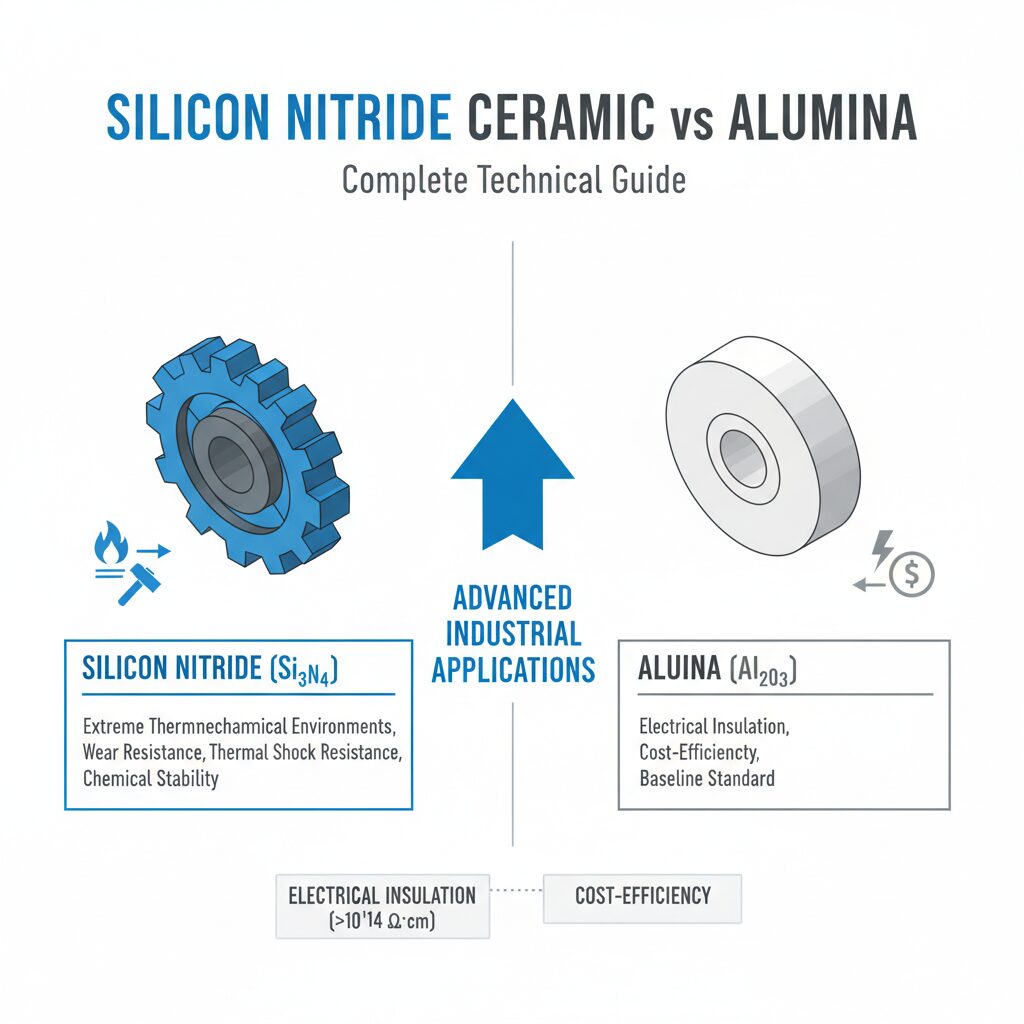
Alumina is more cost-effective and has higher mechanical strength and electrical resistivity. Aluminum Nitride should be chosen only when much higher thermal conductivity (140-180 W/m·K) is required, as it is significantly more expensive and harder to process.
Conclusão
Alumina ceramic components for electronics are indispensable in the modern world. Their unique combination of electrical insulation, thermal management. And mechanical durability allows for the creation of smaller, faster. And more powerful electronic devices. Whether you are designing a high-power inverter for an EV or a sensitive sensor for a spacecraft, alumina provides the performance margin necessary for success.
At Great Ceramic, we combine decades of expertise with state-of-the-art CNC machining technology to deliver precision ceramic solutions. We understand the nuances of ceramic manufacturing and work closely with engineers to turn complex designs into high-quality components.
Contactar o Great Ceramic para obter informações personalizadas maquinagem de cerâmica soluções adaptadas à sua aplicação.
alumina ceramic ceramic components for electronics is widely used in advanced ceramic applications.
Saiba mais sobre Componentes cerâmicos de cerâmica de alumina para eletrónica e os nossos serviços de maquinagem de precisão em cerâmica.