








Classification Characteristics Common: Complete Guide

There are many kinds of electronic packaging substrates. And the commonly used substrates are mainly divided into plastic packaging substrates, metal packaging substrates and ceramic packaging substrates. Plastic packaging materials usually have low thermal conductivity and poor reliability. And are not suitable for high requirements. Metal packaging materials have high thermal conductivity, but the general thermal expansion coefficient does not match. And the price is high.
세라믹 기판은 일반적으로 전자 패키징에 사용됩니다. 플라스틱 기판 및 금속 기판과 비교하여 세라믹 기판은 다음과 같은 장점이 있습니다:
(1) good insulation performance and high reliability.
(2) Low dielectric coefficient, high frequency performance.
(3) Low thermal expansion coefficient and high thermal conductivity.
(4) 우수한 기밀성과 안정적인 화학적 성능으로 전자 시스템에 대한 강력한 보호 역할을합니다.
Therefore, it is suitable for aviation, aerospace and military engineering high reliability, high frequency, high temperature resistance, air tightness of the product packaging. Ultra-small chip electronic components are widely used in the fields of mobile communication, computer, household appliances and automobile electronics, etc.. And their carrier materials are often encapsulated with ceramic substrates.
At present, several commonly used ceramic substrate materials for electronic packaging include 알루미나/”>알루미나 (Al2O3), 질화 알루미늄 (AlN), 실리콘 질화물 (Si3N4), 실리콘 카바이드 (SiC), 질화붕소 (BN), beryllium oxide (BeO).
Al2O3 세라믹 기판
Al2O3 ceramics generally refers to Al2O3 as main raw materials, mainly of alpha Al2O3 crystal phase, Al2O3 content in more than 75% of all kinds of ceramic, it has rich raw material sources, low cost, high mechanical strength and hardness, good insulation performance and good heat shock performance, chemical corrosion resistance, high dimensional accuracy, the advantages of good adhesion with metal, is a kind of comprehensive performance better ceramic substrate materials. Al2O3 ceramic substrate is widely used in electronic industry, accounting for 90% of the total amount of ceramic substrate. And has become an indispensable material for electronic industry.
현재 사용되는 Al2O3 세라믹 기판은 대부분 다층 기판입니다. Al2O3 함량은 전기 절연 성능, 열 전도성 및 내충격성을 향상시키지만 동시에 소결 온도와 생산 비용을 증가시킵니다. 소결 온도를 낮추고 Al2O3 세라믹 기판의 기계적 및 전기적 특성을 보장하기 위해 소결을 촉진하기 위해 B2O3, MgO, CaO, SiO2, TiO2, Nb2O5, Cr2O3, CuO, Y2O3, La2O3 및 Sm2O3와 같은 일정량의 소결 AIDS가 종종 추가됩니다.
Al2O3 세라믹 기판은 출력이 크고 응용 범위가 넓지만 실리콘 단결정에 비해 열전도율이 높아 고주파, 고전력, 초대형 집적 회로에 사용하는 데 한계가 있습니다.
AlN 세라믹 기판
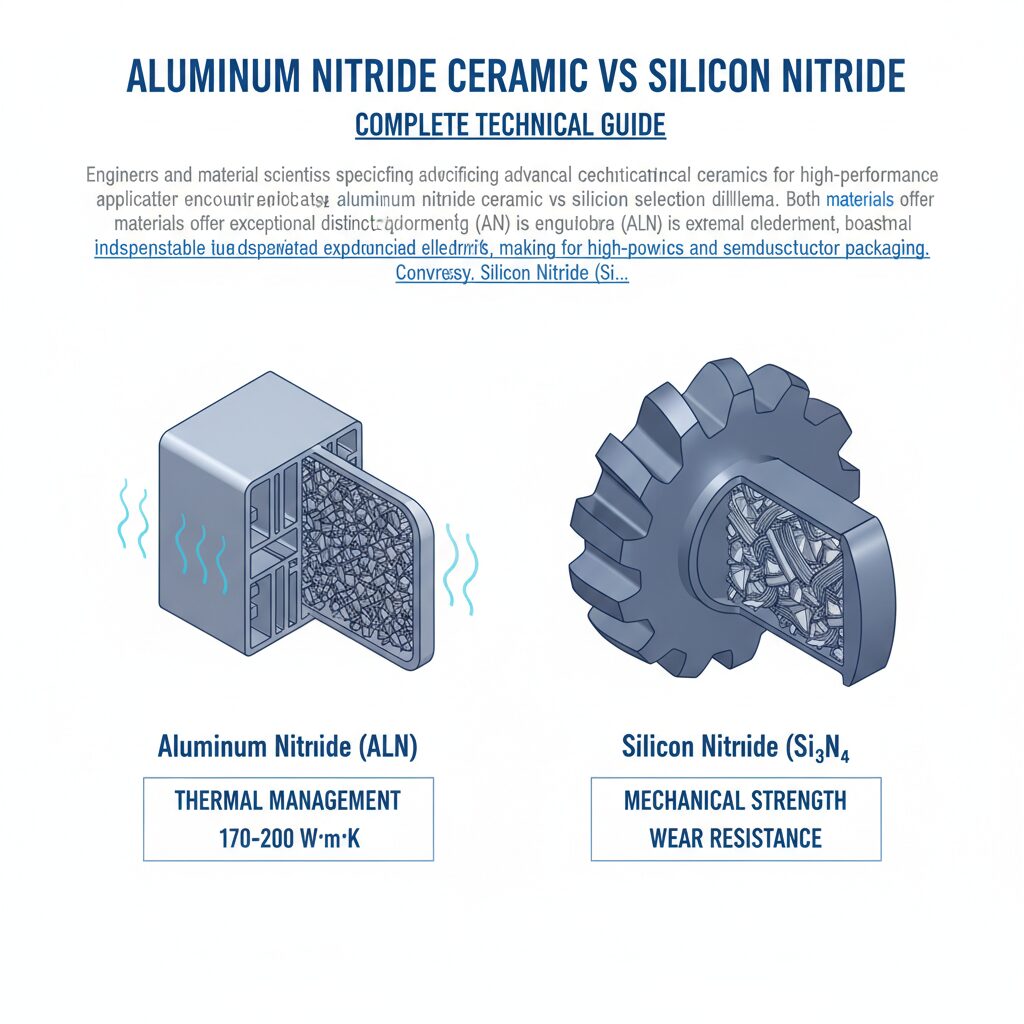
AlN ceramic substrate is a new type of substrate material, the lattice constant of AlN crystals for a = 0.3110 nm, c = 0.4890 nm, hexagonal system, based on [AlN4] tetrahedron structure unit of wurtzite covalent bond compound, good thermal conductivity, a reliable electrical insulation, low dielectric constant and dielectric loss, non-toxic. And match the silicon thermal expansion coefficient and so on a series of excellent features, is considered to be a new generation of high integration semiconductor substrate and the ideal of the electronics packaging materials .
AlN 세라믹의 핵심 원료인 AlN 분말의 제조 공정은 복잡하고 에너지 소비가 높으며 주기가 길고 비용이 많이 듭니다. 높은 비용으로 인해 AlN 세라믹의 광범위한 적용이 제한되므로 AlN 세라믹 기판은 주로 하이엔드 산업에서 사용됩니다.
Si3N4 세라믹 기판
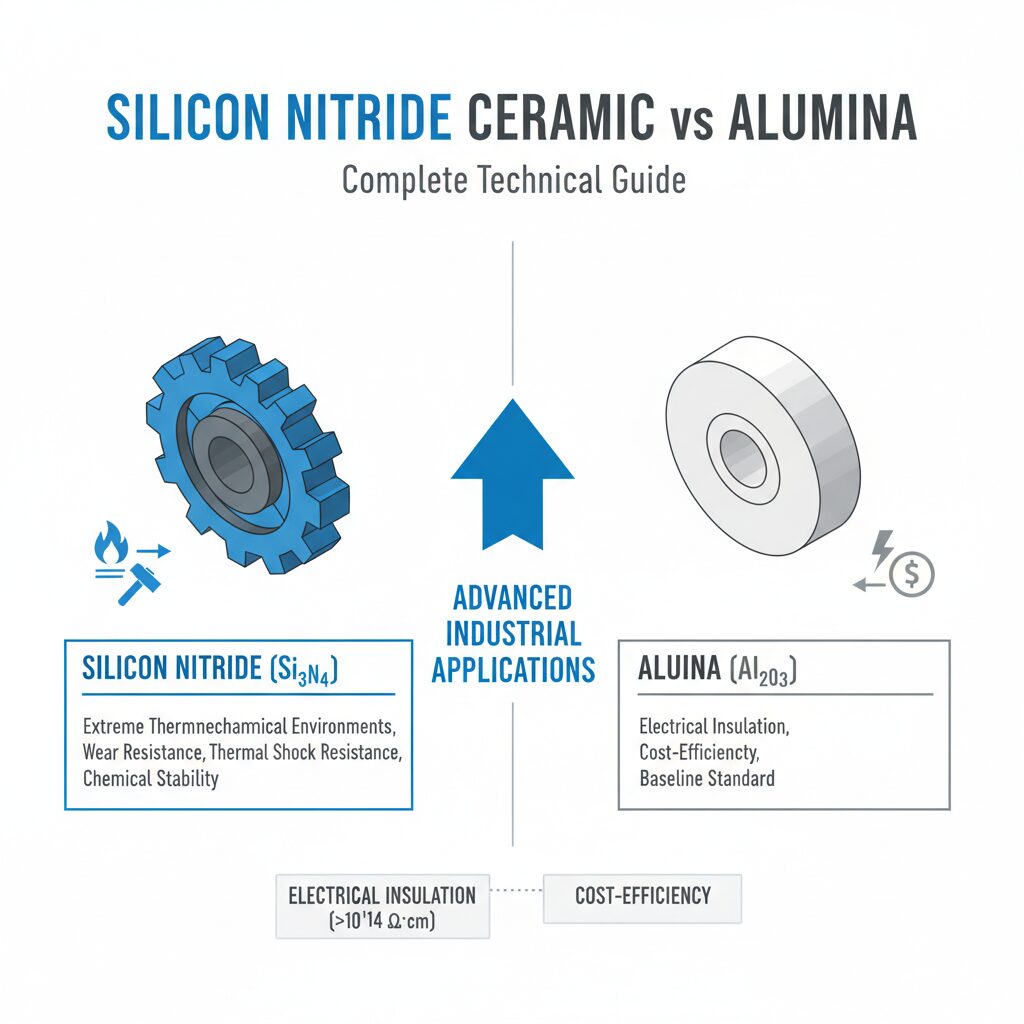
Si3N4 has three crystalline structures, namely phase, phase and phase, among which phase and phase are the most common forms of Si3N4. And they are all hexagonal structures. Si3N4 has many excellent properties, such as large hardness, high strength, small thermal expansion coefficient, small creep at high temperature, good oxidation resistance, good thermal corrosion performance and small friction coefficient. The theoretical thermal conductivity of monocrystalline silicon nitride is up to 400W/ (m·K). And has the potential to become a high thermal conductivity substrate. In addition, the thermal expansion coefficient of Si3N4 is about 3.0×10⁻⁶℃. This is well matched with Si, SiC, GaAs and other materials, making Si3N4 ceramics a very attractive substrate material for high strength and high thermal conductivity electronic devices [4].
However, Si3N4 ceramics have poor dielectric properties (the dielectric constant is 8.3, the dielectric loss is 0.001~0.1) and high production cost. This limits its application as an electronic encapsulated ceramic substrate.
SiC 세라믹 기판
SiC ceramics have high thermal conductivity. This ranges from 100 w /(m·k) to 400W/(m·k) at high temperature, 13 times higher than Al2O3. Good anti-oxidation performance, decomposition temperature above 2500℃, in the oxidation atmosphere at 1600℃ can still be used. Moreover, the electrical insulation is good. And the thermal expansion coefficient is lower than Al2O3 and AlN. SiC ceramics have strong covalent bond characteristics and are difficult to be sintered. A small amount of boron or aluminum oxide is usually added as sintering AIDS to improve the density. Experiments show that beryllium, boron, aluminum and their compounds are the most effective additives. This can make the density of SiC ceramics reach more than 98% .
However, the dielectric constant of SiC is too high, 4 times that of AlN. And its compressive strength is low, so it is only suitable for low-density packaging but not high-density packaging. In addition to integrated circuit components, array components and laser diodes, etc., it is also used for structural parts with electrical conductivity.
BeO 세라믹 기판
BeO is alkaline earth metal oxides in only six party wurtzite structure, because the BeO has wurtzite and strong covalent bond structure. And the relative molecular mass is low, therefore, have high thermal conductivity, BeO alumina is about 10 times, its thermal conductivity at room temperature can reach 250 w/(m K). And the thermal conductivity of the metal. And under the high temperature, high frequency, its electric performance, good heat resistance, heat resisting impact and delicate chemical stability.
Although BeO has some good properties, its fatal disadvantage is the extreme toxicity of its powder. Long-term inhalation of BeO dust will cause poisoning or even life-threatening. And will cause environmental pollution. This greatly affects the production and application of BeO ceramic substrate [5]. In addition, BeO is expensive to produce. This limits its production and application. Its use is limited to the following aspects: heat sinks of high-power transistors, heat sinks of high-frequency and high-power semiconductor devices, emission tubes, TWTS, laser tubes, klystron, etc. BeO ceramic substrates are sometimes used in avionics and satellite communications for high thermal conductivity and ideal high frequency characteristics.
BN 세라믹 기판
BN can be crystallized in two different forms: hexagonal and cubic. Among them, the cubic crystal BN has high hardness and high temperature resistance of 1500~1600℃. This is suitable for superhard materials. Hexagonal BN can maintain high chemical and mechanical stability at very high temperature under correct heat treatment. The BN material has high thermal stability, chemical stability and electrical insulation, meanwhile, the thermal conductivity of BN ceramics is equal to that of stainless steel at room temperature. And the dielectric property is good. BN has better brittleness than most ceramics, smaller thermal expansion coefficient, strong thermal shock resistance. And can withstand sharp changes in temperature difference above 1500℃.
Both cubic BN and hexagonal BN are prepared under high temperature and high pressure. This are typical covalent bond crystals. Due to its high thermal conductivity, thermal conductivity almost does not change with temperature, small dielectric constant and good insulation performance, BN is applied to radar Windows, tube bases of high-power transistors, tube shells, heat sinks and microwave output Windows. But cubic BN is too expensive to be used in the production of high thermal conductivity ceramic materials. The mismatch between thermal expansion coefficient and silicon also limits its application .
classification characteristics common is widely used in advanced ceramic applications.
Classification Characteristics Common Properties
자주 묻는 질문
What is classification characteristics common?
Classification Characteristics Common is an advanced technical ceramic material known for its exceptional properties including high thermal conductivity, excellent electrical insulation, and superior mechanical strength. Great Ceramic specializes in precision manufacturing of classification characteristics common components.
What are the main applications of classification characteristics common?
Classification Characteristics Common is widely used in semiconductor manufacturing, aerospace components, electronic substrates, medical implants, and high-temperature industrial applications. Its unique properties make it ideal for demanding environments.
How is classification characteristics common machined?
Classification Characteristics Common requires specialized machining techniques including diamond grinding, ultrasonic machining, and laser cutting to achieve precision tolerances. Great Ceramic provides custom classification characteristics common machining services with tight tolerances.