








Classification Characteristics Common: Complete Guide

There are many kinds of electronic packaging substrates. And the commonly used substrates are mainly divided into plastic packaging substrates, metal packaging substrates and ceramic packaging substrates. Plastic packaging materials usually have low thermal conductivity and poor reliability. And are not suitable for high requirements. Metal packaging materials have high thermal conductivity, but the general thermal expansion coefficient does not match. And the price is high.
セラミック基板は、電子機器パッケージで一般的に使用されています。プラスチック基板や金属基板と比較して、セラミック基板には次のような利点があります:
(1) good insulation performance and high reliability.
(2) Low dielectric coefficient, high frequency performance.
(3) Low thermal expansion coefficient and high thermal conductivity.
(4)良好な気密性と安定した化学的性能により、電子システムの強力な保護役割を果たす。
Therefore, it is suitable for aviation, aerospace and military engineering high reliability, high frequency, high temperature resistance, air tightness of the product packaging. Ultra-small chip electronic components are widely used in the fields of mobile communication, computer, household appliances and automobile electronics, etc.. And their carrier materials are often encapsulated with ceramic substrates.
At present, several commonly used ceramic substrate materials for electronic packaging include アルミナ/”>alumina (Al2O3), 窒化アルミニウム (AlN), 窒化ケイ素 (Si3N4), 炭化ケイ素 (SiC), 窒化ホウ素 (BN), beryllium oxide (BeO).
Al2O3セラミック基板
Al2O3 ceramics generally refers to Al2O3 as main raw materials, mainly of alpha Al2O3 crystal phase, Al2O3 content in more than 75% of all kinds of ceramic, it has rich raw material sources, low cost, high mechanical strength and hardness, good insulation performance and good heat shock performance, chemical corrosion resistance, high dimensional accuracy, the advantages of good adhesion with metal, is a kind of comprehensive performance better ceramic substrate materials. Al2O3 ceramic substrate is widely used in electronic industry, accounting for 90% of the total amount of ceramic substrate. And has become an indispensable material for electronic industry.
現在使用されているAl2O3セラミック基板は、ほとんどが多層基板である。Al2O3の含有は電気絶縁性能、熱伝導性、耐衝撃性を向上させるが、同時に焼結温度の上昇と製造コストの上昇を招く。焼結温度を下げ、Al2O3セラミック基板の機械的・電気的特性を確保するために、B2O3、MgO、CaO、SiO2、TiO2、Nb2O5、Cr2O3、CuO、Y2O3、La2O3、Sm2O3などの焼結助剤を一定量添加して焼結を促進することが多い。
Al2O3セラミック基板は出力が大きく、応用範囲が広いが、シリコン単結晶に比べて熱伝導率が高いため、高周波、高出力、超大規模集積回路の使用には限界がある。
AlNセラミック基板
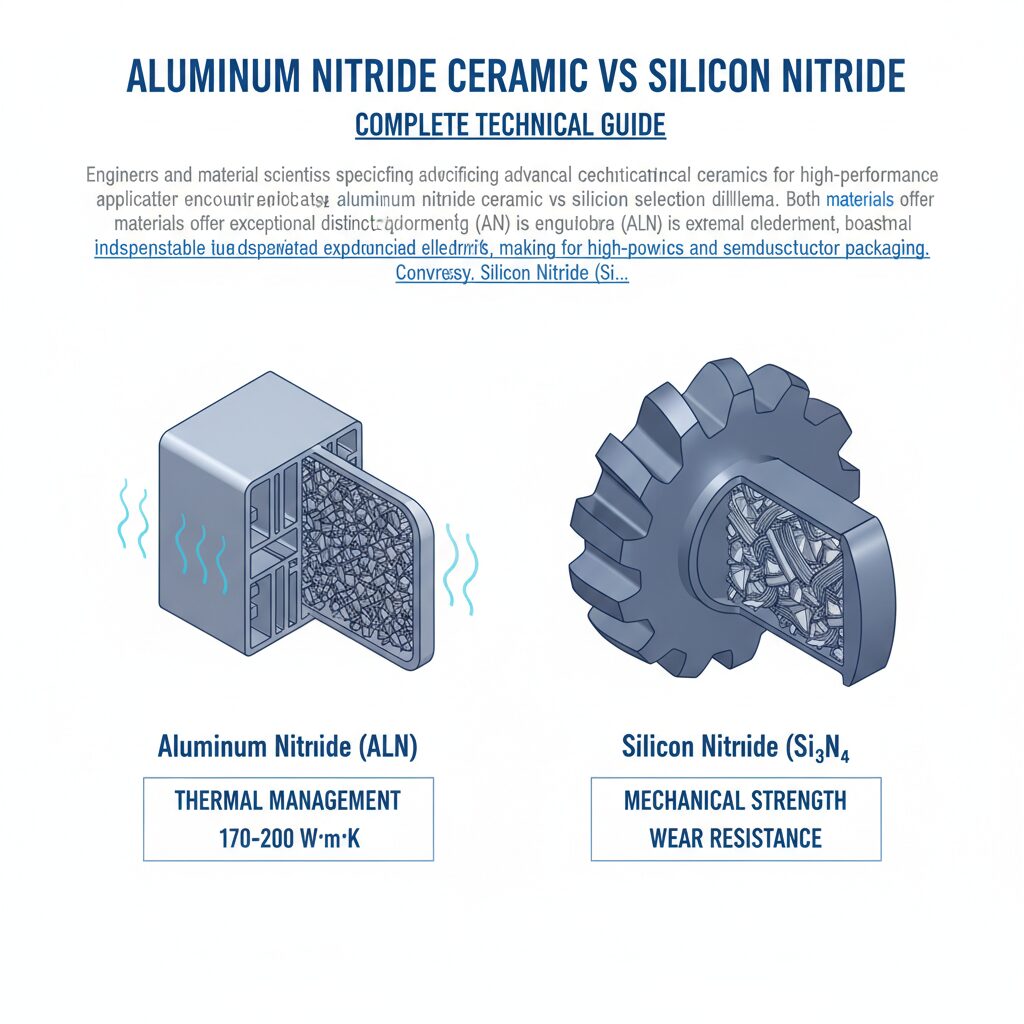
AlN ceramic substrate is a new type of substrate material, the lattice constant of AlN crystals for a = 0.3110 nm, c = 0.4890 nm, hexagonal system, based on [AlN4] tetrahedron structure unit of wurtzite covalent bond compound, good thermal conductivity, a reliable electrical insulation, low dielectric constant and dielectric loss, non-toxic. And match the silicon thermal expansion coefficient and so on a series of excellent features, is considered to be a new generation of high integration semiconductor substrate and the ideal of the electronics packaging materials .
AlNセラミックスの中核原料であるAlN粉末の調製工程は複雑で、エネルギー消費量が多く、サイクルが長く、高価である。そのため、AlNセラミック基板は主にハイエンド産業で使用されています。
Si3N4セラミック基板
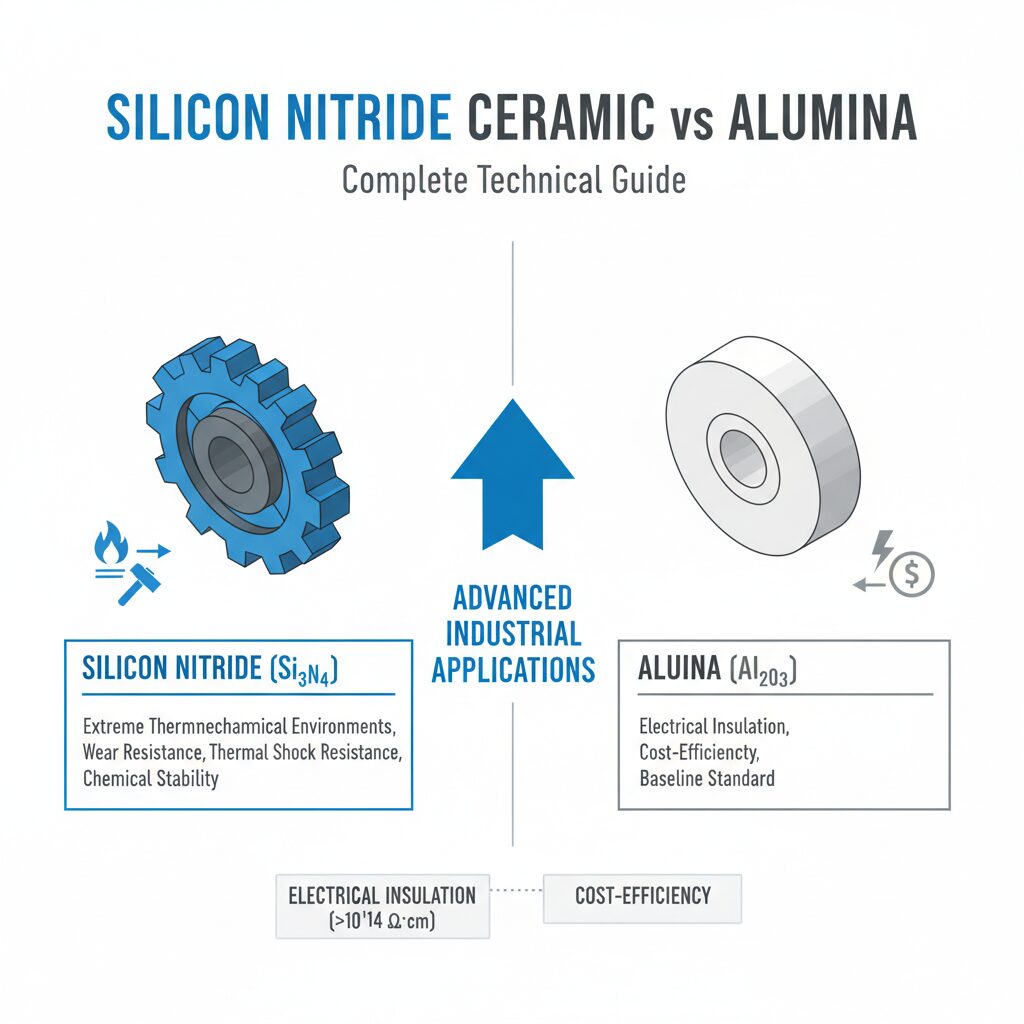
Si3N4 has three crystalline structures, namely phase, phase and phase, among which phase and phase are the most common forms of Si3N4. And they are all hexagonal structures. Si3N4 has many excellent properties, such as large hardness, high strength, small thermal expansion coefficient, small creep at high temperature, good oxidation resistance, good thermal corrosion performance and small friction coefficient. The theoretical thermal conductivity of monocrystalline silicon nitride is up to 400W/ (m·K). And has the potential to become a high thermal conductivity substrate. In addition, the thermal expansion coefficient of Si3N4 is about 3.0×10⁻⁶℃. This is well matched with Si, SiC, GaAs and other materials, making Si3N4 ceramics a very attractive substrate material for high strength and high thermal conductivity electronic devices [4].
However, Si3N4 ceramics have poor dielectric properties (the dielectric constant is 8.3, the dielectric loss is 0.001~0.1) and high production cost. This limits its application as an electronic encapsulated ceramic substrate.
SiCセラミック基板
SiC ceramics have high thermal conductivity. This ranges from 100 w /(m·k) to 400W/(m·k) at high temperature, 13 times higher than Al2O3. Good anti-oxidation performance, decomposition temperature above 2500℃, in the oxidation atmosphere at 1600℃ can still be used. Moreover, the electrical insulation is good. And the thermal expansion coefficient is lower than Al2O3 and AlN. SiC ceramics have strong covalent bond characteristics and are difficult to be sintered. A small amount of boron or aluminum oxide is usually added as sintering AIDS to improve the density. Experiments show that beryllium, boron, aluminum and their compounds are the most effective additives. This can make the density of SiC ceramics reach more than 98% .
However, the dielectric constant of SiC is too high, 4 times that of AlN. And its compressive strength is low, so it is only suitable for low-density packaging but not high-density packaging. In addition to integrated circuit components, array components and laser diodes, etc., it is also used for structural parts with electrical conductivity.
BeOセラミック基板
BeO is alkaline earth metal oxides in only six party wurtzite structure, because the BeO has wurtzite and strong covalent bond structure. And the relative molecular mass is low, therefore, have high thermal conductivity, BeO alumina is about 10 times, its thermal conductivity at room temperature can reach 250 w/(m K). And the thermal conductivity of the metal. And under the high temperature, high frequency, its electric performance, good heat resistance, heat resisting impact and delicate chemical stability.
Although BeO has some good properties, its fatal disadvantage is the extreme toxicity of its powder. Long-term inhalation of BeO dust will cause poisoning or even life-threatening. And will cause environmental pollution. This greatly affects the production and application of BeO ceramic substrate [5]. In addition, BeO is expensive to produce. This limits its production and application. Its use is limited to the following aspects: heat sinks of high-power transistors, heat sinks of high-frequency and high-power semiconductor devices, emission tubes, TWTS, laser tubes, klystron, etc. BeO ceramic substrates are sometimes used in avionics and satellite communications for high thermal conductivity and ideal high frequency characteristics.
BNセラミック基板
BN can be crystallized in two different forms: hexagonal and cubic. Among them, the cubic crystal BN has high hardness and high temperature resistance of 1500~1600℃. This is suitable for superhard materials. Hexagonal BN can maintain high chemical and mechanical stability at very high temperature under correct heat treatment. The BN material has high thermal stability, chemical stability and electrical insulation, meanwhile, the thermal conductivity of BN ceramics is equal to that of stainless steel at room temperature. And the dielectric property is good. BN has better brittleness than most ceramics, smaller thermal expansion coefficient, strong thermal shock resistance. And can withstand sharp changes in temperature difference above 1500℃.
Both cubic BN and hexagonal BN are prepared under high temperature and high pressure. This are typical covalent bond crystals. Due to its high thermal conductivity, thermal conductivity almost does not change with temperature, small dielectric constant and good insulation performance, BN is applied to radar Windows, tube bases of high-power transistors, tube shells, heat sinks and microwave output Windows. But cubic BN is too expensive to be used in the production of high thermal conductivity ceramic materials. The mismatch between thermal expansion coefficient and silicon also limits its application .
classification characteristics common is widely used in advanced ceramic applications.
Classification Characteristics Common Properties
よくある質問
What is classification characteristics common?
Classification Characteristics Common is an advanced technical ceramic material known for its exceptional properties including high thermal conductivity, excellent electrical insulation, and superior mechanical strength. Great Ceramic specializes in precision manufacturing of classification characteristics common components.
What are the main applications of classification characteristics common?
Classification Characteristics Common is widely used in semiconductor manufacturing, aerospace components, electronic substrates, medical implants, and high-temperature industrial applications. Its unique properties make it ideal for demanding environments.
How is classification characteristics common machined?
Classification Characteristics Common requires specialized machining techniques including diamond grinding, ultrasonic machining, and laser cutting to achieve precision tolerances. Great Ceramic provides custom classification characteristics common machining services with tight tolerances.