








“`html
Zirconia Ceramic Rod for Energy: High-Performance Solutions for the Modern Power Sector
As the global energy landscape shifts toward higher efficiency, extreme operating environments. And sustainable technologies, the demand for advanced materials has never been greater. Among these, the zircone ceramic rod for energy applications has emerged as a cornerstone component. Known as “ceramic steel” due to its exceptional fracture toughness and mechanical strength, zirconia (ZrO2) provides a unique combination of thermal insulation, chemical inertness. And wear resistance that traditional metals and polymers cannot match.
Great Ceramic specializes in the precision engineering of zirconia rods, ensuring they meet the rigorous standards required for oil and gas exploration, fuel cell technology, renewable energy systems. And nuclear power generation. This technical guide explores the properties, applications. And machining complexities of zirconia rods in the energy sector.
1. Understanding Zirconia: The “Ceramic Steel”
Zirconia is a polymorphic material, meaning it exists in different crystal structures (monoclinic, tetragonal. And cubic) depending on the temperature. For industrial energy applications, zirconia is typically “stabilized” using oxides such as Yttria (Y2O3) or Magnesia (MgO). This stabilization prevents phase transformation during heating and cooling. This would otherwise lead to cracking.
Yttria-Stabilized Zirconia (YSZ)
YSZ is the most common variety used in the energy sector. By adding yttria, the tetragonal phase becomes stable at room temperature. When a crack begins to form, the material undergoes “transformation toughening,” where the crystal structure expands to compress the crack tip, effectively stopping its progression. This makes YSZ ideal for high-stress energy components.
Magnesia-Stabilized Zirconia (MSZ)
MSZ offers superior resistance to thermal shock and is often used in environments where rapid temperature fluctuations occur. It maintains high mechanical strength even in high-moisture or “hydrothermal” environments. This is critical for subsea energy extraction.
2. Tableaux des propriétés techniques
To understand why a zirconia ceramic rod for energy is preferred over alumina or carbure de silicium, we must examine the quantitative data. Below are the technical specifications for high-purity zirconia grades typically used by Great Ceramic.
Table 1: Physical and Mechanical Properties of Zirconia (Y-TZP)
| Propriété | Unité | Valeur (typique) |
|---|---|---|
| Densité | g/cm³ | 6.05 |
| Dureté (Vickers) | GPa | 12 – 13 |
| Résistance à la flexion | MPa | 900 - 1200 |
| Résistance à la rupture (K1c) | MPa·m¹/² | 8 – 10 |
| Résistance à la compression | MPa | 2000+ |
| Module de Young | GPa | 210 |
| Rapport de Poisson | - | 0.31 |
Tableau 2 : Propriétés thermiques et électriques
| Propriété | Unité | Valeur |
|---|---|---|
| Max. Use Temperature | °C | 1500 (grade dependent) |
| Conductivité thermique | W/m-K | 2.0 – 3.0 |
| Coefficient de dilatation thermique (CTE) | 10-⁶/°C | 10.3 (close to steel) |
| Rigidité diélectrique | kV/mm | >10 |
| Electrical Resistivity (20°C) | Ω-cm | >10¹² |
3. Why Use Zirconia Ceramic Rods in the Energy Industry?
The energy industry operates in some of the most “aggressive” environments on Earth. Whether it is a mile underground in an oil well or inside a high-temperature fuel cell, materials are subjected to high pressure, corrosive chemicals. And extreme heat. Zirconia ceramic rods provide several critical advantages:
Extreme Wear and Erosion Resistance
In fluid handling for the energy sector, rods and pistons are subjected to abrasive slurries. Zirconia’s high hardness ensures that components maintain their dimensional integrity for thousands of hours longer than stainless steel or tungsten carbide.
Chemical and Corrosion Inertness
Zirconia is virtually inert to most acids, alkalis. And organic solvents. In “sour gas” environments (containing H2S) or acidic chemical processing for biofuels, zirconia rods remain unaffected where metals would suffer from pitting or stress-corrosion cracking.
Thermal Management
With a thermal conductivity significantly lower than most ceramics (and much lower than metals), zirconia acts as an excellent thermal insulator. In energy systems, this helps in maintaining localized heat for reactions (like in gasification) while protecting sensitive external electronics.
CTE Matching with Steel
One of the unique features of zirconia is its Coefficient of Thermal Expansion (CTE). This is roughly 10 x 10⁻⁶/°C. This is remarkably close to many steel alloys. In energy machinery where ceramic and metal parts are joined, this similarity minimizes internal stresses during thermal cycling, preventing bond failure.
4. Industry-Specific Applications
The versatility of the zirconia ceramic rod for energy makes it a preferred choice across various sub-sectors:
4.1. Oil and Gas (Upstream & Midstream)
In downhole drilling, “Measurement While Drilling” (MWD) and “Logging While Drilling” (LWD) tools use zirconia rods as structural insulators. These tools must withstand massive hydrostatic pressures and temperatures exceeding 200°C. Zirconia provides the necessary electrical insulation for sensors while maintaining the mechanical strength to support the drill string’s integrity.
Additionally, zirconia rods are used in subsea valves and pump components where saltwater corrosion is a constant threat. Their low friction coefficient also reduces the energy required for mechanical movement, increasing overall system efficiency.
4.2. Solid Oxide Fuel Cells (SOFC)
Zirconia is a vital component in SOFC technology. Specifically, Yttria-Stabilized Zirconia (YSZ) acts as a solid electrolyte. While often used in thin-film form, zirconia rods and tubes serve as structural supports and manifolds within the fuel cell stack. At high temperatures (800°C+), YSZ becomes an oxygen-ion conductor, allowing the electrochemical reaction that produces electricity with high efficiency and low emissions.
4.3. Nuclear Power
The nuclear industry utilizes zirconia-based materials for fuel cladding and sensor housing. Zirconia’s low neutron absorption cross-section (when hafnium is removed) and its stability under radiation make it a candidate for advanced reactor designs. Rods are often used as spacers or insulating pins in control rod assemblies.
4.4. Renewable Energy (Wind and Hydro)
In large-scale wind turbines and hydroelectric plants, zirconia rods are machined into high-precision bearings and shaft sleeves. These components operate in environments where lubrication may be difficult to maintain. Zirconia’s self-lubricating properties (in some formulations) and resistance to “galling” ensure a long service life and reduced maintenance costs.
4.5. Battery Technology and Energy Storage
As the world moves toward solid-state batteries, zirconia derivatives are being explored as solid electrolytes and separators. Machined rods are used in the laboratory testing equipment and pilot-scale production lines for these next-generation storage solutions due to their electrochemical stability.
5. CNC Machining Specifics for Zirconia Rods
Machining zirconia is a highly specialized process. Unlike metals. This can be turned or milled using high-speed steel or carbide tools, zirconia requires diamond-based abrasives and precision CNC grinding. Great Ceramic utilizes state-of-the-art equipment to achieve the tight tolerances required by the energy sector.
5.1. Diamond Grinding
Because of its high hardness (Vickers 1200+), zirconia cannot be “cut” in the traditional sense once it is in its fully sintered state. We use CNC cylindrical grinding with diamond wheels to shape the rods. This process allows for extreme precision, often achieving diameters within +/- 0.001mm.
5.2. Surface Finish Optimization
In energy applications involving seals or bearings, surface roughness (Ra) is critical. A zirconia ceramic rod for energy can be polished to a mirror finish (Ra < 0.05 µm). This reduces friction, minimizes wear on mating parts. And eliminates potential sites for crack initiation.
5.3. Managing Brittleness
While zirconia is “tough” for a ceramic, it is still a brittle material compared to metals. During CNC machining, Great Ceramic engineers must manage “edge chipping.” We utilize specialized tool paths and feed rates to ensure that the ends of the rods and any machined features (like grooves or threads) are smooth and defect-free.
5.4. Threading and Complex Geometries
Threading a zirconia rod is one of the most difficult tasks in usinage de la céramique. Standard taps and dies will not work. We use CNC thread grinding or ultrasonic machining to create internal or external threads that are strong enough to withstand the torques found in energy assembly environments.
6. Design Considerations for Engineers
When designing a zirconia ceramic rod for energy applications, engineers should keep the following best practices in mind:
- Éviter les angles vifs : Always specify radii or chamfers. Sharp 90-degree angles act as stress concentrators and are the primary cause of ceramic failure.
- Tolerance Reality: While we can achieve ultra-tight tolerances, they come with increased cost. Only specify +/- 0.001mm where functionally necessary.
- Loading Types: Ceramics excel in compression but are weaker in tension. Design your assembly so the zirconia rod is loaded compressively whenever possible.
- Thermal Gradients: Although zirconia has good thermal shock resistance, extreme gradients (e.g., localized heating) should be avoided to prevent stress fractures.
7. FAQ: Zirconia Ceramic Rod for Energy
How does Zirconia compare to Alumine for energy applications?
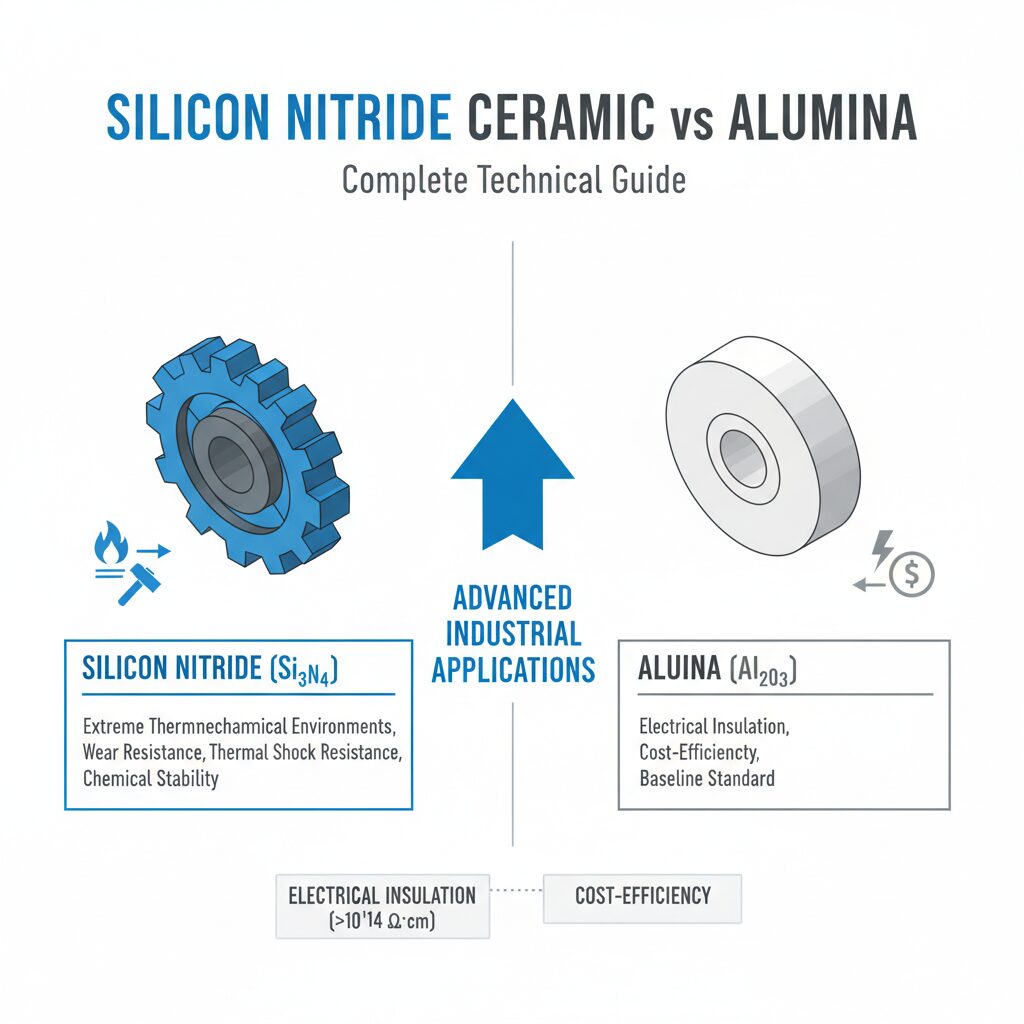
While Alumina is more cost-effective, Zirconia offers significantly higher fracture toughness and better wear resistance. In the energy sector, where the cost of component failure is extremely high (e.g., stopping an oil rig), the superior reliability of zirconia often justifies the higher initial material cost.
Can Zirconia rods be used in cryogenic temperatures?
Yes. Zirconia maintains its mechanical properties at cryogenic temperatures, making it suitable for Liquid Natural Gas (LNG) processing and superconducting energy storage systems.
Is it possible to join a zirconia rod to a metal component?
Yes, through various methods including brazing (using active fill metals), epoxy bonding, or mechanical shrink-fitting. Because zirconia’s CTE is similar to steel, shrink-fitting is a particularly effective and common method in the energy industry.
What is the lead time for custom machined zirconia rods?
Lead times vary based on complexity and quantity. Typically, custom CNC-machined rods take between 3 to 6 weeks, including the sintering process and final precision grinding.
Does Great Ceramic provide material certification?
Absolutely. We provide full material traceability, including COA (Certificate of Analysis) and dimensional inspection reports for every batch of zirconia rods produced for energy applications.
8. Conclusion
Le zirconia ceramic rod for energy is more than just a component. it is an enabling technology. By allowing systems to operate at higher temperatures, withstand more corrosive environments. And last longer under mechanical stress, zirconia is helping to drive the next generation of energy efficiency. Whether you are developing a new downhole tool, a fuel cell stack, or a renewable energy turbine, the material properties of zirconia provide a margin of safety and performance that is unmatched.
At Great Ceramic, we combine deep material science expertise with world-class CNC machining capabilities to deliver ceramic solutions that meet the most exacting specifications. Our commitment to quality and precision ensures that your energy projects are built on a foundation of reliability.
Contact Great Ceramic for custom ceramic machining solutions tailored to your application. Our team of engineers is ready to help you select the right grade of zirconia and optimize your design for manufacturability and performance.
“`
zirconia ceramic rod for energy is widely used in advanced ceramic applications.
En savoir plus sur Zirconia Ceramic Rod For Energy et nos services d'usinage céramique de précision.
Questions fréquemment posées
What is zirconia ceramic rod for energy?
Zirconia Ceramic Rod For Energy is an advanced technical ceramic material known for its exceptional properties including high thermal conductivity, excellent electrical insulation, and superior mechanical strength. Great Ceramic specializes in precision manufacturing of zirconia ceramic rod for energy components.
What are the main applications of zirconia ceramic rod for energy?
Zirconia Ceramic Rod For Energy is widely used in semiconductor manufacturing, aerospace components, electronic substrates, medical implants, and high-temperature industrial applications. Its unique properties make it ideal for demanding environments.
How is zirconia ceramic rod for energy machined?
Zirconia Ceramic Rod For Energy requires specialized machining techniques including diamond grinding, ultrasonic machining, and laser cutting to achieve precision tolerances. Great Ceramic provides custom zirconia ceramic rod for energy machining services with tight tolerances.