








Zirconia Ceramic Ceramic Plate for Medical: Complete Technical Guide
The demand for high-performance implantable and diagnostic materials has driven engineers to transition from traditional titanium and cobalt-chrome alloys to advanced technical ceramics. A zircone ceramic ceramic plate for medical applications represents the pinnacle of biocompatible engineering, offering a solution to critical industry pain points such as metallic ion release (metallosis), stress shielding in orthopedic implants. And galvanic corrosion in surgical instrumentation. By utilizing Yttria-Stabilized Tetragonal Zirconia Polycrystal (Y-TZP), these plates deliver unmatched fracture toughness exceeding 9.0 MPa·m½ and flexural strength up to 1200 MPa, allowing for thinner, lighter. And more durable medical components. However, achieving medical-grade surface finishes (Ra < 0.05 µm) and tight dimensional tolerances requires highly specialized manufacturing protocols. Great Ceramic specializes in the precise usinage de précision de la céramique of medical-grade zirconia, routinely achieving critical tolerances of ±0.005mm to meet strict ISO 13356 and ISO 10993 standards. If your R&D team is facing challenges with radiopacity, sterilization degradation, or mechanical wear, this guide details the exact material parameters, processing kinematics. And integration strategies for medical zirconia plates.
Propriétés des matériaux
Understanding the thermomechanical and dielectric profile of Yttria-Stabilized Zirconia (3Y-TZP) is fundamental for medical device engineers. The unique structural advantage of this material lies in its phase transformation toughening mechanism. When subjected to localized stress, the metastable tetragonal crystal structure undergoes a martensitic transformation into a monoclinic phase. This transformation is accompanied by a 3% to 5% volumetric expansion. This introduces compressive stresses at the crack tip, effectively halting micro-crack propagation. Below are the verified physical, mechanical. And thermal values for medical-grade zircone plates utilized in surgical and implantable applications.
| Propriété | Valeur | Unité |
|---|---|---|
| Densité | 6.05 – 6.08 | g/cm³ |
| Dureté | 1250 – 1300 | HV |
| Résistance à la flexion | 1000 - 1200 | MPa |
| Ténacité à la rupture | 8.0 - 10.0 | MPa-m½ |
| Conductivité thermique | 2.0 – 2.2 | W/m-K |
| Résistivité électrique | > 10^13 | Ω-cm |
| Température maximale de fonctionnement | 1000 | °C |
| Grain Size (Average) | < 0.5 | µm |
| Elastic Modulus (Young’s) | 210 | GPa |
| Poisson’s Ratio | 0.30 | – |
Comparaison avec d'autres céramiques
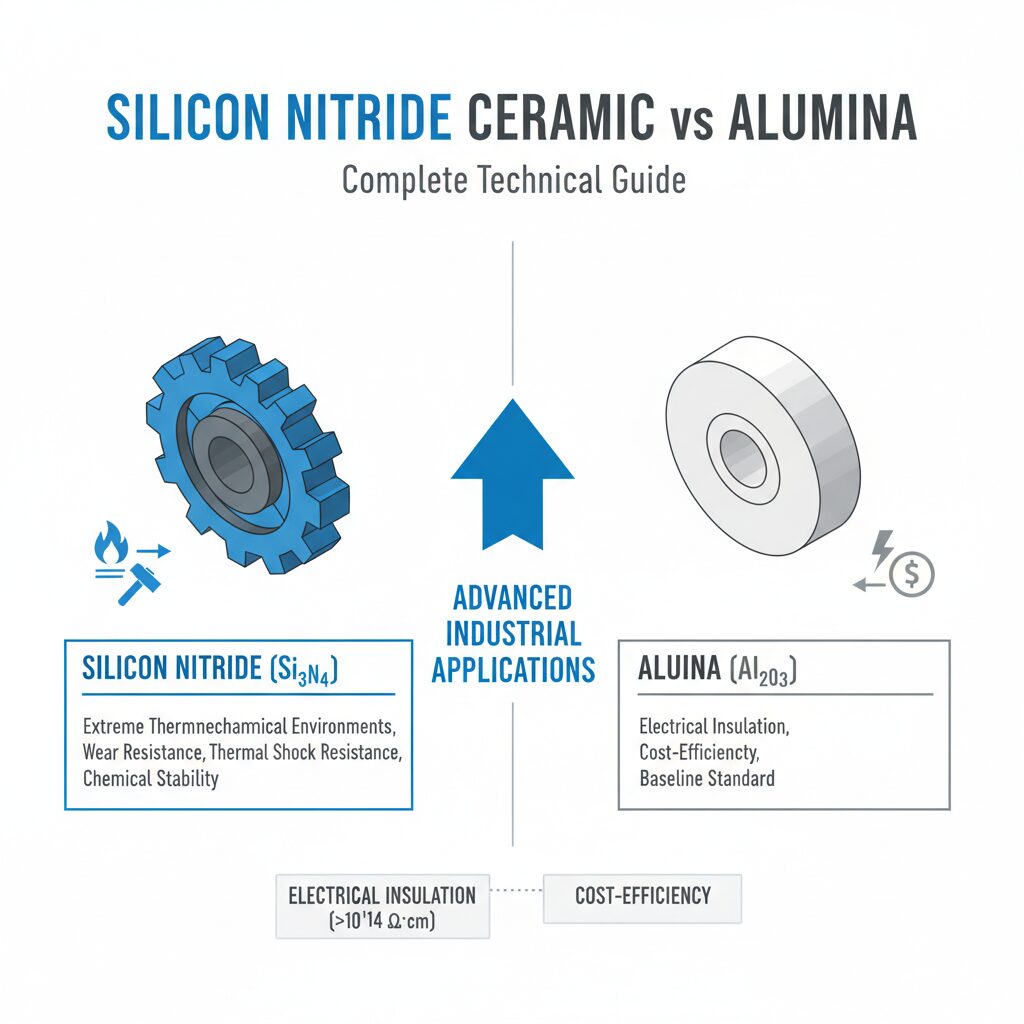
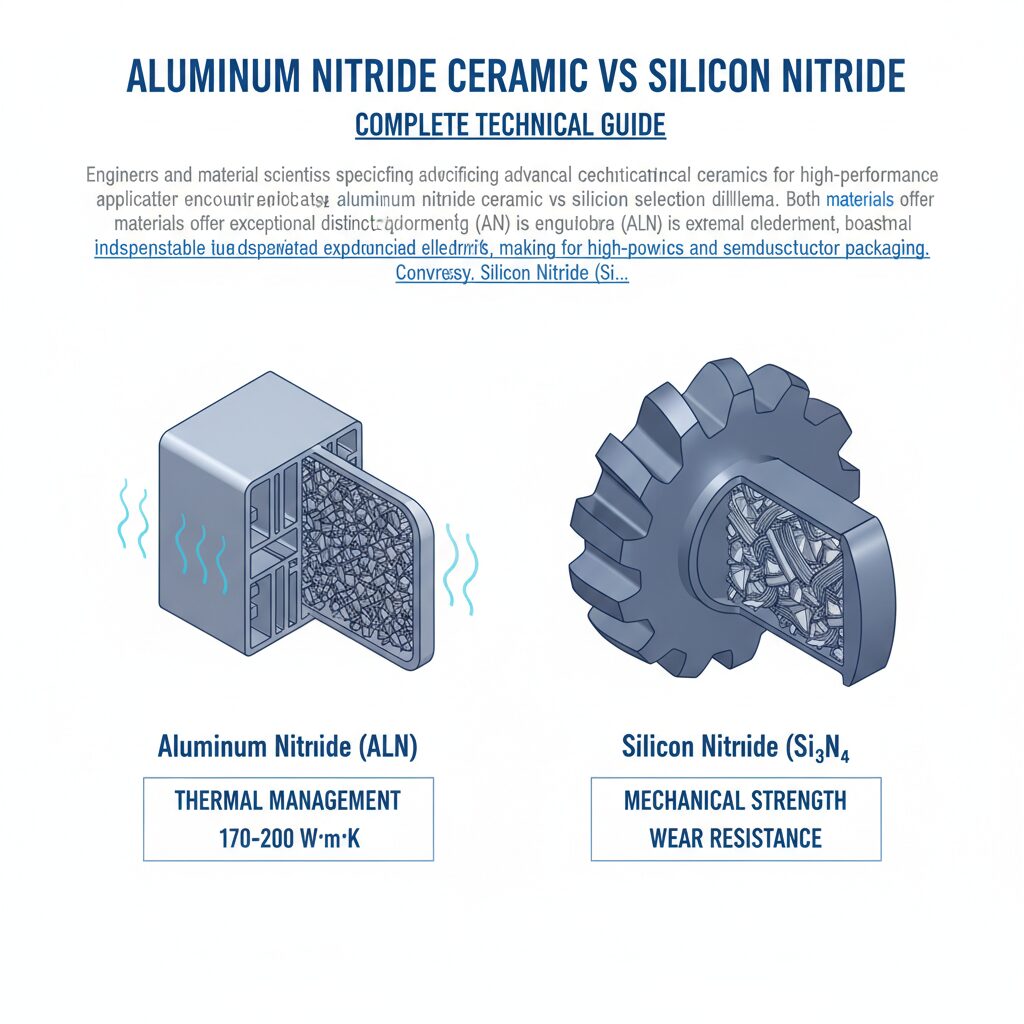
When selecting a ceramic substrate or structural plate for a medical device, engineers frequently evaluate zirconia against other advanced materials such as alumine/”>alumine et nitrure de silicium. While alumina offers excellent chemical inertness and hardness, it is inherently brittle, possessing a fracture toughness of only 3.5 to 4.5 MPa·m½. This makes alumina unsuitable for load-bearing thin plates in orthopedic applications. Silicon nitride provides an excellent balance of high strength and low density (3.2 g/cm³) and is increasingly used in spinal fusion devices due to its osteoconductive properties. However, a zirconia ceramic ceramic plate for medical use provides the highest absolute flexural strength and fracture toughness, making it the superior choice for high-stress, low-profile components where catastrophic failure is unacceptable.
| Propriété | Zirconia Ceramic Plate (Medical) | Alumine | Zircone | Nitrure de silicium |
|---|---|---|---|---|
| Conductivité thermique (W/m-K) | 2.2 | 24.0 – 35.0 | 2.2 | 20.0 – 30.0 |
| Dureté (HV) | 1250 | 1500 - 1650 | 1200 - 1300 | 1400 - 1600 |
| Résistance à la rupture (MPa-m½) | 9.5 | 3.5 – 4.5 | 8.0 - 10.0 | 6.0 - 7.0 |
| Densité (g/cm³) | 6.05 | 3.90 – 3.98 | 6.05 | 3.20 – 3.30 |
| Résistance à la flexion (MPa) | 1200 | 300 – 400 | 900 – 1200 | 800 – 900 |
| Coût | Haut | Faible | Moyen | Haut |
Applications
- Orthopedic Bone Fixation Plates: Utilized in trauma surgery for stabilizing severe fractures. A zirconia ceramic ceramic plate for medical fixation is chosen because its elastic modulus (210 GPa) is closer to cortical bone than cobalt-chrome alloys, reducing stress shielding. Furthermore, it completely eliminates the release of metallic ions into surrounding tissues. This is a critical failure mode in traditional metallic osteosynthesis plates.
- Maxillofacial and Cranial Reconstruction Substrates: Deployed as custom-machined structural plates for facial reconstruction after trauma or oncology resections. The material is chosen for its superior biocompatibility (ISO 10993 compliance), ability to be machined to highly complex topographical contours with ±0.005mm tolerances. And its radiopacity. This allows surgeons to easily monitor the implant post-operatively via X-ray and CT scans without the severe scattering artifacts caused by titanium.
- Blood Analyzer Fluidic Plates: Implemented as the primary manifold and valving substrate in high-throughput hematology analyzers. Zirconia is selected because its ultra-fine grain size (< 0.5 µm) allows for optical-grade surface polishing (Ra < 0.02 µm). This prevents protein adhesion and biological build-up inside microfluidic channels, ensuring zero cross-contamination between patient samples while resisting aggressive acidic and alkaline sterilization chemicals.
- Endodontic and Dental Base Plates: Used in specialized dental milling blocks and implant superstructures. The aesthetic profile of zirconia closely mimics natural dentin, but the primary engineering reason is its extraordinary flexural strength (1200 MPa). This easily withstands human occlusal bite forces that can exceed 800 Newtons. The material’s resistance to biofilm formation also drastically reduces the incidence of peri-implantitis.
- MRI-Compatible Surgical Instrumentation Trays and Forceps: Integrated into surgical tools used within high-magnetic-field environments (e.g., 3-Tesla intraoperative MRI suites). The material is completely non-ferromagnetic and electrically insulating (>10^13 Ω·cm), meaning it will not cause image distortion, induction heating, or pose a projectile risk. Its high toughness ensures surgical forceps and retractors maintain sharp, precise edges over thousands of autoclave cycles.
Processus de fabrication
The production of a medical-grade zirconia ceramic plate requires rigorous control over powder metallurgy, forming kinetics. And thermal processing to ensure the final product strictly adheres to ISO 13356 parameters. Any deviation in the manufacturing process can lead to abnormal grain growth, porosity, or improper phase stabilization. This catastrophically reduces the fracture toughness and increases susceptibility to Low-Temperature Degradation (LTD). Great Ceramic employs a highly monitored, multi-stage production protocol that guarantees absolute microstructural integrity and dimensional accuracy down to the micrometer level.
Méthodes de formage
- Pressage isostatique à froid (CIP) : For thicker structural medical plates (e.g., >5mm thickness), high-purity 3 mol% yttria-stabilized zirconia powder is sealed in an elastomeric mold and subjected to uniform hydrostatic pressure ranging from 200 to 300 MPa. This uniform multi-directional pressure yields a highly dense green body (typically 50-55% theoretical density) with isotropic shrinkage characteristics, drastically reducing internal stress gradients during subsequent sintering.
- Coulée de bandes : For ultra-thin microfluidic diagnostic plates or piezoelectric sensor substrates (thicknesses between 0.1mm and 2.0mm), tape casting is utilized. A precisely engineered ceramic slurry—comprising zirconia powder, solvents, dispersants, binders. And plasticizers—is extruded through a doctor blade assembly onto a moving carrier film. This method achieves exceptional thickness uniformity (±0.015mm tolerance in the green state) and allows for the lamination of multiple layers to create complex internal channel structures.
Frittage
The green ceramic plates are first subjected to a careful binder burnout phase at 400°C to 600°C to volatilize organic components at a rate of 1°C per minute to prevent blistering. Sintering is then conducted in highly controlled atmospheric furnaces at peak temperatures between 1400°C and 1500°C. The dwell time and cooling rates are tightly regulated to ensure complete densification (>99.5% theoretical density) while restricting the average grain size to less than 0.5 µm. Keeping the grain size small is a critical engineering requirement, as larger grains reduce the critical stress required for the spontaneous tetragonal-to-monoclinic transformation, thereby reducing the mechanical stability of the plate over time.
Usinage final
Post-sintering, the zirconia ceramic plate achieves extreme hardness (up to 1300 HV), making conventional metal-cutting tools entirely ineffective. Final dimensioning requires advanced usinage de précision de la céramique techniques utilizing multi-axis CNC grinding centers equipped with resin-bonded and metal-bonded diamond abrasive wheels. Surface grinding removes the outer “fired skin,” while precision lapping and chemo-mechanical polishing (CMP) sequences utilize sub-micron diamond suspensions to achieve exact flatness (< 0.002mm/100mm) and an optically clear surface finish (Ra 0.02 µm) necessary for medical fluidic seals or articulation surfaces.
Avantages et limites
Avantages
- Exceptional Biocompatibility: Meets stringent ISO 10993 requirements for cytotoxicity, sensitization. And systemic toxicity. Unlike metallic implants, a zirconia ceramic ceramic plate for medical use exhibits zero galvanic corrosion in vivo and does not release allergenic metallic ions like nickel or cobalt into the bloodstream.
- Phase Transformation Toughening: Outperforms all other oxide ceramics in impact resistance. The stress-induced phase change at the microscopic level physically squeezes advancing micro-cracks shut, absorbing massive amounts of kinetic energy and providing a fracture toughness of up to 10.0 MPa·m½.
- Thermal Insulation: With a thermal conductivity of just 2.2 W/m·K (compared to 16 W/m·K for stainless steel), zirconia plates act as excellent thermal barriers. In electrosurgical applications, this prevents unintended thermal necrosis of adjacent healthy tissues when cauterizing target zones.
- Radiopacity without MRI Artifacts: The high atomic density of zirconium ensures excellent visibility on traditional radiographs and fluoroscopy, aiding surgical placement. Simultaneously, its non-magnetic nature eliminates signal dropout and image distortion in high-field MRI environments.
Limitations
- Low-Temperature Degradation (LTD): Also known as hydrothermal aging, untreated Y-TZP can undergo a slow, spontaneous transformation from the tetragonal to the monoclinic phase when exposed to moisture at moderately elevated temperatures (37°C to 250°C), leading to surface micro-cracking over decades. This is mitigated by using highly refined medical-grade powders, doping with small amounts of alumina (0.25 wt%). And maintaining a sub-micron grain structure.
- High Density: With a specific gravity of 6.05 g/cm³, zirconia is significantly heavier than titanium alloys (4.5 g/cm³) and nitrure d'aluminium (3.26 g/cm³). This can be a minor drawback in large-volume orthopedic implants where weight reduction is desired for patient comfort.
Considérations relatives à l'usinage
The physical properties that make a zirconia ceramic ceramic plate for medical components so valuable—immense hardness and high toughness—simultaneously make it one of the most challenging materials to machine. Traditional milling or turning will immediately result in catastrophic tool failure and severe workpiece damage. Machining must be executed via abrasive diamond grinding. However, grinding induces high localized thermal loads and mechanical stresses on the surface of the ceramic. If the grinding interface temperature exceeds 200°C, or if the mechanical shear forces are too aggressive, it can trigger localized phase transformation toughening prematurely, creating an internally stressed, brittle surface layer that drastically compromises the flexural strength of the final medical device.
Great Ceramic overcomes these complex machining challenges through highly optimized, data-driven CNC grinding kinematics. We utilize customized resin-bonded diamond wheels with grit sizes ranging from D126 for high material removal down to D15 for ultra-fine finishing. Spindle speeds are carefully maintained between 15,000 and 30,000 RPM, matched with precisely calibrated feed rates as low as 0.005 mm/pass to minimize sub-surface micro-cracking. To negate thermal damage, our 5-axis CNC centers employ high-pressure flood cooling systems delivering specialized water-soluble synthetic coolants at 50 to 80 PSI directly to the cutting zone.
Because medical components demand absolute geometrical perfection, our metrology departments utilize coordinate measuring machines (CMM) and laser interferometry to verify dimensions. We routinely achieve tolerances that standard machine shops cannot:
| Paramètres d'usinage | Standard Tolerance | Great Ceramic Precision |
|---|---|---|
| Précision dimensionnelle | ± 0,020 mm | ± 0,005 mm |
| Flatness (per 100mm) | 0,010 mm | < 0,002 mm |
| Parallelism | 0,010 mm | 0.003 mm |
| Rugosité de surface (Ra) | 0.4 µm | < 0.02 µm (Polished) |
| Hole Diameter Tolerance | ± 0.015 mm | ± 0.003 mm |
Whether you require complex stepped profiles, micro-hole arrays for fluidics, or ultra-flat substrates for diagnostic equipment, Great Ceramic guarantees zero edge chipping and strict adherence to geometric dimensioning and tolerancing (GD&T) specifications.
FAQ
What is a zirconia ceramic ceramic plate for medical use?
A zirconia ceramic ceramic plate for medical use is an advanced engineering component manufactured primarily from Yttria-Stabilized Tetragonal Zirconia Polycrystal (Y-TZP). It is designed to serve as a structural, load-bearing, or fluid-handling substrate within medical devices, surgical instrumentation. And human implants. These plates leverage zirconia’s unique phase-transformation toughening to achieve a fracture toughness of 8.0 – 10.0 MPa·m½, making them highly resistant to cracking while offering absolute biocompatibility, chemical inertness. And an extremely hard, wear-resistant surface (1250 HV). They strictly comply with ISO 13356 standards for surgical implants.
What are the main applications of a zirconia ceramic ceramic plate for medical?
The main applications span across orthopedics, dentistry. And laboratory diagnostics. In surgery, they are utilized as bone fixation plates and maxillofacial reconstruction substrates due to their high flexural strength (up to 1200 MPa) and lack of metallic ion release. In diagnostic equipment, they are machined into high-precision fluidic manifolds and valve plates for blood analyzers, where ultra-smooth surfaces (Ra < 0.02 µm) prevent biological contamination. Additionally, they are used to manufacture electrically insulating, MRI-compatible surgical instrument trays and cutting guides, as well as wear-resistant components in endodontic milling machines.
How does a zirconia ceramic ceramic plate for medical compare to other ceramics?
Par rapport à la norme alumine plates, medical zirconia offers more than double the flexural strength and over twice the fracture toughness, allowing it to absorb mechanical impacts that would shatter alumina. When evaluated against nitrure de silicium, zirconia offers superior hardness and a whiter, more aesthetically pleasing color profile ideal for dental applications, though silicon nitride is lighter in density. Compared to technical carbure de silicium. This is extremely hard but brittle and dark-colored, medical zirconia is much more suitable for implantable environments where biocompatibility, radiopacity. And high impact resistance are the dominant engineering requirements.
What are the advantages of a zirconia ceramic ceramic plate for medical?
The primary engineering advantages include supreme mechanical strength and transformation toughening. This prevents catastrophic brittle failure in load-bearing applications. Furthermore, its excellent biocompatibility eliminates the risks of metallosis and galvanic corrosion associated with titanium or stainless steel implants. Zirconia is radiopaque, meaning it is clearly visible on X-rays without creating the severe scattering artifacts seen with metal implants. Finally, its extremely low thermal conductivity (2.2 W/m·K) serves as an effective thermal barrier, protecting tissue from heat necrosis during electrosurgical procedures.
How is a zirconia ceramic ceramic plate for medical machined?
Because the fully sintered ceramic is incredibly hard (1250-1300 HV), it cannot be machined using conventional metal cutting tools like high-speed steel or carbide end mills. It requires highly specialized usinage de précision de la céramique using diamond-abrasive grinding wheels on rigid, multi-axis CNC machines. The process demands optimized feed rates (e.g., 0.005 mm/pass) and high-pressure flood coolant to prevent thermal damage or micro-cracking during material removal. Great Ceramic utilizes state-of-the-art grinding, lapping. And chemo-mechanical polishing techniques to process medical zirconia plates to extreme tolerances of ±0.005mm and optical-grade surface finishes of Ra 0.02 µm, ensuring the components meet all stringent medical device manufacturing regulations.
Need custom zirconia ceramic ceramic plate for medical parts? Contacter Great Ceramic pour des services d'usinage de précision avec des tolérances serrées, ou envoyez un courriel à l'adresse suivante [email protected].
zirconia ceramic ceramic plate for medical is widely used in advanced ceramic applications.
En savoir plus sur Zirconia Ceramic Ceramic Plate For Medical et nos services d'usinage céramique de précision.