








Silicon Nitride Ceramic Hardness: An Engineering Guide to Properties and Precision Machining
In the realm of advanced technical ceramics, silicon nitride ceramic hardness is a defining characteristic that engineers and material scientists heavily rely upon. While it may not be the absolute hardest material in the ceramic family, Silicon Nitride (Si3N4) possesses an unparalleled combination of high hardness, exceptional fracture toughness. And superior thermal shock resistance. This unique tribological profile makes it the material of choice for severe stress and high-wear applications.
As experts at Great Ceramic, we specialize in the precision machining of advanced materials. In this comprehensive guide, we will explore the technical nuances of silicon nitride ceramic hardness, compare its grades, detail its properties. And explain how to effectively machine this formidable material.
Understanding Silicon Nitride Ceramic Hardness
Hardness in technical ceramics dictates the material’s resistance to plastic deformation, scratching. And mechanical wear. For silicon nitride, hardness is intrinsically linked to its strong covalent atomic bonds and its crystalline microstructure. This typically consists of intertwined needle-like beta-phase (β-Si3N4) grains.
Vickers Hardness (HV) of Silicon Nitride
The standard metric for measuring ceramic hardness is the Vickers Hardness scale (HV) or Knoop Hardness (HK). Typical fully dense silicon nitride exhibits a Vickers hardness ranging from 14 to 17 GPa (1400 – 1700 HV), tested at a 1 kg load. This high hardness level allows Si3N4 to effortlessly cut through cast iron and withstand the relentless abrasive forces found in high-speed bearing applications.
Comparing Si3N4 with Other Technical Ceramics
To truly understand silicon nitride ceramic hardness, it is vital to contextualize it against other common technical ceramics:
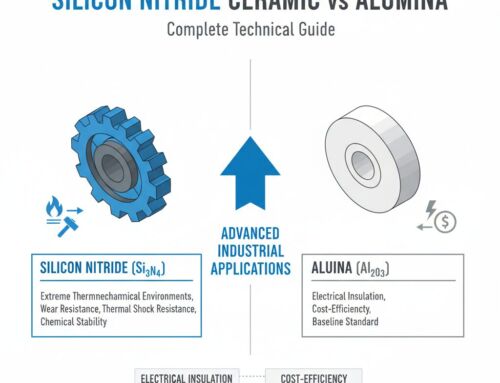
- Alumina (Al2O3): ~1500 – 1800 HV. Similar hardness, but significantly lower fracture toughness. Alumina is more brittle.
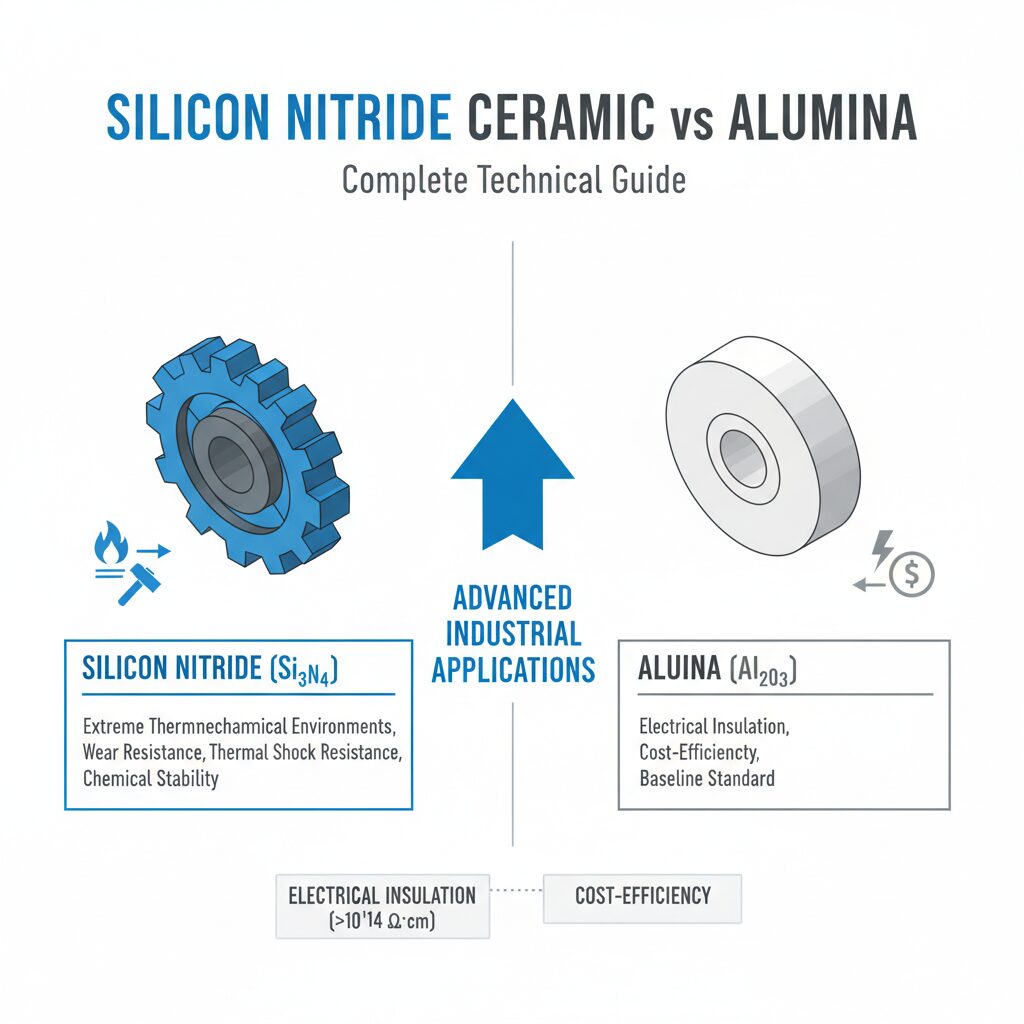
- Silicon Carbide (SiC): ~2400 – 2800 HV. SiC is much harder than silicon nitride, making it highly wear-resistant, but it lacks the toughness of Si3N4 and shatters more easily under impact.
- Zirconia (ZrO2): ~1200 – 1300 HV. Zirconia boasts higher toughness but lower hardness and poor high-temperature stability compared to silicon nitride.
Types of Silicon Nitride and Their Hardness Values
Silicon nitride is not a monolith. The manufacturing process dictates the final density and, consequently, the hardness of the ceramic.
1. Hot-Pressed and Hot Isostatic Pressed Silicon Nitride (HPSN / HIPSN)
Applying extreme pressure during the sintering process yields a fully dense material with virtually zero porosity. HIPSN exhibits the highest silicon nitride ceramic hardness, consistently reaching 15-17 GPa. It is reserved for the most demanding structural and tribological applications.
2. Sintered Silicon Nitride (SSN)
Using sintering aids (like Yttria or Magnesia), SSN achieves near-theoretical density (98-99%) without applied pressure. SSN offers an excellent balance of cost and performance, with a typical hardness of 14-15 GPa.
3. Reaction Bonded Silicon Nitride (RBSN)
RBSN is formed by nitriding a compacted silicon powder. It does not shrink during manufacturing, allowing for complex near-net shapes. However, because it retains 15-25% porosity, its hardness is notably lower, ranging from 9 to 11 GPa.
Comprehensive Material Properties Table
Below is a technical comparison of fully dense (SSN/HIPSN) and porous (RBSN) silicon nitride to highlight how hardness scales with other mechanical properties.
| Property | Unit | Sintered / HIPSN | Reaction Bonded (RBSN) |
|---|---|---|---|
| Vickers Hardness (HV1) | GPa | 14.0 – 17.0 | 9.0 – 11.0 |
| Fracture Toughness (KIc) | MPa·m1/2 | 6.0 – 8.0 | 2.5 – 3.5 |
| Density | g/cm3 | 3.20 – 3.30 | 2.30 – 2.70 |
| Flexural Strength (Room Temp) | MPa | 800 – 1000 | 200 – 350 |
| Maximum Use Temperature | °C | 1200 – 1400 | 1400 |
| Thermal Conductivity | W/m·K | 20 – 30 | 10 – 15 |
Key Industrial Applications
The synergy of high silicon nitride ceramic hardness, low mass (density of 3.2 g/cm³). And exceptional fracture toughness makes this material indispensable across various rigorous industries.
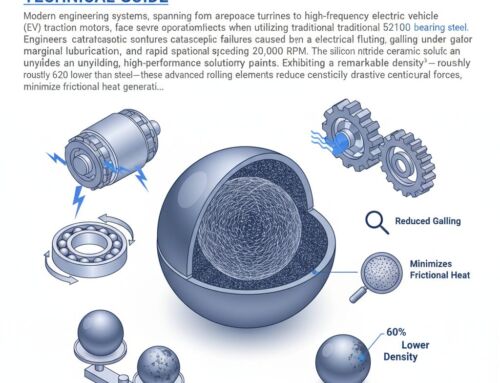
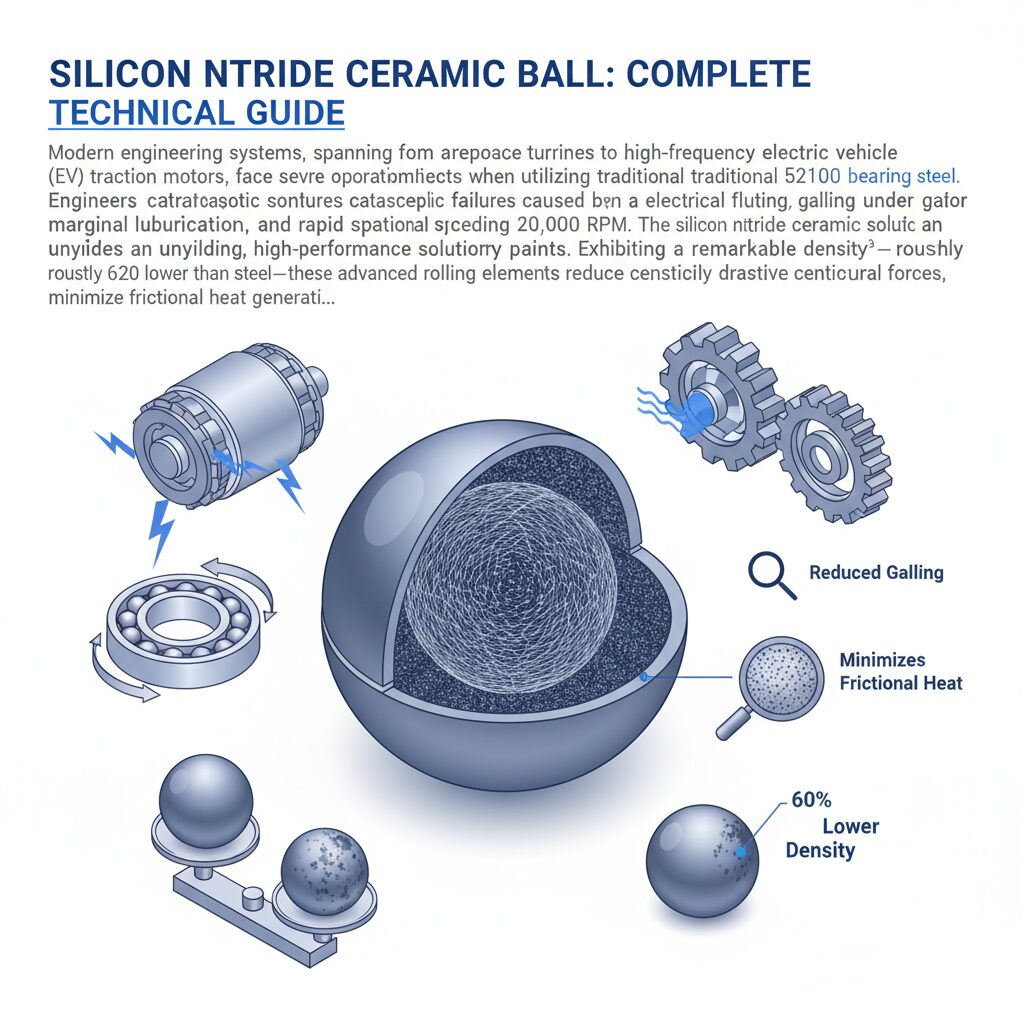
- High-Speed Ceramic Bearings: Silicon nitride’s high hardness prevents galling and spalling. Because it is 40% lighter than steel, centrifugal force in high-speed rotation is minimized, making it standard in aerospace, EV motors. And high-performance bicycles.
- Metal Cutting Tools: Si3N4 inserts maintain their extreme hardness at high temperatures, allowing for dry, high-speed turning and milling of cast iron and hard steel alloys.
- Welding Pins and Locating Dowels: The material resists weld spatter adhesion while its hardness withstands the mechanical impact of automated robotic assembly lines.
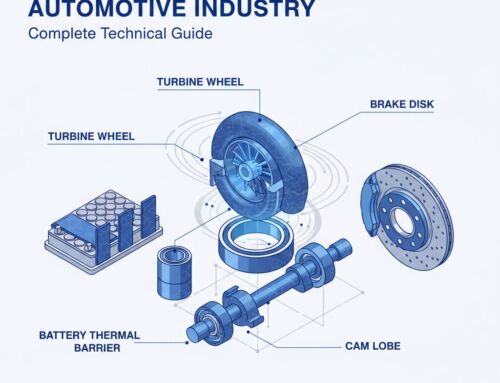
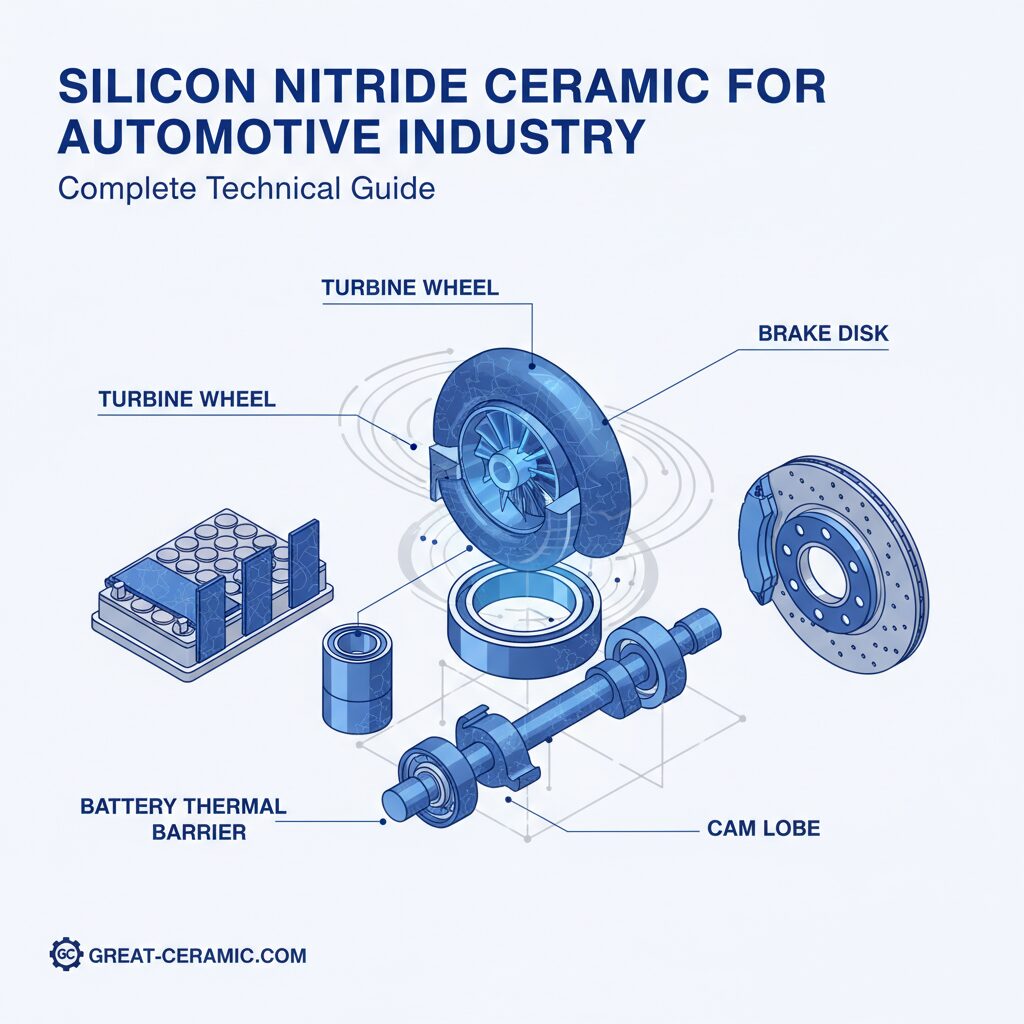
- Automotive Engine Components: Used in turbocharger rotors and diesel glow plugs where thermal shock resistance and high-temperature hardness are mandatory.
Machining Considerations for Silicon Nitride Ceramics
Achieving tight tolerances on silicon nitride components presents a significant engineering challenge. Because silicon nitride ceramic hardness exceeds that of nearly all conventional cutting tools, post-sintering machining requires specialized techniques and equipment.
Green Machining vs. Hard Machining
Whenever possible, Great Ceramic performs “green machining.” Before the material is sintered (when it is still a compacted powder held together by binders), it is soft enough to be machined using standard CNC turning and milling equipment. We calculate the exact shrinkage rate (typically 15-20%) so the part achieves near-net dimensions after firing.
Precision Hard Grinding
To achieve the final, ultra-precise tolerances (up to ±0.001mm) required by our clients, fully sintered silicon nitride must undergo diamond grinding. Due to the material’s toughness and hardness, this process involves:
- Diamond Tooling: Only resin-bonded or metal-bonded diamond grinding wheels and drill bits can effectively abrade Si3N4.
- Strict Feed Rates: High speeds but highly controlled, low feed rates are essential to prevent micro-cracking and sub-surface damage.
- Flood Coolant: Generous application of water-based coolants is required to flush away abrasive swarf and manage the localized heat generated by friction.
At Great Ceramic, our state-of-the-art multi-axis CNC grinding centers and proprietary diamond tooling strategies allow us to efficiently machine complex silicon nitride components without compromising the structural integrity of the ceramic.
Frequently Asked Questions (FAQ)
1. Is silicon nitride the hardest ceramic?
No. Silicon Carbide (SiC) and Boron Carbide (B4C) are harder than Silicon Nitride. However, Silicon Nitride is vastly preferred in dynamic structural applications because its fracture toughness is nearly double that of SiC, meaning it will not shatter under sudden impact.
2. How is silicon nitride ceramic hardness measured?
It is typically measured using the Vickers Hardness Test. A diamond indenter in the shape of a pyramid is pressed into the polished surface of the ceramic under a specific load (usually 1 kg or 10 kg). The size of the resulting indentation is measured to calculate the hardness value in GPa or HV.
3. Does the hardness of silicon nitride decrease at high temperatures?
While all materials lose some hardness at elevated temperatures, silicon nitride retains its hardness remarkably well. It can operate continuously at temperatures up to 1200°C without significant degradation of its mechanical properties, outperforming high-speed steels and tungsten carbides.
4. Can you CNC machine fully sintered silicon nitride?
Traditional CNC milling with carbide tools is impossible. However, it can be precision machined using CNC diamond grinding, ultrasonic machining, or electrical discharge machining (EDM) if specialized electrically conductive grades of Si3N4 are utilized. Great Ceramic specializes in these advanced hard-machining processes.