






Aluminum Nitride Ceramic Ceramic Block for Aerospace: Complete Technical Guide

In the demanding fields of aerospace and defense engineering, thermal management within high-vacuum and extreme-temperature environments remains a critical design bottleneck. The aluminum nitride ceramic ceramic block for aerospace represents the industry’s most advanced solution for dissipating heat in high-power electronic payloads, avionics. And optoelectronic systems. Unlike legacy materials, aluminum nitride (AlN) delivers an exceptional thermal conductivity of 170 to 200 W/m·K, combined with a coefficient of thermal expansion (CTE) of 4.5 x 10⁻⁶/°C that closely matches silicon semiconductor dies. This dual capability prevents solder joint fatigue during the severe thermal cycling of low-earth orbit (LEO) operations, where temperatures swing from -150°C to +150°C within minutes.

For aerospace procurement managers and R&D engineers, balancing weight restrictions with dielectric strength (up to 15 kV/mm) requires materials machined to exact specifications. Great Ceramic provides these advanced components with uncompromising precision, achieving ultra-tight machining tolerances of ±0.005mm. Ready to optimize your aerospace thermal management? Contact our engineering team for a technical consultation.

Material Properties

The selection of an aluminum nitride ceramic ceramic block for aerospace applications is fundamentally driven by its unique thermomechanical and electrical profile. Below is the rigorously validated data for aerospace-grade AlN blocks produced by Great Ceramic. These metrics dictate performance in critical systems such as satellite payloads and active electronically scanned array (AESA) radar.

Property Value Unit
Density 3.26 g/cm³
Hardness 1100 – 1200 HV
Flexural Strength 320 MPa
Fracture Toughness 2.8 – 3.2 MPa·m½
Thermal Conductivity 170 – 200 W/m·K
Electrical Resistivity > 10¹⁴ Ω·cm
Max Working Temperature 1000 (Air) / 1900 (Inert) °C

Density (3.26 g/cm³): In aerospace engineering, every gram translates directly to launch cost. At 3.26 g/cm³, an aluminum nitride ceramic ceramic block for aerospace provides a 16% weight reduction compared to aluminum oxide (3.90 g/cm³), while delivering more than five times the thermal conductivity. This mass-to-thermal-performance ratio is unmatched in structural technical ceramics.

Thermal Conductivity (170 – 200 W/m·K): Operating in a vacuum eliminates convective cooling, leaving only conduction and radiation. The high thermal conductivity of AlN is critical for drawing heat away from concentrated point sources, such as high-power microwave transistors (GaN and GaAs) dissipating heat fluxes in excess of 50 W/cm².

Flexural Strength and Hardness (320 MPa / 1100 HV): Aerospace components are subjected to immense mechanical stresses, including launch vibrations exceeding 20G RMS. With a flexural strength of 320 MPa, an aluminum nitride block ensures structural integrity without the risk of micro-cracking under payload acceleration forces. Its hardness of 1100 HV provides excellent wear resistance, crucial for mating surfaces in orbital mechanisms.

Comparison with Other Ceramics

To make an informed material selection, engineers must compare an aluminum nitride ceramic ceramic block for aerospace against alternative technical ceramics. While alumina/”>alumina is standard for basic insulation and zirconia excels in fracture toughness, AlN dominates in thermal management. The data below outlines how these materials stack up against each other, alongside structural heavyweights like silicon nitride.

Property Aluminum Nitride (AlN) Alumina (99.5%) Zirconia (Y-TZP) Silicon Nitride (Si3N4)
Thermal Conductivity 170 – 200 W/m·K 30 – 35 W/m·K 2 – 3 W/m·K 20 – 30 W/m·K
Hardness 1100 HV 1500 HV 1200 HV 1500 HV
Fracture Toughness 3.0 MPa·m½ 4.0 MPa·m½ 8.0 – 10.0 MPa·m½ 6.0 – 7.0 MPa·m½
Cost High Low Medium High

When analyzing thermal conductivity, AlN is vastly superior to Alumina (35 W/m·K) and Zirconia (2 W/m·K). While Silicon Nitride offers exceptional fracture toughness (up to 7.0 MPa·m½) and is ideal for high-impact structural aerospace parts (like turbine blades), its thermal conductivity maxes out around 30 W/m·K (unless specialized high-thermal-conductivity variants are used. This are prohibitively expensive and difficult to source). For purely thermal-electronic applications, the aluminum nitride ceramic ceramic block for aerospace is irreplaceable.

Applications

  • High-Power T/R Modules in Phased Array Radar: Active Electronically Scanned Array (AESA) radars utilize thousands of transmit/receive (T/R) modules packed tightly into aerial platforms. These modules generate massive thermal loads (exceeding 100 W per module). An aluminum nitride ceramic ceramic block for aerospace is chosen here because it acts as an immediate heat sink and RF-transparent dielectric substrate, pulling heat away from GaN amplifiers while preventing electrical crosstalk due to its >10¹⁴ Ω·cm resistivity.
  • Satellite Optoelectronic Baseplates: In orbital environments, optical sensors and LiDAR systems require absolute dimensional stability. With a CTE of 4.5 x 10⁻⁶/°C (perfectly matching silicon and approaching gallium arsenide), AlN blocks prevent optomechanical misalignment when the satellite transitions in and out of the earth’s shadow, enduring rapid -150°C to +150°C thermal shocks.
  • Power Electronics Heat Sinks for Avionics: Modern military and commercial aircraft are migrating toward more electric aircraft (MEA) architectures. Solid-state power controllers and IGBT modules operating at voltages over 1200V require isolation and cooling. AlN blocks are chosen because their 15 kV/mm dielectric strength isolates high voltages while transferring heat directly to the aircraft’s liquid cooling chassis.
  • Laser Diode Submounts for Space Communications: Deep-space optical communication systems utilize high-power laser diodes generating intense localized heat (>50W/cm²). The material is selected because an AlN block prevents thermal runaway. This would otherwise shift the laser’s emission wavelength, ensuring secure and stable multi-gigabit data transmission across astronomical distances.
  • Ion Thruster Isolation Components: Electric propulsion systems, such as Hall-effect thrusters, require insulating grids and mounting blocks that can withstand continuous bombardment by ionized xenon gas at temperatures exceeding 800°C. AlN is chosen because it maintains its dielectric isolation properties at high temperatures without outgassing in hard vacuum environments.

Manufacturing Process

The fabrication of an aerospace-grade aluminum nitride ceramic block demands a highly controlled metallurgical and chemical environment. Because AlN is a covalent compound, it is notoriously difficult to densify without specialized techniques. Great Ceramic utilizes a proprietary, multi-stage manufacturing workflow to ensure exact stoichiometry, maximum density (>99%). And phase purity, all of which are essential to achieving the 170+ W/m·K thermal conductivity required by aerospace standards.

Forming Methods

  • Cold Isostatic Pressing (CIP): To ensure uniform density in large, thick aluminum nitride ceramic ceramic blocks for aerospace, raw AlN powder (with a particle size of 1-2 µm) is mixed with Yttrium Oxide (Y₂O₃) sintering aids. The powder is placed in an elastomeric mold and subjected to omnidirectional hydraulic pressure exceeding 250 MPa. This eliminates density gradients that would cause warping or internal stresses during sintering, achieving a green density of roughly 60-65%.
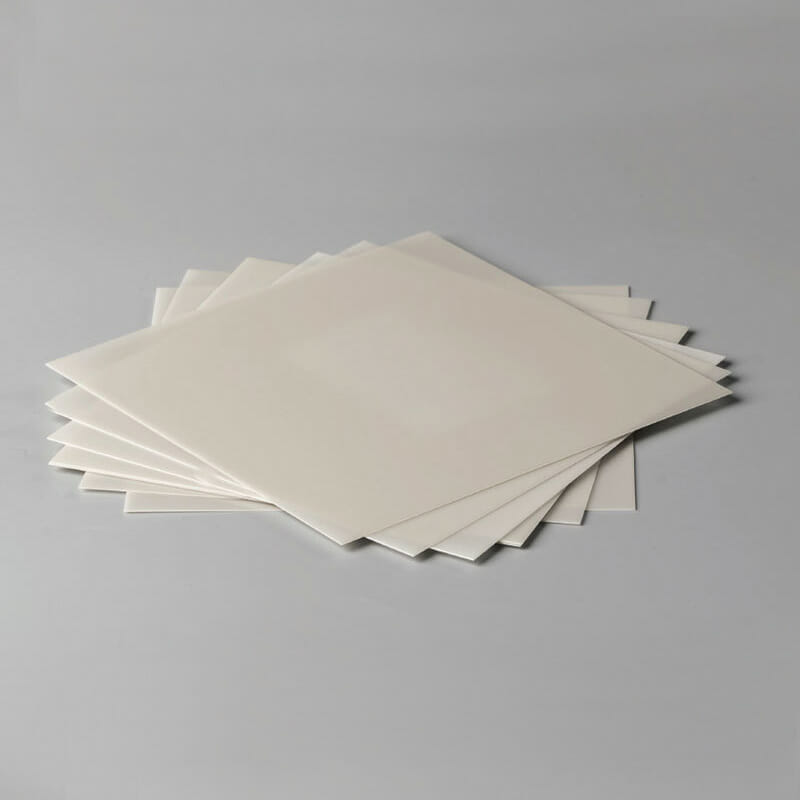
  • Tape Casting (for thin substrates/blocks): For layered or slightly thinner aerospace block configurations, the AlN powder is mixed with organic binders and solvents to form a slurry. A doctor blade spreads this slurry over a carrier tape at precise thicknesses ranging from 0.5mm to 3.0mm. Multiple tapes can be laminated under heat and pressure (typically 70°C at 20 MPa) to form thicker blocks prior to firing.

Sintering

The sintering of an aluminum nitride ceramic ceramic block for aerospace is the most critical phase for thermal performance. Great Ceramic employs liquid-phase sintering in a high-temperature nitrogen atmosphere (1800°C to 1900°C). The Yttrium Oxide (Y₂O₃) additive reacts with the oxygen impurities (Al₂O₃) present on the surface of the AlN particles to form yttrium aluminates (e.g., Y₃Al₅O₁₂). This liquid phase promotes densification and essentially “cleans” the AlN lattice of oxygen. This acts as a phonon scattering center. By removing oxygen from the lattice, the thermal conductivity increases dramatically from ~50 W/m·K to the aerospace requirement of 170-200 W/m·K. The blocks shrink by approximately 15-20% during this stage, requiring precise predictive modeling to ensure near-net shape dimensions.

Final Machining

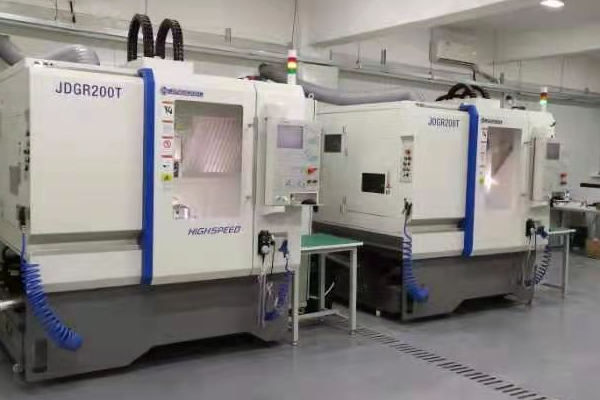
Because sintered AlN has a hardness of 1100 HV, traditional high-speed steel or carbide tools cannot penetrate the material. Final machining requires rigorous diamond-tooling processes. Great Ceramic utilizes multi-axis CNC grinding, planetary lapping. And polishing to bring the aluminum nitride ceramic ceramic block for aerospace to its final dimensions. Diamond abrasive wheels (ranging from 120 mesh for roughing to 400 mesh for finishing) are utilized with carefully controlled feed rates (as low as 0.01 mm/rev) to prevent micro-fracturing at the grain boundaries. Do you have specific drawing requirements? Submit your CAD files for a rapid RFQ and manufacturability analysis.

Advantages & Limitations

Advantages

  • Unrivaled Thermal/Electrical Balance: No other structural ceramic offers a 170-200 W/m·K thermal conductivity combined with a volume resistivity of > 10¹⁴ Ω·cm, making it the ultimate electrical insulator and thermal conductor.
  • Silicon CTE Compatibility: The CTE of 4.5 x 10⁻⁶/°C minimizes thermomechanical stress at the interface between the ceramic block and attached silicon dies or metal-matrix composites, preventing delamination.
  • Non-Toxicity: Historically, aerospace engineers used Beryllium Oxide (BeO) for similar thermal tasks. However, BeO dust is highly toxic and causes berylliosis. An aluminum nitride ceramic ceramic block for aerospace offers similar performance with zero toxicity, lowering compliance and handling costs.
  • Plasma and Halogen Resistance: AlN demonstrates exceptional resistance to fluorine-based plasmas and harsh halogens. This is highly beneficial for satellite components exposed to extreme radiation and atomic oxygen in LEO.

Limitations

  • High Manufacturing Cost: The requirement for ultra-pure precursor powders, carbothermal reduction processes. And extreme sintering temperatures (1900°C) makes AlN significantly more expensive than standard alumina.
  • Hydrolysis Vulnerability in Powder Form: While the fully densified block is stable, AlN powder is highly sensitive to moisture, forming ammonia and aluminum hydroxide. This demands stringent humidity controls during the pre-sintering phases.

Machining Considerations

Machining an aluminum nitride ceramic ceramic block for aerospace to tight tolerances without compromising its structural integrity is a specialized discipline. AlN is a brittle material (fracture toughness of 3.0 MPa·m½). Any aggressive tool engagement or excessive spindle vibration will result in edge chipping, surface micro-cracking. And a catastrophic reduction in flexural strength, leading to eventual failure under aerospace vibration protocols.

To successfully deliver complex aerospace geometries, Great Ceramic leverages state-of-the-art precision ceramic machining protocols. We control the following parameters rigidly:

Machining Operation Spindle Speed (RPM) Feed Rate (mm/min) Depth of Cut (mm) Abrasive Spec
Rough Grinding 3,000 – 5,000 50 – 100 0.05 – 0.10 Resin-bonded Diamond (D126)
Fine CNC Milling 6,000 – 8,000 10 – 25 0.005 – 0.02 Metal-bonded Diamond (D46)
Planetary Lapping 30 – 60 N/A (Pressure controlled) N/A 1 – 3 µm Diamond Slurry

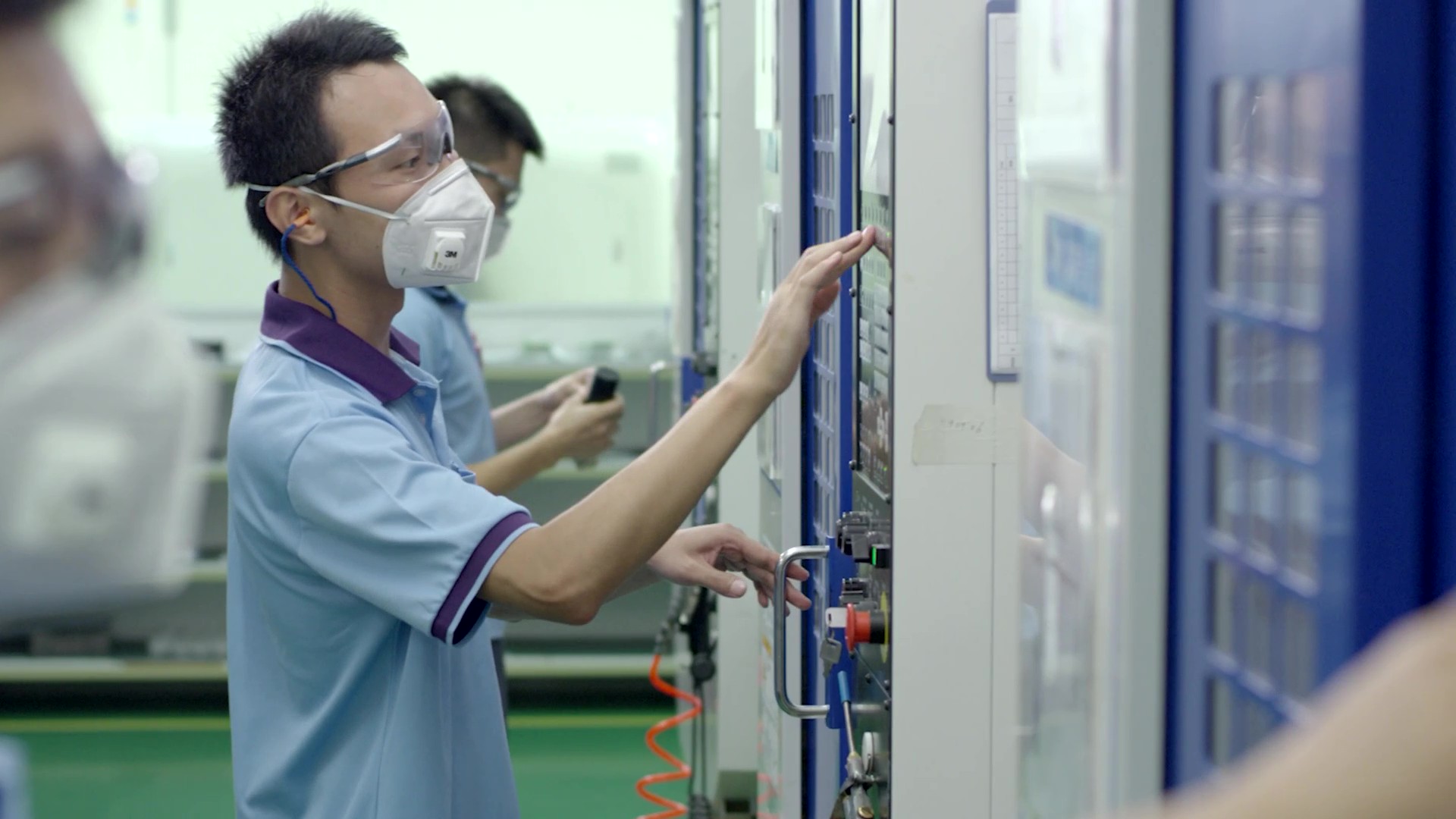
Coolant application is equally critical. We utilize high-pressure, water-based synthetic coolants with specific anti-corrosion inhibitors to flush ceramic swarf away from the cutting zone instantly, preventing tool glazing and excessive heat buildup. Furthermore, to mitigate edge chipping—the most common defect in AlN machining—our engineers program progressive chamfering routines before executing deep pocketing or perimeter cuts. Through these advanced methodologies, Great Ceramic guarantees dimensional tolerances of ±0.005mm, hole position accuracies of 0.01mm. And surface finishes up to Ra 0.1 µm, ensuring perfectly mated surfaces for aerospace thermal interfaces.

FAQ

What is an aluminum nitride ceramic ceramic block for aerospace?

An aluminum nitride ceramic ceramic block for aerospace is a dense, high-performance structural component engineered primarily for severe thermal management and electrical isolation in flight and orbital systems. Manufactured from AlN powder sintered at near 1900°C, these blocks possess an extremely high thermal conductivity (170-200 W/m·K) and strong dielectric insulation. They are specifically utilized to draw heat away from mission-critical electronics, such as radar modules, avionics controllers. And satellite optoelectronics, while preventing electrical short-circuiting in the vacuum of space where traditional air-cooling is impossible.

What are the main applications of an aluminum nitride ceramic ceramic block for aerospace?

The primary applications revolve around high-power electronics and thermal stabilization. Key uses include acting as heat-sink mounting blocks for IGBTs in aircraft power controllers, Transmit/Receive (T/R) module baseplates for military active electronically scanned array (AESA) radar systems. And submounts for high-power laser diodes used in satellite optical communications. They are also used extensively in low-earth orbit payloads where electronic components must endure drastic thermal cycling between extreme cold (-150°C) and extreme heat (+150°C), as the block’s CTE prevents the semiconductor from detaching or cracking.

How does an aluminum nitride ceramic ceramic block for aerospace compare to other ceramics?

When compared to alumina (aluminum oxide), AlN offers up to six times the thermal conductivity (170+ W/m·K vs 30 W/m·K) and a CTE that more closely matches silicon, making it vastly superior for electronic packaging. Compared to beryllium oxide (BeO). This has excellent thermal properties, AlN is completely non-toxic, eliminating severe health and safety compliance costs. Compared to silicon carbide (SiC). This also boasts high thermal conductivity, AlN acts as an electrical insulator, whereas SiC is a semiconductor, making AlN the mandatory choice when high-voltage electrical isolation is strictly required.

What are the advantages of an aluminum nitride ceramic ceramic block for aerospace?

The most significant advantage is its unparalleled capacity to dissipate heat quickly while acting as a barrier to high electrical voltages (dielectric strength up to 15 kV/mm). Additionally, its coefficient of thermal expansion (4.5 ppm/K) perfectly complements silicon (4.0 ppm/K) and gallium arsenide (5.8 ppm/K) semiconductor chips. This harmonious expansion rate drastically reduces thermal stresses on solder joints during mission operations. Finally, at a density of 3.26 g/cm³, it is relatively lightweight compared to metal heat sinks (like copper at 8.96 g/cm³), directly contributing to critical mass reductions in aerospace payloads.

How is an aluminum nitride ceramic ceramic block for aerospace machined?

Because of its extreme hardness (1100 HV) and inherent brittleness, AlN cannot be machined with standard metallic tooling. It requires specialized multi-axis CNC grinding utilizing electroplated and resin-bonded diamond abrasive wheels. Machining involves highly optimized feed rates (often below 0.01 mm per revolution), high spindle speeds. And flood cooling to prevent localized thermal shock and micro-cracking. To achieve precise flatness and surface finish (Ra 0.1 µm), planetary lapping with micron-graded diamond paste is employed. Great Ceramic specializes in these exact precision ceramic machining solutions, routinely achieving ±0.005mm tolerances required by tier-one aerospace contractors.

Need custom aluminum nitride ceramic ceramic block for aerospace parts? Contact Great Ceramic for precision machining services with tight tolerances, or email [email protected].

Learn more about Aluminum Nitride Ceramic Ceramic Block For Aerospace and our precision ceramic machining services.