










Metallized Ceramics Solution
Przy Great Ceramic, we specialize in ceramika metalizowana solutions tailored for high-performance industrial and electronic applications. With a strong foundation in advanced ceramic machining, we deliver custom ceramic metallization services that enable robust, high-temperature, and hermetically sealed ceramic-to-metal assemblies.
Whether your application requires ceramic-to-metal feedthroughs, vacuum electronic packaging, lub high-reliability metallized substrates, our engineering and processing capabilities ensure consistent quality and high-performance results.
Przejdź do
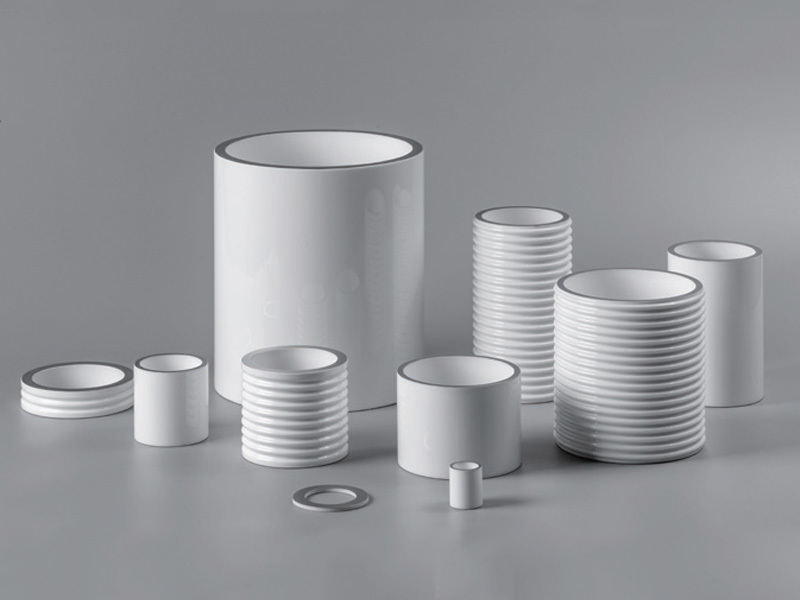
What are Metallized ceramics?
Metallized ceramics represent a cornerstone in modern ceramic packaging technology, enabling reliable, high-strength, and hermetically sealed joints between ceramic and metal components. By depositing a functional metal layer onto an insulating ceramic surface, we create surfaces that support brazing ceramics to metal, vacuum electronic packaging, oraz electrical connectivity while retaining the intrinsic benefits of advanced ceramics.
Why Metallized Ceramics?
Materiały ceramiczne, takie jak tlenek glinu (Al₂O₃), azotek glinu (AlN), tlenek cyrkonu (ZrO₂), oraz azotek krzemu (Si₃N₄) possess excellent thermal stability, wear resistance, and electrical insulation. However, they are difficult to bond directly to metals due to poor wettability and mismatched thermal expansion.
Metallization technology overcomes these limitations by forming a metallurgical bond between ceramic and metal via various methods—enabling:
What We Do: Ceramic Metallization Capabilities
Great Ceramic delivers high-reliability metallized ceramics using proprietary Mo/Mn and Mo/Mn/W coatings, enabling precise, hermetic ceramic-to-metal brazing. With in-house plating, tight-tolerance machining, and full testing for strength and seal integrity, we provide custom solutions for medical, electronic, power, and sensor applications. The metallization performance indicators are as follows:
Metallization Techniques Offered
Our experts work with you to select the best metallization materials and processes to achieve reliable, high-strength brazed joints, even in challenging geometries.
Metallization Application Methods
We will choose the appropriate method based on the product structure (cylindrical, flat, inner hole) as well as batch and precision requirements.
Metallized ceramic case
We will custom produce metallized alumina ceramics for ultra-high vacuum feedthroughs, vacuum isolator flanges, gas discharge tubes, grid tubes, vacuum circuit breakers, vacuum capacitors and similar applications according to customer drawings and requirements.
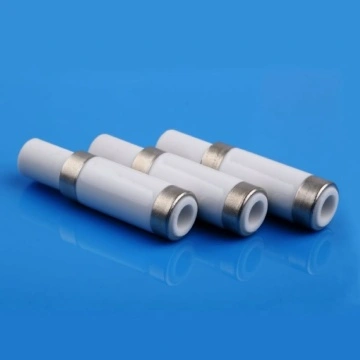
Metalizowany izolator ceramiczny
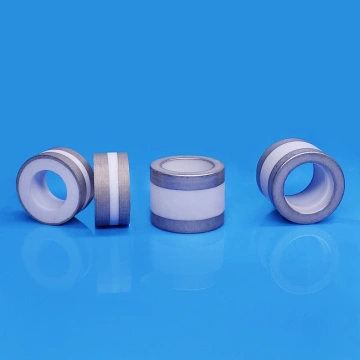
Próżniowy element ceramiczny
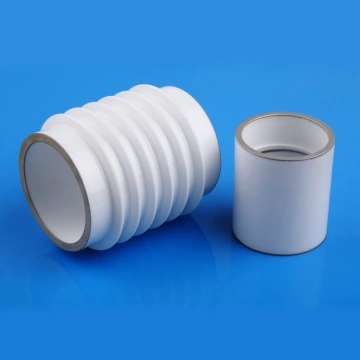
Metalizowany izolator ceramiczny
Metalizowany pierścień ceramiczny
Optional metallized ceramic materials
We offer a wide range of high purity metallized alumina ceramic components (95%~99.7% purity) for thick film metallization of molybdenum (Mo-Mn) and tungsten (W). The main metallization methods used include screen printing or vacuum sputtering, followed by electroplating or chemical plating on the metallized surface with nickel, gold, silver or tin. In this way, ceramics can be welded with oxygen-free copper, Kovar, stainless steel and other alloys. The material parameters are as follows:
| Project title | Jednostka | 96% Al2O3 | 97% Al2O3 | 99% Al2O3 | 99.6% Al2O3 |
| Zawartość tlenku glinu | % | Al2O3≧95% | Al2O3≧97% | Al2O3≧99% | Al2O3≧99.6% |
| Size range | mm | 0.5-500 | 0.5-500 | 0.5-500 | 0.5-500 |
| Highest accuracy | mm | 0.01 | 0.01 | 0.01 | 0.01 |
| Gęstość nasypowa | g/cm3 | ≧3.67 | ≧3.70 | ≧3.85 | ≧3.90 |
| Wytrzymałość na zginanie | MPa (25℃) | ≧300 | ≧300 | ≧350 | ≧400 |
| Wytrzymałość na ściskanie | GPa (25℃) | ≧1.8 | ≧1.8 | ≧2.0 | ≧2.3 |
| Przewodność cieplna | W/m.K | 10-20 | 10-20 | 15-21 | 15-21 |
| Average linear expansion coefficient | /℃ (20~500℃) | 7.36×10⁻⁶ | 6.9×10⁻⁶ | 6.9×10⁻⁶ | 6.9×10⁻⁶ |
| Stała dielektryczna | 1MHz (20℃) | 9.1 | 9.5 | 9.8 | 10 |
| Dielectric loss tangent value | 1MHz (20℃) | ≦4×10⁻⁴ | ≦3×10⁻⁴ | ≦2×10⁻⁴ | ≦2×10⁻⁴ |
| Volume resistivity | Ω.cm (100℃) | ≧1×10¹⁴ | ≧1×10¹⁴ | ≧1×10¹⁴ | ≧1×10¹⁴ |
| Wytrzymałość na przebicie prądem stałym | KV/mm | ≧30 | ≧35 | ≧25 | ≧25 |
| Odporność na szok termiczny | ℃ | 20~800 | 20~800 | 20~800 | 20~800 |
| Maksymalna temperatura pracy | ℃ | ≦1300 | ≦1400 | ≦1500 | ≦1500 |
| Acid resistance | General | Suitable | First-rate | First-rate | |
| Alkali resistance | General | Suitable | Suitable | First-rate | |
| Ease of metallization | Easy | Normal difficulty | Medium difficulty | Very difficult | |
| Air tightness | Pa•m3/s | ≦1×10-11 | ≦1×10-11 | ≦1×10⁻¹⁰ | ≦1×10⁻⁹ |
| Average Tension strength | MPa | 130 | 130 | 130 | 130 |
Uwaga: Każda partia może być inna, wyłącznie w celach informacyjnych.
Uwaga: należy wyświetlić go na komputerze.
Applications of Metallized Ceramics
Często zadawane pytania (FAQ)
Customize your metallized ceramic parts
With more than a decade of experience in advanced ceramic manufacturing, Great Ceramic understands that the success of metallized ceramics lies in interface engineering, material compatibility, and tight tolerances. Every step of our process is customized to your design, environment, and joining method.
Whether you are building a one-off prototype or preparing for large-scale production, we support flexible order quantities and serve customers in Europe, North America, and Asia.