









Aluminum Nitride Ceramic vs Silicon Nitride: Complete Technical Guide
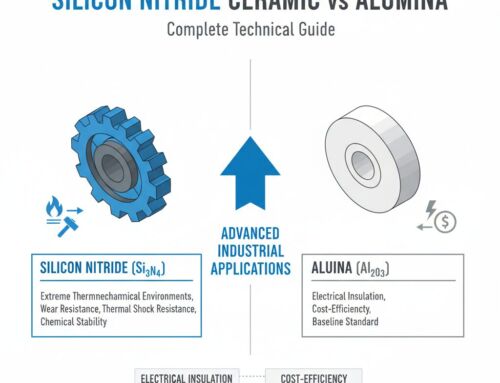
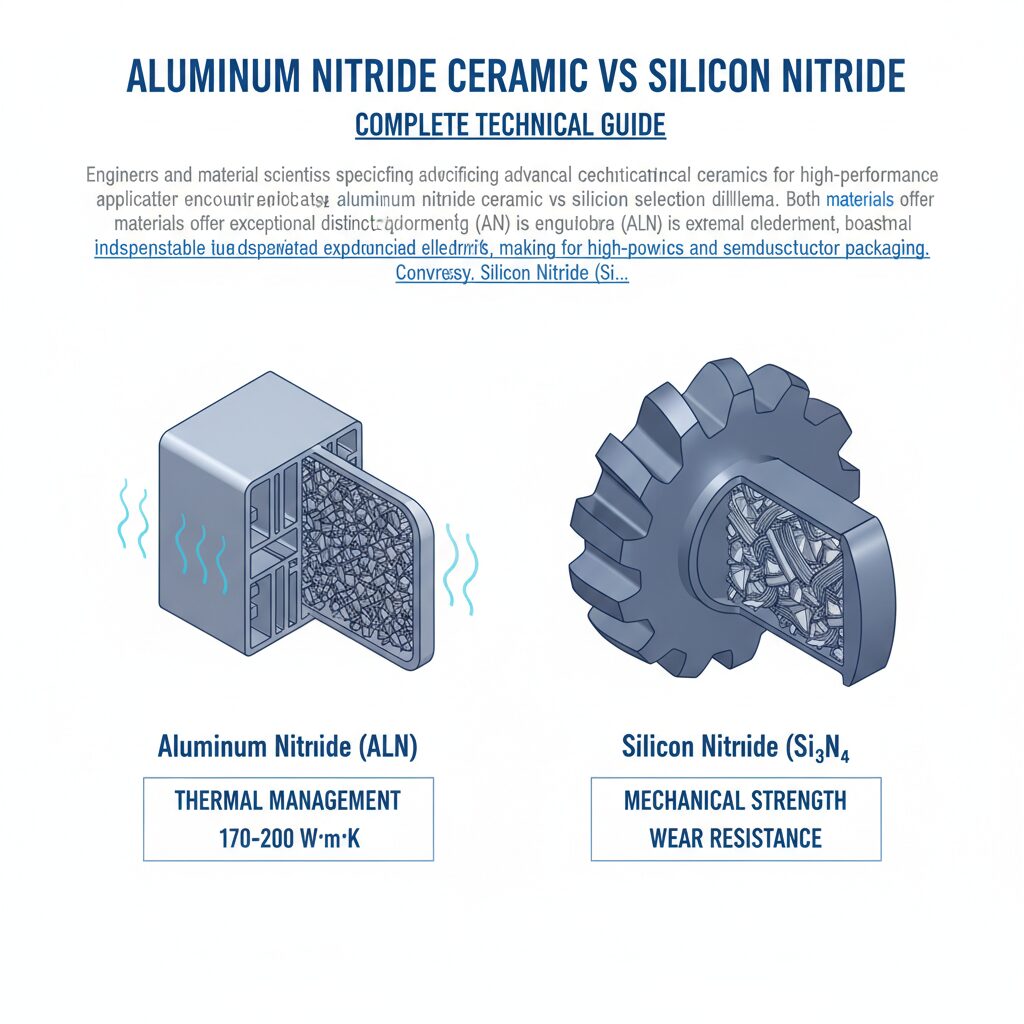
Engineers and material scientists specifying advanced technical ceramics for high-performance applications frequently encounter the azotek aluminium ceramika a azotek krzemu selection dilemma. Both materials offer exceptional performance profiles, but they serve fundamentally distinct engineering requirements. Azotek glinu (AlN) is engineered for extreme thermal management, boasting a thermal conductivity of 170-200 W/m·K, making it indispensable for high-power electronics and semiconductor packaging. Conversely, azotek krzemu (Si3N4) dominates in structural integrity and fracture toughness, achieving values up to 7.0 MPa·m½. This allows it to survive severe mechanical stress and extreme thermal shock where other ceramics would fail catastrophically. Selecting the incorrect material can lead to premature component failure, thermal throttling in electronic modules, or excessive wear in rotating machinery. This comprehensive technical guide provides a data-driven analysis of both materials, detailing their microstructural properties, specialized applications. And manufacturing challenges. For engineering teams ready to transition from prototyping to production, Great Ceramic provides precyzyjna obróbka ceramiki with ultra-tight tolerances (±0.005mm) to ensure your critical components meet exact specifications.
Właściwości materiałów
To accurately evaluate the aluminum nitride ceramic vs silicon nitride decision, engineers must analyze the baseline mechanical, thermal. And electrical properties. The table below outlines the standard specifications for high-purity Aluminum Nitride (AlN). This is primarily utilized for its thermal dissipation capabilities. AlN features a wurtzite crystal structure where the strong covalent bonds between aluminum and nitrogen atoms facilitate rapid phonon transmission—the primary mechanism for heat transfer in dielectric solids. However, to achieve thermal conductivities exceeding 170 W/m·K, the oxygen impurity content must be strictly controlled to less than 1.0 wt%, as oxygen atoms introduce lattice defects that scatter phonons and drastically reduce thermal efficiency.
| Nieruchomość | Wartość | Jednostka |
|---|---|---|
| Gęstość | 3.26 | g/cm³ |
| Twardość | 1100 | HV |
| Wytrzymałość na zginanie | 300 – 350 | MPa |
| Wytrzymałość na złamania | 2.6 – 2.8 | MPa-m½ |
| Przewodność cieplna | 170 - 200 | W/m-K |
| Rezystywność elektryczna | > 10^14 | Ω-cm |
| Maksymalna temperatura robocza | 1000 (Oxidizing) / 1900 (Inert) | °C |
In stark contrast, Silicon Nitride (Si3N4) possesses a highly complex interlocking acicular (needle-like) beta-phase grain structure. This unique microstructural morphology acts as an internal crack-deflection mechanism, forcing propagating cracks to navigate a tortuous path around the elongated grains. This mechanism is responsible for Si3N4’s exceptional fracture toughness (6.0 – 7.0 MPa·m½) and flexural strength (up to 1000 MPa). While its baseline thermal conductivity is relatively low (20-30 W/m·K), its coefficient of thermal expansion (CTE) is incredibly low (3.2 ppm/K). This, combined with high strength, grants it unparalleled thermal shock resistance among technical ceramics.
Porównanie z innymi materiałami ceramicznymi
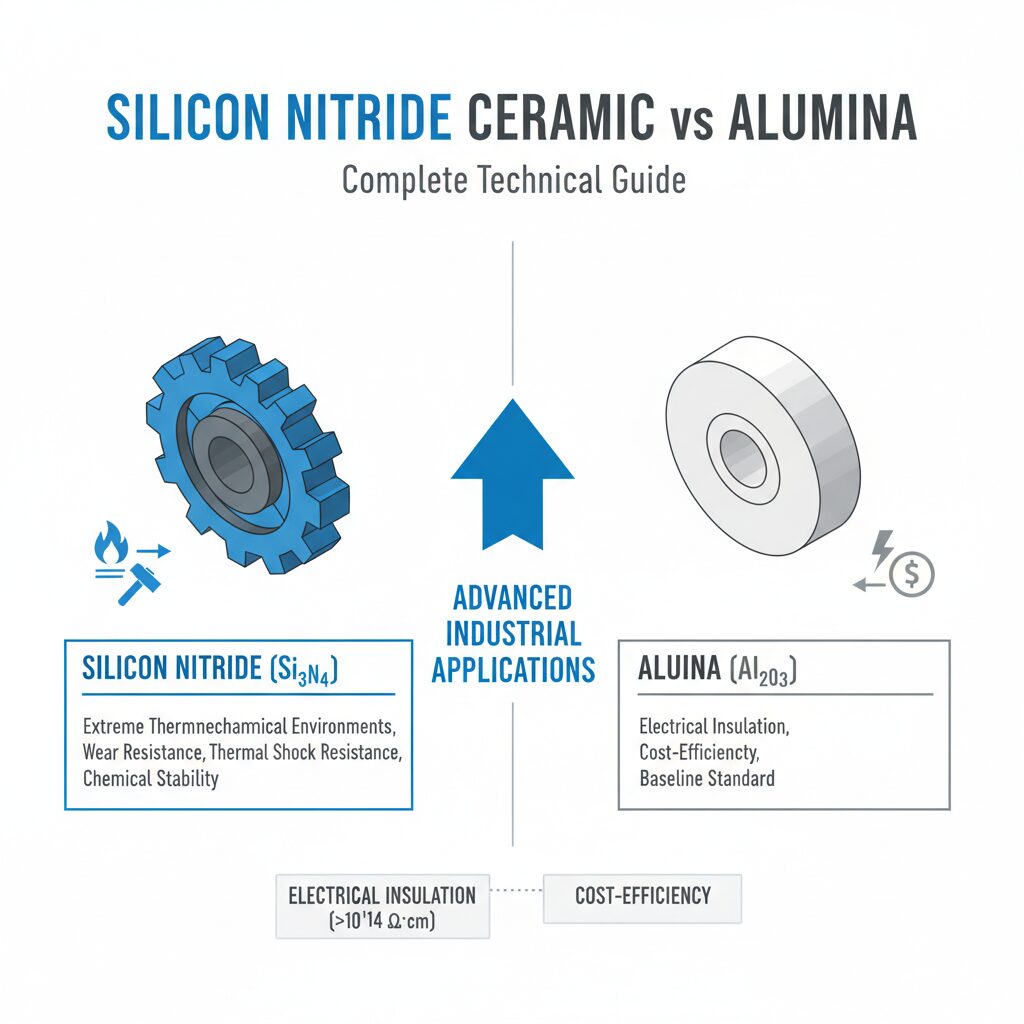
When selecting advanced materials for critical infrastructure, comparing the target materials against legacy options like tlenek glinu/”>aluminium (Al2O3) and cyrkonia (ZrO2) provides essential context. Alumina remains the cost-effective industry standard for general electrical insulation, but it suffers from low thermal conductivity (24-30 W/m·K) and moderate toughness (3.5 MPa·m½). Zirconia offers the highest fracture toughness (up to 10.0 MPa·m½) due to its transformation toughening mechanism, but it acts as a thermal insulator (2-3 W/m·K). The table below contextualizes the performance metrics of these advanced technical ceramics.
| Nieruchomość | Azotek glinu | Tlenek glinu | Cyrkon | Azotek krzemu |
|---|---|---|---|---|
| Przewodność cieplna (W/m-K) | 170 - 200 | 25 - 35 | 2.0 - 3.0 | 20 - 30 |
| Twardość (HV) | 1100 | 1440 – 1600 | 1200 - 1300 | 1500 - 1600 |
| Wytrzymałość na złamanie (MPa-m½) | 2.6 – 2.8 | 3,5 – 4,0 | 8.0 - 10.0 | 6.0 - 7.0 |
| Koszt | Wysoki | Niski | Średni | Wysoki |
Another specialized alternative to consider in thermal management is azotek boru (BN). While hexagonal Boron Nitride offers excellent lubricity and thermal shock resistance, it is extremely soft and structurally weak compared to both AlN and Si3N4. For applications requiring extreme wear resistance in abrasive environments, węglik krzemu (SiC) may be evaluated alongside Silicon Nitride, though SiC is significantly more brittle.
Aplikacje
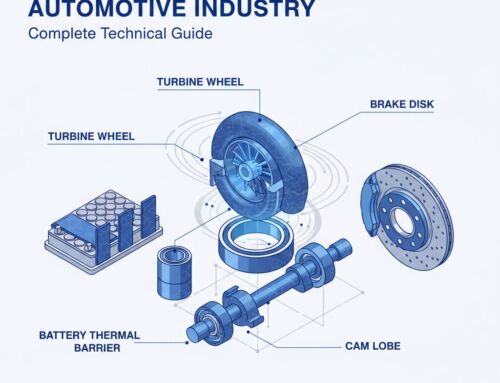
The operational deployment of these materials highlights the core differences in the aluminum nitride ceramic vs silicon nitride debate. Each material is specified based on stringent environmental demands, ranging from extreme voltages in semiconductor fabrication to brutal mechanical forces in aerospace engineering.
- Insulated Gate Bipolar Transistor (IGBT) Modules: In high-power traction inverters for electric vehicles and high-speed rail, electronic components generate localized heat fluxes exceeding 200 W/cm². Aluminum Nitride is chosen as the substrate material because its 170+ W/m·K thermal conductivity rapidly dissipates heat, while its dielectric strength (>15 kV/mm) prevents catastrophic electrical shorting.
- Semiconductor Plasma Chucks: During deep reactive-ion etching (DRIE), wafer chucks are exposed to corrosive fluorine-based plasmas and require extreme temperature uniformity (±1°C). Aluminum Nitride provides the necessary halogen plasma resistance and rapid thermal equilibration, ensuring uniform critical dimensions (CD) across 300mm silicon wafers.
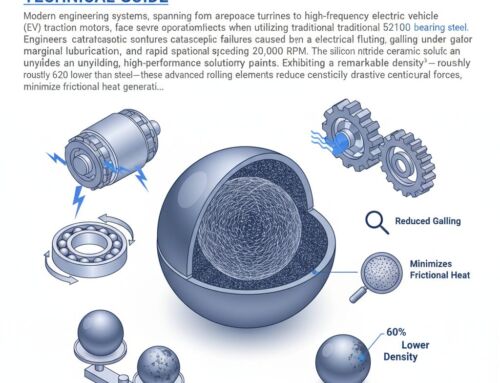
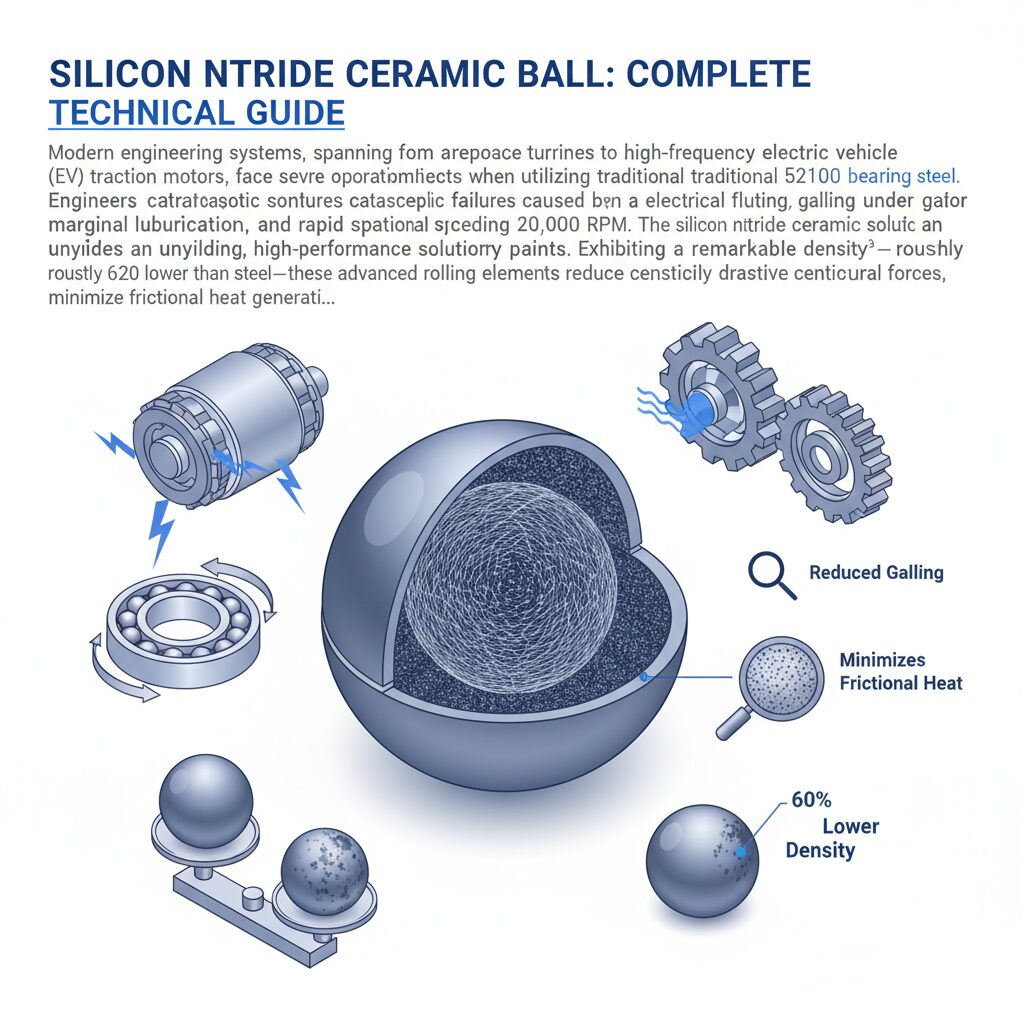
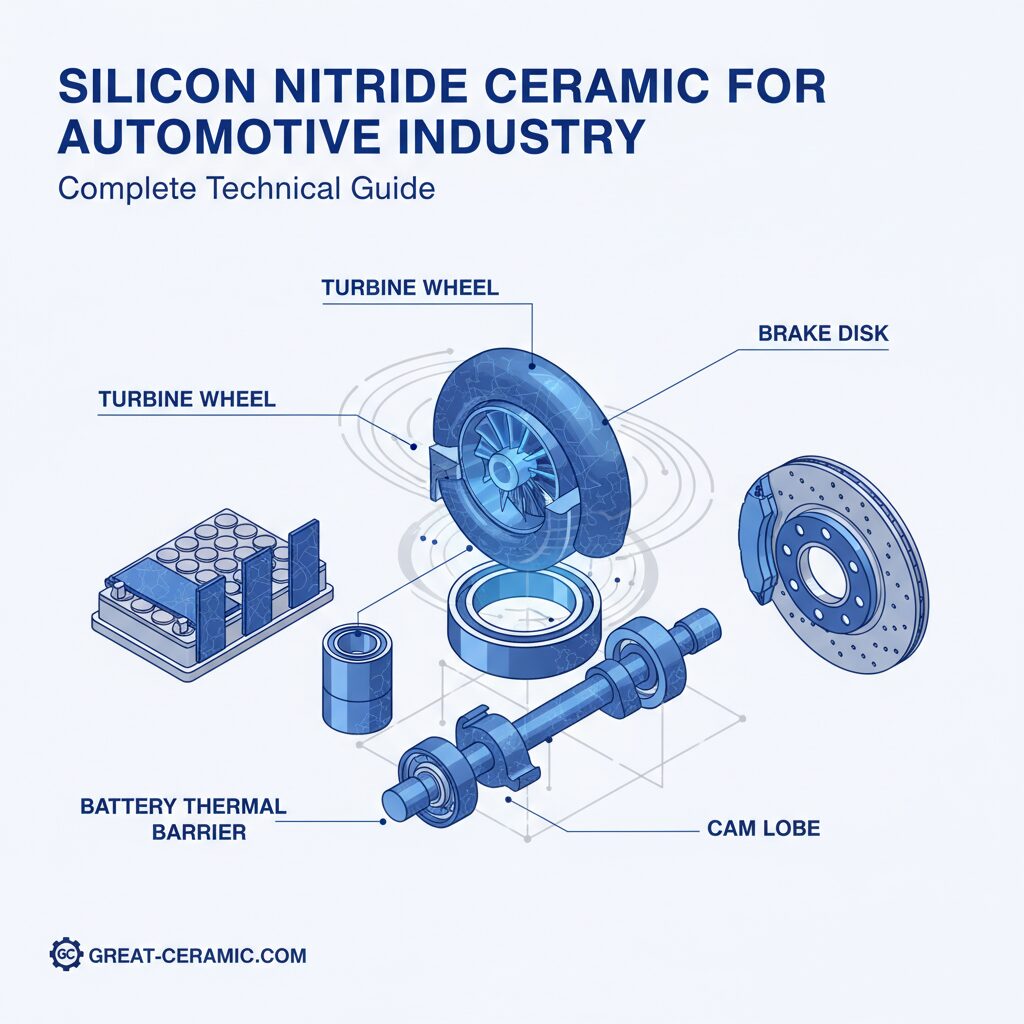
- High-Speed Spindle Bearings: In CNC machine tools operating at speeds exceeding 40,000 RPM, steel ball bearings suffer from galling and excessive centrifugal loading. Silicon Nitride is selected for rolling elements because its low density (3.20 g/cm³) reduces centrifugal force by 40% compared to steel, while its 7.0 MPa·m½ toughness prevents spalling under heavy radial loads.
- Molten Aluminum Handling Components: Thermocouple protection tubes and riser tubes in non-ferrous foundries face severe thermal shock when plunged into 700°C molten aluminum. Silicon Nitride is the ideal material because it is not wetted by molten aluminum. And its low CTE (3.2 ppm/K) combined with high flexural strength (800 MPa) prevents catastrophic cracking during rapid temperature changes.
- Podstawki pod diody laserowe: High-power continuous-wave (CW) solid-state lasers require precise temperature control to maintain wavelength stability (typically shifting 0.3 nm/°C). Aluminum Nitride is utilized as the submount because its CTE (4.5 ppm/K) closely matches that of the gallium arsenide (GaAs) semiconductor die, preventing delamination while efficiently extracting heat.
Proces produkcji
The fabrication of high-purity technical ceramics is a highly controlled, multi-stage metallurgical process. Minor deviations in powder stoichiometry, compaction pressure, or atmospheric control during firing will drastically degrade the final mechanical and thermal properties of both Aluminum Nitride and Silicon Nitride.
Metody formowania
Achieving a homogeneous green body (unfired ceramic) with specific density gradients is critical for dimensional stability during sintering.
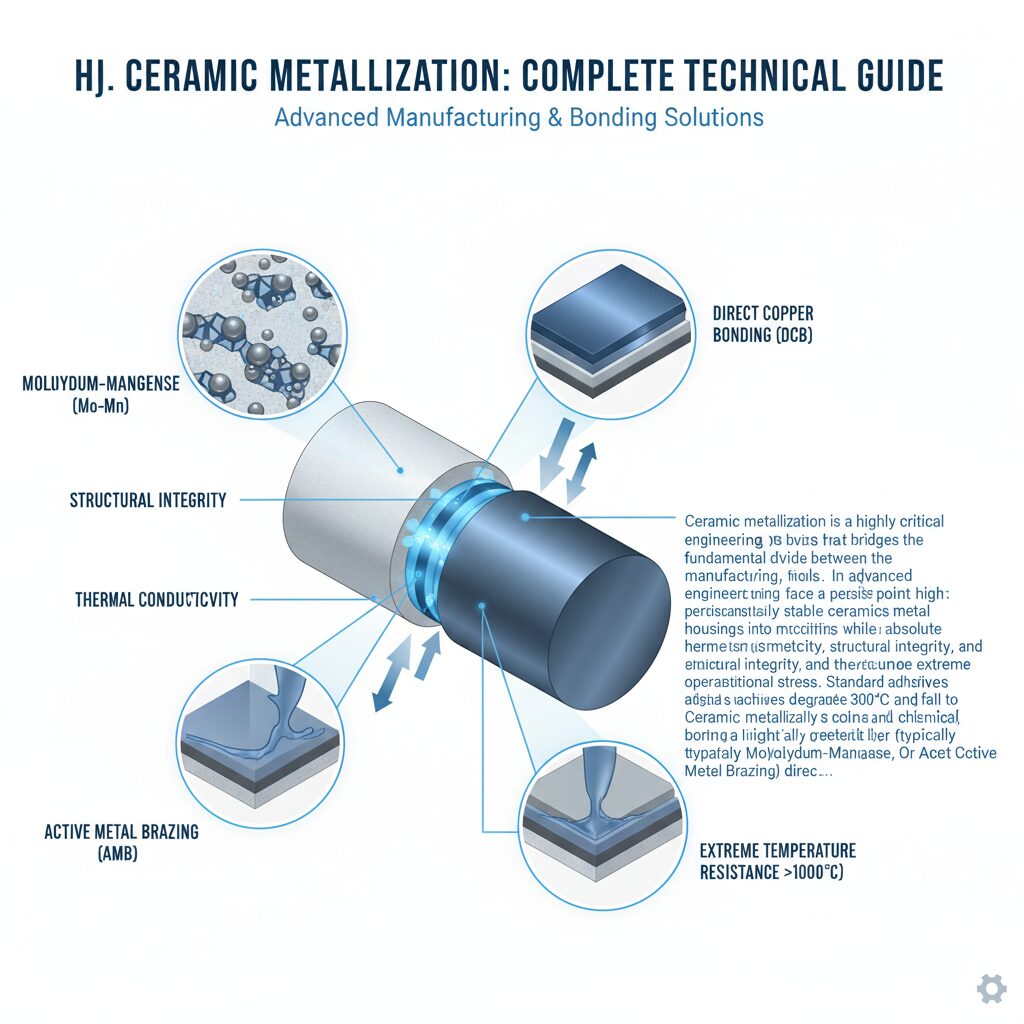
- Odlewanie taśmy: Primarily used for AlN substrates in electronics. Ceramic powder is mixed with organic binders, plasticizers. And solvents to create a slurry. A doctor blade spreads this slurry into ultra-thin sheets (ranging from 0.25mm to 1.5mm thick). After drying, these flexible tapes are punched, via-filled with refractory metals (like Tungsten or Molybdenum). And laminated into multi-layer circuits.
- Prasowanie izostatyczne na zimno (CIP): Utilized for bulk Silicon Nitride components (like bearings or structural blocks). Dry ceramic powder is sealed in an elastomeric mold and subjected to uniform hydraulic pressure (typically 200 to 300 MPa). This omnidirectional pressure yields a highly uniform green density. This minimizes anisotropic shrinkage and distortion during the subsequent high-temperature firing phase.
Spiekanie
Sintering is the critical thermal process where individual powder particles coalesce into a dense solid. Because both AlN and Si3N4 possess strong covalent bonds, they have exceedingly low self-diffusion coefficients, making them incredibly difficult to densify without specialized techniques.
For Aluminum Nitride, liquid-phase sintering is employed. Yttrium oxide (Y2O3) or calcium oxide (CaO) is added as a sintering aid (typically 3-5 wt%). Firing occurs in a nitrogen atmosphere at temperatures between 1800°C and 1900°C. The yttria reacts with oxygen impurities on the surface of the AlN particles, forming an aluminate liquid phase that facilitates densification and simultaneously purifies the AlN lattice, thereby maximizing thermal conductivity.
Silicon Nitride requires Gas Pressure Sintering (GPS). Because Si3N4 begins to dissociate into silicon and nitrogen gas at temperatures above 1850°C, high-pressure nitrogen gas (up to 10 MPa) must be applied in the furnace. This overpressure suppresses thermal decomposition, allowing the material to reach full theoretical density while maintaining its critical beta-phase crystalline structure.
Obróbka końcowa
Post-sintering, both ceramics exhibit extreme hardness (1100 to 1600 HV). Traditional cutting tools like high-speed steel or tungsten carbide will degrade almost instantly. Final machining must be executed using specialized diamond-impregnated abrasive wheels. This process requires rigid, vibration-damped CNC platforms operating at high spindle speeds (up to 30,000 RPM) with high-pressure, water-based coolants to flush away abrasive swarf and prevent thermal damage to the micro-cracked subsurface.
Zalety i ograniczenia
A rigorous engineering assessment must balance the inherent strengths of these materials against their physical and economic constraints.
Zalety
- Unmatched Thermal Management (AlN): Aluminum Nitride achieves up to 200 W/m·K thermal conductivity, outperforming alumina by nearly a factor of seven, while providing superior dielectric isolation.
- Extreme Fracture Toughness (Si3N4): With fracture toughness values reaching 7.0 MPa·m½, Silicon Nitride is one of the few technical ceramics capable of surviving severe mechanical impacts without catastrophic brittle failure.
- Thermal Shock Resistance (Si3N4): The combination of high mechanical strength and a low coefficient of thermal expansion (3.2 ppm/K) allows Silicon Nitride to withstand temperature differentials of up to 800°C without fracturing.
- Silicon CTE Matching (AlN): The thermal expansion coefficient of AlN (4.5 ppm/K) is nearly identical to that of bare silicon semiconductor wafers (4.1 ppm/K), virtually eliminating thermally induced mechanical stress in direct-bonded copper (DBC) packaging arrays.
Ograniczenia
- Hydrolysis Susceptibility (AlN): Bare, unprotected Aluminum Nitride powder and green bodies are highly reactive with atmospheric moisture, forming aluminum hydroxide and ammonia gas. This requires strict humidity-controlled environments during manufacturing.
- Low Thermal Conductivity (Si3N4): Standard structural grades of Silicon Nitride offer poor thermal dissipation (20-30 W/m·K). While specialized highly-oriented Si3N4 grades can reach 90 W/m·K, they come at a prohibitive cost and compromised mechanical strength.
Rozważania dotyczące obróbki
The final operational success of any technical ceramic component relies heavily on the quality of its post-sintering machining. This is a critical factor in the aluminum nitride ceramic vs silicon nitride selection process, as their differing hardness and toughness profiles drastically alter machining dynamics. Machining these advanced ceramics presents significant tribological challenges. When a diamond grit engages the ceramic surface, material removal occurs primarily through brittle micro-fracture rather than plastic deformation. If the cutting parameters—specifically the depth of cut (ap), feed rate (vf). And peripheral wheel speed (vc)—are not optimized, the resulting subsurface damage layer can exceed 50 micrometers. This hidden damage acts as an initiation site for catastrophic failure under operational mechanical stress.
Machining Silicon Nitride is notoriously difficult due to its high fracture toughness and 1600 HV hardness. It requires metal-bonded diamond grinding wheels with optimized grit sizes (typically D46 for roughing, D15 or finer for finishing). Tool wear rates (G-ratios) are exceptionally high, requiring frequent wheel truing and dressing to maintain cutting efficiency. Aluminum Nitride, while slightly softer (1100 HV), is significantly more brittle (2.8 MPa·m½). Excessive tool pressure during CNC milling or grinding will easily induce edge chipping and corner breakout, requiring lighter depths of cut (often less than 0.01mm per pass) and highly stable fixture designs.
Great Ceramic overcomes these complex machining challenges through state-of-the-art ultrasonic-assisted CNC machining and multi-axis precision grinding. By superimposing high-frequency ultrasonic vibrations (typically 20 kHz to 40 kHz) onto the rotating diamond tool, cutting forces are reduced by up to 40%. This minimizes the micro-crack depth and allows Great Ceramic to achieve ultra-tight geometric tolerances of ±0.005mm and surface finishes as fine as Ra 0.1 µm. Furthermore, our engineers optimize high-pressure flood coolant delivery to manage the extreme friction generated during the diamond abrasion process. If your engineering team requires exact specifications without compromise, we offer world-class precyzyjna obróbka ceramiki tailored specifically to AlN and Si3N4.
FAQ
What is aluminum nitride ceramic vs silicon nitride?
The comparison involves two distinct high-performance technical ceramics. Aluminum Nitride (AlN) is a thermal management material featuring a wurtzite crystal structure, prized for its extremely high thermal conductivity (up to 200 W/m·K) and excellent electrical insulation. It is primarily used to pull heat away from active electronic components. Silicon Nitride (Si3N4) is a structural material characterized by an interlocking beta-phase grain structure. It is designed for maximum mechanical survivability, offering high fracture toughness (7.0 MPa·m½) and extreme resistance to thermal shock and wear, but providing minimal thermal conductivity compared to AlN.
What are the main applications of aluminum nitride ceramic vs silicon nitride?
Aluminum Nitride is heavily deployed in high-power microelectronics, specifically as substrates for Insulated Gate Bipolar Transistors (IGBTs), RF/microwave packages, deep UV LED submounts. And semiconductor plasma processing equipment. Its primary job is heat extraction. Silicon Nitride is used in mechanically demanding environments such as high-speed precision ball bearings, cutting tool inserts for machining cast iron, molten metal handling tubes in non-ferrous foundries. And aerospace engine components where high temperatures and mechanical loads are combined.
How does aluminum nitride ceramic vs silicon nitride compare to other ceramics?
When evaluated against the broader ceramic spectrum, Aluminum Nitride is the ultimate thermal conductor, offering nearly seven times the thermal conductivity of standard alumina (Al2O3) while maintaining high dielectric strength. Silicon Nitride is the ultimate balanced structural material. it does not have the extreme raw hardness of silicon carbide (SiC) or the raw toughness of zirconia (ZrO2), but it offers the best combination of high strength, high toughness, low density. And thermal shock resistance, making it uniquely suited for dynamic structural parts.
What are the advantages of aluminum nitride ceramic vs silicon nitride?
The primary advantage of Aluminum Nitride is its ability to dissipate massive amounts of heat (170-200 W/m·K) while physically expanding at the exact same rate as silicon semiconductors (CTE of 4.5 ppm/K), preventing thermally induced mechanical stress in electronics. The primary advantage of Silicon Nitride is its extreme durability. It can absorb mechanical impacts that would shatter alumina or silicon carbide. And it can survive sudden temperature drops of hundreds of degrees without suffering from thermal shock cracking due to its low CTE (3.2 ppm/K).
How is aluminum nitride ceramic vs silicon nitride machined?
Both materials are fully dense and exceptionally hard post-sintering, meaning they cannot be machined using conventional metal-cutting tools. They require precision grinding, lapping. And polishing using diamond-impregnated abrasives. Aluminum Nitride requires highly controlled feed rates to prevent edge chipping due to its lower fracture toughness. Silicon Nitride requires highly rigid machine setups to counteract extreme cutting forces generated by its high toughness. Great Ceramic specializes in advanced processing techniques, including ultrasonic-assisted machining, enabling us to process both materials to rigorous geometric tolerances of ±0.005mm with flawless surface finishes.
Need custom aluminum nitride ceramic vs silicon nitride parts? Kontakt Great Ceramic w przypadku usług precyzyjnej obróbki skrawaniem o wąskich tolerancjach lub wyślij wiadomość e-mail na adres [email protected].
aluminum nitride ceramic vs silicon nitride is widely used in advanced ceramic applications.
Dowiedz się więcej o Ceramika z azotku glinu a azotek krzemu i nasze usługi precyzyjnej obróbki ceramiki.