








ZTA ceramic vs 炭化ケイ素: Complete Technical Guide
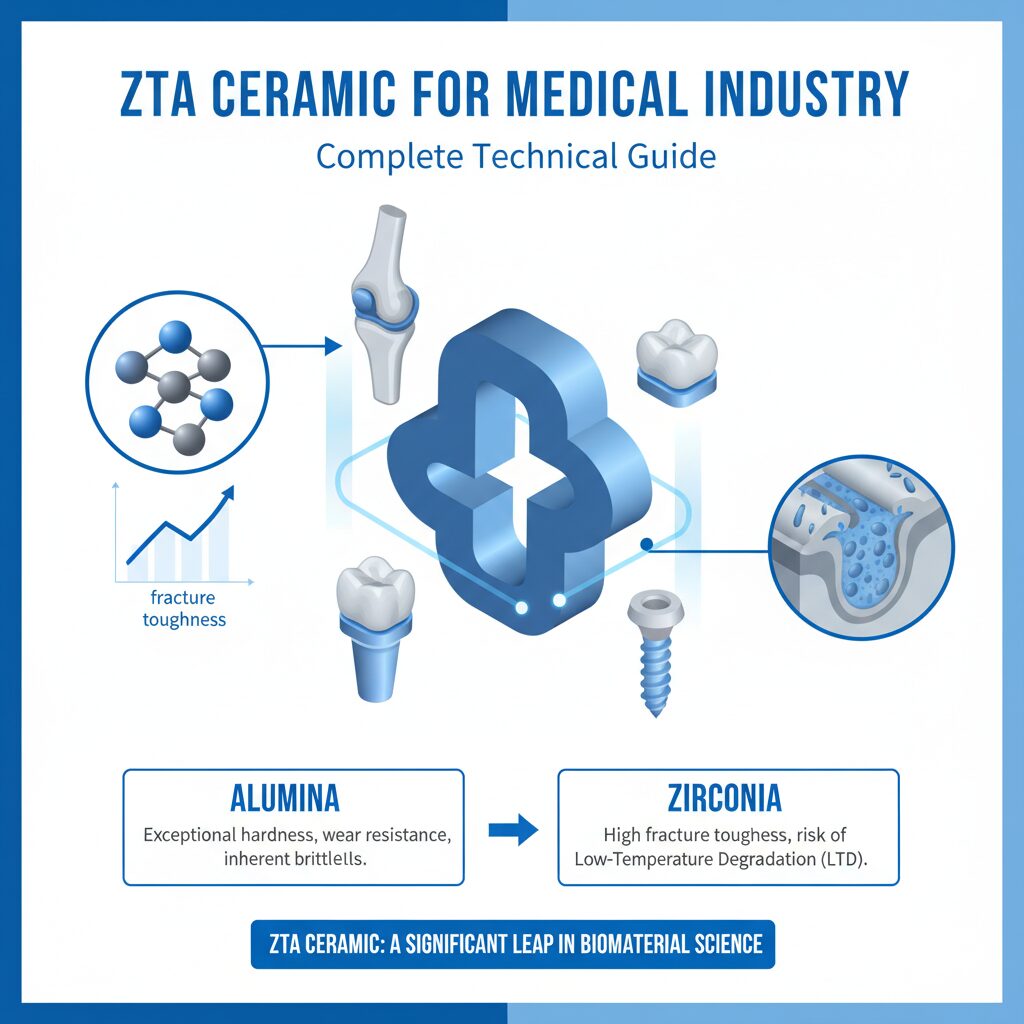
When engineering high-performance components for extreme industrial environments, the selection between ZTA ceramic vs silicon carbide represents a critical decision for R&D teams and procurement managers. Zirconia Toughened Alumina (ZTA) and Silicon Carbide (SiC) are two advanced materials designed to solve severe industry pain points, including rapid mechanical wear, catastrophic brittle failure. And thermal shock degradation under high operational loads. ZTA incorporates 10% to 20% zirconia particles into an アルミナ matrix, leveraging phase-transformation toughening to achieve a fracture toughness of up to 6.0 MPa·m½, effectively mitigating crack propagation in heavy-impact scenarios. Conversely, Silicon Carbide relies on ultra-strong covalent bonding to deliver an exceptional hardness of 2800 HV and a thermal conductivity reaching 150 W/m·K, making it the premier choice for extreme heat dissipation and abrasive friction environments. Navigating the dimensional stability and machining parameters of these materials requires specialized capabilities. At Great Ceramic, we engineer custom solutions that bridge the performance gaps between these technical ceramics, offering high-precision manufacturing that reliably achieves tight tolerances of ±0.005mm for complex geometries. If you are evaluating ZTA ceramic vs silicon carbide for your next project, our engineering team can provide immediate feasibility analysis and prototyping support. Request an RFQ today to optimize your component design.
材料特性
Understanding the fundamental microstructural differences is essential when evaluating ZTA ceramic vs silicon carbide. ZTA is a composite ceramic where precisely controlled amounts of metastable tetragonal zirconia particles (typically ranging from 0.2 μm to 0.5 μm in diameter) are dispersed uniformly throughout an alpha-alumina matrix (with a grain size of 1.0 μm to 2.0 μm). When a stress field from a micro-crack approaches the zirconia particle, the localized stress triggers a martensitic transformation from the tetragonal phase to the monoclinic phase. This transformation is accompanied by a 3% to 5% volumetric expansion and a 1% to 2% shear strain. This creates compressive residual stresses that actively squeeze the crack shut. This phenomenon elevates the flexural strength of ZTA to an impressive 500-700 MPa.
On the other hand, 炭化ケイ素 (SiC) exhibits a purely monophase crystal structure characterized by primarily covalent bonds (up to 88% covalency) between silicon and carbon atoms. The Si-C bond energy is exceptionally high at roughly 447 kJ/mol, resulting in a theoretical density of 3.21 g/cm³ and a virtually impenetrable crystal lattice. Because of this structural rigidity, SiC maintains its mechanical integrity at temperatures exceeding 1600°C in inert atmospheres, exhibiting negligible creep deformation under a steady load of 300 MPa at 1400°C. However, this same rigidity results in lower fracture toughness compared to ZTA. Furthermore, SiC features outstanding thermal management capabilities. The mean free path of phonons in the SiC lattice is highly unencumbered, allowing thermal conductivity values to reach 120-150 W/m·K at 20°C. This rapidly dissipates localized frictional heat in high-RPM dynamic seals.
| プロパティ | Value (ZTA / SiC) | 単位 |
|---|---|---|
| 密度 | 4.10 / 3.15 | g/cm³ |
| 硬度 | 1700 / 2800 | HV |
| 曲げ強度 | 600 / 450 | MPa |
| 破壊靭性 | 5.5 / 4.0 | MPa-m½ |
| 熱伝導率 | 24 / 150 | W/m-K |
| 電気抵抗率 | >10¹⁴ / 10⁴ | Ω・cm |
| 最高使用温度 | 1500 / 1600 | °C |
他のセラミックとの比較
To fully contextualize the performance of ZTA ceramic vs silicon carbide, engineers must evaluate how these materials benchmark against the broader spectrum of advanced ceramics. Pure アルミナ (Al₂O₃) typically provides a baseline with a fracture toughness of merely 3.5 MPa·m½ and a flexural strength of 350 MPa. By upgrading to ZTA, engineers gain a 50% to 70% increase in mechanical strength and toughness, justifying the approximately 30% to 40% increase in raw material costs for applications subjected to continuous impact, such as grinding media or mining valve trim.
When thermal shock is the primary failure mode, SiC severely outperforms ZTA. The thermal shock parameter (R) is directly proportional to thermal conductivity and strength, but inversely proportional to the coefficient of thermal expansion (CTE) and elastic modulus. SiC features a low CTE of 4.0 x 10⁻⁶ /°C combined with an excellent thermal conductivity of 150 W/m·K, giving it a thermal shock resistance ΔT rating of approximately 400°C. In contrast, ジルコニア (Y-TZP) operates as a thermal insulator with a conductivity of only 2.5 W/m·K and a CTE of 10.5 x 10⁻⁶ /°C, meaning a rapid temperature fluctuation of just 250°C can induce catastrophic thermal cracking in pure zirconia components.
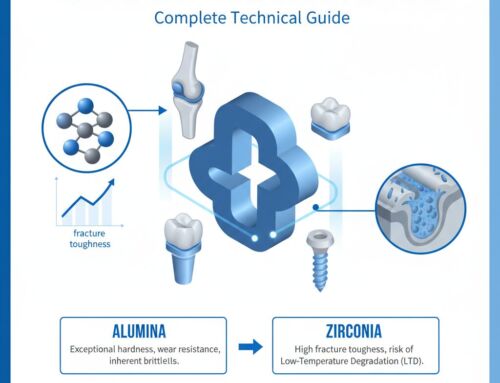
For applications demanding maximum fracture toughness at ambient temperatures, partially stabilized zirconia remains unmatched at 8.0 to 10.0 MPa·m½. However, zirconia suffers from Low-Temperature Degradation (LTD) when exposed to moisture between 150°C and 300°C, where spontaneous phase transformation causes surface roughening and microcracking. Both ZTA and SiC are immune to LTD, making them vastly superior for high-pressure steam environments and hydrothermal chemical processing. For extreme high-temperature structural components such as gas turbine blades operating at 1200°C, 窒化ケイ素 (Si₃N₄) provides a highly balanced alternative, offering a fracture toughness of 6.0 to 7.0 MPa·m½ and an extremely low CTE of 3.2 x 10⁻⁶ /°C, though its material cost is typically 2 to 3 times higher than that of sintered silicon carbide.
| プロパティ | ZTA / SiC | Alumina (99.5%) | ジルコニア(Y-TZP) | 窒化ケイ素 |
|---|---|---|---|---|
| 熱伝導率 | 24 / 150 | 30 | 2.5 | 25-30 |
| 硬度 | 1700 / 2800 | 1500 | 1250 | 1500-1600 |
| 破壊靭性 | 5.5 / 4.0 | 3.5 | 8.0 - 10.0 | 6.0 – 7.0 |
| コスト | Moderate / High | 低い | 中程度 | 非常に高い |
アプリケーション
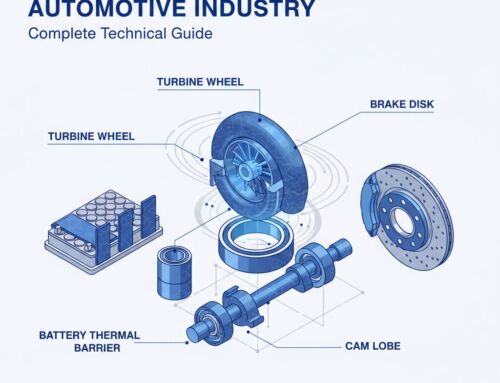
- Mechanical Seal Faces: In centrifugal pumps operating at speeds exceeding 3,600 RPM under systemic pressures of 40 bar, silicon carbide is the preferred choice due to its high thermal conductivity (150 W/m·K) and low coefficient of friction (0.1 in lubricated conditions). It rapidly dissipates the intense frictional heat generated at the mating interface, preventing the localized fluid vaporization that would cause dry-running failures. ZTA is occasionally utilized in less severe abrasive fluid conditions where high fracture toughness is required to withstand sudden hydraulic shock waves.
- Industrial Valve Trim and Chokes: For severe service valves utilized in the oil & gas industry handling multiphase fluids loaded with sand at velocities up to 30 m/s, ZTA ceramic provides exceptional resistance to cavitation and solid particle erosion. Its fracture toughness of 5.5 MPa·m½ ensures that the valve stems and seats do not suffer from brittle chipping during high-impact valve closure against hard particulate matter, extending the operational lifespan by 400% compared to standard stainless steel 316.
- Semiconductor Wafer Processing Equipment: In semiconductor manufacturing, silicon carbide is extensively utilized for susceptors, edge rings. And wafer handling end-effectors in rapid thermal processing (RTP) and plasma etching equipment. SiC can effortlessly withstand processing temperatures of 1200°C with near-zero outgassing and extreme plasma resistance. In contrast to metal alternatives, SiC offers high purity (exceeding 99.999% in CVD grades) and an elastic modulus of 410 GPa. This completely prevents wafer sag across 300mm diameter spans.
- Ballistic Armor Plating: ZTA ceramic plays a pivotal role in advanced composite armor systems utilized in military vehicles and personal body armor. When impacted by a high-velocity projectile exceeding 800 m/s, the zirconia phase transformation absorbs massive amounts of kinetic energy, dulling and shattering the armor-piercing core. ZTA offers a highly optimized weight-to-performance ratio, achieving multi-hit capability that purely monolithic alumina struggles to provide due to radial crack propagation.
- Precision Extrusion Dies: When extruding highly abrasive abrasive pastes, advanced polymers, or battery cathode slurries at extrusion pressures ranging from 50 to 150 MPa, ZTA ceramic dies provide exceptional dimensional stability. The 1700 HV hardness prevents the die orifice from expanding over millions of extrusion cycles, ensuring the extruded filament maintains a strict diametrical tolerance of ±0.01mm. SiC is also utilized here when the extruded material involves highly corrosive chemical precursors at elevated temperatures up to 800°C.
製造工程
The manufacturing process for both ZTA and silicon carbide demands stringent environmental control, sub-micron powder metallurgy. And ultra-high-temperature processing. Even minute deviations in powder morphology or sintering profiles can induce fatal internal porosities or abnormal grain growth, instantly degrading the mechanical properties of the final component. At Great Ceramic, we rely on a comprehensive suite of high-precision forming and sintering technologies to consistently yield ceramic blanks with homogenous densities exceeding 99.5% of their theoretical values, ensuring a flawless foundation for our tight-tolerance precision machining.
成形方法
- Cold Isostatic Pressing (CIP): To achieve uniform green body density, sub-micron powder mixtures (typically spray-dried with 2% to 3% polyvinyl alcohol binder) are sealed in elastomeric molds and subjected to multi-directional hydrostatic pressure utilizing fluid mediums at 200 to 300 MPa. This uniform compaction eliminates density gradients, ensuring that complex parts do not warp during the 15% to 20% volumetric shrinkage experienced during subsequent sintering.
- Dry Pressing: For high-volume production of geometrically simplistic components like flat seal rings or armor tiles, uniaxial dry pressing is utilized. Tooling steel or tungsten carbide dies apply targeted pressures of 50 to 100 MPa. Advanced automated presses can produce up to 30 parts per minute, though the length-to-diameter ratio is strictly limited to 2:1 to avoid internal density stratification caused by die wall friction.
- Slip Casting: For highly complex, hollow, or thin-walled geometries, a highly dispersed ceramic suspension (slip) with a solid loading of 60% to 70% by weight and a controlled viscosity of 300 to 500 mPa·s is poured into porous plaster molds. Capillary action draws the liquid carrier out, depositing a dense layer of ceramic particles against the mold wall at a deposition rate of approximately 1.0mm per 10 minutes.
焼結
Sintering consolidates the porous green body into a fully dense ceramic structure via solid-state atomic diffusion. ZTA is typically fired in atmospheric oxidizing furnaces utilizing a precisely engineered temperature ramp rate of 2°C to 5°C per minute to prevent binder burnout cracking. The peak sintering temperature for ZTA ranges between 1550°C and 1650°C, held for a soaking period of 2 to 4 hours. Strict thermal control is critical. exceeding 1650°C causes abnormal alumina grain growth. This suppresses the critical tetragonal-to-monoclinic transformation of the zirconia particles, entirely negating the toughening mechanism.
Silicon carbide requires vastly more extreme sintering conditions due to the highly directional and rigid covalent bonds. Sintered Alpha Silicon Carbide (SSiC) is densified via pressureless sintering in a vacuum or inert argon atmosphere at temperatures between 2100°C and 2200°C. Small additions of boron (0.5 wt%) and carbon (1.0 wt%) are frequently utilized as sintering aids to reduce grain boundary energy and facilitate diffusion. For components requiring zero shrinkage, Reaction Bonded Silicon Carbide (RBSiC) is formed by infiltrating a porous matrix of primary SiC and carbon with molten silicon at 1500°C, though this leaves approximately 10% to 15% residual free silicon in the microstructure, limiting its maximum operational temperature to 1350°C.
最終加工
Following the sintering process, both ZTA and silicon carbide undergo significant volumetric shrinkage, typically resulting in dimensional tolerances no better than ±1% to ±2%. Because modern industrial applications demand extreme precision, post-sintering final machining is strictly necessary. Due to the extreme hardness of these materials (up to 2800 HV for SiC), conventional cutting tools made of high-speed steel or tungsten carbide suffer instantaneous catastrophic failure. Final machining exclusively relies on industrial diamond-impregnated tooling. The process utilizes 5-axis CNC grinding centers, lapping machines. And specialized honing equipment. To achieve high-end specifications, Great Ceramic employs rigorous 精密セラミック加工 techniques, utilizing resin-bonded and metal-bonded diamond wheels with grit sizes ranging from D46 for aggressive stock removal down to D15 for ultra-fine surface finishing.
利点と限界
メリット
- Exceptional Wear Resistance: Both materials vastly outlast hardened metallic alloys. The 2800 HV hardness of SiC provides near-zero material loss in slurry erosion scenarios, while the 1700 HV hardness of ZTA combined with its toughness prevents surface micro-chipping under cyclic sliding contact.
- Extreme Thermal Stability: Silicon carbide can operate continuously at temperatures up to 1600°C in air without significant oxidation or loss of mechanical strength, while ZTA maintains its structural integrity comfortably up to 1500°C. Both materials completely bypass the high-temperature creep limitations that plague superalloys.
- Superior Chemical Inertness: ZTA and SiC offer universal resistance to almost all corrosive media. They remain chemically stable when fully submerged in highly concentrated acids (such as 98% H₂SO₄ or concentrated HCl) and strong alkaline solutions (pH 14) across elevated temperatures reaching 200°C.
- High Stiffness-to-Weight Ratios: With an elastic modulus of approximately 410 GPa for SiC and 350 GPa for ZTA, these materials undergo virtually zero elastic deformation under extreme structural loading. SiC is particularly lightweight at 3.15 g/cm³, making it ideal for high-speed rotating components and aerospace applications.
制限事項
- Inherent Brittleness: Despite the 5.5 MPa·m½ fracture toughness of ZTA and 4.0 MPa·m½ of SiC, both are fundamentally brittle ceramics. They lack the plastic yield zones found in metals, meaning any localized stress exceeding their ultimate flexural strength will result in catastrophic, instantaneous fracturing rather than gradual yielding.
- Extreme Machining Difficulty: Due to their ultra-hard covalent and ionic matrices, both materials are exceptionally difficult and time-consuming to machine post-sintering. The reliance on diamond grinding processes restricts geometric freedom slightly and increases manufacturing costs for highly complex internal features such as threaded holes or deep blind cavities.
加工に関する考慮事項
The core challenge in evaluating ZTA ceramic vs silicon carbide lies not just in material selection, but in manufacturability. Because ZTA possesses a fracture toughness of 5.5 MPa·m½, it requires exceptionally high cutting forces to remove material. When grinding ZTA, spindle loads frequently spike, requiring high-torque CNC spindles and highly rigid machine frames to prevent tool deflection. The diamond wheels must run at precise peripheral speeds of 25 to 35 m/s. If the feed rate exceeds 0.01mm to 0.05mm per pass, the localized heat and pressure can induce subsurface micro-cracking, penetrating up to 50 microns deep into the ceramic. This drastically reduces the structural integrity of the final part.
Silicon carbide presents an entirely different set of machining challenges. While its lower fracture toughness (4.0 MPa·m½) means it requires less absolute force to initiate a chip compared to ZTA, its staggering hardness of 2800 HV causes hyper-accelerated diamond tool wear. Metal-bonded diamond tools are strictly required for roughing SiC. And continuous, high-volume flood coolant (delivered at high pressures of 50 to 80 bar) is absolutely critical to flush away the highly abrasive SiC swarf. Without adequate flushing, the SiC dust behaves like a secondary abrasive, instantaneously destroying the diamond grinding wheel matrix.
At Great Ceramic, we mitigate these machining challenges through advanced kinematics and proprietary tooling geometry. We implement ultrasonic-assisted machining protocols where the diamond tool is vibrated at high frequencies (20 kHz) with amplitudes of 5 to 10 μm. This intermittent cutting action reduces cutting forces by up to 40%, actively preventing subsurface damage and extending tool life. For thermal management applications where heat sinks require absolute flatness, our double-sided planetary lapping processes achieve surface finishes of Ra 0.05 μm and flatness of 1 Helium Light Band (0.3 μm). We routinely process 窒化アルミニウム そして 窒化ホウ素 with similar precision, but our optimized parameters for ZTA and SiC guarantee that we consistently deliver finished components with tight tolerances of ±0.005mm.
FAQ
What is ZTA ceramic vs silicon carbide?
ZTA (Zirconia Toughened Alumina) is a composite ceramic blending 10-20% zirconia into an alumina matrix, utilizing phase-transformation toughening to achieve high fracture toughness (5.5 MPa·m½) and impact resistance. Silicon carbide (SiC) is a monophase ceramic held together by ultra-strong covalent bonds, prioritizing extreme hardness (2800 HV), exceptional thermal conductivity (150 W/m·K). And high-temperature structural rigidity up to 1600°C.
What are the main applications of ZTA ceramic vs silicon carbide?
ZTA is predominantly utilized in applications requiring high mechanical impact and wear resistance, such as industrial valve trim, cutting tools, pump plungers. And ballistic body armor. Silicon carbide is specified for extreme thermal and abrasive environments, heavily utilized for mechanical seal faces in high-RPM pumps, semiconductor wafer processing susceptors, cyclone separator liners. And extreme high-temperature kiln furniture.
How does ZTA ceramic vs silicon carbide compare to other ceramics?
Compared to standard 99.5% pure alumina, ZTA offers 50% higher strength and toughness. Compared to pure zirconia, both ZTA and SiC are highly immune to Low-Temperature Degradation (LTD) in hot, humid environments. Compared to highly expensive silicon nitride, SiC offers better thermal conductivity and a more cost-effective production cycle for large-scale parts, while ZTA provides a more economical solution for ambient-temperature structural wear parts.
What are the advantages of ZTA ceramic vs silicon carbide?
The primary advantage of ZTA is its unique ability to resist crack propagation via volumetric expansion, giving it a high tolerance for mechanical shock and impact without catastrophic failure. The primary advantage of silicon carbide is its unmatched combination of low density (3.15 g/cm³), extreme hardness. And high thermal conductivity, allowing it to rapidly dissipate heat and resist abrasive wear under intense frictional loads.
How is ZTA ceramic vs silicon carbide machined?
Both advanced ceramics cannot be machined using traditional metallic tooling. they require specialized precision grinding, lapping. And polishing utilizing diamond-impregnated abrasives. To avoid critical subsurface micro-cracking, ultra-rigid CNC setups, high-pressure coolant (up to 80 bar). And minimal depths of cut (0.01mm) are required. At Great Ceramic, we leverage high-frequency ultrasonic machining and advanced 5-axis CNC grinding to achieve dimensional tolerances of ±0.005mm and pristine surface finishes down to Ra 0.05 μm for both materials.
Need custom ZTA ceramic vs silicon carbide parts? グレート・セラミックへのお問い合わせ 公差の厳しい精密機械加工サービスについては、Eメールでお問い合わせください。 [email protected].
ZTA ceramic vs silicon carbide is widely used in advanced ceramic applications.
詳細はこちら Zta Ceramic Vs Silicon Carbide および当社の精密セラミック加工サービス。.