








“`html
The Comprehensive Guide to Boron Nitride Ceramic Rings for Electronics: Properties, Applications. And Precision Machining
In the rapidly evolving landscape of modern electronics, thermal management and electrical insulation have become the twin pillars of device reliability. As components shrink and power densities soar, traditional materials often fail to meet the rigorous demands of high-frequency and high-temperature environments. Enter the bor nitrür ceramic ring for electronics—a high-performance solution that combines the lubricity of graphite with the dielectric strength of high-end ceramics.
Great Ceramic specializes in the precision engineering of these components, ensuring that every boron nitride (BN) ring meets the exacting tolerances required by the semiconductor, aerospace. And telecommunications industries. This article explores the technical nuances, material properties. And manufacturing processes that make boron nitride the “White Graphite” of the electronics world.
What is Boron Nitride (BN)?
Boron Nitride is a heat- and chemically resistant refractory compound of boron and nitrogen with the chemical formula BN. It exists in various crystalline forms that are isoelectronic to a similarly structured carbon lattice. The hexagonal form (h-BN). This corresponds to graphite, is the most stable and soft among BN polymorphs and is the primary material used for machining rings and insulators for electronic applications.
Often referred to as “White Graphite” because of its lubricity and white color, h-BN offers a unique combination of high thermal conductivity and excellent dielectric strength. Unlike graphite. This is an electrical conductor, boron nitride is a superior electrical insulator.
Technical Properties of Boron Nitride Ceramic Rings
To understand why a boron nitride ceramic ring for electronics is preferred over alumina or aluminum nitride in specific scenarios, one must look at its physical and thermal profile. Most industrial BN components are produced via Hot Pressing (HBN). This results in a dense, non-porous material.
Table 1: Physical and Thermal Properties of Hot-Pressed Boron Nitride (HBN)
| Mülkiyet | Birim | Değer (Tipik) |
|---|---|---|
| Yoğunluk | g/cm³ | 1.9 – 2.1 |
| Eğilme Dayanımı | MPa | 40 – 70 |
| Thermal Conductivity (Parallel to Pressing) | W/m-K | 30 - 60 |
| Thermal Conductivity (Perpendicular to Pressing) | W/m-K | 20 – 30 |
| Termal Genleşme Katsayısı (CTE) | 10⁻⁶/°C | 0.5 – 3.0 |
| Maximum Use Temperature (Inert) | °C | 2000+ |
| Maximum Use Temperature (Oxygen) | °C | 850 – 900 |
| Dielektrik Dayanım | kV/mm | >35 |
| Dielektrik Sabiti (1 MHz) | - | 4.0 |
One of the most critical aspects of BN is its anisotropy. Because the hexagonal flakes align during the hot-pressing process, the properties of the ceramic ring can vary depending on the direction of the grain. Great Ceramic’s engineering team accounts for this orientation during the CNC machining process to optimize thermal dissipation for your specific electronic layout.
Why Boron Nitride Rings are Essential for Electronics
1. Superior Thermal Management
In high-power electronic assemblies, heat is the enemy. Boron nitride ceramic rings act as efficient thermal bridges. They pull heat away from sensitive junctions while maintaining total electrical isolation. Unlike alumina, BN has a higher thermal conductivity, making it ideal for power transistors and thyristors.
2. Exceptional Dielectric Properties
BN maintains a low dielectric constant and low loss tangent across a wide frequency range. This makes it an ideal material for microwave and RF (Radio Frequency) components where signal integrity is paramount. A boron nitride ring can act as a support or spacer in a vacuum system without interfering with the electromagnetic fields.
3. Chemical Inertness and Non-Wetting
In the manufacturing of semiconductors, purity is vital. BN is chemically inert and is not “wetted” by most molten metals, glasses, or salts. This makes BN rings excellent for use in PVD (Physical Vapor Deposition) and CVD (Chemical Vapor Deposition) equipment, where they serve as insulators and shields that do not contaminate the deposition process.
4. Ease of Machining
Unlike Alümina or Zirconia. This require diamond grinding and are extremely brittle, BN is relatively soft (comparable to graphite or technical plastics). This allows for the creation of complex geometries, thin walls. And high-precision threads—features often required in custom electronic housing and connectors.
Industry Applications for Boron Nitride Ceramic Rings
Yarı İletken Üretimi
In the semiconductor industry, BN rings are used as insulators in ion implantation equipment and plasma etching chambers. Their ability to withstand high-energy plasma without eroding or outgassing makes them indispensable for maintaining the vacuum integrity required for wafer processing.
High-Power Electronics and RF Systems
For high-frequency induction heating and RF power tubes, BN rings provide the necessary standoff insulation. Their low loss tangent ensures that the material does not heat up internally due to the RF field. This prevents thermal runaway in high-power transmitters.
Vacuum Furnace Components
Boron nitride is one of the few materials that can be used in high-vacuum environments at temperatures exceeding 1500°C. Rings are used as spacers, insulators. And lead-throughs in vacuum furnaces, where they prevent electrical arcing between heating elements and the furnace shell.
Havacılık ve Savunma
The lightweight nature of BN (low density) combined with its thermal shock resistance makes it a candidate for satellite electronics and radar systems. It can withstand the rapid temperature fluctuations of space while providing consistent electrical performance.
Precision CNC Machining of Boron Nitride
While boron nitride is “machinable,” achieving the micron-level tolerances required for modern electronics is a specialized task. Great Ceramic utilizes advanced CNC centers to transform raw BN billets into finished rings with complex features.
İşleme Süreci
- Material Selection: We choose the appropriate grade of BN (Standard, High-Purity, or Composite with Silica/Alumina) based on the application’s moisture resistance and mechanical needs.
- Grain Orientation: As mentioned, BN is anisotropic. We align the billet so that the direction of highest thermal conductivity matches the heat flow path of the ring.
- Turning and Milling: Using high-speed steel (HSS) or carbide tools, we machine the ID (Inner Diameter), OD (Outer Diameter). And height. BN produces a fine powder rather than chips, requiring specialized dust extraction to protect both the machine and the environment.
- Secondary Operations: For rings requiring threads or micro-holes, we use precision tapping and drilling. BN’s lack of brittleness compared to other ceramics allows for remarkably fine details without edge chipping.
Table 2: Typical Machining Tolerances for BN Rings
| Özellik | Tolerance Range |
|---|---|
| Outer/Inner Diameter (OD/ID) | ± 0.01 mm to ± 0.05 mm |
| Flatness / Parallelism | Up to 0.005 mm |
| Surface Finish (Ra) | 0.4 μm to 1.6 μm |
| Thread Precision | Class 6H/6g |
Comparison: Boron Nitride vs. Other Technical Ceramics
When selecting a boron nitride ceramic ring for electronics, engineers often compare it to Alumina (Al2O3) or Alüminyum Nitrür (AlN). Here is why BN stands out in specific contexts:
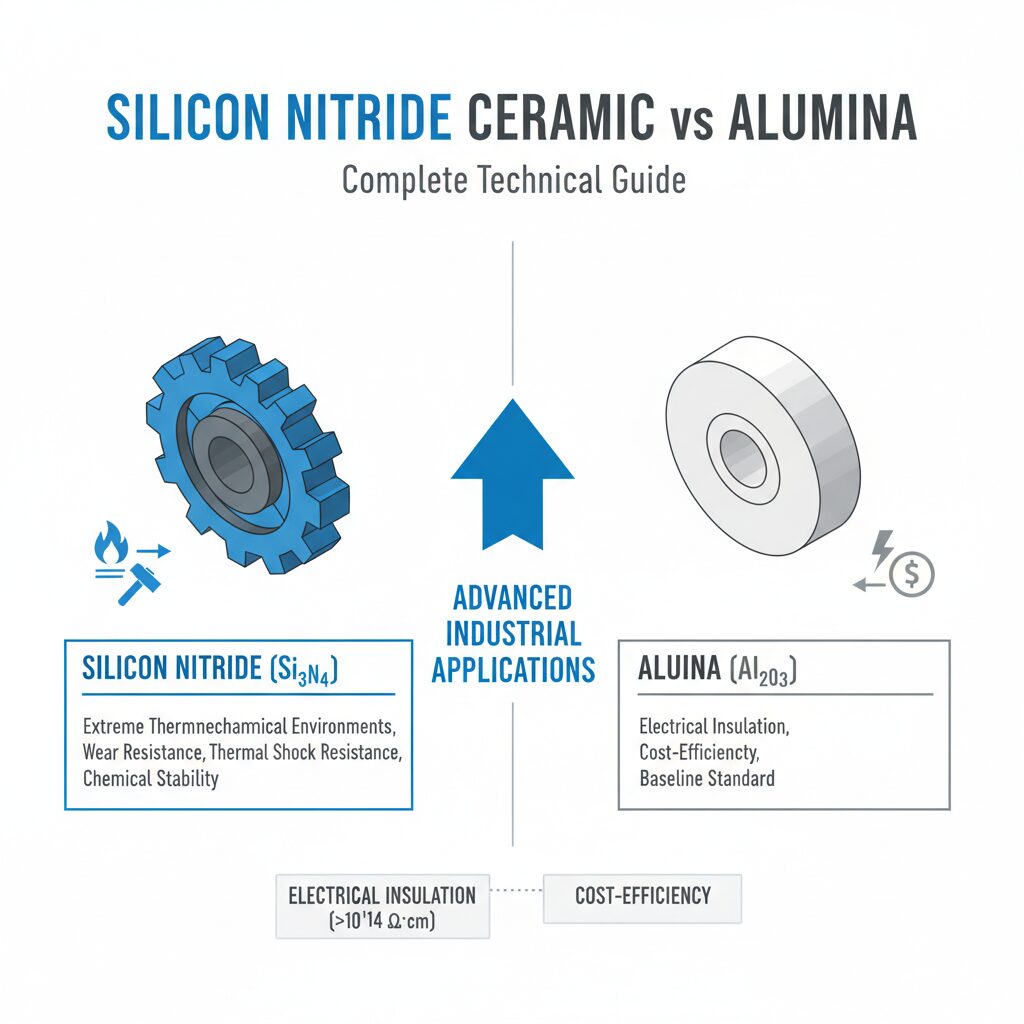
- Karşı. Alümina: Alumina is cheaper and harder but has significantly lower thermal shock resistance and lower thermal conductivity. Alumina is also much harder to machine into complex shapes.
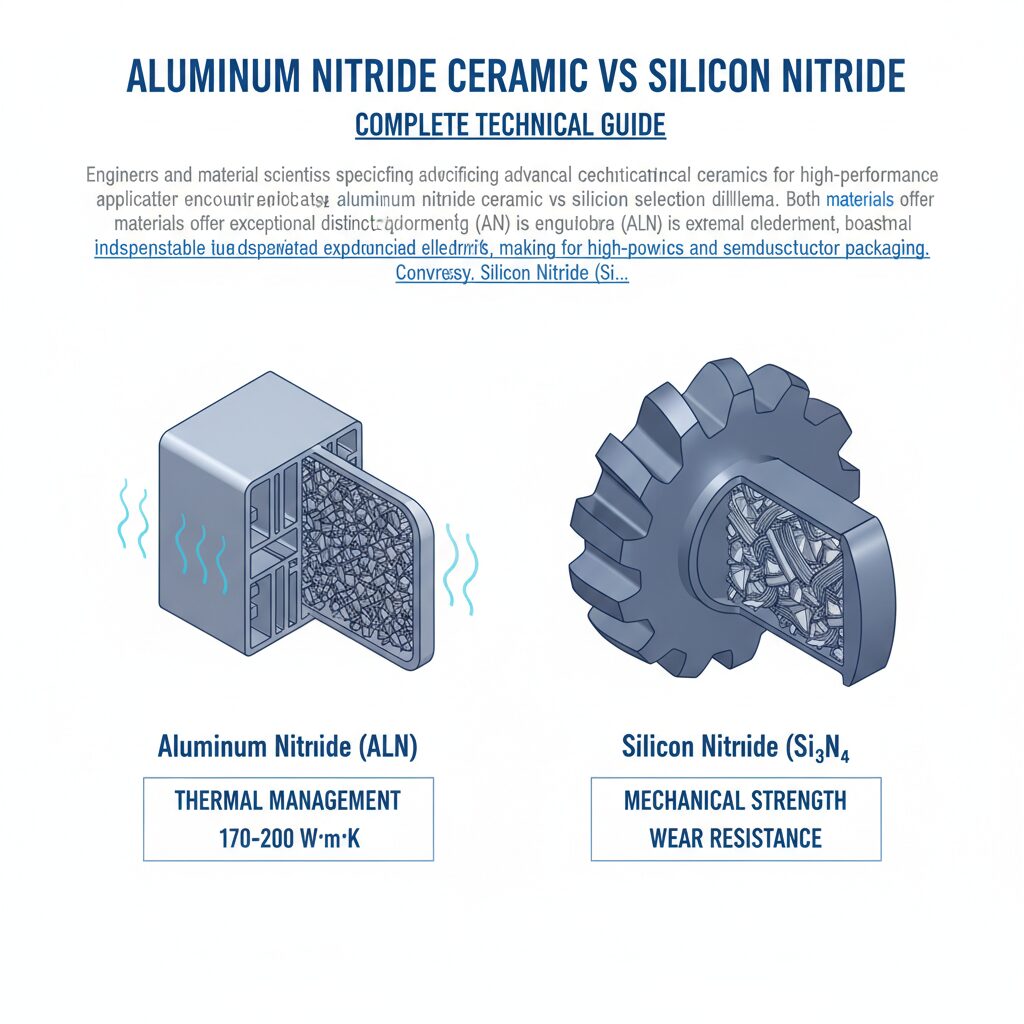
- Vs. Aluminum Nitride: AlN has higher thermal conductivity than BN, but it is extremely difficult to machine and very brittle. BN is preferred when complex geometries are needed or when the material must be modified on-site.
- Vs. Macor: Macor is a glass-ceramic with similar machinability, but its maximum use temperature is only 800°C–1000°C, whereas BN can exceed 2000°C in inert atmospheres.
Mühendisler için Tasarım Hususları
When designing a BN ring, keep the following in mind to ensure the best performance and cost-efficiency:
1. Moisture Sensitivity
Some grades of hot-pressed BN contain small amounts of boric oxide (B2O3). This can absorb moisture from the air. For electronics used in humid environments, Great Ceramic recommends “diffusion bonded” or “high purity” grades that are treated to resist hydration and prevent blistering during rapid heating.
2. Wall Thickness
While BN is easier to machine than alumina, very thin walls (under 0.5mm) can be fragile during handling. We recommend maintaining a wall thickness proportional to the diameter to ensure structural integrity during assembly.
3. Mounting and Fastening
BN has a very low CTE. When mounting a BN ring within a metal housing (like aluminum or stainless steel), the metal will expand much more than the ceramic. Great Ceramic can assist in calculating the necessary clearances to prevent the ceramic from cracking under mechanical stress at high temperatures.
Sıkça Sorulan Sorular (SSS)
Is boron nitride electrically conductive?
No. Boron Nitride is an excellent electrical insulator with a high dielectric strength. It is often used to replace graphite when electrical insulation is required alongside high thermal conductivity.
Can BN ceramic rings be used in a vacuum?
Yes. Boron nitride has an extremely low vapor pressure and does not outgas significantly at high temperatures, making it a “vacuum-compatible” material for space and semiconductor applications.
What is the maximum temperature for a boron nitride ring?
In an oxidizing atmosphere (air), BN can be used up to approximately 900°C. In a vacuum or inert gas (Nitrogen/Argon) environment, it remains stable up to 2000°C or higher.
How does the price of BN compare to Alumina?
BN is generally more expensive than Alumina due to the cost of raw powder and the hot-pressing manufacturing process. However, the savings in machining time for complex parts and the superior performance in extreme environments often offset the material cost.
Does BN require special tools for machining?
While it can be machined with standard carbide tools, the abrasive nature of ceramic dust can wear tools quickly. Great Ceramic uses optimized tooling and vacuum systems to ensure precision and finish quality.
The Great Ceramic Advantage
At Great Ceramic, we understand that a boron nitride ceramic ring for electronics is more than just a spacer. it is a critical component that determines the lifespan of your device. Our facility is equipped with state-of-the-art CNC technology specifically tuned for ceramic materials. We provide:
- Prototyping to mass production.
- Material grade consultation based on your thermal and electrical requirements.
- Rigorous quality control with CMM measurement reports.
- Global shipping and technical support.
Whether you are developing the next generation of 5G base stations, high-power LED arrays, or semiconductor processing tools, our team is ready to deliver the precision you need.
Özel siparişler için Great Ceramic ile iletişime geçin serami̇k i̇şleme uygulamanıza özel çözümler. Our engineers are available to review your drawings and provide a technical feasibility assessment within 24 hours.
Conclusion: The boron nitride ceramic ring remains a cornerstone of high-performance electronic design. By leveraging its unique “White Graphite” properties—thermal conductivity, electrical insulation. And ease of machining—manufacturers can push the boundaries of what is possible in thermal management. Partnering with a specialist like Great Ceramic ensures that these advanced materials are utilized to their full potential through precision CNC engineering.
“`
boron nitride ceramic ring for electronics is widely used in advanced ceramic applications.
Hakkında daha fazla bilgi edinin Elektronik İçin Bor Nitrür Seramik Halka ve hassas seramik işleme hizmetlerimiz.