








ZTA Ceramic Electrical Resistivity: Complete Technical Guide
For engineers designing high-voltage electromechanical systems, managing electrical insulation under extreme mechanical stress is a critical challenge. Pure insulating materials often fail under impact, while high-toughness materials may leak current at elevated temperatures. Understanding ZTA ceramic electrical resistivity is the key to solving this engineering bottleneck. Zirconia Toughened Alumina (ZTA) offers a unique microstructural matrix that combines an exceptional room-temperature volume resistivity of >1013 Ω·cm with a fracture toughness ranging from 4.5 to 6.0 MPa·m½. This makes it an indispensable material for structural insulators, semiconductor equipment. And high-load electronic substrates where catastrophic brittle failure is not an option.
In this comprehensive technical guide, we will analyze the precise dielectric properties, mechanical specifications. And thermal behavior of ZTA. We will also explore the complex relationship between ambient temperature and electrical resistance, providing the exact numerical data R&D teams require for material selection. If your project requires tight-tolerance (±0.005mm) components that balance dielectric strength with physical durability, our engineering team at Great Ceramic is ready to assist. Request an RFQ today to optimize your next high-performance assembly.
材料特性
Zirconia Toughened Alumina (ZTA) is a two-phase composite ceramic, typically engineered by dispersing 10% to 20% by volume of fine tetragonal zirconia particles within a high-purity (usually 99% or greater) alpha-アルミナ matrix. This specific stoichiometric ratio dictates not only the mechanical phase-transformation toughening but also the baseline ZTA ceramic electrical resistivity. Because the base matrix is アルミナ. This possesses a wide bandgap of approximately 9.0 eV, the composite exhibits exceptional dielectric characteristics at room temperature. The atomic lattice heavily restricts free electron mobility, resulting in a volume resistivity exceeding 1013 Ω·cm at 20°C.
Mechanically, the dispersed zirconia particles act as stress absorbers. When a microscopic crack propagates through the alumina matrix and strikes a zirconia particle, the localized stress triggers a martensitic transformation in the zirconia from a tetragonal to a monoclinic crystal structure. This phase change is accompanied by a 3% to 5% volumetric expansion. This effectively places the crack tip under severe compressive stress (up to 400 MPa locally), halting further propagation. This mechanism allows ZTA to achieve a flexural strength of 600 to 800 MPa, a significant upgrade over pure alumina’s 300 to 400 MPa, without sacrificing the electrical isolation required for high-voltage applications.
| プロパティ | 価値 | 単位 |
|---|---|---|
| 密度 | 4.1 – 4.3 | g/cm³ |
| 硬度 | 1500 – 1600 | HV |
| 曲げ強度 | 600 – 800 | MPa |
| 破壊靭性 | 4.5 – 6.0 | MPa-m½ |
| 熱伝導率 | 20 – 24 | W/m-K |
| Electrical Resistivity (at 20°C) | > 10^13 | Ω・cm |
| 最高使用温度 | 1400 | °C |
It is critical for electrical engineers to understand that ZTA ceramic electrical resistivity is heavily temperature-dependent. While it acts as a perfect insulator below 400°C, the zirconia phase introduces ionic conductivity at elevated temperatures. Zirconia inherently contains oxygen vacancies within its lattice. As thermal energy increases (specifically above 600°C), the mobility of oxygen ions through these vacancies accelerates. Consequently, the volume resistivity of ZTA will begin to degrade. At 600°C, the resistivity drops to approximately 108 Ω·cm. And by 1000°C, it can fall below 105 Ω·cm. For continuous high-voltage insulation (e.g., >10 kV isolation), operating temperatures should be maintained below 500°C to ensure dielectric integrity.
Temperature Impact on ZTA Resistivity
| Temperature (°C) | Approx. Electrical Resistivity (Ω·cm) | 絶縁耐力 (kV/mm) |
|---|---|---|
| 20°C | > 10^13 | 15 – 18 |
| 400°C | 10^10 – 10^11 | 10 – 12 |
| 600°C | 10^7 – 10^8 | 5 – 8 |
| 800°C | 10^5 – 10^6 | < 4 |
他のセラミックとの比較
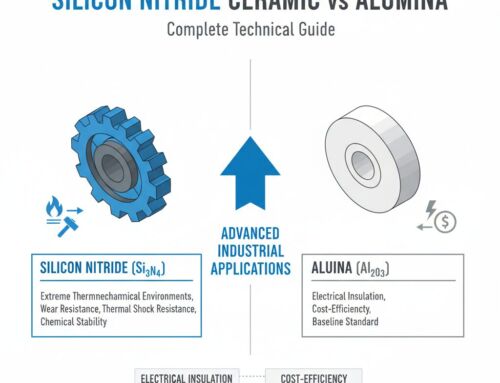
When selecting a technical ceramic for structural and electrical applications, engineers must weigh ZTA against its parent materials and alternative advanced ceramics. The primary trade-off usually involves balancing thermal conductivity, fracture toughness. And electrical resistivity against raw material and manufacturing costs. For instance, pure ジルコニア offers the highest fracture toughness (up to 8.0 MPa·m½) but has incredibly poor thermal conductivity (2.5 W/m·K). This can lead to thermal shock failure in high-power electronic applications where heat dissipation is critical.
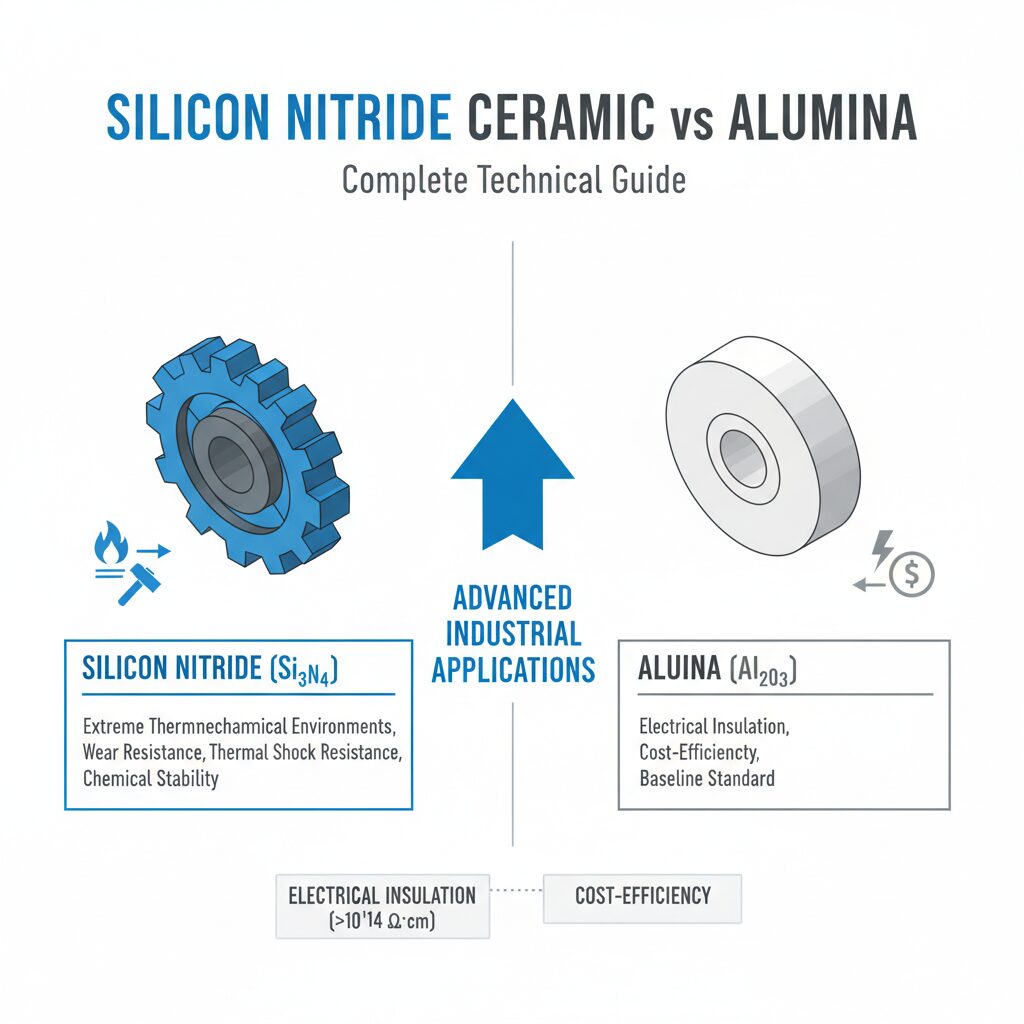
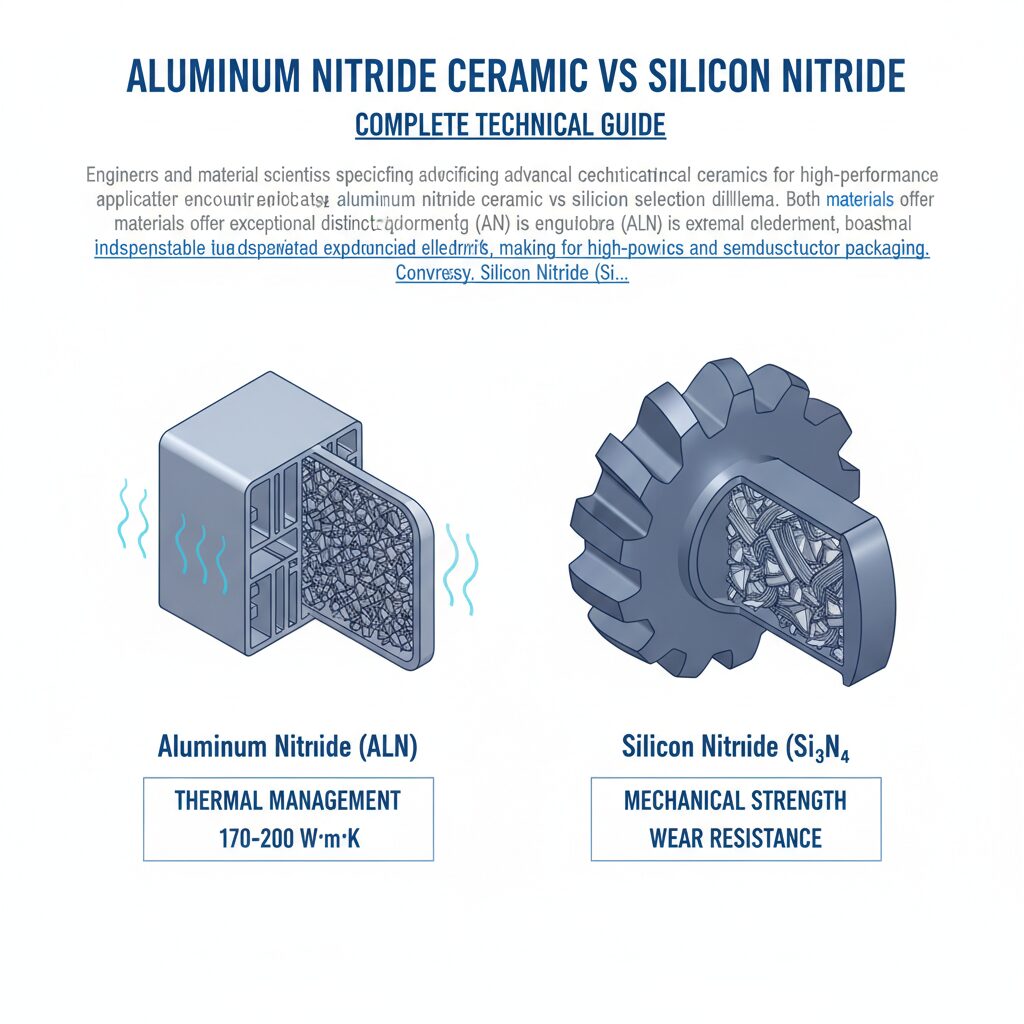
Conversely, materials like 窒化ケイ素 offer excellent thermal shock resistance and high strength, but they present a different cost paradigm and slightly different dielectric properties. For ultimate thermal management in electronic substrates, 窒化アルミニウム is superior with thermal conductivity exceeding 170 W/m·K, but it lacks the extreme wear resistance and fracture toughness of ZTA. ZTA serves as the optimal middle ground: it provides 1.5 to 2 times the toughness of standard 99.5% alumina, maintains superior room-temperature ZTA ceramic electrical resistivity. And does so at a price point significantly lower than fully stabilized zirconia or silicon nitride.
| プロパティ | ZTA Ceramic | Alumina (99.5%) | ジルコニア(Y-TZP) | 窒化ケイ素 |
|---|---|---|---|---|
| 熱伝導率 | 20 – 24 W/m·K | 30 – 35 W/m·K | 2.5 – 3.0 W/m·K | 25 – 30 W/m·K |
| 硬度 | 1500 – 1600 HV | 1700 – 1800 HV | 1200 – 1300 HV | 1500 – 1600 HV |
| 破壊靭性 | 4.5 – 6.0 MPa·m½ | 3.5 – 4.0 MPa·m½ | 7.0 – 8.0 MPa·m½ | 6.0 – 7.0 MPa·m½ |
| コスト | 中程度 | 低い | 高い | 高い |
The electrical properties also differ significantly in high-frequency applications. At 1 MHz, ZTA exhibits a dielectric constant (relative permittivity) of approximately 9.5 to 10.5. And a dissipation factor (loss tangent) of around 0.0005. This extremely low loss tangent ensures minimal energy dissipation as heat when exposed to alternating electromagnetic fields, making it vastly superior to many polymer-based insulators that degrade under similar high-frequency, high-voltage conditions.
アプリケーション
- High-Voltage Insulators in Mechanical Systems: Utilized in switchgear and power distribution networks where components must withstand electrical potentials exceeding 35 kV while supporting static mechanical loads of up to 500 MPa. The volume resistivity of >1013 Ω·cm prevents current leakage, while the toughened matrix prevents catastrophic cracking from bolt-torquing stresses.
- Semiconductor Wafer Handling Components: Used for end effectors and vacuum chucks in semiconductor fabrication. These parts require strict dimensional stability (tolerances of ±0.005mm) and high ZTA ceramic electrical resistivity to prevent electrostatic discharge (ESD) from damaging microscopic silicon architecture with node sizes below 5 nm.
- Heavy-Duty Sensor Housings: Deployed in downhole oil and gas drilling equipment operating at temperatures up to 200°C and pressures exceeding 150 MPa. ZTA provides the necessary electrical isolation for sensitive telemetry electronics while resisting extreme abrasive wear from silica-rich mud flows.
- Power Electronics Substrates: Applied in insulated-gate bipolar transistor (IGBT) modules where cyclical thermal stresses cause pure alumina to fracture over time. ZTA handles the mismatch in coefficient of thermal expansion (CTE of ~7.5 x 10⁻⁶/°C) between copper layers and the ceramic base, maintaining electrical isolation over 100,000 thermal cycles.
- Electromechanical Pump Bearings and Shafts: Chosen for magnetic drive pumps handling highly corrosive fluids. The material’s diamagnetic nature, combined with its high electrical resistivity, prevents eddy current losses, while its 1500 HV hardness guarantees a wear rate of less than 0.1 microns per 1,000 hours of continuous operation.
製造工程
Achieving the precise microstructural balance required to optimize ZTA ceramic electrical resistivity and fracture toughness demands a tightly controlled manufacturing process. The production begins with high-purity powders. Typically, alpha-alumina powder with a median particle size of 0.5 to 1.0 µm is mechanically mixed with yttria-stabilized zirconia (Y-TZP) powder featuring a much finer particle size of 0.1 to 0.3 µm. This mixture is milled for 24 to 48 hours using high-energy attrition milling with zirconia media to ensure absolutely homogeneous dispersion. Any agglomeration of zirconia particles greater than 2.0 µm acts as a defect that severely downgrades both the dielectric strength and the mechanical toughness.
Following milling, organic binders (typically 2% to 4% by weight of polyvinyl alcohol) and plasticizers are added to create a slurry. This slurry undergoes spray drying at an inlet temperature of 200°C to 250°C to produce spherical, free-flowing granules with moisture content strictly controlled between 0.5% and 1.5%. These granules are the foundational building blocks for forming near-net-shape components.
成形方法
- 冷間静水圧プレス(CIP): For complex or large cylindrical components, the granulated powder is sealed in a flexible polyurethane elastomer mold and subjected to uniform hydrostatic pressure ranging from 200 to 300 MPa. This method yields high green-body densities (up to 60% of theoretical density), ensuring uniform shrinkage during sintering and eliminating anisotropic density gradients that could cause localized drops in electrical resistivity.
- Dry Pressing: For high-volume production of flat substrates or simple geometric rings, uniaxial dry pressing is utilized at pressures between 50 and 150 MPa. While faster, the length-to-diameter ratio is strictly limited (typically to less than 3:1) to prevent density variations along the pressing axis.
焼結
The sintering profile is the most critical thermal phase in determining the final ZTA ceramic electrical resistivity. Green bodies are first subjected to a binder burnout phase at 400°C to 600°C for 24 to 48 hours, with slow ramp rates of 0.5°C to 1.0°C per minute to prevent micro-cracking from escaping organic gases. The high-temperature sintering is then conducted in an oxidizing atmosphere at peak temperatures between 1550°C and 1650°C for 2 to 4 hours. If the temperature exceeds 1650°C, exaggerated grain growth occurs in the alumina matrix (grains expanding beyond 5.0 µm). This traps the zirconia particles entirely within the alumina grains (intragranular) rather than at the grain boundaries (intergranular). This drastically reduces the transformation toughening effect and creates porous grain boundaries that degrade dielectric strength by up to 30%.
最終加工
Because sintered ZTA achieves a hardness of 1500 to 1600 HV, traditional high-speed steel or carbide tooling is entirely useless. Final machining requires precision diamond abrasives. Surface grinding is executed using metal-bonded or resin-bonded diamond wheels with grit sizes ranging from D46 for roughing to D126 or finer for finishing. Spindle speeds typically range from 10,000 to 30,000 RPM, with extremely shallow depths of cut (0.001 mm to 0.010 mm per pass) to prevent subsurface micro-fracturing. Lapping and polishing using 1 µm to 3 µm diamond pastes can achieve surface roughness (Ra) values as low as 0.05 µm. This ultra-smooth surface finish is essential for high-voltage applications, as surface imperfections act as focal points for corona discharge and electrical tracking.
利点と限界
メリット
- Exceptional Dielectric Strength: ZTA boasts a breakdown voltage of 15 to 20 kV/mm, ensuring safe operation in compact, high-voltage assemblies where physical space between conductive elements is minimal.
- Superior Fracture Toughness: With a K1c value of 4.5 to 6.0 MPa·m½, ZTA is up to 60% more resistant to crack propagation than 99.5% pure alumina, dramatically reducing rejection rates during assembly operations involving interference fits or high-torque bolting.
- High Volume Resistivity at Room Temperature: Maintaining an electrical resistivity greater than 1013 Ω·cm at 20°C guarantees virtually zero current leakage, critical for sensitive signal processing and precision sensor data acquisition.
- Excellent Wear and Corrosion Resistance: The extreme hardness (1500+ HV) and chemical inertness provide a lifespan 10 to 15 times longer than hardened steel when exposed to abrasive slurries or acidic environments (pH 2 to pH 12).
制限事項
- High-Temperature Electrical Degradation: Above 600°C, the ionic conductivity of the dispersed zirconia phase activates, causing the volume resistivity to drop precipitously from 1013 Ω·cm to 108 Ω·cm, limiting its use as an insulator in extreme-heat environments.
- Machining Complexity and Cost: The elevated fracture toughness makes post-sintering material removal 20% to 30% slower than pure alumina. It requires specialized, rigid CNC platforms and high-grade diamond tooling. This elevates the total cost of intricately machined parts.
加工に関する考慮事項
Engineering precision parts from ZTA is notoriously difficult due to the exact properties that make it desirable: extreme hardness combined with high toughness. In standard alumina, a diamond grinding wheel creates micro-cracks that propagate easily, allowing for predictable material removal. In ZTA, the zirconia phase-transformation mechanism actively resists these micro-cracks, essentially “fighting back” against the cutting tool. This results in rapid diamond tool wear, increased cutting forces (often exceeding 500 N). And excessive heat generation at the tool-workpiece interface. If temperatures exceed 800°C locally during grinding, it can induce unwanted phase changes in the surface zirconia, compromising the component’s mechanical integrity and altering surface ZTA ceramic electrical resistivity.
To overcome these challenges, machining requires flood coolant systems operating at high pressures (5 to 10 bar) to ensure maximum heat evacuation and swarf removal. Tool paths must be optimized using advanced CAM software to maintain constant chip loads and avoid sharp directional changes that cause tool deflection and edge chipping. At Great Ceramic, our specialized 精密セラミック加工 facilities utilize multi-axis ultrasonic-assisted grinding. By oscillating the diamond tool at frequencies of 20 to 40 kHz, we reduce cutting forces by up to 40%. This allows us to achieve strict geometric tolerances of ±0.005 mm, concentricity within 0.003 mm. And surface finishes down to Ra 0.1 µm, delivering flawless ZTA components ready for your most demanding high-voltage applications. Contact our engineering team to discuss your specific tolerance requirements.
FAQ
What is ZTA ceramic electrical resistivity?
ZTA ceramic electrical resistivity refers to the material’s ability to oppose the flow of electric current. At room temperature (20°C), ZTA acts as an exceptional electrical insulator with a volume resistivity exceeding 1013 Ω·cm. This is due to the 9.0 eV wide bandgap of its primary alumina matrix. This heavily restricts free electron movement, making it highly suitable for high-voltage electromechanical insulators requiring dielectric strengths of 15 to 20 kV/mm.
What are the main applications of ZTA ceramics?
Because it perfectly balances >1013 Ω·cm electrical resistivity with high fracture toughness (4.5 – 6.0 MPa·m½), ZTA is primarily used in harsh environment engineering. Core applications include high-voltage insulators in switchgears, semiconductor wafer handling equipment, sensor housings for downhole drilling at pressures up to 150 MPa, wear-resistant pump components. And power electronic substrates subjected to massive mechanical and thermal cycling.
How does ZTA compare to other ceramics?
ZTA is a composite designed to bridge the gap between alumina and pure zirconia. Compared to 99.5% alumina, ZTA offers up to 60% greater fracture toughness (5.5 vs 3.5 MPa·m½) while maintaining similar room-temperature electrical insulation. Compared to pure yttria-stabilized zirconia, ZTA provides nearly 10 times better thermal conductivity (20 W/m·K vs 2.5 W/m·K) and higher baseline electrical resistivity, all at a significantly lower manufacturing cost.
What are the advantages of ZTA ceramics?
The primary advantages include exceptionally high dielectric strength (up to 20 kV/mm), a very high volume resistivity (>1013 Ω·cm at 20°C). And superior mechanical durability. By utilizing a phase-transformation toughening mechanism, ZTA resists crack propagation under high structural loads (up to 800 MPa flexural strength), meaning it won’t shatter during interference fitting or torque-heavy assembly processes like traditional brittle insulators do.
How is ZTA ceramic machined?
Post-sintered ZTA has a hardness of over 1500 HV, meaning it can only be machined using specialized diamond abrasives. Because the material actively resists micro-cracking, it causes rapid tool wear and requires high-speed spindles (up to 30,000 RPM), ultra-shallow cut depths (0.001 mm). And high-pressure coolant. At Great Ceramic, we offer advanced precision ceramic machining services, including ultrasonic-assisted grinding, enabling us to manufacture complex ZTA geometries with ultra-tight tolerances of ±0.005 mm and surface finishes of Ra 0.05 µm.
Need custom ZTA ceramic parts? グレート・セラミックへのお問い合わせ 公差の厳しい精密機械加工サービスについては、Eメールでお問い合わせください。 [email protected].
ZTA ceramic electrical resistivity is widely used in advanced ceramic applications.
詳細はこちら Zta Ceramic Electrical Resistivity および当社の精密セラミック加工サービス。.