






アルミナ ceramic ball for energy: Complete Technical Guide
The transition toward high-efficiency energy systems demands components capable of enduring extreme mechanical, thermal. And chemical stress. An alumina ceramic ball for energy applications is a critical structural element utilized across oil and gas extraction, wind turbine bearing systems, thermal energy storage. And solid-state battery manufacturing. Operating in environments where traditional metal alloys suffer from rapid oxidation, galling, or severe abrasive wear, these highly spherical components deliver exceptional performance. With standard operating environments frequently exceeding temperatures of 1,500°C and pressures of 25,000 PSI, the specification of advanced ceramics is no longer optional but a baseline engineering requirement. Great Ceramic engineers these high-purity アルミナ spheres to eliminate sub-surface defects, delivering an industry-leading diametric tolerance and sphericity of ±0.005mm. This guide provides a comprehensive technical breakdown of material properties, comparative data, precise manufacturing kinematics. And the rigorous 精密セラミック加工 protocols required to integrate these components into modern energy infrastructure.
材料特性
The fundamental performance of an alumina ceramic ball for energy applications relies on the intrinsic crystallographic structure of alpha-aluminum oxide (α-Al2O3). For high-demand energy sectors, purity levels strictly range between 99.5% and 99.9%, minimizing glassy phase boundary networks that typically act as failure initiation sites under high-stress cyclical loading. With a bulk density of 3.90 g/cm³, this material provides a high strength-to-weight ratio, reducing centrifugal forces by up to 40% compared to standard steel ball bearings rotating at speeds exceeding 10,000 RPM in kinetic energy recovery systems.
Thermally, the material exhibits a highly stable coefficient of thermal expansion (CTE) of approximately 8.1 x 10⁻⁶ /°C (from 20 to 1000°C), preventing dimensional warping during rapid thermal cycling in concentrated solar power (CSP) storage tanks. The inherent hardness (1650 HV) translates to near-zero volumetric wear rates even when subjected to erosive multiphase fluid flows containing sand, fracking proppants. And corrosive hydrocarbons.
| プロパティ | 価値 | 単位 |
|---|---|---|
| 密度 | 3.90 – 3.95 | g/cm³ |
| 硬度 | 1650 | HV |
| 曲げ強度 | 380 – 400 | MPa |
| 破壊靭性 | 4.5 – 5.0 | MPa·m½ |
| 熱伝導率 | 30.0 – 35.0 | W/m-K |
| 電気抵抗率 | > 10¹⁴ | Ω・cm |
| Max Working Temperature | 1700 | °C |
Comparison with Other Ceramics
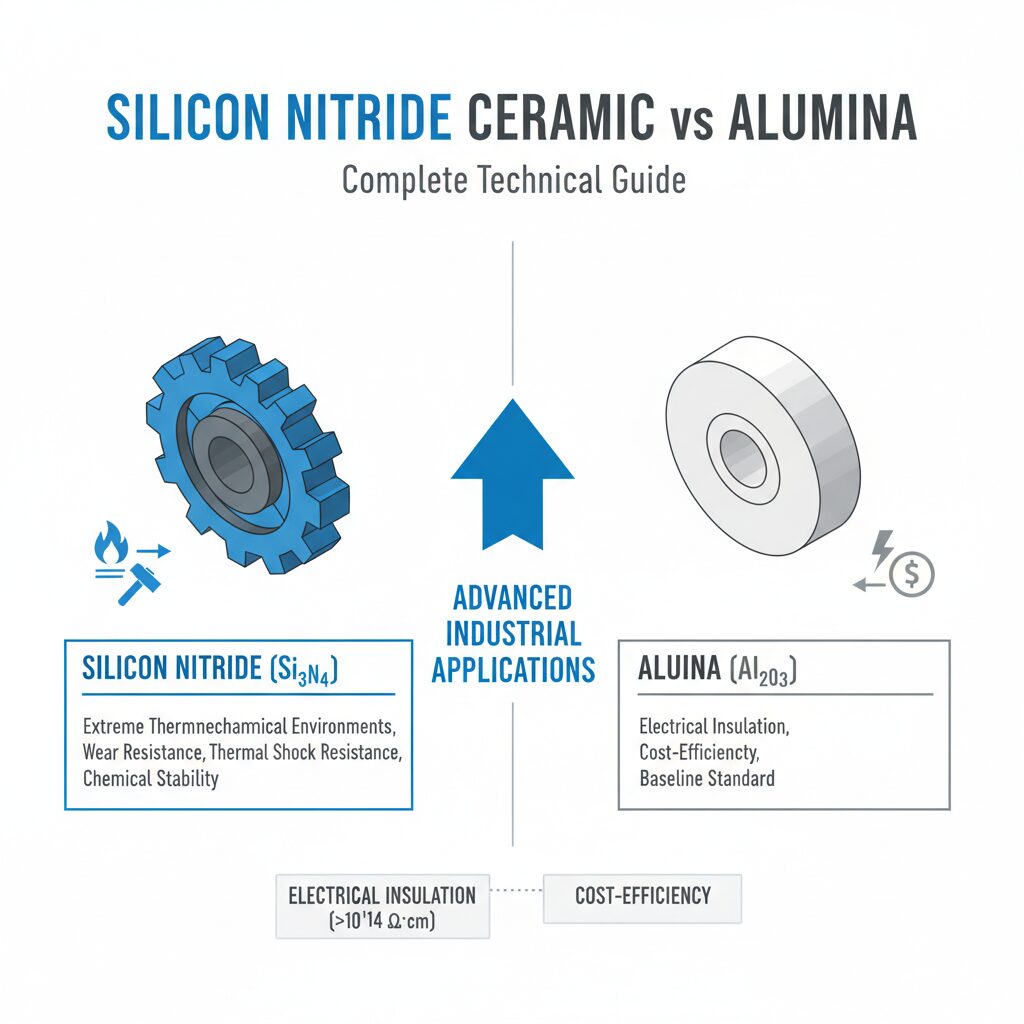
When engineering valve geometries, check valves, or high-speed energy turbine bearings, selecting the correct ceramic matrix is vital. An alumina ceramic ball for energy provides a balanced spectrum of properties, but it must be evaluated against competing materials such as ジルコニア. This boasts superior fracture toughness (up to 10 MPa·m½) through transformation toughening, making it ideal for high-impact applications. However, Zirconia suffers from hydrothermal degradation at temperatures exceeding 250°C in aqueous environments, a vulnerability not shared by Alumina.
Alternatively, 窒化ケイ素 represents the apex of rolling contact fatigue (RCF) resistance, frequently utilized in wind turbine main shaft bearings, but it comes at a significantly higher raw material and processing cost. Compared to 炭化ケイ素. This offers extremely high thermal conductivity (120 W/m·K), alumina presents higher electrical resistivity, making it the superior choice when galvanic corrosion or electrical insulation is required alongside mechanical durability.
| プロパティ | alumina ceramic ball for energy | Alumina (95% Standard) | ジルコニア(Y-TZP) | 窒化ケイ素 (Si3N4) |
|---|---|---|---|---|
| 熱伝導率 | 35.0 W/m·K | 24.0 W/m·K | 2.5 W/m·K | 30.0 W/m·K |
| 硬度 | 1650 HV | 1350 HV | 1250 HV | 1600 HV |
| 破壊靭性 | 4.5 MPa·m½ | 3.5 MPa·m½ | 9.0 MPa·m½ | 7.0 MPa·m½ |
| コスト | 中程度 | 低い | 高い | 非常に高い |
アプリケーション
- Downhole Check Valves for Oil & Gas Extraction: In deep-well drilling environments, fluid pressures routinely exceed 20,000 PSI with ambient temperatures reaching 250°C. An alumina ceramic ball for energy is utilized in the ball-and-seat valve assemblies of sub-surface sucker rod pumps. Its selection is driven by its exceptional resistance to hydrogen sulfide (H2S) sour gas corrosion and its ability to withstand the abrasive kinetic impact of high-velocity sand particles, outlasting hardened steel balls by a factor of 5 to 1.
- Solid-State Battery Cathode Milling: The production of lithium-ion and next-generation solid-state batteries requires active materials to be milled to sub-micron particle sizes. Using an alumina ceramic ball for energy in planetary ball mills prevents transition-metal contamination (such as iron or chromium). This would fatally compromise the battery’s electrical capacity. The 99.9% high-purity alumina ensures a wear rate of less than 0.001% per 100 hours of aggressive milling.
- Thermal Energy Storage (TES) Systems: Concentrated solar power (CSP) plants require sensible heat storage mediums to maintain energy output after sunset. Packed beds of alumina spheres are subjected to daily thermal cycles ranging from 200°C to 1000°C. Engineers select this material because its specific heat capacity (approx. 880 J/kg·K) and high structural refractoriness (up to 1700°C) prevent the balls from fusing together, creeping, or shattering under massive thermal shock loads.
- Wind Turbine Pitch and Yaw Bearings: Offshore wind turbines operate in highly corrosive saline environments where maintenance is extraordinarily expensive. The integration of high-precision alumina balls as electrical insulating elements prevents stray currents from causing electrical pitting and fluting in the bearing raceways. The ±0.005mm sphericity ensures an even load distribution, reducing friction torque by 25% compared to non-optimized geometries.
- Nuclear Reactor Coolant Pumping Systems: Primary coolant pumps in pressurized water reactors (PWR) require check valves and bearings that will not degrade under heavy neutron bombardment or in the presence of borated water. An alumina ceramic ball for energy remains radiologically inert, does not suffer from neutron-induced swelling like certain metallic alloys. And maintains its geometric stability over a 20-year operational lifespan inside the containment zone.
Manufacturing Process
The manufacturing architecture for an alumina ceramic ball for energy requires strict atmospheric, thermal. And mechanical controls. Because advanced ceramics cannot be cast or forged like metals, they must be synthesized from micro-fine powders, consolidated under extreme pressure. And sintered near their melting point. The goal is to achieve near-100% theoretical density, eliminating internal porosity that could serve as stress concentrators during high-pressure energy applications. At Great Ceramic, our engineers control the particle size distribution (D50 of 0.5 to 1.0 microns) to ensure uniform shrinkage.
成形方法
- Cold Isostatic Pressing (CIP): High-purity alumina powder, mixed with organic binders, is placed into flexible polyurethane molds and subjected to multi-directional hydrostatic pressure ranging from 200 to 300 MPa. This method ensures uniform density gradients across the entire volume of the sphere. This is critical for preventing ovality and differential shrinkage during the firing process.
- Roll Forming / Granulation: For smaller energy storage beads (diameters under 10mm), a pan agglomerator or roll-forming method is utilized. Seed cores are rotated while atomized alumina slurry is continuously sprayed. This creates a dense, layered macrostructure. The raw “green” spheres are then carefully dried in humidity-controlled chambers over 48 hours to prevent microscopic surface fissure formation.
焼結
Sintering is the critical thermal consolidation phase. The green spheres are loaded into high-temperature kilns—often utilizing 窒化ホウ素 setter plates to prevent sticking—and subjected to a rigorously profiled thermal gradient. Temperatures are ramped at a slow rate of 1 to 2 °C/min to safely burn out the organic binders before peaking at 1600°C to 1650°C for up to 6 hours. During this phase, atomic diffusion causes the particles to fuse, eliminating porosity. The material undergoes a volumetric shrinkage of 15% to 20%. This must be precisely calculated beforehand to ensure sufficient stock material remains for final grinding. Controlled cooling is equally critical to prevent the induction of residual thermal stresses.
Final Machining
Achieving the extreme tolerances required for high-pressure energy valves and bearings necessitates proprietary multi-axis lapping and polishing techniques. The sintered balls are initially ground using rough diamond-bonded grinding wheels to correct major out-of-roundness. Following this, they are placed between cast iron lapping plates utilizing progressively finer diamond suspensions (from 15 microns down to 1 micron). The complex, chaotic kinematics of the lapping machine ensures the sphere rotates on every possible axis, systematically removing microscopic peaks. Final chemo-mechanical polishing yields a mirror finish (Ra < 0.05 μm) and the requisite ±0.005mm sphericity.
Advantages & Limitations
メリット
- Extreme Tribological Wear Resistance: Due to a Vickers hardness rating of 1650 HV, an alumina ceramic ball for energy demonstrates volumetric wear rates that are up to 10 times lower than hardened 440C stainless steel, ensuring zero loss of seal integrity in high-pressure hydraulic fracking pumps.
- Absolute Chemical Inertness: Alumina is unreactive with virtually all industrial acids, alkalis. And complex hydrocarbons up to its melting point. It exhibits a corrosion rate of <0.001 mm/year when continuously submerged in 10% hydrochloric acid solutions used in wellbore stimulation.
- High Dielectric Strength: Acting as an exceptional electrical insulator (resistivity >10¹⁴ Ω·cm), it effectively eliminates the risk of galvanic corrosion in dissimilar metal assemblies and prevents stray current arcing in high-voltage generator bearings.
- Thermal Stability in Oxidizing Environments: Unlike many metals and non-oxide ceramics, high-purity alumina will not oxidize or lose structural integrity in ambient air environments at temperatures up to 1700°C, making it indispensable for solar thermal storage mass.
制限事項
- Inherent Brittleness: With a fracture toughness of 4.5 MPa·m½, the material is highly sensitive to point-loading and tensile stress. Rapid impact or collision with unyielding metallic faces can cause catastrophic spalling or shattering if the mechanical assembly is not properly engineered with compliant seating geometries.
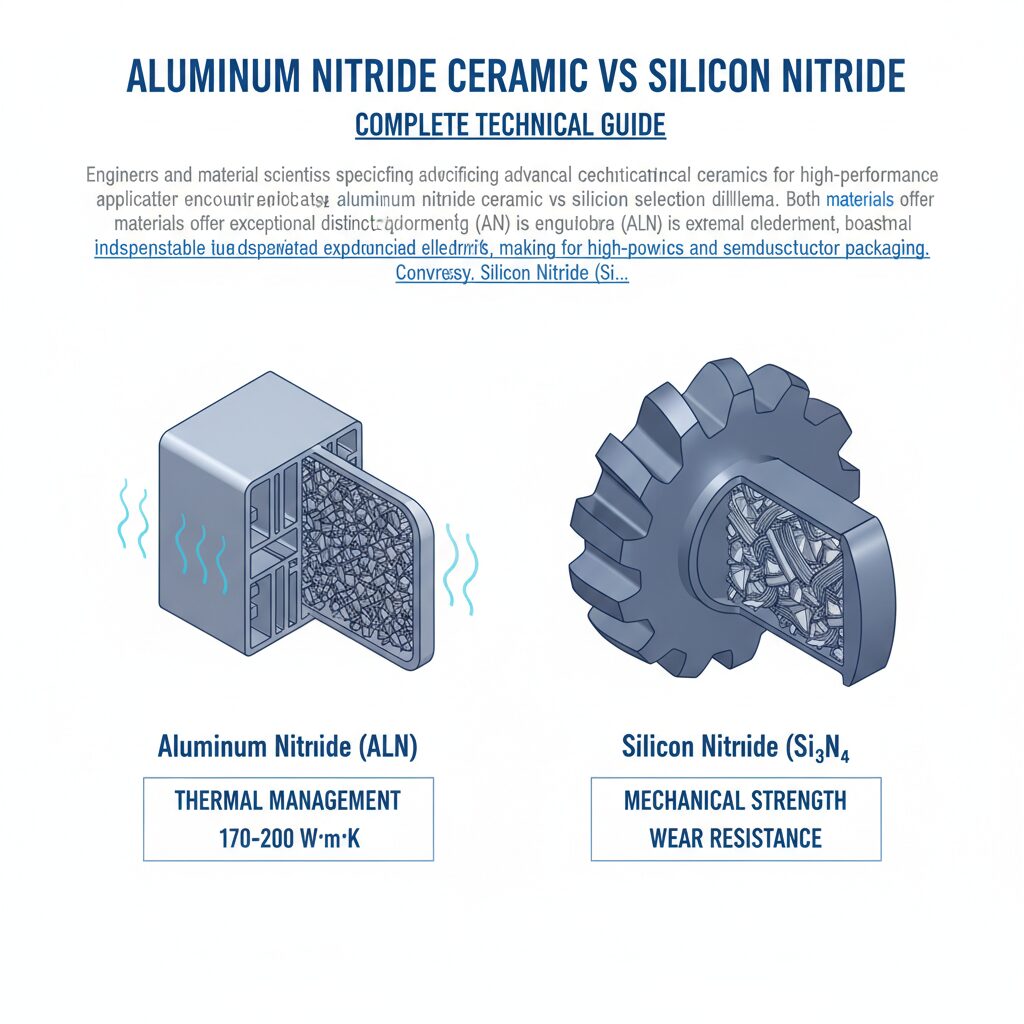
- Thermal Shock Sensitivity: While exceptionally stable at high continuous temperatures, high-purity alumina possesses moderate thermal conductivity. Exposing a thick-walled component to a sudden temperature drop (ΔT > 250°C) can induce severe internal tensile stresses, leading to thermal fracturing. For extreme thermal shock environments, 窒化アルミニウム or silicon nitride may be required.
Machining Considerations
The manufacturing and machining of an alumina ceramic ball for energy presents significant tribological challenges that deter standard machine shops. Because alumina is significantly harder than standard tungsten carbide cutting tools, traditional lathe turning or milling is impossible once the material is fully sintered. Material removal strictly relies on abrasive kinematics utilizing industrial diamond media.
The primary challenge in machining ceramic spheres is the induction of Sub-Surface Damage (SSD). If the lapping pressure exceeds critical thresholds (typically kept between 5 to 15 kPa), the diamond abrasives will cause micro-cracking beneath the surface rather than ductile shearing. Under the 20,000 PSI cyclical loading of an energy sector check valve, these micro-cracks will rapidly propagate, leading to premature macro-failure of the valve seal.
Great Ceramic overcomes these limitations through highly controlled, multi-stage lapping processes that strictly govern the downward pressure, rotational velocity. And slurry concentration. By optimizing the specific downforce per ball, our engineers guarantee that the depth of cut remains strictly within the ductile regime of the alumina lattice. This results in parts with flawless surface integrity.
Machining Precision Capabilities for Energy Spheres
| Tolerance Parameter | Standard Industry Capability | Great Ceramic Precision |
|---|---|---|
| Sphericity (Deviation from perfect sphere) | ± 0.025 mm | ± 0.005 mm |
| Diameter Tolerance | ± 0.050 mm | ± 0.005 mm |
| Surface Roughness (Ra) | 0.4 μm | < 0.05 μm (Mirror Finish) |
| Batch-to-Batch Size Variation | ± 0.100 mm | ± 0.010 mm |
To access engineering support for highly constrained tolerances and complex valve seat mating, utilize our custom 精密セラミック加工 services.
FAQ
What is an alumina ceramic ball for energy?
An alumina ceramic ball for energy is a precision-engineered spherical component constructed from high-purity (99%+) alpha-aluminum oxide. It is specifically designed to function as a structural, load-bearing, or sealing element in extreme industrial environments such as high-pressure oil extraction, thermal energy storage. And wind turbine systems. Unlike steel alternatives, it offers absolute chemical resistance, electrical insulation. And maintains its mechanical integrity at temperatures up to 1700°C.
What are the main applications of an alumina ceramic ball for energy?
These components are critical to several high-stress energy infrastructures. They are predominantly used as ball valves in downhole sucker rod pumps for oil and gas extraction where they resist 20,000 PSI pressures and abrasive sand. Additionally, they are used as grinding media for zero-contamination milling of solid-state battery cathodes, as thermal mass in concentrated solar power (CSP) storage beds. And as electrically insulating bearing elements in offshore wind turbine drivetrains.
How does an alumina ceramic ball for energy compare to other ceramics?
Compared to Zirconia, alumina offers superior high-temperature hydrothermal stability and is generally more cost-effective, though Zirconia offers higher impact resistance (fracture toughness). When compared to Silicon Nitride, alumina provides much better electrical insulation properties but possesses slightly lower rolling contact fatigue limits. Against Silicon Carbide, alumina lacks extreme thermal conductivity but offers absolute oxidation resistance and electrical resistivity, making it superior for insulating mechanical environments.
What are the advantages of an alumina ceramic ball for energy?
The core advantages revolve around its ability to drastically reduce maintenance cycles in harsh environments. It features a Vickers hardness of 1650 HV. This practically eliminates abrasive wear. It operates flawlessly in continuous ambient temperatures up to 1700°C, is highly immune to aggressive chemical corrosion (including H2S and strong acids). And acts as a superior electrical isolator to prevent galvanic decay in complex sub-sea or downhole mechanical assemblies.
How is an alumina ceramic ball for energy machined?
Once formed through cold isostatic pressing and sintered at 1600°C, the ceramic sphere is too hard for conventional cutting tools. It must be processed using specialized multi-axis lapping and polishing machines loaded with microscopic diamond abrasives. Great Ceramic utilizes proprietary kinematic lapping parameters, controlling downward pressure (5-15 kPa) to prevent sub-surface micro-cracking. This meticulous process ensures extreme dimensional accuracy, consistently achieving ±0.005mm sphericity and a flawless Ra < 0.05 μm surface finish.
Need custom alumina ceramic ball for energy parts? グレート・セラミックへのお問い合わせ for precision machining services with tight tolerances, or email [email protected].
詳細はこちら Alumina Ceramic Ball For Energy および当社の精密セラミック加工サービス。.