









Zirconia Ceramic Thermal Expansion: Complete Technical Guide
Managing thermal mismatch in high-temperature mechanical assemblies represents a critical engineering pain point, often leading to catastrophic structural failures, micro-cracking. And compromised hermetic seals. When metallic components interface with traditional technical ceramics under fluctuating thermal loads, the divergent expansion rates generate massive interfacial shear stresses. Understanding zirconio ceramic thermal expansion is the definitive solution to this challenge. With a coefficient of thermal expansion (CTE) ranging from 10.3 to 11.2 × 10⁻⁶ /°C at 20–1000°C, yttria-stabilized tetragonal zirconia polycrystal (Y-TZP) closely mirrors the expansion behavior of cast irons (10.5 × 10⁻⁶ /°C) and most structural steel alloys (11.0–13.0 × 10⁻⁶ /°C). This unique thermomechanical synergy, combined with an extreme fracture toughness of up to 10 MPa·m½, allows engineers to design robust metal-to-ceramic interfaces without complex expansion-compensating geometries. For R&D teams and procurement managers, navigating these material properties is essential for high-yield manufacturing. Need expert engineering assistance? Contatto Great Ceramic to request a quote for precision machining services customized to your exact thermal specifications.
Proprietà dei materiali
The thermomechanical behavior of zirconio is governed by its complex crystallographic structure and the intentional introduction of dopants such as Yttria (Y₂O₃), Magnesia (MgO), or Ceria (CeO₂). Pure zirconium dioxide undergoes severe disruptive phase transformations: from monoclinic at room temperature to tetragonal at 1,170°C. And subsequently to a cubic structure at 2,370°C. The monoclinic-to-tetragonal transformation is accompanied by a volumetric shrinkage of approximately 3% to 5%. Upon cooling, the reverse transformation causes massive volumetric expansion. This would shatter an un-stabilized ceramic part. By heavily doping the matrix with 3 mol% Yttria (3Y-TZP), the tetragonal phase becomes meta-stable at ambient temperatures (20°C). This stabilization not only yields the well-known transformation toughening effect—where stress-induced phase changes absorb fracture energy—but also dictates the fundamental zirconia ceramic thermal expansion metrics utilized in rigorous industrial design.
Because the thermal expansion mechanism is physically rooted in the asymmetry of the interatomic Condon-Morse potential energy well, the CTE is not entirely linear across all temperature gradients. To provide engineers with exact design parameters, we must evaluate the properties of highly stabilized, engineering-grade 3Y-TZP.
| Proprietà | Valore | Unità |
|---|---|---|
| Densità | 6.05 | g/cm³ |
| Durezza | 1250 | HV |
| Resistenza alla flessione | 1000 – 1200 | MPa |
| Resistenza alla frattura | 8.0 - 10.0 | MPa-m½ |
| Conducibilità termica | 2.2 | W/m-K |
| Resistività elettrica | >10¹³ | Ω-cm |
| Temperatura massima di lavoro | 1000 | °C |
To further elucidate the zirconia ceramic thermal expansion behavior, it is critical to break down the Coefficient of Thermal Expansion (CTE) across distinct temperature brackets. Between 20°C and 400°C, the CTE hovers tightly at 9.6 × 10⁻⁶ /°C, providing exceptional stability for low-heat mechanical pumping applications. As thermal energy increases the amplitude of atomic lattice vibrations between 400°C and 800°C, the expansion rate accelerates to 10.4 × 10⁻⁶ /°C. In the extreme high-temperature operating regime of 800°C to 1200°C, the coefficient normalizes near 11.2 × 10⁻⁶ /°C. This predictable, gradual non-linear thermal expansion curve ensures predictable tolerance stacking when mated with austenitic stainless steels (such as 304 or 316) operating in high-temperature environments. This predictable expansion allows Great Ceramic to execute precision machining processes that account for exact dimensional shifts at the operating temperature of the assembly, achieving functional tolerances of ±0.005mm at the final service temperature.
Confronto con altre ceramiche
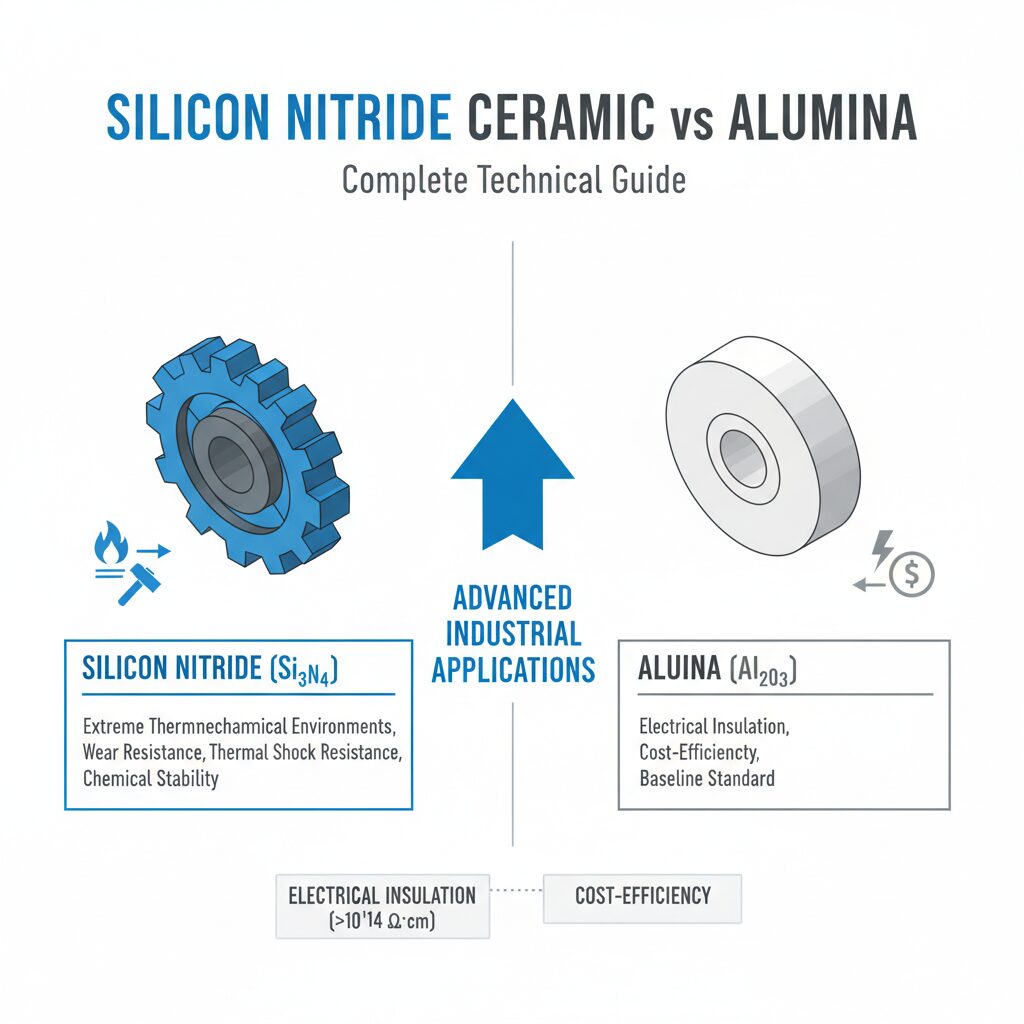
When selecting a technical ceramic for high-stress, variable-temperature environments, comparing thermomechanical data is vital. The zirconia ceramic thermal expansion profile is uniquely high compared to nearly all other technical ceramics, making it a highly specialized tool for metal-mating. For instance, allumina/”>allumina (aluminum oxide, Al₂O₃) possesses a CTE of approximately 8.1 × 10⁻⁶ /°C. This poses a moderate risk of interfacial shear when brazed directly to steel without a compliant interlayer. Nitruro di silicio (Si₃N₄), while possessing superior thermal shock resistance due to its incredibly low CTE of 3.2 × 10⁻⁶ /°C, is generally incompatible with direct metal encapsulation at high temperatures because the metal will rapidly expand and pull away from the ceramic, destroying interference fits.
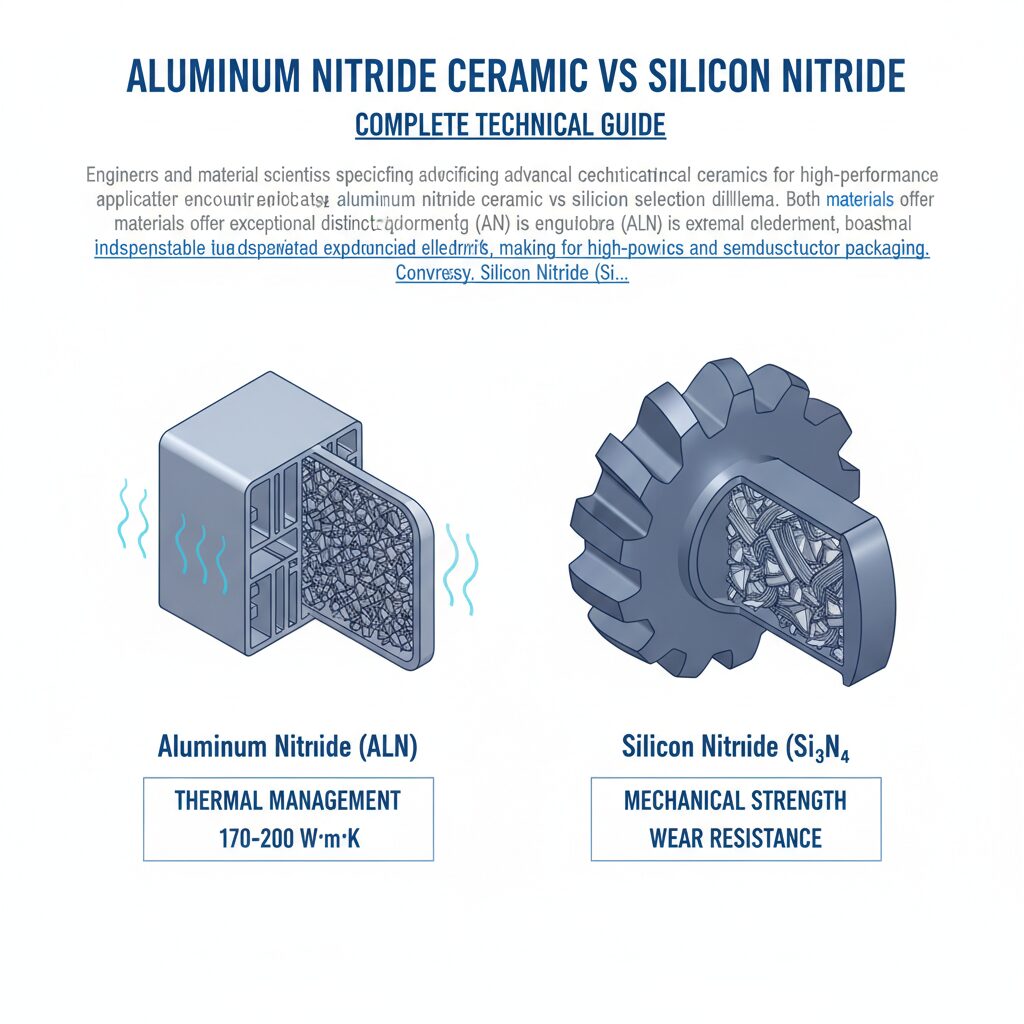
Other materials, such as nitruro di alluminio (CTE ~4.5 × 10⁻⁶ /°C) and carburo di silicio (CTE ~4.0 × 10⁻⁶ /°C), are primarily selected for their extraordinary thermal conductivity (upwards of 170 W/m·K and 120 W/m·K, respectively), rather than their expansion matching capabilities. Alternatively, nitruro di boro offers high machinability and lubricity but lacks the sheer structural yield strength required for heavy mechanical loads. The table below outlines the critical mechanical and thermal distinctions that dictate material selection in complex assemblies.
| Proprietà | Zirconia Ceramic Thermal Expansion | Allumina | Zirconia | Nitruro di silicio |
|---|---|---|---|---|
| Conducibilità termica | 2.2 W/m·K | 24.0 W/m·K | 2.2 W/m·K | 30.0 W/m·K |
| Durezza | 1250 HV | 1650 HV | 1250 HV | 1500 HV |
| Resistenza alla frattura | 9.5 MPa·m½ | 4,5 MPa-m½ | 9.5 MPa·m½ | 6,5 MPa-m½ |
| Costo | Moderate-High | Basso | Moderate-High | Alto |
Note: The “Zirconia Ceramic Thermal Expansion” column represents the specialized thermal data focus (CTE: 10.5 × 10⁻⁶ /°C). This perfectly aligns with the standard structural Zirconia (Y-TZP) parameters. Notice how Zirconia’s low thermal conductivity (2.2 W/m·K) acts as a thermal barrier, isolating metallic components from rapid temperature spikes while simultaneously expanding at the same rate as the metal to prevent cracking.
Applicazioni
The unique combination of zirconia ceramic thermal expansion rates, ultra-low thermal conductivity. And exceptionally high fracture toughness makes this material the undisputed choice for specific, high-stress engineering environments. When engineers design systems that alternate between sub-zero holding states and intense operational heat, Y-TZP provides reliability that metals or other ceramics simply cannot achieve.
- Metal-to-Ceramic Brazed Assemblies: In aerospace sensor housings and high-voltage feedthroughs, true hermeticity (helium leak rates < 10⁻⁹ atm·cc/s) is non-negotiable. Because the zirconia ceramic thermal expansion coefficient perfectly mimics the expansion of titanium and 400-series stainless steels, joint interfaces endure thousands of thermal cycles from -50°C to 400°C without initiating microscopic shear cracks in the braze alloy filler (typically Ag-Cu-Ti).
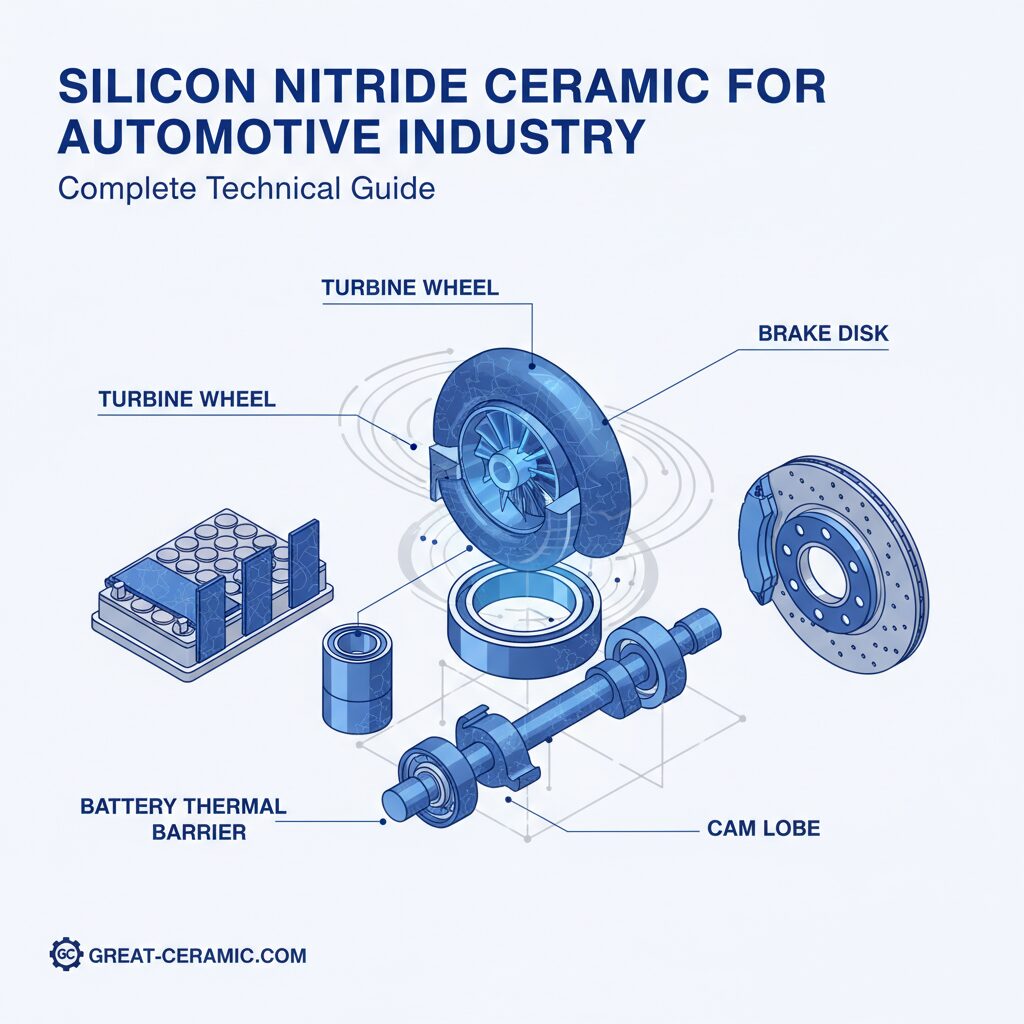
- Automotive Engine Components: Internal combustion engines utilize Y-TZP for valve guides, cam rollers. And fuel injector nozzles. Operating at temperatures exceeding 600°C, the low thermal conductivity (2.2 W/m·K) acts as a high-efficiency thermal barrier coating. Crucially, the expansion rate allows the ceramic components to maintain critical geometric clearances (often under 0.010mm) within metallic engine blocks during rapid thermal ramping.
- Extrusion Dies for Non-Ferrous Metals: During the extrusion of copper and brass at temperatures approaching 800°C, die inserts must withstand massive compressive forces (over 500 MPa). The matched thermal expansion ensures the ceramic die insert remains tightly compressed within its H13 tool steel casing. A mismatch here would cause the steel casing to expand faster than the ceramic, leading to a loss of compressive pre-load and catastrophic die explosion.
- High-Temperature Chemical Pump Shafts: In chemical processing plants pumping corrosive acids at 200°C, engineers utilize zirconia for impellers and drive shafts. The material delivers supreme wear resistance (1250 HV) while its expansion matches the metallic drive couplings, preventing the shaft from seizing or fretting within the mechanical seal faces during high-speed rotation (up to 3,600 RPM).
- Welding Pins and Locating Dowels: In automated projection welding and induction welding lines, locating pins are subjected to immediate, localized heat spikes up to 900°C. Zirconia welding pins prevent weld spatter adhesion due to their non-conductive electrical resistivity (>10¹³ Ω·cm). The matched expansion rate ensures the pins do not fracture or jam inside the precision-machined steel locating fixtures during continuous production cycles.
Processo di produzione
Transforming raw zirconium dioxide powder into a fully dense, dimensionally accurate mechanical component requires a tightly controlled, multi-stage manufacturing sequence. Given that the specific zirconia ceramic thermal expansion properties are heavily dependent on the exact phase distribution within the crystalline matrix, every step—from powder morphology management to the final hard-machining—must be executed with absolute precision.
The process begins with the synthesis of ultra-fine sub-micron powders (typically 0.2 to 0.5 µm particle size). To achieve Y-TZP, 3 mol% yttrium oxide is co-precipitated with the zirconium powder to ensure homogeneous distribution. The powder is then mixed with organic polymeric binders, plasticizers. And dispersants to create a spray-dried, free-flowing granular powder with high tap density. This precise chemical formulation is what guarantees the 10.5 × 10⁻⁶ /°C CTE value in the final fired state.
Metodi di formatura
- Cold Isostatic Pressing (CIP): For high-mass, symmetrical components like pump shafts or large extrusion dies, the spray-dried powder is loaded into flexible elastomeric molds. The mold is submerged in a hydraulic fluid chamber and subjected to uniform omnidirectional hydrostatic pressures ranging from 200 to 300 MPa. This method ensures uniform green density. This is critical for isotropic shrinkage (preventing warping) during the subsequent thermal processing phases.
- Ceramic Injection Molding (CIM): For intricate geometries such as medical tool tips or multi-featured sensor housings, the ceramic powder is heavily loaded (up to 55% by volume) into a thermoplastic binder system. The highly viscous feedstock is injected into hardened steel tool cavities at pressures of 50 to 100 MPa and temperatures of 150°C. After molding, the parts undergo a rigorous catalytic or thermal debinding process to slowly extract the organics without creating internal vapor pressure micro-cracks.
Sinterizzazione
The sintering phase is where the mechanical integrity and the specific zirconia ceramic thermal expansion characteristics are locked into the molecular structure. The “green” parts are loaded into high-temperature, programmable electric kilns utilizing molybdenum disilicide (MoSi₂) heating elements. The temperature is gradually ramped at highly controlled rates (typically 1°C to 2°C per minute) up to a peak sintering temperature between 1,400°C and 1,500°C. During this dwell period (typically 2 to 4 hours), solid-state diffusion occurs across the grain boundaries, eliminating porosity and increasing the relative density to over 99.5% of theoretical maximum (≥6.00 g/cm³).
Crucially, the parts undergo a massive volumetric shrinkage of approximately 20% to 25% during this phase. If the thermal gradients within the kiln vary by even ±5°C, the shrinkage will be non-uniform, resulting in camber, bowing. And internal residual stresses that can wildly alter the expected thermal expansion behavior in the field. Post-sintering, the average grain size is strictly maintained below 0.5 µm to optimize the meta-stable tetragonal phase retention, ensuring maximum transformation toughening.
Lavorazione finale
Because as-sintered components typically only hold dimensional tolerances of ±1% to ±2% due to firing variations, final precision machining is an absolute necessity for strict B2B engineering applications. Once fully densified, zirconia boasts a hardness of 1250 HV, making it entirely impervious to standard high-speed steel or carbide cutting tools. All subsequent material removal must be performed using highly specialized diamond-impregnated abrasives. To meet the stringent demands of aerospace and medical device customers, lavorazione di precisione della ceramica involves CNC diamond grinding, lapping. And polishing. Great Ceramic employs multi-axis, rigid-frame CNC platforms running at spindle speeds up to 30,000 RPM, combined with flood coolant systems to suppress localized heat generation, thereby achieving mirror-like surface finishes (Ra < 0.1 µm) and strict dimensional tolerances.
Vantaggi e limiti
Vantaggi
- Exceptional Thermal Matching: The defining characteristic of zirconia ceramic thermal expansion is its CTE of 10.5 × 10⁻⁶ /°C. This closely parallels steel alloys. This practically eliminates thermal shear stress at the interface of metal-ceramic joined assemblies, enabling high-integrity brazing and rigid interference fits up to 800°C.
- Superior Fracture Toughness: Unlike brittle ceramics such as alumina (4.5 MPa·m½), Y-TZP exhibits a fracture toughness of up to 10.0 MPa·m½. The martensitic-like transformation from the tetragonal to the monoclinic phase at the tip of an advancing crack actively induces compressive stresses, clamping the crack shut and absorbing massive amounts of kinetic energy.
- Estrema resistenza all'usura e all'abrasione: With a Vickers hardness approaching 1300 HV, zirconia outperforms hardened tool steels in continuous-friction applications by a factor of 10. This ensures dimensional stability over millions of cycles in wire drawing dies, cutting blades. And high-speed bearings.
- Ultra-Low Thermal Conductivity: Clocking in at just 2.2 W/m·K, zirconia acts as a highly effective thermal barrier. It prevents destructive heat transfer from combustion chambers or hot chemical zones into sensitive underlying metallic structures, bearings, or electronic sensor arrays.
Limitazioni
- Low-Temperature Degradation (LTD): In environments combining high moisture (steam) and temperatures between 150°C and 300°C, Y-TZP is susceptible to hydrothermal aging. Water molecules penetrate the oxygen vacancies in the lattice, triggering a spontaneous transformation from the tetragonal to the monoclinic phase on the material’s surface. This causes micro-cracking, surface roughening. And a severe drop in structural strength over time.
- High Density and Mass: At 6.05 g/cm³, zirconia is significantly heavier than alumina (3.9 g/cm³) and silicon nitride (3.2 g/cm³). In weight-sensitive aerospace applications or high-speed reciprocating components requiring low rotational inertia, the extreme mass of zirconia can increase kinetic energy loads and require heavier counter-balancing.
Considerazioni sulla lavorazione
The very properties that make zirconia a phenomenal engineering material—its extreme hardness, transformation toughening. And distinct zirconia ceramic thermal expansion profile—also make it notoriously difficult to machine. Conventional subtractive manufacturing principles fail completely. attempting to cut fully sintered Y-TZP with excessive feed rates will immediately induce sub-surface micro-cracks. These invisible defects drastically compromise the flexural strength of the component, often leading to unpredictable catastrophic failure when subjected to high-pressure operational loads.
To overcome these hurdles, Great Ceramic leverages state-of-the-art precision grinding kinematics. By utilizing continuous-dress resin-bonded diamond wheels with specific grit sizes (ranging from D126 for aggressive roughing down to D15 for ultra-fine finishing), we meticulously control the rate of volumetric material removal. Advanced flood coolant strategies, utilizing low-surface-tension synthetic fluids delivered at 70 Bar of pressure, wash away microscopic swarf and prevent localized frictional heating. This strict thermal management during the grinding process is paramount. if the ceramic exceeds 250°C locally during machining, unintended phase transformations can alter the localized zirconia ceramic thermal expansion coefficient. Ready to optimize your component manufacturing? Rely on Great Ceramic’s unmatched metrology and engineering capabilities to guarantee your parts are machined defect-free to exact ±0.005mm tolerances. Reach out to our engineering team today.
FAQ
What is zirconia ceramic thermal expansion?
Zirconia ceramic thermal expansion refers to the dimensional change (volumetric or linear) of zirconium dioxide as it responds to fluctuating temperatures. The most critical metric for engineers is the coefficient of thermal expansion (CTE). This for Yttria-Stabilized Zirconia (Y-TZP) is extraordinarily high for a ceramic, measuring between 10.3 and 11.2 × 10⁻⁶ /°C. This specific expansion rate is driven by the physical widening of the interatomic bonds as thermal energy increases. Because this CTE directly mimics the expansion rate of structural steels and cast iron, zirconia is uniquely positioned as the optimal material for hybrid metal-ceramic engineering assemblies.
What are the main applications of zirconia ceramic thermal expansion properties?
The applications heavily rely on the material’s ability to expand and contract harmoniously with metals. Key applications include aerospace hermetic feedthroughs where zirconia is brazed directly to titanium or stainless steel frames. automotive internal combustion engine components (like valve guides and tappet rollers) operating above 600°C. non-ferrous metal extrusion dies that must maintain compressive interference fits within H13 tool steel jackets. high-speed impeller shafts in heated chemical pumps. and electrically insulating locating dowels in resistance welding fixtures operating up to 900°C without binding or spalling.
How does zirconia ceramic thermal expansion compare to other ceramics?
Zirconia exhibits the highest thermal expansion coefficient among common technical ceramics. While standard Y-TZP zirconia sits at ~10.5 × 10⁻⁶ /°C, alumina is significantly lower at ~8.1 × 10⁻⁶ /°C, aluminum nitride sits around 4.5 × 10⁻⁶ /°C. And silicon nitride features an ultra-low expansion of just 3.2 × 10⁻⁶ /°C. While low-expansion materials like silicon nitride are exceptional for surviving rapid thermal shock (e.g., being dropped from 1000°C into cold water), they fail catastrophically in rigid, direct-contact metal assemblies due to extreme thermal mismatch. Zirconia bridges this gap, sacrificing some extreme thermal shock resistance to gain unparalleled mechanical compatibility with steel infrastructure.
What are the advantages of zirconia ceramic thermal expansion?
The primary advantage is structural integrity in mixed-material engineering. By mirroring the thermal expansion of common structural metals, engineers can design complex assemblies with zero-clearance or heavy interference fits without requiring complex, pliable interlayers or convoluted spring-loaded tensioning systems. As the assembly heats up, the metal and the ceramic expand in unison, maintaining constant contact pressures. This prevents the metal from expanding away from the ceramic (which would cause a loss of hermeticity or mechanical grip) and prevents the metal from crushing the ceramic upon rapid cooling.
How is zirconia machined?
Fully sintered zirconia cannot be machined with standard metallic tools. it must be ground using diamond abrasives. Because of its 1250 HV hardness and high fracture toughness, machining requires highly rigid CNC grinding platforms to prevent vibration-induced chipping. Specialized resin-bonded diamond wheels remove material at extremely shallow depths of cut (often 0.002mm to 0.010mm per pass) while submerged in high-pressure coolant. At Great Ceramic, our soluzioni per la lavorazione della ceramica di precisione utilize high-speed 5-axis CNC grinding and ultrasonic-assisted machining techniques. We implement rigid process controls to eliminate subsurface micro-cracking, guaranteeing flawless structural integrity and an industry-leading dimensional tolerance capability of ±0.005mm.
Need custom zirconia ceramic thermal expansion parts? Contatto Great Ceramic per servizi di lavorazione di precisione con tolleranze ristrette, oppure inviate un'e-mail a [email protected].
Per saperne di più Zirconia Ceramic Thermal Expansion e i nostri servizi di lavorazione della ceramica di precisione.