









Silicon Nitride Ceramic Ball: Complete Technical Guide
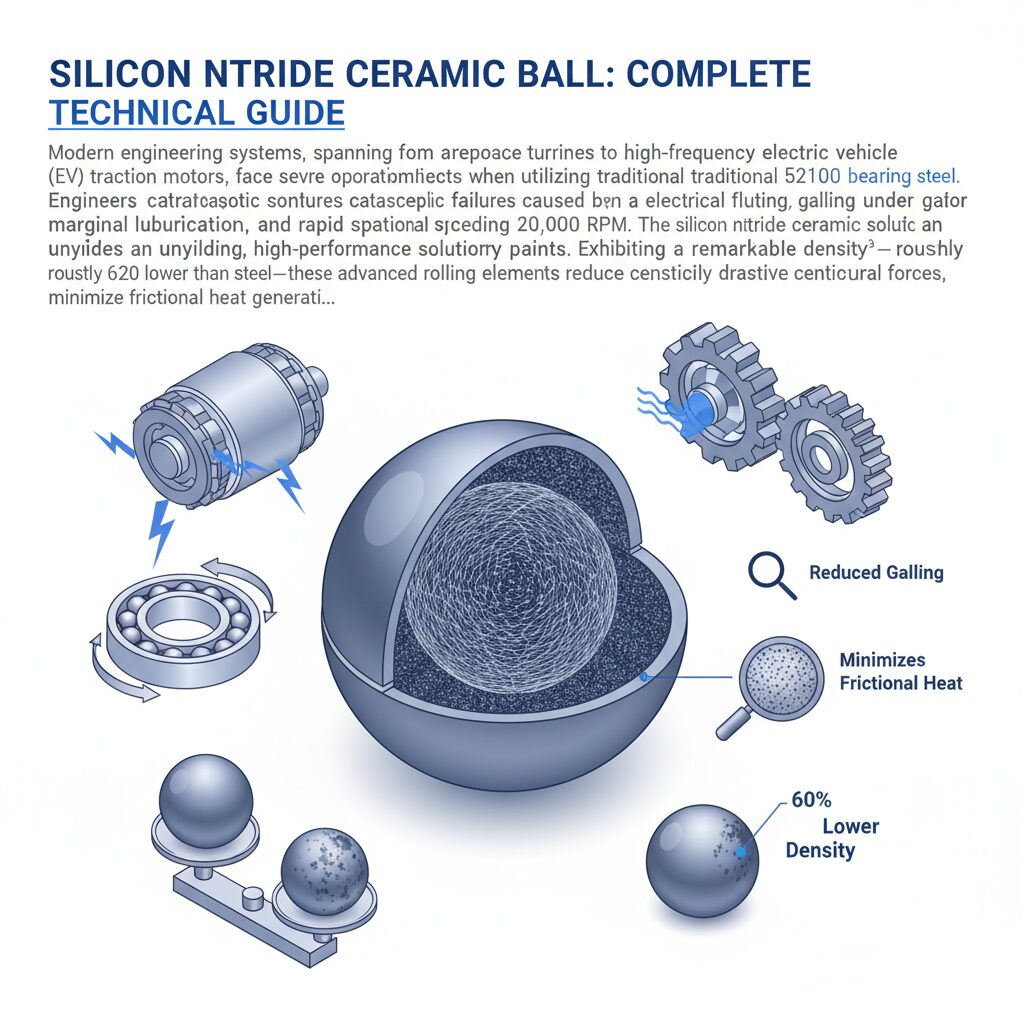
Modern engineering systems, spanning from aerospace turbines to high-frequency electric vehicle (EV) traction motors, face severe operational bottlenecks when utilizing traditional 52100 bearing steel. Engineers confront catastrophic failures caused by electrical fluting, galling under marginal lubrication. And rapid spalling at rotational speeds exceeding 20,000 RPM. The nitruro di silicio ceramic ball provides an unyielding, high-performance solution to these exact industry pain points. Exhibiting a remarkable density of just 3.20 g/cm³—roughly 60% lower than steel—these advanced rolling elements drastically reduce centrifugal forces, minimize frictional heat generation. And eliminate electrical discharge machining (EDM) bearing damage. At Great Ceramic, we engineer these superior components to precise specifications, leveraging our advanced lavorazione di precisione della ceramica capabilities to consistently achieve dimensional tolerances of ±0.005mm. This comprehensive guide details the mechanical, thermal. And tribological parameters of the silicon nitride ceramic ball, providing procurement managers and R&D engineers with the data required to optimize their high-load, high-speed rotary assemblies.
Proprietà dei materiali
The crystallographic structure of bearing-grade silicon nitride consists primarily of interlocking beta-phase (β-Si3N4) needle-like grains. This unique microstructure, achieved through precise sintering with yttria (Y2O3) or allumina oxide additives, grants the material an extraordinary combination of high hardness, thermal shock resistance. And fracture toughness. Unlike brittle monolithic ceramics, the acicular grain structure creates an inherent crack-deflection mechanism, resulting in a Weibull modulus frequently exceeding 15. The operational stability of a silicon nitride ceramic ball is further enhanced by its low coefficient of thermal expansion (3.2 × 10⁻⁶ /°C). This allows engineers to design bearings with extremely tight radial clearances without fear of thermal seizure at high rotational speeds.
Furthermore, the high Young’s Modulus (310 GPa) of this material ensures that rolling elements maintain their spherical geometry under extreme Hertzian contact stresses (often exceeding 3,500 MPa in high-load applications). This rigidity minimizes the elastohydrodynamic lubrication (EHL) contact area. This directly translates to lower rolling friction and a reduction in parasitic power losses. Below is the precise technical data governing these high-performance rolling elements.
| Proprietà | Valore | Unità |
|---|---|---|
| Densità | 3,20 – 3,25 | g/cm³ |
| Durezza | 1500 – 1700 | HV |
| Resistenza alla flessione | 800 – 1000 | MPa |
| Resistenza alla frattura | 6.0 - 8.0 | MPa-m½ |
| Conducibilità termica | 25 - 35 | W/m-K |
| Resistività elettrica | > 10¹⁴ | Ω-cm |
| Temperatura massima di lavoro | 1000 – 1200 | °C |
Confronto con altre ceramiche
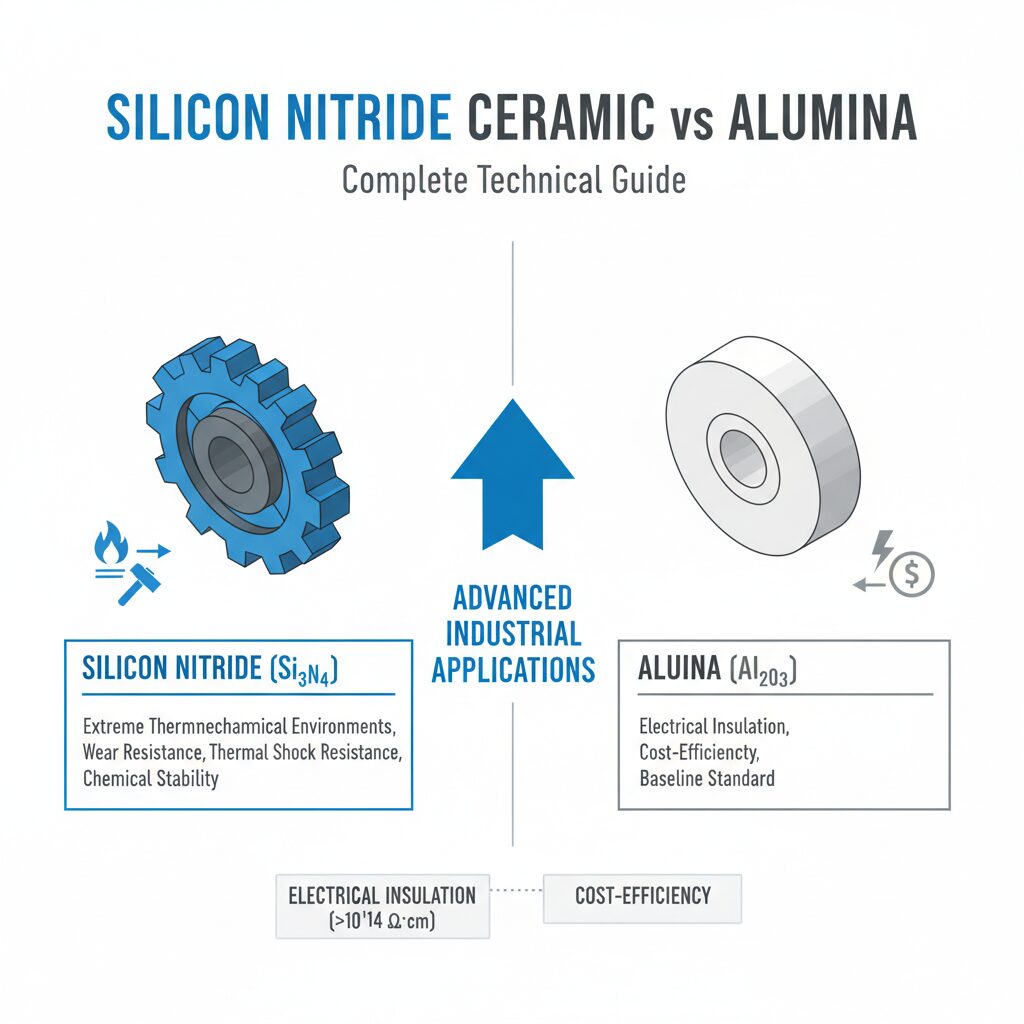
When selecting a technical ceramic for high-speed rolling contact applications, engineers must carefully analyze the specific failure modes of their system. While allumina offers excellent chemical inertness and high electrical resistivity, its relatively low fracture toughness (3.5 – 4.5 MPa·m½) makes it highly susceptible to impact damage and spalling under heavy rolling loads. Conversely, zirconio provides exceptional fracture toughness (up to 10.0 MPa·m½), making it highly resilient against impact. However, zirconia’s high density (6.0 g/cm³) negates the centrifugal force advantages critical for high-speed bearings. And its incredibly low thermal conductivity (2.5 W/m·K) prevents effective heat dissipation, leading to localized thermal expansion and catastrophic bearing seizure.
The bearing-grade silicon nitride ceramic ball is manufactured using Hot Isostatic Pressing (HIP) to achieve near-zero porosity, distinguishing it from standard structural nitruro di silicio. This specific densification process maximizes rolling contact fatigue (RCF) life. Compared to generic structural grades, the HIPed ceramic ball delivers superior strength and a perfectly homogenous microstructure, ensuring that no subsurface voids exist to act as stress concentrators. The table below illustrates the precise numerical differences between these materials.
| Proprietà | Palla in ceramica al nitruro di silicio | Allumina | Zirconia | Nitruro di silicio |
|---|---|---|---|---|
| Conducibilità termica (W/m·K) | 35 | 20 – 25 | 2.5 – 3.0 | 25 – 30 |
| Durezza (HV) | 1600 | 1500 | 1200 | 1450 |
| Durezza alla frattura (MPa-m½) | 7.5 | 4.0 | 9.5 | 6.0 |
| Costo | Alto | Basso | Medio | Medio |
Applicazioni
The unique tribological and thermomechanical properties of the silicon nitride ceramic ball make it the exclusive choice for engineering environments where metallic rolling elements rapidly degrade. By substituting standard 52100 steel or 440C stainless steel balls with these ceramic alternatives, hybrid bearings (steel rings with ceramic balls) can achieve up to a 10x increase in operational lifespan. The following high-performance applications demand the uncompromising specifications provided by this material.
- Electric Vehicle (EV) Traction Motors: Modern EV architectures utilize high-frequency Pulse Width Modulation (PWM) inverters that generate extreme common-mode voltages. This induces parasitic currents that arc across traditional steel bearings, causing electrical discharge machining (EDM) pitting, fluting. And rapid acoustic degradation. With an electrical resistivity of >10¹⁴ Ω·cm, the silicon nitride ceramic ball acts as a perfect dielectric insulator, completely halting EDM damage while supporting rotor speeds exceeding 25,000 RPM.
- Aerospace Main Engine Bearings: Jet turbine main shafts operate under extreme thermal gradients and massive centrifugal loads. The 6.0-8.0 MPa·m½ fracture toughness prevents catastrophic shattering, while the low 3.20 g/cm³ density reduces the centrifugal force exerted on the outer race by up to 60%. This allows turbine bearings to safely achieve DN values (bore diameter in mm × speed in RPM) exceeding 3.0 × 10⁶.
- High-Speed Machine Tool Spindles: CNC milling centers require immense dynamic rigidity and zero thermal distortion to achieve sub-micron workpiece tolerances. The low thermal expansion coefficient (3.2 × 10⁻⁶ /°C) of the silicon nitride ceramic ball ensures that the bearing preload remains constant regardless of operational duration, preventing spindle seizure and maintaining runout below 2 µm at 40,000 RPM.
- Wind Turbine Generators: Offshore wind turbines are subjected to highly variable wind loads, resulting in frequent starting, stopping. And micro-oscillations that cause “false brinelling” (fretting wear) in steel bearings. The immense 1600 HV hardness and adhesive wear resistance of the ceramic ball eliminate microscopic welding between the ball and the race under these boundary lubrication conditions.
- Chemical Processing Pumps: Sealless magnetic drive pumps often rely on the pumped media (such as concentrated sulfuric acid or harsh alkaline solutions) for bearing lubrication. Because silicon nitride is completely inert to most corrosive agents and experiences zero oxidation below 1000°C, it thrives in environments where stainless steel would suffer rapid intergranular corrosion.
Optimize Your High-Speed Assemblies: If your engineering team is battling bearing fatigue, thermal expansion, or electrical fluting, upgrading to advanced ceramic components is the definitive solution. Contatto Great Ceramic to discuss custom precision manufacturing tailored exactly to your operational load and RPM requirements.
Processo di produzione
Transforming raw alpha-phase silicon nitride powder into a dimensionally perfect, high-density silicon nitride ceramic ball is an intricate metallurgical and mechanical process. The raw powder, synthesized via direct nitridation of silicon or the diimide process, must possess a sub-micron particle size (typically <0.5 µm) and exceedingly high purity (oxygen content <1.5%). Because pure silicon nitride exhibits strong covalent bonding, it cannot be sintered conventionally. it requires the exact addition of sintering aids (such as Yttria and Alumina) to form a liquid phase at high temperatures, facilitating densification and the crucial alpha-to-beta phase transformation.
Metodi di formatura
- Pressatura isostatica a freddo (CIP): This is the premier method for bearing-grade blanks. The compounded powder is enclosed in an elastomeric mold and subjected to uniform fluid pressure ranging from 200 to 300 MPa. This ensures a highly isotropic green density (roughly 60% of theoretical density). This is absolutely critical for preventing non-uniform shrinkage and maintaining high sphericity during the subsequent firing stages.
- Die Pressing / Uniaxial Pressing: Utilized primarily for lower-grade or highly customized non-spherical variants, the powder is compressed in a rigid metallic die at 100-150 MPa. While highly automated and cost-effective, it can introduce density gradients that require more extensive post-sintering machining.
Sinterizzazione
The thermal consolidation of the silicon nitride ceramic ball requires extreme environmental control. The primary stage utilizes Gas Pressure Sintering (GPS) at temperatures between 1700°C and 1800°C, conducted within an overpressure of pure nitrogen gas (typically 1 to 10 MPa). This high nitrogen pressure prevents the silicon nitride from thermally decomposing into silicon gas and nitrogen gas at extreme temperatures. To achieve the absolute zero-porosity required for maximum rolling contact fatigue life, the GPS process is followed by Hot Isostatic Pressing (HIP). During HIP, the components are subjected to simultaneous extreme heat (up to 1800°C) and immense argon gas pressure (up to 200 MPa). This obliterates any residual microscopic internal voids, pushing the final density to >99.9% of theoretical maximum and maximizing the material’s structural integrity.
Lavorazione finale
The sintered blanks undergo a rigorous, multi-stage precision machining process to achieve the geometric perfection mandated by international bearing standards (ISO 3290 and ASTM F2094). Due to the material’s extreme hardness, conventional abrasives are useless. the process strictly utilizes synthetic diamond slurries and wheels. The process begins with rough grinding to remove the “sintering skin” and establish basic sphericity. This is followed by coarse and fine lapping between counter-rotating cast iron plates flooded with progressively finer diamond paste (ranging from 15 µm down to 0.5 µm grit sizes). The final polishing stage imparts a mirror-like surface finish. To guarantee long-term RCF life, strict tolerances must be met across three critical parameters: diameter variation, sphericity. And surface roughness (Ra). The table below outlines the precise dimensional requirements for various ISO grades.
| ISO 3290 Bearing Grade | Sphericity Tolerance (µm) | Diameter Variation (µm) | Surface Roughness Ra (µm) |
|---|---|---|---|
| Grade 3 (G3) | 0.08 | 0.08 | 0.010 |
| Grade 5 (G5) | 0.13 | 0.13 | 0.014 |
| Grade 10 (G10) | 0.25 | 0.25 | 0.020 |
| Grade 16 (G16) | 0.40 | 0.40 | 0.025 |
Vantaggi e limiti
Vantaggi
- Mass Reduction & Speed Optimization: The specific gravity of 3.20 g/cm³ drastically cuts the mass of the rolling element. Because centrifugal force is directly proportional to mass and the square of velocity, this 60% weight reduction exponentially decreases the outward force exerted on the bearing’s outer ring at high RPMs, lowering operating temperatures by up to 15°C and allowing for immense speed threshold increases.
- Superior Wear & Galling Resistance: In standard steel-on-steel bearings operating under boundary (thin-film) lubrication, microscopic asperities cold-weld together and tear apart, causing galling and adhesive wear. The dissimilar molecular structure of a silicon nitride ceramic ball running against a steel race completely precludes this cold-welding phenomenon, extending lubricant life and surviving oil-starved conditions.
- Complete Electrical Isolation: With a dielectric strength of 15-20 kV/mm and electrical resistivity surpassing 10¹⁴ Ω·cm, these balls completely block the passage of rotor-induced common-mode currents in Variable Frequency Drive (VFD) and EV motor systems, eliminating the root cause of electrical fluting.
- Exceptional Corrosion Resilience: The inert chemical profile ensures zero degradation when exposed to harsh alkaline, acidic, or saltwater environments, making them ideal for submerged chemical pumps and offshore marine applications where standard alloys rapidly pit and fail.
Limitazioni
- Thermal Expansion Mismatch: The low coefficient of thermal expansion (3.2 × 10⁻⁶ /°C) compared to standard bearing steel (11.5 × 10⁻⁶ /°C) means that the steel inner and outer rings will expand faster than the ceramic balls as the system heats up. Engineers must perform precise internal clearance calculations (utilizing C3 or C4 clearances) to prevent the bearing from losing preload or seizing over a wide temperature gradient.
- High Initial Capital Cost: Due to the necessity of ultrapure raw powders, energy-intensive Hot Isostatic Pressing (HIP). And hundreds of hours of diamond lapping, silicon nitride components carry a significant cost premium—often 3x to 5x higher than equivalent 52100 steel elements. However, the total cost of ownership (TCO) is consistently lower due to reduced maintenance intervals.
Considerazioni sulla lavorazione
Achieving the tight-tolerance geometries demanded by aerospace and medical industries represents one of the most formidable challenges in modern materials science. A silicon nitride ceramic ball possesses an extreme Vickers hardness (1500-1700 HV), making it entirely impervious to high-speed steel (HSS), carbide. And even standard cubic nitruro di boro (CBN) cutting tools. Attempting to machine this material with incorrect parameters results in massive sub-surface micro-cracking. This severely degrades the fracture toughness and leads to catastrophic premature spalling in the final application.
Precision grinding requires resin-bonded or vitrified diamond wheels, strictly controlled spindle speeds (often exceeding 10,000 RPM). And exceptionally slow, calculated feed rates to minimize normal forces. The depth of cut (ap) must frequently be kept below 5 µm per pass to remain in the ductile-regime machining zone, thereby preventing brittle fracture propagation. Furthermore, the extreme friction generated during diamond grinding necessitates high-pressure coolant delivery (often at 70 to 100 bar) targeted directly at the grinding interface to immediately flush away abrasive swarf and prevent localized thermal shock. This could induce micro-fissures.
At Great Ceramic, we have mastered these exact engineering challenges. Utilizing highly rigid, thermally stabilized CNC grinding centers combined with proprietary, multi-stage diamond lapping kinematics, our lavorazione di precisione della ceramica process reliably achieves Grade 5 (G5) and Grade 3 (G3) standards. We routinely hold sphericity tolerances tighter than 0.13 µm and overall dimensional accuracy to ±0.005mm, guaranteeing our clients receive flawless rolling elements that meet ISO 3290 stringent requirements.
Overcoming complex machining bottlenecks? Trust your most demanding tight-tolerance components to a proven industry leader. Send your blueprints to Great Ceramic today to secure precision-machined ceramics engineered for zero-failure applications.
FAQ
What is silicon nitride ceramic ball?
A silicon nitride ceramic ball is a highly advanced, ultra-hard rolling element manufactured from synthesized silicon nitride (Si3N4) powder. Engineered specifically to replace standard metallic balls in rolling contact bearings, these components are fully densified through Hot Isostatic Pressing (HIP). They offer extreme mechanical properties, including a low density of 3.20 g/cm³, zero electrical conductivity, high fracture toughness (up to 8.0 MPa·m½). And the ability to operate at rotational speeds up to 60% faster than traditional 52100 bearing steel.
What are the main applications of silicon nitride ceramic ball?
The primary applications revolve around environments featuring extreme RPMs, marginal lubrication, high temperatures, or parasitic electrical currents. They are fundamentally critical in electric vehicle (EV) traction motors to prevent electrical discharge machining (EDM) fluting. Additionally, they are the standard in aerospace main engine shaft bearings, high-speed CNC machine tool spindles, dental drill air turbines (operating at >300,000 RPM). And heavy-duty wind turbine generators. They are also heavily utilized in chemical processing pumps due to their complete resistance to corrosive media.
How does silicon nitride ceramic ball compare to other ceramics?
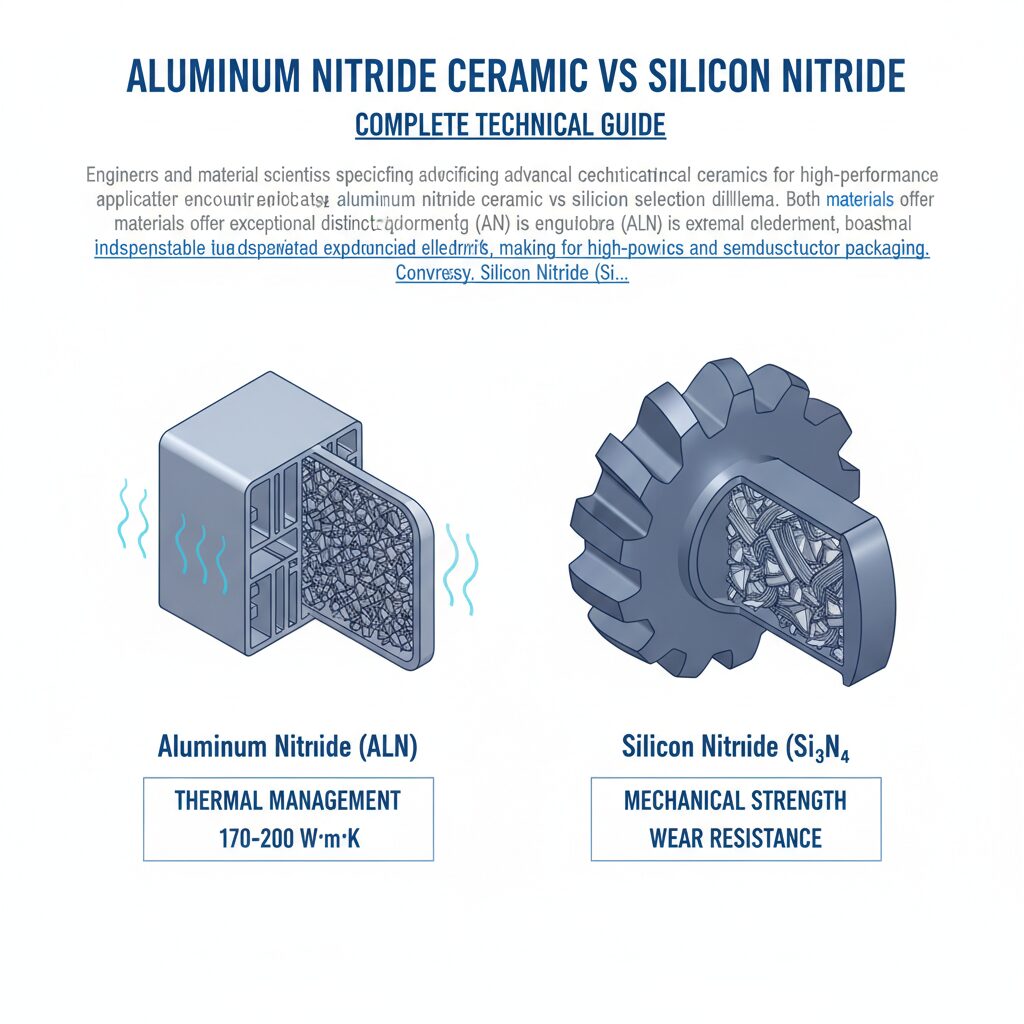
Compared to other technical ceramics, silicon nitride offers the optimal balance of mechanical traits for dynamic rolling applications. While carburo di silicio possesses greater hardness and thermal conductivity, it is inherently more brittle, making it unsuitable for the extreme Hertzian point-contact stresses found in ball bearings. Conversely, zirconia offers higher fracture toughness but suffers from a high mass penalty and poor thermal conductivity, leading to rapid heat buildup. Silicon nitride uniquely combines low mass, high thermal shock resistance. And an interlocking grain structure that halts crack propagation, making it the undisputed gold standard for hybrid bearings.
What are the advantages of silicon nitride ceramic ball?
The primary advantages are massive reductions in centrifugal force, elimination of electrical damage. And dramatically reduced frictional heat. Because they are 60% lighter than steel, they exert vastly lower forces on the outer bearing race at high speeds, directly lowering operational temperatures and extending grease life. Their non-metallic structure ensures they will never cold-weld or gall to a steel race, even in completely oil-starved conditions. Furthermore, they are immune to magnetic fields, non-oxidizing below 1000°C. And provide absolute dielectric isolation to block stray rotor currents.
How is silicon nitride ceramic ball machined?
Machining a sintered silicon nitride ceramic ball requires a specialized, multi-stage abrasive process utilizing synthetic diamond media. Initial blank shaping is achieved via precision CNC grinding using vitrified or resin-bonded diamond wheels under high-pressure coolant floods. The exact spherical geometry is then perfected through hundreds of hours of planetary lapping and polishing between cast iron plates loaded with progressively finer diamond slurries (from 15 µm down to sub-micron pastes). Achieving critical ±0.005mm tolerances requires immense technical expertise. Great Ceramic specializes in this exact highly-controlled precision ceramic machining, delivering flawless surface finishes (Ra < 0.014 µm) and sphericity (<0.13 µm) for the most demanding industrial applications.
Need custom silicon nitride ceramic ball parts? Contatto Great Ceramic per servizi di lavorazione di precisione con tolleranze ristrette, oppure inviate un'e-mail a [email protected].
Per saperne di più Palla in ceramica al nitruro di silicio e i nostri servizi di lavorazione della ceramica di precisione.