









Machinable Glass Ceramic Ceramic Parts for Energy: High-Performance Solutions for Modern Power Systems
The global energy landscape is undergoing a radical transformation. As we move toward higher efficiency in traditional power generation and rapid innovation in renewable sectors, the demand for materials that can withstand extreme environments has never been greater. Machinable glass ceramic ceramic parts for energy applications have emerged as a critical solution, bridging the gap between the high-performance properties of technical ceramics and the ease of manufacturing associated with metals. Great Ceramic specializes in the precision fabrication of these components, ensuring that energy infrastructure—from nuclear reactors to solar arrays—operates with maximum reliability and safety.
The Evolution of Machinable Glass Ceramics in Energy Infrastructure
Traditional ceramics like alumina or zirconio offer excellent thermal and electrical properties but are notoriously difficult and expensive to machine, especially for complex geometries required in modern energy sensors and insulators. Machinable glass ceramics (MGC), most notably those containing fluorophlogopite mica crystals within a borosilicate glass matrix, offer a unique advantage. These materials can be machined using standard high-speed steel or carbide cutting tools, allowing for rapid prototyping and the production of intricate components without the need for post-firing shrinkage compensation.
In the energy sector, where downtime can cost millions and safety is paramount, the ability to produce custom, high-precision ceramic parts quickly is invaluable. Whether it is for high-voltage insulation in power grids or thermal barriers in gas turbines, machinable glass ceramic ceramic parts for energy systems provide a versatile and robust material choice.
Technical Properties and Performance Metrics
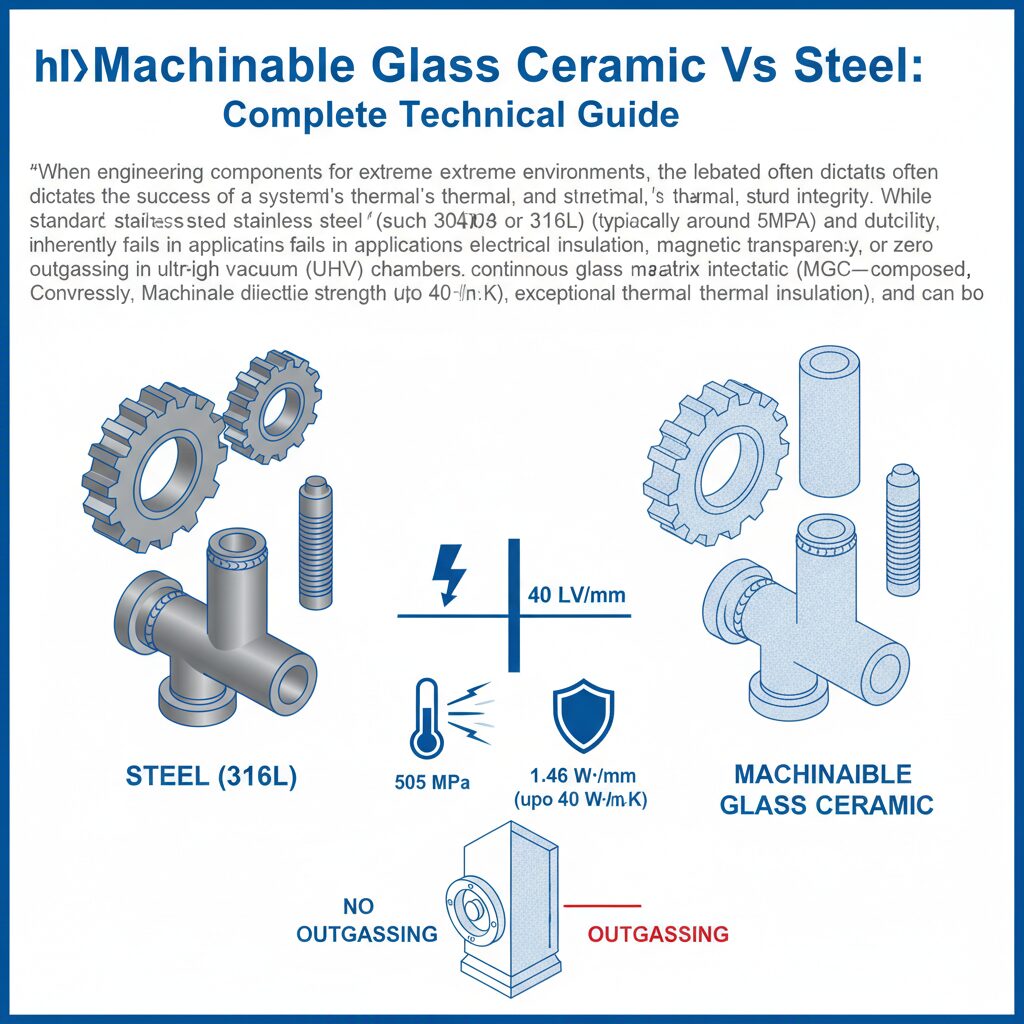
The reason machinable glass ceramics are preferred in energy applications lies in their unique physical and chemical properties. These materials maintain dimensional stability across a wide temperature range, possess high dielectric strength. And are inherently non-porous. Below is a detailed technical property table outlining the characteristics of high-grade machinable glass ceramics utilized by Great Ceramic.
| Proprietà | Unità | Valore (tipico) |
|---|---|---|
| Densità | g/cm³ | 2.52 |
| Maximum Use Temperature (No Load) | °C | 800 - 1000 |
| Conduttività termica (25°C) | W/m-K | 1.46 |
| Coefficiente di espansione termica (CTE) | 10-⁶/°C | 9.3 – 12.6 |
| Rigidità dielettrica (AC) | kV/mm | 40 |
| Volume Resistivity (25°C) | Ω-cm | >10¹⁴ |
| Resistenza alla flessione | MPa | 94 |
| Resistenza alla compressione | MPa | 345 |
| Porosità | % | 0 (Vacuum Tight) |
These properties make MGC parts ideal for vacuum environments, high-pressure chambers. And areas requiring stringent electrical isolation. The zero-porosity characteristic is particularly important in the energy sector for preventing gas outgassing in vacuum systems or fluid absorption in oil and gas exploration tools.
Key Industry Applications in the Energy Sector
1. Nuclear Power and Research
In the nuclear industry, materials must resist radiation damage while providing reliable electrical insulation. Machinable glass ceramic ceramic parts for energy are used in reactor instrumentation, spacers. And fuel rod support systems. Their ability to be machined to tight tolerances allows for the creation of custom sensor housings that must fit precisely within the complex architecture of a nuclear core. Additionally, their stability under neutron bombardment ensures long-term structural integrity.
2. Esplorazione di petrolio e gas
Downhole drilling environments are among the harshest on Earth, characterized by extreme pressures and temperatures exceeding 200°C. Machinable glass ceramics are used for logging-while-drilling (LWD) and measurement-while-drilling (MWD) tools. These components serve as high-temperature insulators and pressure-resistant housings for sensitive electronics that monitor geological formations. Because they are non-magnetic, they do not interfere with the magnetic sensors used for directional drilling.
3. Renewable Energy Systems (Solar and Wind)
As solar concentrated power (CSP) and high-voltage wind turbine systems evolve, the need for advanced insulation grows. Machinable glass ceramics are utilized in solar thermal receivers to provide thermal decoupling between the absorber and the support structure. In high-power wind turbine converters, MGC parts act as arc shields and high-voltage insulators that can withstand environmental exposure and vibration without cracking or degrading over time.
4. Hydrogen Fuel Cells and Electrolyzers
The push toward a hydrogen economy requires materials that are chemically inert and can handle thermal cycling. Machinable glass ceramic components are used as end-plates and insulating spacers in fuel cell stacks. Their low thermal conductivity helps maintain the necessary thermal gradients within the cell, while their precision machining ensures a leak-proof seal. This is critical when dealing with volatile hydrogen gas.
5. Fusion Energy Research
Fusion energy research involves extreme vacuums and massive magnetic fields. Machinable glass ceramic parts are widely used in Tokamak reactors for diagnostic probes and vacuum feedthroughs. The material’s vacuum-tight nature and its ability to withstand rapid thermal cycles make it the gold standard for experimental energy platforms where standard plastics or metals would fail due to melting or outgassing.
Precision CNC Machining of Glass Ceramics
One of the primary advantages of machinable glass ceramics is their compatibility with standard CNC machining centers. However, achieving the precision required for energy-sector components necessitates a deep understanding of the material’s microcrystalline structure. At Great Ceramic, we utilize specialized techniques to ensure every part meets the exact specifications of our clients.
Utensili e velocità
While MGC is “machinable,” it is still an abrasive material. We utilize high-grade carbide or diamond-coated tooling to maintain sharp edges and prevent tool wear. For high-volume energy parts, PCD (Polycrystalline Diamond) tools are often employed to ensure consistency across large batches. Spindle speeds and feed rates must be carefully controlled. generally, lower speeds compared to aluminum machining are used to prevent thermal shock at the cutting interface.
Coolant Management
Cooling is critical during the machining of machinable glass ceramic ceramic parts for energy. While the material can be machined dry, the use of a water-based coolant is preferred. This serves two purposes: it flushes away the fine ceramic powder (which can be abrasive to the machine’s ways and leadscrews) and it prevents localized heating. Precision energy components often require tolerances as tight as +/- 0.01mm. And thermal expansion during machining can easily throw a part out of spec if not properly managed.
Complex Geometries and Features
Because MGC does not require post-machining firing, we can produce features that are impossible with traditional ceramics. This includes fine-pitch internal threads, deep blind holes. And ultra-thin walls (down to 0.5mm in some configurations). For energy sensors, this capability allows for the integration of complex internal galleries for wire routing or fluid flow, all within a single monolithic ceramic block.
The Advantage of Custom Solutions by Great Ceramic
Great Ceramic understands that the energy sector operates on the edge of technical possibility. A “one-size-fits-all” approach does not work when dealing with high-voltage power grids or deep-sea drilling. Our engineering team works closely with energy firms to optimize part designs for both performance and manufacturability.
By choosing Great Ceramic for your machinable glass ceramic ceramic parts for energy, you benefit from:
- Expertise in material selection to match specific thermal and electrical requirements.
- State-of-the-art CNC milling, turning. And grinding equipment.
- Strict quality control processes, including ultrasonic cleaning and coordinate measuring machine (CMM) verification.
- Rapid turnaround times for prototypes and small-to-medium production runs.
Environmental and Economic Impact
Efficiency in the energy sector is not just about power output. it is also about the longevity of the components. Machinable glass ceramics contribute to a lower total cost of ownership by extending the service life of critical equipment. In power plants, high-quality ceramic insulators reduce the risk of flashovers and electrical failures. This in turn reduces maintenance costs and prevents unplanned outages. Furthermore, the ability to repair or replace parts quickly through precision machining ensures that energy infrastructure remains resilient in the face of growing demand.
From a sustainability perspective, the long life cycle of ceramic components reduces material waste. Unlike many plastics used in insulation, glass ceramics do not degrade into microplastics and are chemically stable, ensuring they do not leach toxins into the environment even in subsea or underground energy installations.
Domande frequenti (FAQ)
What is the maximum temperature machinable glass ceramic can withstand?
Generally, machinable glass ceramics can withstand continuous operating temperatures up to 800°C. They can reach peaks of 1000°C under no-load conditions. However, for energy applications involving high mechanical stress, we recommend keeping the operating environment below 700°C to ensure long-term structural integrity.
Can machinable glass ceramic parts be used in high-vacuum environments?
Yes. These materials are zero-porosity and do not outgas, making them excellent for high-vacuum (HV) and ultra-high-vacuum (UHV) energy applications, such as those found in fusion research or specialized power tube manufacturing.
How does MGC compare to Allumina (Al2O3)?
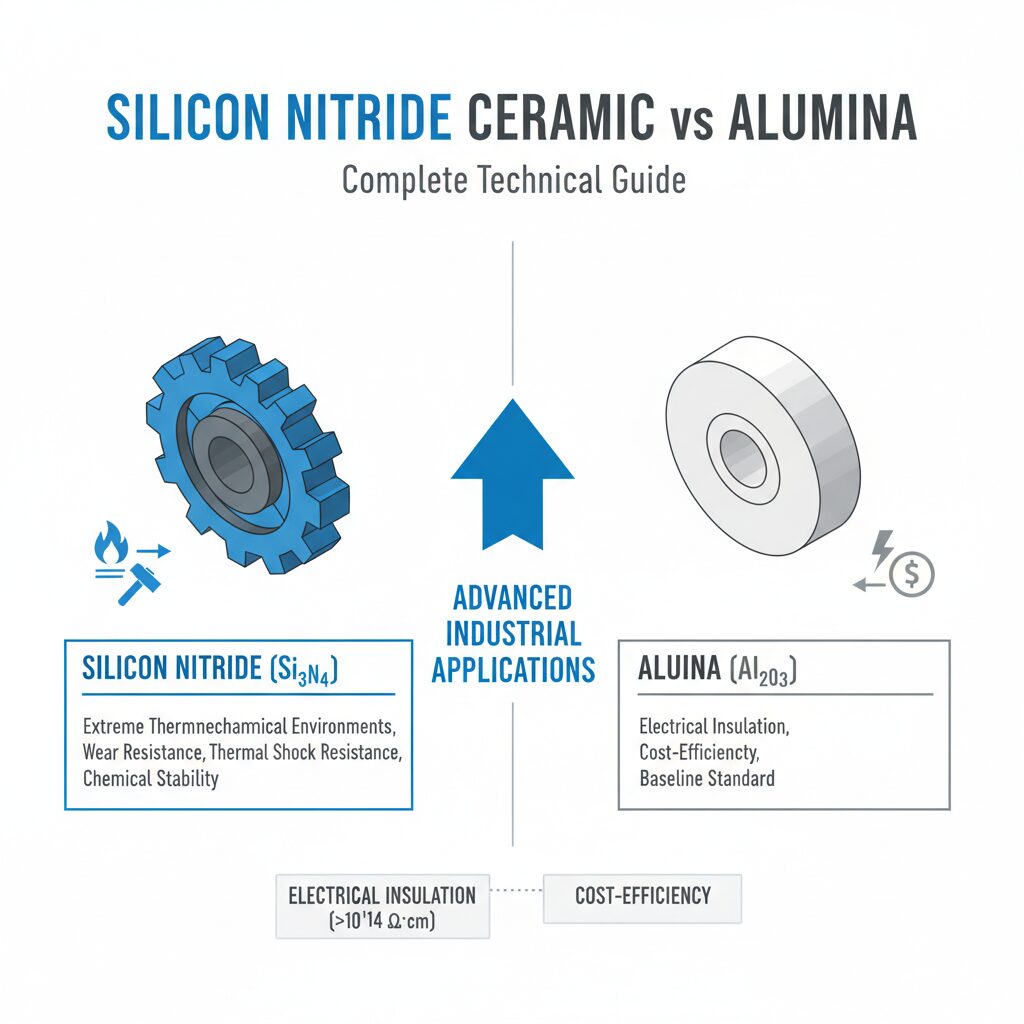
While alumina has higher mechanical strength and can withstand higher temperatures (up to 1600°C), it requires diamond grinding after firing to achieve tight tolerances. Machinable glass ceramic is far easier to shape into complex geometries and can be produced much faster, making it the preferred choice for prototypes and complex insulators where the ultra-high temperature of alumina is not required.
Is the material resistant to chemical corrosion?
Machinable glass ceramics offer excellent resistance to most acids and alkalis. However, they can be etched by hydrofluoric acid. In the oil and gas sector, they perform exceptionally well against hydrogen sulfide (H2S) and other corrosive gases found in downhole environments.
What tolerances can Great Ceramic achieve for energy parts?
With our advanced CNC equipment, we routinely achieve tolerances of +/- 0.013mm (0.0005 inches). For specialized ground surfaces, we can achieve even tighter tolerances and high-quality surface finishes (Ra < 0.4 μm).
The Future of Ceramics in Energy
As we look toward the future, the integration of machinable glass ceramic ceramic parts for energy will only deepen. The rise of Small Modular Reactors (SMRs), the expansion of high-voltage DC (HVDC) transmission lines. And the development of more efficient solid-state batteries all require the unique combination of properties that only MGC can provide. Great Ceramic remains at the forefront of this material revolution, continually refining our machining processes to meet the next generation of energy challenges.
Whether you are developing a prototype for a new fusion experiment or need a reliable supplier for downhole sensor housings, our team has the technical expertise to deliver. The intersection of ceramic science and precision engineering is where the most significant energy breakthroughs happen. And Great Ceramic is proud to be a part of that journey.
Contattare Great Ceramic per informazioni personalizzate lavorazione della ceramica soluzioni su misura per le vostre applicazioni.
machinable glass ceramic ceramic parts for energy is widely used in advanced ceramic applications.
Per saperne di più Machinable Glass Ceramic Ceramic Parts For Energy e i nostri servizi di lavorazione della ceramica di precisione.