









Alumina Ceramic for Vacuum Industry: Complete Technical Guide
Specifying materials for High Vacuum (HV) and Ultra-High Vacuum (UHV) environments demands rigorous attention to outgassing rates, thermal stability. And dielectric performance. When operating at pressures below 10-9 Torr, standard polymers and low-grade ceramics fail due to molecular desorption and structural degradation during 400°C to 600°C bake-out cycles. The premier solution to these severe engineering pain points is high-purity allumina ceramic for vacuum industry applications. Utilizing 99.5% to 99.8% pure aluminum oxide eliminates trapped volatile contaminants and provides near-zero porosity, ensuring hermeticity with helium leak rates below 10-11 mbar·L/s. Great Ceramic specializes in the advanced fabrication of these critical UHV components, leveraging state-of-the-art grinding technology to deliver complex geometries with exceptional tight-tolerance parameters up to ±0.005mm. Whether your system requires custom high-voltage feedthroughs, RF windows, or structural insulators, our lavorazione di precisione della ceramica capabilities ensure immediate integration into your most demanding vacuum architectures. Contact our engineering team today to optimize your next UHV assembly.
Proprietà dei materiali
The operational success of an ultra-high vacuum system is dictated entirely by the physio-chemical properties of its internal components. High-purity allumina (typically 99.5% to 99.8% Al₂O₃ for UHV grades) exhibits a fully dense, polycrystalline microstructure with 0% open porosity. This density, approaching the theoretical maximum of 3.98 g/cm³, is fundamental to preventing virtual leaks—a phenomenon where trapped gases in porous materials slowly escape, making it impossible to achieve target pressures in the 10-10 mbar range. Furthermore, its extreme hardness of 1500 HV ensures that components do not generate particulate contamination under mechanical friction, a vital characteristic for vacuum-compatible motion systems. Electrically, it boasts a volume resistivity exceeding 1014 Ω·cm at 20°C and maintains exceptional isolation up to 1000°C, preventing catastrophic arcing in electron beam and ion source environments.
| Proprietà | Valore | Unità |
|---|---|---|
| Densità | 3.92 | g/cm³ |
| Durezza | 1500 | HV |
| Resistenza alla flessione | 380 | MPa |
| Resistenza alla frattura | 4.5 | MPa-m½ |
| Conducibilità termica | 30 | W/m-K |
| Resistività elettrica | >10¹⁴ | Ω-cm |
| Temperatura massima di lavoro | 1700 | °C |
Confronto con altre ceramiche
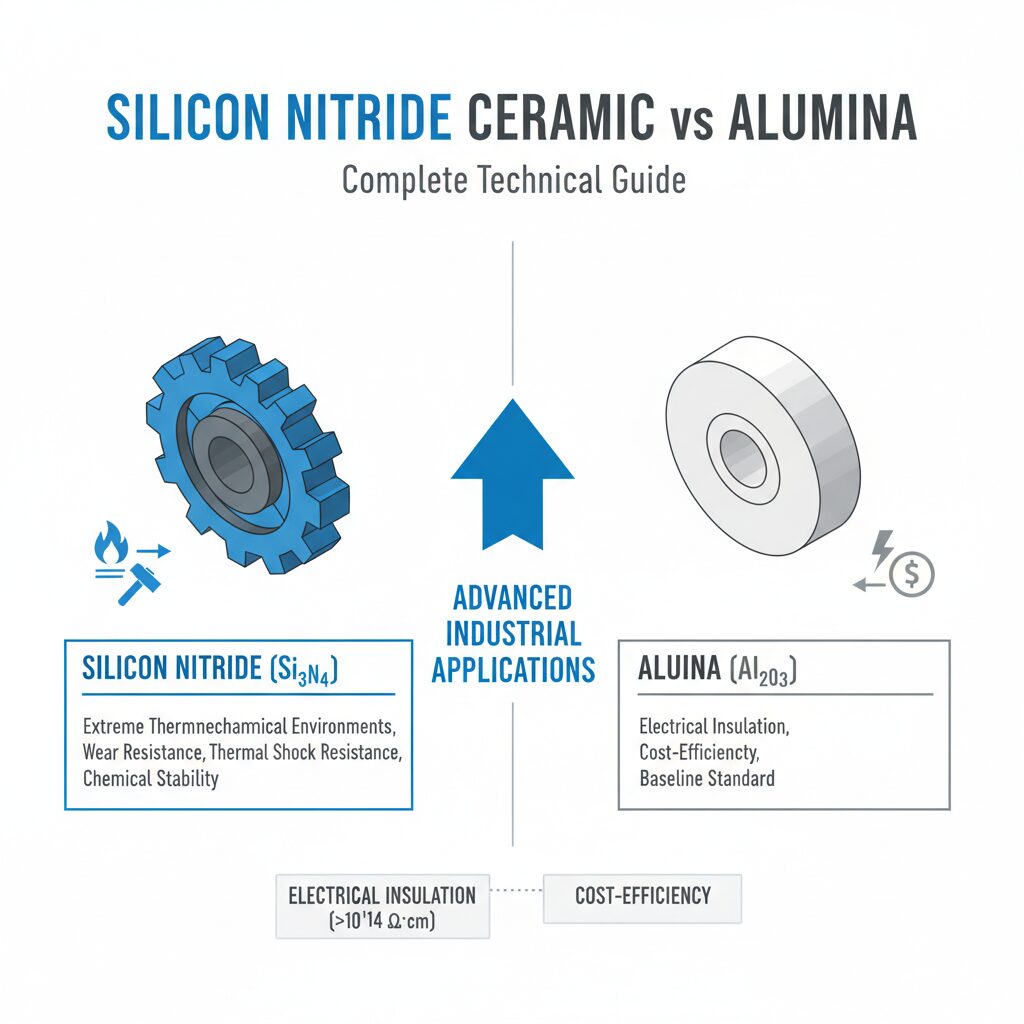
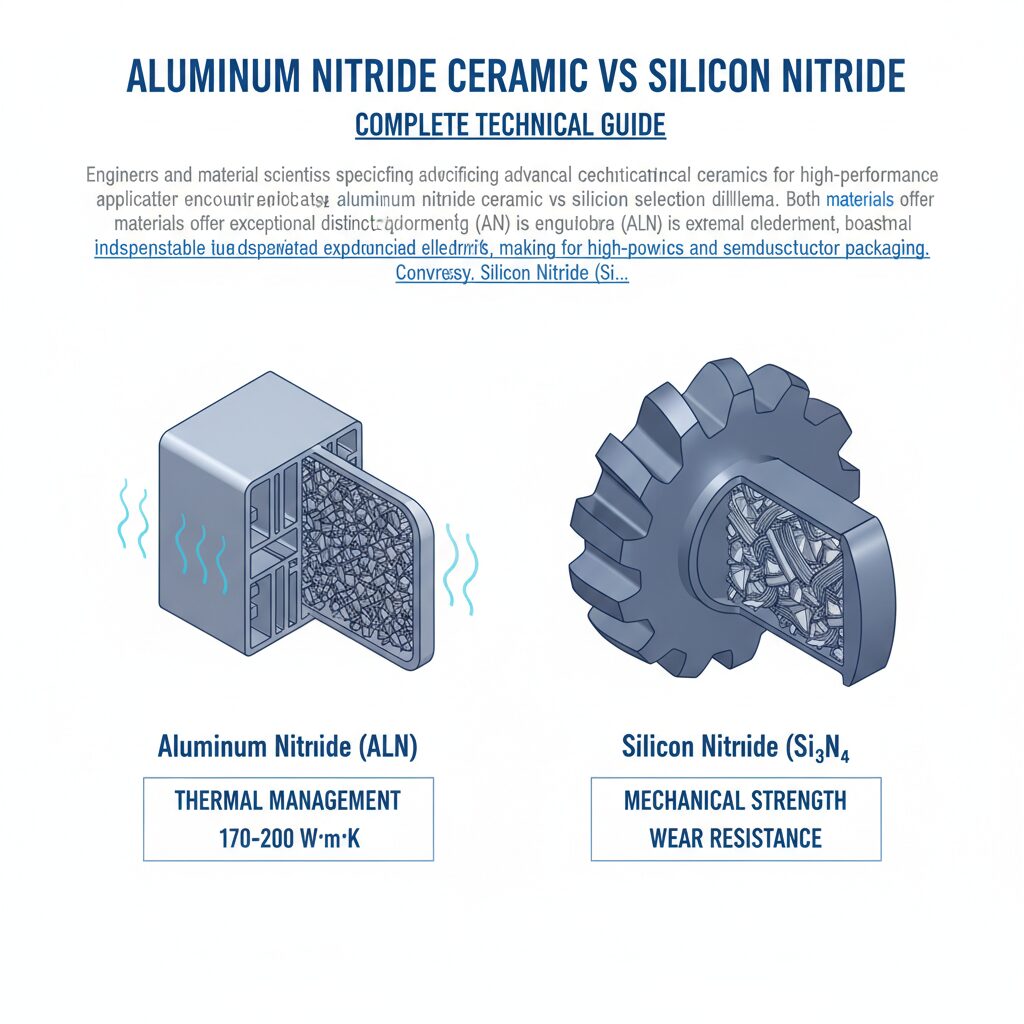
When engineering for UHV environments, selecting the correct technical ceramic involves evaluating thermal conductivity, fracture toughness. And overall cost against outgassing requirements. While high-purity alumina ceramic for vacuum industry applications is the universal standard due to its balanced thermal and dielectric metrics, other materials serve niche roles. Standard alumina (95% purity) contains silica and magnesia glass fluxes. these lower the sintering temperature but drastically increase outgassing and susceptibility to reduction in high-temperature vacuums. Zirconia offers a much higher fracture toughness of 10.0 MPa·m½, making it suitable for high-stress mechanical components, but it suffers from oxygen ion conductivity at elevated temperatures (>600°C). This can disrupt sensitive vacuum instrumentation. Nitruro di silicio provides excellent thermal shock resistance and a strength of 800 MPa, ideal for rapid heating cycles, yet it is significantly more expensive to machine to the ±0.005mm tolerances required for hermetic seals. For pure thermal management where heat dissipation is critical, nitruro di alluminio offers 170 W/m·K conductivity, though its hygroscopic precursors demand extreme care during UHV integration.
| Proprietà | Alumina Ceramic for Vacuum Industry (99.8%) | Alumina (95% Standard) | Zirconia (Y-TZP) | Silicon Nitride (GPS-Si3N4) |
|---|---|---|---|---|
| Conducibilità termica | 30.0 W/m·K | 24.0 W/m·K | 2,5 W/m-K | 30.0 W/m·K |
| Durezza | 1500 HV | 1350 HV | 1250 HV | 1600 HV |
| Resistenza alla frattura | 4,5 MPa-m½ | 4,0 MPa-m½ | 10.0 MPa·m½ | 6,5 MPa-m½ |
| Costo | Moderato | Basso | Alto | Molto alto |
Applicazioni
The deployment of advanced ceramics in vacuum technologies is ubiquitous across semiconductor manufacturing, particle accelerators, surface analysis equipment. And aerospace testing chambers. High-purity aluminum oxide is universally selected for these roles due to its distinct combination of high dielectric strength (typically >15 kV/mm), extremely low secondary electron emission. And dimensional stability during continuous 450°C system bake-outs.
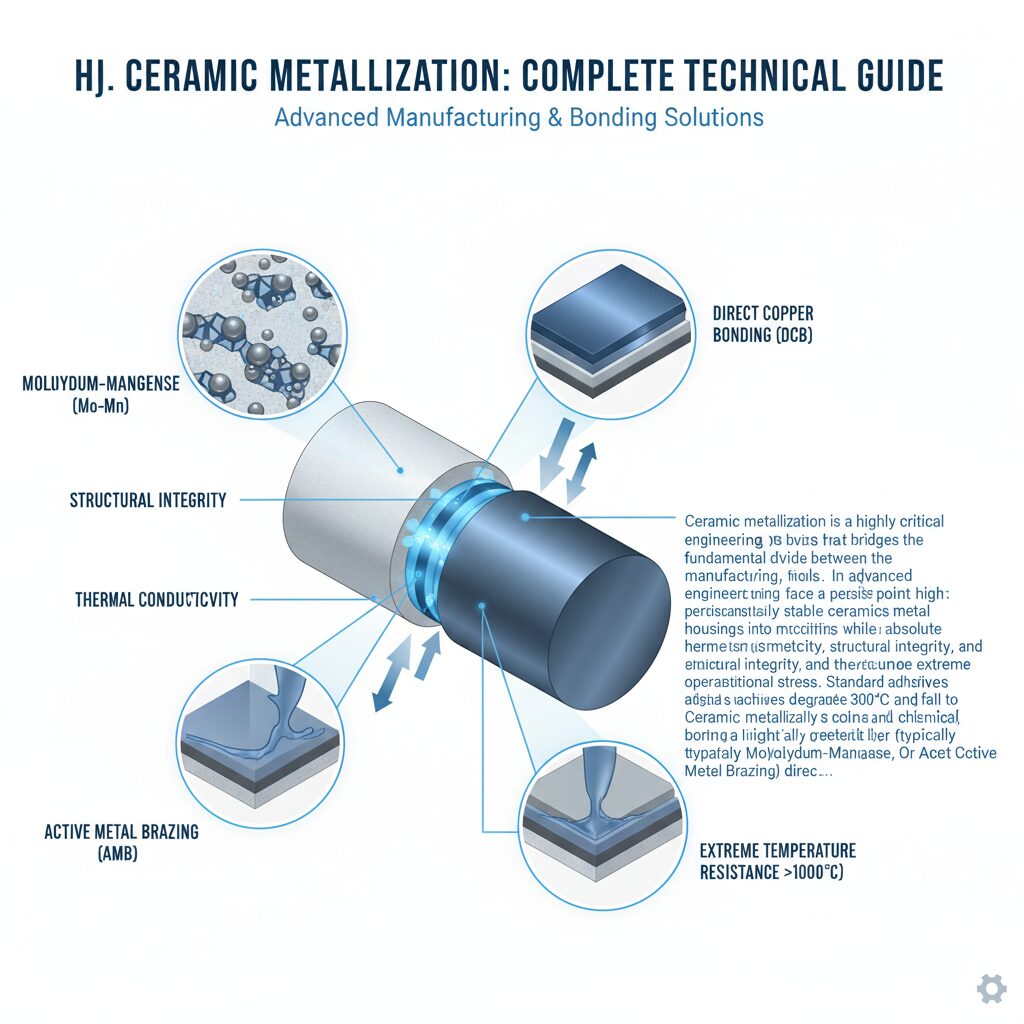
- High-Voltage Electrical Feedthroughs: Utilized as the primary insulator in multi-pin and coaxial feedthroughs bridging atmospheric pressure and 10-11 Torr environments. The material’s dielectric strength of 15 kV/mm prevents high-voltage breakdown, while its Coefficient of Thermal Expansion (CTE) of 7.2 x 10⁻⁶/°C allows for reliable hermetic brazing to Kovar or titanium flanges using Mo-Mn metallization.
- RF/Microwave Windows: Deployed in klystrons, magnetrons. And plasma deposition tools where microwave energy (often 13.56 MHz or 2.45 GHz) must enter the vacuum chamber. High-purity 99.8% alumina is selected because its ultra-low dielectric loss tangent (tan δ < 0.0002) ensures that multi-kilowatt RF power transmits efficiently without localized overheating and thermal stress fracturing.
- Ion Source and Electron Gun Insulators: Implemented as structural standoffs, alignment grids. And insulating blocks in mass spectrometers and scanning electron microscopes (SEM). Chosen specifically because it maintains over 1012 Ω·cm resistivity at 400°C, ensuring trajectory stability for charged particle beams operating at 10 keV to 30 keV without suffering from charge accumulation.
- Thermal Evaporation and MBE Crucibles: Used as effusion cell crucibles in Molecular Beam Epitaxy (MBE) and physical vapor deposition (PVD) systems operating up to 1600°C. Alumina is selected over standard graphite or metals because its inherent chemical inertness prevents contamination of ultra-pure deposition materials like gallium or aluminum, while its zero porosity prevents outgassing during the deposition phase.
- Vacuum Chamber Structural Supports: Engineered as robotic end-effectors, substrate heaters. And internal load-bearing isolators inside semiconductor wafer processing equipment. It is selected for its high flexural strength (380 MPa) and dimensional stability, maintaining sub-micron planar accuracy across 300mm wafers even when exposed to harsh halogen-based plasma cleaning cycles.
Processo di produzione
The fabrication of high-purity alumina ceramic for vacuum industry standards requires a rigorously controlled, multi-stage powder metallurgy process. Any deviation in particle size distribution, binder formulation, or thermal profiling can result in micro-porosity, residual internal stresses, or secondary phase impurities—all of which are catastrophic for UHV components requiring helium leak rates below 10-11 mbar·L/s. The process begins with ultra-fine α-alumina powder, typically possessing an average particle size of 0.5 to 1.5 micrometers. These powders are meticulously mixed with organic binders and spray-dried to form flowable, spherical agglomerates of roughly 50 to 100 micrometers in diameter, optimized for high-density compaction.
Metodi di formatura
Achieving a homogenous green body (unfired ceramic) is essential to ensure uniform shrinkage and prevent warping during the high-temperature firing phase. For complex UHV geometries, different pressing methods are utilized based on volumetric and structural requirements:
- Cold Isostatic Pressing (CIP): The preferred method for high-performance vacuum components. Powder is sealed in a flexible elastomeric mold and submerged in a fluid medium. Hydraulic pressure of 200 to 300 MPa is applied uniformly from all directions, yielding an exceptionally uniform green density of 55-60%. This eliminates internal density gradients, ensuring zero-porosity in the final sintered UHV part.
- Uniaxial Dry Pressing: Utilized for high-volume, flat, or low-profile components like simple insulation washers or flat RF window blanks. Pressures of 50 to 150 MPa are applied vertically. While faster, the aspect ratio is limited to prevent density variations along the pressing axis.
Sinterizzazione
The green bodies undergo a two-stage thermal process. First, a precision binder burnout phase is executed at 300°C to 600°C in an oxidizing atmosphere to slowly vaporize the organic compounds (typically 3% to 5% of the total mass). If heated too rapidly, outgassing binders will induce micro-cracking. Following burnout, the components are sintered in high-temperature kilns between 1600°C and 1700°C for 24 to 48 hours. During sintering, the alumina particles fuse via solid-state diffusion, eliminating pore space and resulting in a volumetric shrinkage of 15% to 20%. The temperature ramp rates (often 1°C to 2°C per minute) and dwell times are precisely calibrated to achieve a maximum theoretical density of >99.5% while restricting average grain growth to under 5 micrometers, preserving optimal mechanical strength and dielectric integrity.
Lavorazione finale
Because the fired UHV alumina possesses a hardness of 1500 HV (second only to diamond and boron carbide), standard cutting tools are completely ineffective. Final dimensional accuracy is achieved through highly specialized diamond abrasive grinding, honing. And lapping techniques. For components interfacing with metallic flanges, tolerances must frequently hit ±0.005mm with surface finishes of Ra 0.2 μm or better to facilitate subsequent thin-film metallization and hermetic brazing. The machining must be executed with copious amounts of water-based, sulfur-free coolants to flush away ceramic swarf and prevent localized thermal shock, ensuring no organic oils are embedded into the UHV component’s surface lattice.
Vantaggi e limiti
While alumina ceramic is the undisputed baseline for high-vacuum engineering, a thorough understanding of its operational spectrum is necessary to prevent premature system failure. Designing for deep vacuum (10-10 Torr) and extreme temperatures (up to 1000°C) requires balancing its formidable thermal and electrical strengths against its inherent mechanical constraints.
Vantaggi
- Exceptional Hermeticity and Low Outgassing: With a 0% open porosity structure, 99.8% alumina yields outgassing rates routinely lower than 10-10 Torr·L/s·cm². It successfully prevents the permeation of atmospheric gases, achieving baseline pressures required for sensitive surface science and semiconductor lithography.
- UHV Bake-out Compatibility: High-vacuum systems must be periodically baked at 250°C to 450°C to drive off adsorbed water molecules. Alumina easily withstands continuous thermal cycling up to 1000°C without undergoing phase transitions, mechanical creep, or releasing volatile compounds.
- Superior Dielectric Properties: Featuring a volume resistivity of >1014 Ω·cm and a dielectric strength exceeding 15 kV/mm, it provides flawless electrical isolation. Furthermore, its minimal dielectric constant (approx. 9.8 at 1 MHz) and low loss tangent make it highly transparent to RF and microwave frequencies.
- Chemical Inertness and Plasma Resistance: Highly resistant to reduction in deep vacuum and impervious to halogen-based etching plasmas (like CF₄ or SF₆) used in semiconductor processing. It exhibits a mass loss of less than 0.1 mg/cm² even after prolonged exposure to aggressive chemical environments.
Limitazioni
- Low Thermal Shock Resistance: With a moderate thermal conductivity of 30 W/m·K and a relatively high thermal expansion coefficient (7.2 x 10⁻⁶/°C), sudden temperature differentials exceeding 150°C/minute can induce severe thermal gradients, leading to catastrophic brittle fracture.
- Extreme Machining Difficulty: The high hardness (1500 HV) and extreme brittleness (Fracture Toughness 4.5 MPa·m½) dictate that any post-sintering modification requires expensive, time-consuming diamond-tool machining. Generating complex features like internal threads or ultra-thin walls (under 0.5mm) dramatically increases manufacturing costs and requires highly specialized CNC equipment.
Considerazioni sulla lavorazione
Machining high-purity alumina ceramic for vacuum industry applications to a ±0.005mm tolerance presents severe kinematic and tribological challenges. Unlike ductile metals that deform plastically, alumina fails via brittle fracture at the micro-scale. Material removal is achieved by utilizing resin-bonded or metal-bonded diamond grinding wheels. The spindle speeds typically range from 10,000 to 30,000 RPM, requiring high-rigidity CNC platforms to prevent harmonic vibrations that would otherwise cause micro-cracking and degrade the component’s flexural strength from 380 MPa down to less than 200 MPa.
For UHV components, the choice of coolant during the machining phase is as critical as the tooling itself. Standard oil-based machining coolants will inevitably penetrate microscopic surface flaws and outgas violently when exposed to 10-9 Torr vacuum pressure. Therefore, machining must utilize heavily filtered (sub-1 micron), water-based, synthetic coolants completely devoid of sulfur, chlorine, or long-chain hydrocarbons. Tool wear compensation is also a massive hurdle. a D64 grit diamond wheel can wear down by several microns after just a few passes over a 1500 HV alumina surface. Continuous metrology using highly accurate Coordinate Measuring Machines (CMM) and laser interferometry is strictly necessary to hold concentricity, flatness. And parallelism within 0.005mm parameters.
Great Ceramic overcomes these extreme machining barriers by operating specialized multiaxis ultrasonic CNC grinding centers. By introducing 20 kHz to 40 kHz ultrasonic oscillation to the diamond tooling, we drastically reduce the required cutting forces by up to 40%. This minimizes the sub-surface damage zone, improves the surface finish to Ra 0.1 μm. And effectively eliminates edge-chipping on delicate features like hermetic sealing lips and fine-pitch threads. Our meticulous post-machining ultrasonic cleaning protocols, utilizing deionized water and vacuum baking, ensure that every component is strictly UHV-ready upon delivery. Contattate il nostro team di ingegneri to discuss how our advanced toolpaths and proprietary grinding methodologies can realize your complex UHV designs while reducing overall lead times.
FAQ
What is alumina ceramic for vacuum industry?
Alumina ceramic for vacuum industry refers to high-purity (typically 99.5% to 99.8%) aluminum oxide specifically engineered and processed for Ultra-High Vacuum (UHV) environments. Unlike commercial grade ceramics, vacuum-grade alumina is manufactured using fine-grained powders pressed at over 200 MPa and sintered at 1700°C to achieve 0% open porosity. This near-theoretical density of 3.92 g/cm³ eliminates trapped gases, ensuring helium leak rates below 10-11 mbar·L/s and outgassing rates under 10-10 Torr·L/s·cm². It serves as the primary structural, thermal. And electrical isolator in chambers operating at pressures down to 10-12 Torr.
What are the main applications of alumina ceramic for vacuum industry?
The primary applications revolve around electrical isolation, RF transmission. And high-temperature material handling within UHV environments. Specifically, it is used to manufacture high-voltage feedthroughs (insulating up to 100 kV), hermetically sealed RF and microwave windows for particle accelerators and plasma deposition systems, electron gun spacers. And effusion cell crucibles for Molecular Beam Epitaxy (MBE) operating up to 1600°C. Additionally, it is heavily utilized in the semiconductor industry for wafer lift pins, electrostatic chuck insulators. And structural supports inside plasma-etching chambers due to its resistance to halogen gases.
How does alumina ceramic for vacuum industry compare to other ceramics?
Compared to standard 95% alumina, vacuum-grade alumina possesses far lower outgassing rates and superior dielectric strength (15 kV/mm) due to the absence of silicate glass binders. When compared to zirconio. This boasts a fracture toughness of 10.0 MPa·m½, alumina is preferred for UHV use because it remains electrically insulating at high temperatures, whereas zirconia becomes an oxygen ion conductor above 600°C. Compared to nitruro di alluminio (170 W/m·K) and carburo di silicio (120 W/m·K), alumina has a lower thermal conductivity (30 W/m·K) but provides drastically superior electrical isolation and is significantly more cost-effective to produce and metallize for hermetic brazing.
What are the advantages of alumina ceramic for vacuum industry?
The core advantages are its extreme hermeticity, minimal molecular desorption. And aggressive bake-out compatibility. Because UHV systems must be routinely baked at 250°C to 450°C to remove adsorbed moisture, alumina’s ability to withstand thermal cycling up to 1000°C without mechanical degradation is critical. Furthermore, its volume resistivity of >1014 Ω·cm and low dielectric loss (tan δ < 0.0002) make it virtually transparent to high-frequency RF power. Its high flexural strength (380 MPa) and dimensional stability ensure exact alignment of critical optical and particle-beam instrumentation inside the chamber.
How is alumina ceramic for vacuum industry machined?
Machining vacuum-grade alumina is highly complex due to its massive hardness (1500 HV) and extreme brittleness. Once fully sintered, it can only be shaped using diamond-impregnated tooling on rigid, high-speed CNC grinding centers operating between 10,000 and 30,000 RPM. Specialized water-based, organic-free coolants must be used to prevent vacuum contamination. At Great Ceramic, our lavorazione di precisione della ceramica services utilize multi-axis ultrasonic CNC grinding to mitigate cutting forces, minimize subsurface micro-cracking. And hold strict tolerances down to ±0.005mm with surface finishes of Ra 0.2 μm, ensuring seamless UHV integration.
Need custom alumina ceramic for vacuum industry parts? Contatto Great Ceramic per servizi di lavorazione di precisione con tolleranze ristrette, oppure inviate un'e-mail a [email protected].
alumina ceramic for vacuum industry is widely used in advanced ceramic applications.
Per saperne di più Ceramica all’allumina per l’industria del vuoto e i nostri servizi di lavorazione della ceramica di precisione.