


Seramik Metalizasyon: Eksiksiz Teknik Kılavuz
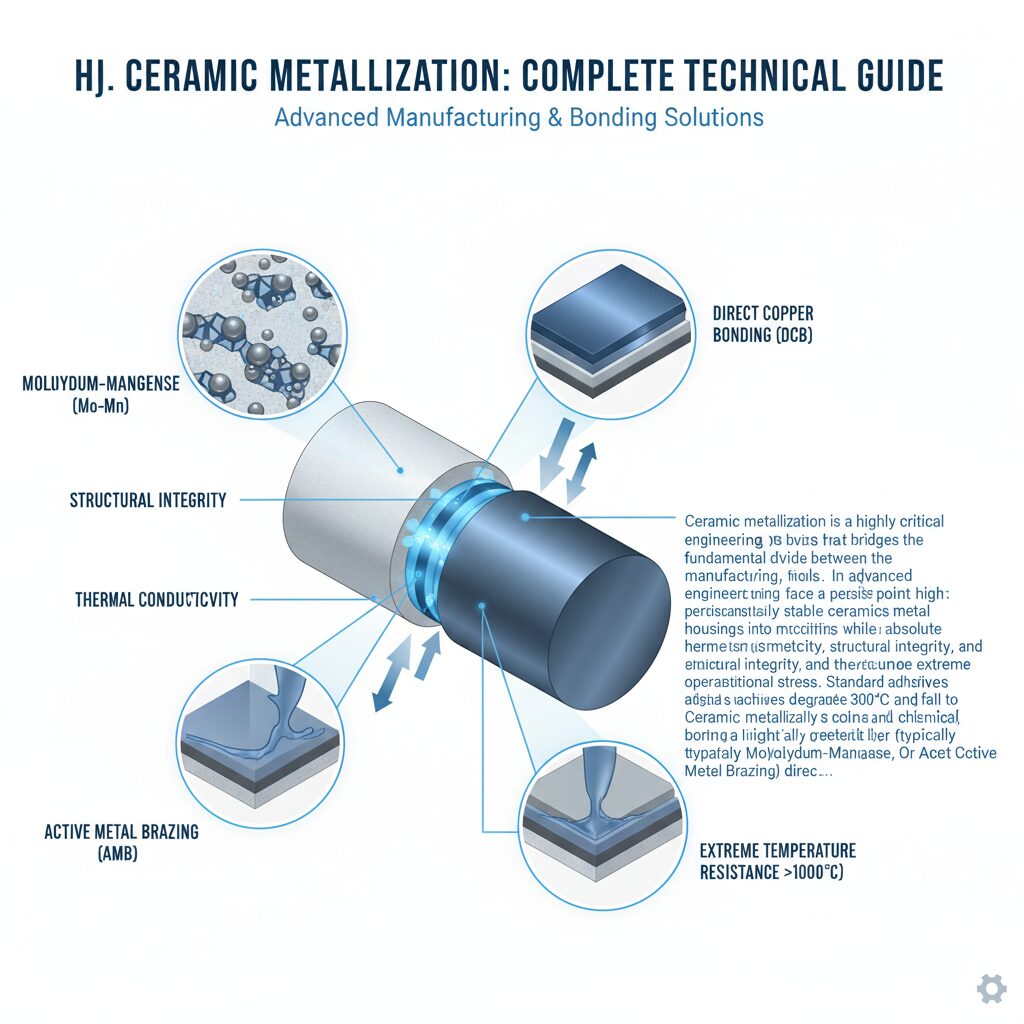
Seramik metalizasyonu, iletken olmayan, termal olarak kararlı seramikler ile iletken, kolayca lehimlenebilen metaller arasındaki temel uçurumu kapatan son derece kritik bir mühendislik sürecidir. Gelişmiş üretimde mühendisler sürekli bir sorunla karşı karşıyadır: Yüksek performanslı seramikleri metal muhafazalara veya devrelere entegre ederken mutlak sızdırmazlığı, yapısal bütünlüğü korumak. Ve aşırı operasyonel stres altında termal iletkenlik. Standart yapıştırıcılar 300°C'yi aşan sıcaklıklarda bozulur ve vakum geçirmez contalar sağlayamaz. Seramik metalizasyon bu sorunu, son derece hassas bir metalik tabakayı (tipik olarak Molibden-Manganez, Doğrudan Bakır Bağlama veya Aktif Metal Sert Lehimleme) doğrudan seramik alt tabakaya kimyasal ve mekanik olarak bağlayarak çözer. Great Ceramic, kalınlığı 10 ila 25 µm arasında değişen hassas kontrollü metal katmanlar ve ardından 2 ila 5 µm elektrolitik veya akımsız Nikel kaplama uygulayarak, 1,0 × 10-¹⁰ atm-cc/sn'den daha iyi helyum sızıntı oranlarına dayanabilen yapısal sert lehimleme sağlar. 0,005 mm'ye kadar dar toleranslı işleme kabiliyetlerimizle birleştiğinde, en zorlu havacılık, tıp ve güç elektroniği uygulamaları için özel olarak tasarlanmış, sert lehimlemeye hazır, tam entegre bileşenler sağlıyoruz. Ve güç elektroniği uygulamaları.
Yüksek performanslı metalize bileşenleri bir sonraki montajınıza entegre etmeye hazır mısınız? Great Ceramic ile iletişime geçin Özel mühendislik gereksinimlerinizi görüşmek ve kapsamlı bir teknik danışmanlık almak için.
Malzeme Özellikleri
Metalize seramik kompozitin termomekanik özelliklerini anlamak, dayanıklı lehimli bağlantılar tasarlamak için çok önemlidir. Aşağıdaki tablo endüstri standardı 96%'nin temel özelliklerini göstermektedir alümina/”>alümina kalın film Molibden-Manganez (Mo-Mn) metalizasyon tabakası ile hazırlanmış alt tabaka. Bu, hermetik vakum tertibatları için en yaygın olarak benimsenen standarttır.
| Mülkiyet | Değer | Birim |
|---|---|---|
| Yoğunluk | 3.72 | g/cm³ |
| Sertlik | 1500 | HV |
| Eğilme Dayanımı | 330 | MPa |
| Kırılma Tokluğu | 4.5 | MPa-m½ |
| Termal İletkenlik | 24.0 | W/m-K |
| Elektriksel Dirençlilik | >10¹⁴ (Dökme) / <0,05 (Katman) | Ω-cm |
| Maksimum Çalışma Sıcaklığı | 800 (Lehimli) / 1600 (Çıplak) | °C |
Seramik metalizasyon tabakasının mekanik bütünlüğü büyük ölçüde camsı fazın seramik alt tabakadan gözenekli molibden matrisine geçişine bağlıdır. Islak hidrojen atmosferinde (çiğlenme noktası +20°C ila +25°C) 1.400°C ila 1.500°C'deki fırınlama işlemi sırasında manganez oksitlenir ve alt tabakadaki silikat cam ile reaksiyona girer. Bu kimyasal etkileşim, kılcal hareket yoluyla molibden parçacıklarının içine akan karmaşık bir manganez-alüminosilikat cam üretir. Ortaya çıkan yapışma mukavemeti, yapısal entegrasyon için uygun kabul edilebilmesi için standart çekme testlerinde sürekli olarak 100 MPa'yı (14.500 psi) aşmalıdır. Yüksek güvenilirlikli uygulamalarda, Great Ceramic sürekli olarak 150 MPa'yı aşan yapışma mukavemetlerine ulaşır.
Termal yönetim bir diğer kritik parametredir. Kompozit termal iletkenlik, temel malzeme tarafından belirlenir. standart 96% saflıktaki malzemeler 24 W/m-K sunarken, yüksek saflığa yükseltme alüminyum nitrür termal iletkenliği 170 W/m-K'nin üzerine çıkarabilir. Termal Genleşme Katsayısı (CTE) eşleşmesi çok önemlidir. Seramik metalizasyon katmanı bir ara yüzey tamponu görevi görür, ancak mühendisler yine de yığın seramiği (örneğin, 7,2 × 10-⁶ /°C) Kovar (5,5 × 10-⁶ /°C) veya Alloy 42 gibi uyumlu kontrollü genleşme alaşımlarıyla eşleştirmelidir. CTE'de 15%'yi aşan uyumsuzluklar kaçınılmaz olarak malzemenin kırılma tokluğunu (tipik olarak 4,0 ila 5,0 MPa-m½) aşan arayüzey kesme gerilmelerine yol açacak ve sert lehimleme döngüsünün soğutma aşaması sırasında (tipik olarak 800°C'den oda sıcaklığına kadar uzanan) yıkıcı delaminasyon veya mikro çatlama ile sonuçlanacaktır.
Diğer Seramiklerle Karşılaştırma
Metalize bir bağlantının performansı temel alt tabakaya bağlı olarak büyük ölçüde değişir. Aşağıdaki tablo, standart Seramik Metalizasyonunun (kompozit yüzey özelliklerini temsil eden) temel mekanik ve termal özellikler açısından çıplak temel seramiklerle nasıl karşılaştırıldığını özetlemektedir.
| Mülkiyet | Seramik Metalizasyon | Alümina | Zirkonya | Silisyum Nitrür |
|---|---|---|---|---|
| Termal İletkenlik | 24 - 170 | 24 - 35 | 2.0 - 3.0 | 20 – 30 |
| Sertlik | 250 (Yüzey) | 1500 | 1200 | 1600 |
| Kırılma Tokluğu | >150 MPa (Bond) | 4.5 | 8.0 - 10.0 | 6.0 - 8.0 |
| Maliyet | Yüksek | Düşük | Orta | Yüksek |
Standart alt tabakalara seramik metalizasyon uygulanması yüzey sertlik profilini tamamen değiştirir. Çıplak bir alt tabaka 1500 HV'lik bir Vickers sertliğine sahipken, metalize yüzey - tipik olarak 2 ila 5 µm elektroliz nikel ile kaplanır - yaklaşık 250 ila 300 HV'lik sünek bir yüzey sertliği sergiler. Bu süneklik kasıtlı bir mühendislik özelliğidir. Ag72Cu28 (ötektik gümüş-bakır) gibi alaşımlarla birleştirildiğinde metalizasyon katmanının sert lehimleme işlemi sırasında lokalize mikro gerilimleri absorbe etmesini sağlar. Bu alaşım 780°C'de erir. Bu akıcı metalik arayüz olmasaydı, sert seramik diferansiyel termal büzülme altında çatlardı.
Metalizasyon için alt tabakaların karşılaştırılması, önemli işleme farklılıklarını ortaya koymaktadır. Çıplak Zirkonya olağanüstü kırılma tokluğu (10,0 MPa-m½'ye kadar) sağlayarak yüksek darbeli yapısal bileşenler için idealdir. Bununla birlikte, doğal camsı silikat fazının olmaması, geleneksel Mo-Mn metalizasyonunun büyük ölçüde etkisiz olduğu anlamına gelir. Zirkonya, bir titanyum oksit ara yüzey tabakası oluşturarak reaktif bir kimyasal bağ oluşturmak için yüksek vakumlu bir ortamda (1,0 × 10-⁵ Torr) titanyum veya zirkonyum alaşımları (örn. Ag-Cu-Ti) kullanan Aktif Metal Lehimleme (AMB) gerektirir. Bu, üretim maliyet seviyesini düşük/orta seviyeden yüksek seviyeye çıkarır.
Aynı şekilde, silisyum nitrür mükemmel termal şok direncine ve düşük CTE'ye (3,2 × 10-⁶ /°C) sahiptir, bu da onu yüksek stresli havacılık motor bileşenleri ve elektrikli araç güç modülleri için birinci sınıf bir seçim haline getirir. Bu koyu renkli, oksit içermeyen malzemenin metalize edilmesi, geleneksel manganez oksitlerin etkileşime girebileceği oksijen molekülleri olmadığından, özel Doğrudan Bakır Bağlama (DCB) veya AMB işlemleri gerektirir. Temel malzemeyi dikkatlice seçerek ve metalizasyon kimyasını uyarlayarak Great Ceramic, seçilen seramik bileşiğinden bağımsız olarak optimum bağlanma mukavemeti sağlar.
Uygulamalar
- Vakum Geçişler ve Hermetik Konnektörler: Havacılık ve yüksek enerjili fizik odalarında kullanılır. Seramik metalizasyon mutlak sızdırmazlık sağlarken (sızıntı oranları 10¹⁴ Ω-cm direnç), metalik pimlerin vakum sınırından ödün vermeden doğrudan dökme malzemeden lehimlenmesine izin verir.
- Güç Elektroniği (IGBT ve MOSFET Modülleri): Elektrikli araç invertörlerinde ve yenilenebilir enerji şebekelerinde kullanılır. Burada, Doğrudan Bakır Bağlantılı (DCB) veya Aktif Metal Lehimli (AMB) alt tabakalar zorunludur. Mühendisler aşağıdaki gibi metalize alt tabakaları seçerler silisyum karbür veya alüminyum nitrürdür, çünkü dielektrik bozulma (dielektrik dayanımı > 15 kV/mm) yaşamadan yüksek voltajlı anahtarlama akımlarını idare ederken büyük ısı yüklerini (termal iletkenlik > 170 W/m-K) dağıtmaları gerekir.
- Vücuda Yerleştirilebilir Tıbbi Cihazlar: Kalp pillerinde, koklear implantlarda. Ve nöromodülatörlerde. Seramik metalizasyon, hassas mikroelektronikleri yüksek derecede aşındırıcı vücut sıvılarından koruyan biyouyumlu, hermetik muhafazalar oluşturur. Yüksek saflıkta tıbbi sınıf malzemeler kimyasal inertlikleri için seçilmiştir. Ve metalize conta halkaları, 20 yıllık kullanım ömrü boyunca sıfır galvanik korozyonu garanti etmek için saf altın veya platin alaşımları kullanılarak titanyum gövdelere lehimlenir.
- Optoelektronik ve Lazer Diyot Bağlantıları: Telekomünikasyon fiber optiklerinde ve yüksek güçlü endüstriyel kesme lazerlerinde kullanılır. Metalizasyon işlemi, ısı alıcılarının ve aktif diyot yongalarının hassas bir şekilde bağlanmasını sağlar. Mühendisler, katı boyutsal kararlılıkları (6,0-7,0 × 10-⁶ /°C CTE) nedeniyle metalize alt tabakaları seçer ve çalışma sırasında 150°C'ye kadar sıcaklık dalgalanmalarına rağmen optik hizalamanın mikron altı toleranslar içinde kalmasını sağlar.
- RF ve Mikrodalga Paketleme: Askeri radar sistemlerinde, uydu iletişiminde kullanılır. Ve 5G baz istasyonlarında. Seramik metalizasyon, karmaşık şerit hatlarının ve zemin düzlemlerinin oluşturulmasını kolaylaştırır. Düşük dielektrik sabitlerine (örneğin, εr = 9.0 ila 9.8) ve 10 GHz'de düşük dağılım faktörlerine (tan δ < 0.0002) sahip malzemeler, sinyal ekleme kaybını en aza indirmek için seçilirken, yüksek iletkenliğe sahip metalizasyon katmanı sağlam sinyal iletimi ve elektromanyetik ekranlama sağlar.
Özel uygulamanıza göre uyarlanmış özelleştirilmiş bir alt tabakaya mı ihtiyacınız var? Mühendislik ekibimizle şu adresten iletişime geçin [email protected] CAD dosyalarınızı incelemek ve projeniz için en uygun malzeme ve metalizasyon sürecini belirlemek için.
Üretim Süreci
Seramik metalizasyonu için üretim süreci, fiziksel ve kimyasal dönüşümlerin çok aşamalı, son derece kontrollü bir dizisidir. Parçacık boyutlarının, sıvı reolojisinin, termodinamik profillerin hassas bir şekilde düzenlenmesini gerektirir. Ve yüksek gerilimli lehimleme işlemlerine dayanabilen güvenilir, hermetik bir ürün elde etmek için atmosferik bileşimler.
Şekillendirme Yöntemleri
- Bant Döküm: Elektronikte kullanılan ince alt tabakaları üretmek için birincil yöntem. Seramik tozu organik bağlayıcılar, plastikleştiriciler. Ve çözücülerle karıştırılarak kabaca 2.000 ila 5.000 santipoise viskoziteye sahip bir astar oluşturulur. Bu kayma, bir sıyırma bıçağı kullanılarak hareketli bir taşıyıcı bant üzerine dökülür ve ±0,01 mm'ye kadar kontrol edilen yeşil kalınlıklara sahip sürekli tabakalar oluşturur. Bu yöntem, 0,25 mm ila 1,5 mm kalınlık arasında değişen hassas katmanlar üretmek için kritik öneme sahiptir.
- İzostatik Presleme ve Kuru Presleme: Silindirler, standoff izolatörler gibi 3D geometriler oluşturmak için kullanılır. Ve karmaşık muhafazalar. Kuru presleme, sertleştirilmiş çelik kalıplarda 50 ila 150 MPa basınçlarda preslenen yüksek kontrollü sprey kurutmalı tozları kullanır. En yüksek yoğunluk ve homojenlik için Soğuk İzostatik Presleme (CIP), her yönden 300 MPa'ya kadar eşit sıvı basıncı uygular ve daha sonra ateşleme sırasında çarpılmaya neden olabilecek yoğunluk gradyanlarını ortadan kaldırır.
Sinterleme
“Yeşil” seramik oluşturulduktan sonra sinterlenmelidir. Bu, yavaş bir bağlayıcı yakma aşamasını (300°C ila 600°C'de) ve ardından yüksek sıcaklıkta yoğunlaştırmayı içerir. Standart oksitler için sinterleme 1.550°C ila 1.650°C'de gerçekleşir ve yaklaşık 15% ila 20% hacimsel büzülme ile sonuçlanır. Malzeme bu aşamada teorik yoğunluğunun 99,5%'sine kadar ulaşır.
Birincil sinterlemenin ardından, metalizasyon macunu (örneğin, Molibden-Manganez) serigrafi, tampon baskı veya robotik püskürtme yoluyla uygulanır. Basılan parçalar daha sonra ikincil fırınlamaya tabi tutulur. Bu metalizasyon pişirimi, 1.350°C ile 1.500°C arasındaki sıcaklıklarda, tipik olarak hidrojen ve nitrojen karışımı (örn. 75% H₂ / 25% N₂) olan özel bir indirgeyici atmosfer gerektirir. Fırına verilen nem (kabaca +25°C'lik bir çiğlenme noktası oluşturarak), molibden oksitlenmeden manganezin oksitlenmesi için gerekli olan tam oksijen miktarını sağlar. Bu, manganez oksidin taban seramiğindeki silika ile reaksiyona girerek refrakter molibden partiküllerini alt tabakaya tutturan akışkan bir cam oluşturmasını sağlar.
Son İşleme
Temel metalizasyon katmanı fırınlandıktan sonra, bileşen koruyucu, ıslatılabilir bir kaplama alana kadar standart lehimleme veya sert lehimleme için neredeyse işe yaramaz. Akımsız veya elektrolitik nikel kaplama işlemi, molibden üzerine tam olarak 2,0 ila 5,0 µm kalınlığında sürekli bir tabaka uygular. Bu nikel tabakası, molibden tabakasına difüzyonu teşvik etmek, yüksek çekme mukavemeti sağlamak ve son sert lehimleme sırasında nikelin soyulmasını önlemek için 800°C ila 850°C'de sinterlenmelidir.
Metalizasyon sonrası, parçalar genellikle katı boyutsal uyumluluk gerektirir. Bu şunları içerir hassas serami̇k i̇şleme Reçine bağlı elmas disklerle donatılmış çok eksenli CNC taşlama makineleri kullanarak. Son sert lehimleme adımı sırasında metal donanımla boşluksuz eşleşme sağlamak için yüzey düzlüğünü rutin olarak 0,002 mm'ye ve genel boyut toleranslarını ±0,005 mm'ye kadar tutuyoruz. Kritik optik veya ultra yüksek vakumlu sızdırmazlık uygulamaları için yüzey pürüzlülük parametresinin (Ra) 0,1 µm'nin altına düşmesi gerekiyorsa lepleme ve parlatma da kullanılabilir.
Avantajlar ve Sınırlamalar
Avantajlar
- Eşsiz Hermetiklik: Mutlak vakum bütünlüğü sağlar. Metalize bağlantılar helyum sızıntı testlerini 1,0 × 10-¹⁰ atm-cc/sn'den daha yüksek oranlarla sürekli olarak geçerek ultra yüksek vakum (UHV) sistemleri, X-ışını tüpleri için gerekli hale gelir. Ve uzaya bağlı elektronikler.
- Olağanüstü Yapışma Dayanımı: Kimyasal ve mekanik bağlar oluşturur. Yalnızca yüzey sürtünmesine dayanan ve zamanla bozulan epoksilerin aksine, düzgün bir şekilde uygulanan seramik metalizasyon katmanı, 500G'ye kadar şiddetli mekanik şoklara dayanabilen 150 MPa'yı aşan gerilme çekme mukavemetleri sağlar.
- Yüksek Sıcaklık Esnekliği: Elde edilen lehimli tertibatlar 600°C'ye kadar sıcaklıklarda sürekli olarak güvenle çalışabilir. Ve 800°C'ye kadar kısa süreli gezintilerde hayatta kalabilir. Standart polimer bazlı yapıştırıcılar tipik olarak 250°C ila 300°C'de arızalanır.
- Entegre Elektro-Mekanik İşlevsellik: Tek bir bileşenin aynı anda birden fazla role hizmet etmesini sağlar. Metalize bir alt tabaka, yapısal bir montaj, bir elektrik yalıtkanı (15 kV/mm'ye kadar dirençli) olarak işlev görür. Ve bir termal kanal (170 W/m-K'ye kadar dağıtma), genel montaj ayak izini büyük ölçüde azaltır.
Sınırlamalar
- Karmaşık CTE Uyuşmazlık Yönetimi: Yanlış hesaplanırsa yüksek arıza riski. Seramik ve hedef metalin termal genleşme eğrileri titizlikle eşleştirilmelidir. Bir uyumsuzluk, soğutma döngüsü sırasında arayüzde artık kayma gerilimi oluşturur. Gerilme 300 MPa'yı aşarsa, seramik kırılgan kırılmaya uğrayacak ve montajı tahrip edecektir.
- Yüksek Üretim Maliyetleri ve Teslim Süreleri: Süreç, ıslak hidrojen atmosfer fırınları, 1,0 × 10-⁵ Torr'da çalışan vakumlu sert lehim odaları dahil olmak üzere son derece özel sermaye ekipmanı gerektirir. Ve elmas CNC taşlama aletleri. Bu da basit polimer yapıştırma yöntemlerine kıyasla önemli ölçüde daha yüksek başlangıç NRE (Yinelenmeyen Mühendislik) maliyetleri ve birim fiyatları ile sonuçlanır.
İşleme ile İlgili Hususlar
Seramik metalizasyona sahip bir bileşen üzerinde hassas işleme yapmak, gelişmiş üretimdeki tartışmasız en karmaşık zorluklardan biridir. Mühendisler mutlak hassasiyete ihtiyaç duyduklarından (yapısal uyumlar için sıklıkla ±0,005 mm'lik toleranslar talep edilir) işleme yapılmalıdır. Bununla birlikte, farklı malzeme bölgelerinin varlığı (kırılgan bir seramik alt tabaka, yoğun camsı bir arayüz. Ve sünek bir metalik katman) oldukça çelişkili kesme mekanikleri yaratır.
Başvuru yaparken hassas serami̇k i̇şleme Metalizasyon sonrası, elmas takım, delaminasyona neden olmadan arayüzde dikkatlice gezinmelidir. Reçine bağlı bir elmas taşlama taşı metalizasyon kenarına çok yüksek bir ilerleme hızında (örn. >50 mm/dak) veya uygun olmayan bir iş mili hızında çarparsa, büyük kuvvet 150 MPa bağ mukavemetini kolayca aşarak Mo-Mn tabakasını doğrudan alt tabakadan koparır. Bunu önlemek için Great Ceramic mühendisleri, aksi takdirde kaplanmış nikel tabakasını yumuşatabilecek sürtünme ısısını dağıtmak için ultra ince taneli elmas diskler (D46 ila D15 kum boyutu) ve agresif taşkın soğutma sıvısı (60 PSI'da su bazlı sentetik sıvılar) ile birlikte yüksek hızlı iş milleri (30.000 RPM'ye kadar) kullanmaktadır.
Ayrıca, metalizasyon katmanının bozulmamış durumunu korumak çok önemlidir. Taşlama işlemleri sırasında 2,0 ila 5,0 µm nikel kaplamanın mikroskobik çizilmesi veya bulaşması bile altta yatan molibdeni açığa çıkaracaktır. Molibden yüksek derecede refrakter olduğundan ve gümüş-bakır sert lehim alaşımları tarafından zayıf bir şekilde ıslatıldığından, açıkta kalan yamalar son sert lehimleme işlemi sırasında boşluklara neden olacaktır. Bu boşluklar gerilim yoğunlaştırıcı ve sızıntı yolları olarak işlev görerek bileşenin hermetiklik testlerinde başarısız olmasına neden olur. Great Ceramic, tescilli fikstür tasarımları, özelleştirilmiş taşlama rutinleri kullanarak bu işleme zorluklarının üstesinden gelir. Ve hassas metalize yüzeylere fiziksel olarak temas etmeden düzlüğü doğrulamak için lazer interferometri kullanan sıkı metroloji. Uygulamanız tavizsiz hassasiyet gerektiriyorsa, 5 eksenli CNC işleme merkezlerimiz bu gelişmiş kompozitleri işlemek için özel olarak optimize edilmiştir.
FAQ
Seramik metalizasyon nedir?
Seramik metalizasyon, teknik bir seramik alt tabakanın yüzeyine ince, sıkıca bağlanmış bir metalik tabaka uygulayan oldukça özel bir üretim sürecidir. Süreç, yüksek saflıktaki oksitler veya metaller gibi malzemelerin iletken olmayan yüzeyini temel olarak dönüştürür. bor nitrür metal donanıma geleneksel olarak lehimlenebilen veya lehimlenebilen iletken bir arayüze dönüştürür. Tipik olarak 1.500°C'de pişirilen Molibden ve Manganez gibi refrakter metaller ve ardından bir Nikel elektrokaplama katmanı kullanılarak, aşırı mühendislik ortamlarında kullanılan yapısal olarak sağlam, hermetik olarak sızdırmaz, vakum geçirmez tertibatların oluşturulmasını sağlar.
Seramik metalizasyonun ana uygulamaları nelerdir?
Seramik metalizasyonun birincil uygulamaları, hermetik sızdırmazlık, aşırı termal yönetim gerektiren endüstrilerde bulunur. Ve sağlam elektrik izolasyonu. Havacılık ve yüksek enerji fiziğinde, 10-⁸ Torr'un altındaki basınçları koruyan vakum geçişleri oluşturmak için yoğun bir şekilde kullanılmaktadır. Güç elektroniğinde metalizasyon, elektrikli araçlarda yüksek voltajlı IGBT'leri soğutmak için kullanılan Doğrudan Bakır Bağlantılı (DCB) alt tabakaların temelini oluşturur. Tıp teknolojisinde de kalp pilleri için biyouyumlu, sızdırmaz muhafazalar oluşturmak için gereklidir. Ve optoelektronikte boyutsal olarak kararlı lazer diyot bağlantıları ve yüksek frekanslı RF iletim paketleri için.
Seramik metalizasyon diğer seramiklere kıyasla nasıldır?
Seramik metalizasyonu tek başına bir malzeme değil, temel seramiklerin yüzey davranışını büyük ölçüde değiştiren bir arayüzey kompozitidir. Standart bir çıplak alt tabaka 1500 HV yüzey sertliğine ve mutlak elektrik direncine (>10¹⁴ Ω-cm) sahip olabilirken, metalize bir yüzey metalik süneklik (~250 HV sertlik) ve yüzeyinde sıfıra yakın elektrik direnci sergiler. Farklı ana malzemelere uygulandığında, işleme gereksinimleri değişir: geleneksel oksitler, silikat cam içerikleri nedeniyle standart Mo-Mn macunları kolayca kabul ederken, gelişmiş oksit olmayanlar, 100 MPa'nın üzerinde karşılaştırılabilir bağ mukavemetleri elde etmek için oldukça reaktif, vakum bazlı Aktif Metal Lehimleme (AMB) işlemleri gerektirir.
Seramik metalizasyonun avantajları nelerdir?
Seramik metalizasyonun en önemli avantajı, 1,0 × 10-¹⁰ atm-cc/sn'den daha iyi helyum sızıntı oranları elde ederek mutlak hermetikliğe sahip bağlantılar üretebilmesidir. Polimer yapıştırıcılarla bu mümkün değildir. Metalize yapıştırıcılar, 150 MPa'yı aşan olağanüstü mekanik bağ mukavemeti sağlayarak montajların büyük titreşim ve mekanik şok yüklerine dayanmasına olanak tanır. Ek olarak, metalize bağlantılar olağanüstü yüksek sıcaklık kararlılığına sahiptir ve 600°C'ye kadar sürekli çalışma sıcaklıklarında yapısal olarak sağlam kalır. Son olarak, tek bir parçanın ağır termal yükleri dağıtmasına, yüksek voltajları izole etmesine ve aynı anda yapısal ağırlığı taşımasına izin vererek çok işlevli bileşen tasarımına olanak tanır. Ve yapısal ağırlığı aynı anda taşıyabilir.
Seramik metalizasyon nasıl işlenir?
Metalize seramiklerin işlenmesi son derece gelişmiş hassas serami̇k i̇şleme Sert, kırılgan seramik alt tabaka ile yumuşak, sünek metal tabaka arasındaki keskin kontrast nedeniyle teknikler. Metalizasyon sonrası işleme, arayüzey delaminasyonunu önlemek için yüksek iş mili hızlarında (30.000 RPM'ye kadar) ve çok düşük ilerleme hızlarında çalışan ince taneli elmas aşındırıcı disklerle donatılmış çok eksenli CNC taşlayıcılar kullanmalıdır. 2-5 µm nikel kaplamanın termal hasar görmesini önlemek için bol miktarda özel soğutma sıvısı gereklidir. Great Ceramic, bu karmaşık işleme sürecinde uzmanlaşmıştır ve rutin olarak kritik boyut toleranslarını ±0,005 mm'ye ve yüzey düzlüğünü 0,002 mm'ye kadar tutarak parçalarınızın hemen yapısal lehimlemeye hazır olmasını sağlar.
Özel seramik metalizasyon parçalarına mı ihtiyacınız var? Great Ceramic ile iletişime geçin dar toleranslara sahip hassas işleme hizmetleri için veya e-posta [email protected].
Hakkında daha fazla bilgi edinin Seramik Metalizasyon ve hassas seramik işleme hizmetlerimiz.