









Płytka ceramiczna ZTA do zastosowań elektronicznych: Kompletny przewodnik techniczny
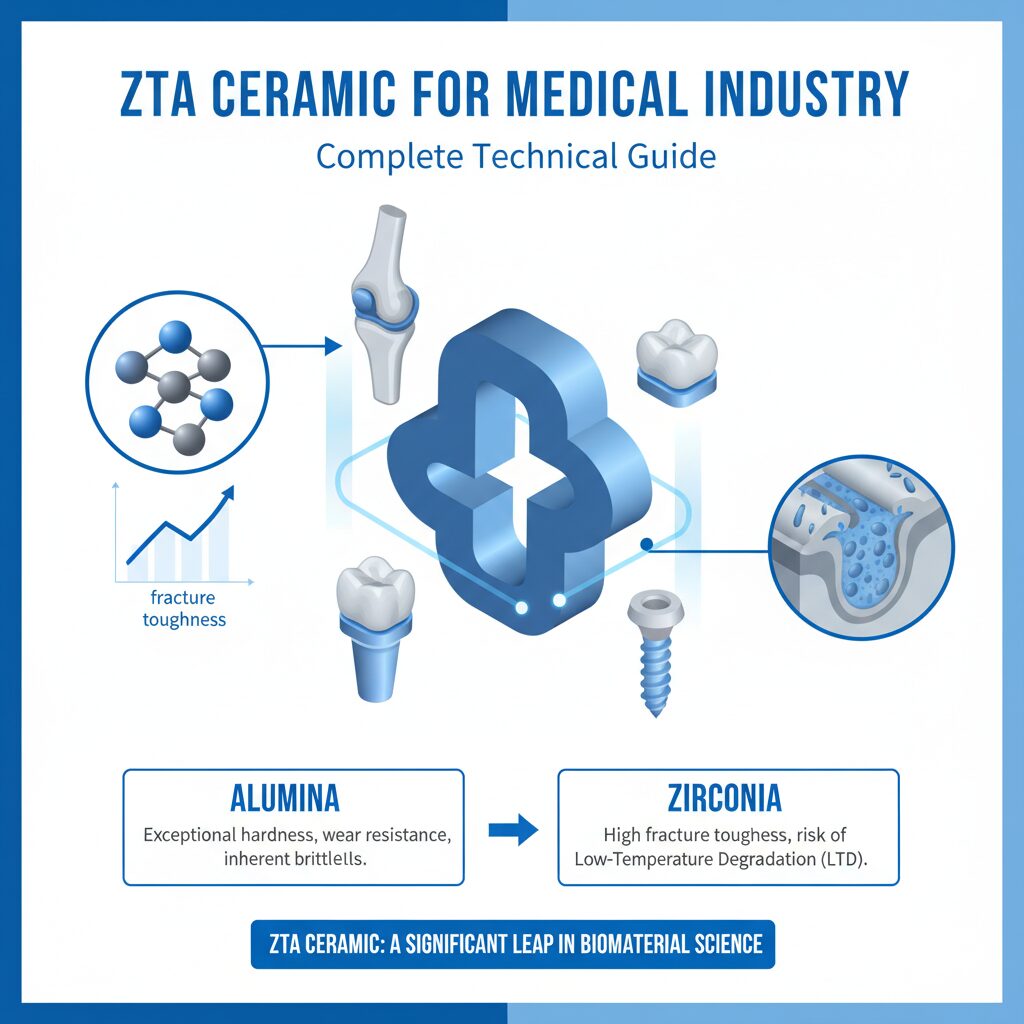
Zapotrzebowanie na wysoce niezawodne systemy zarządzania temperaturą w nowoczesnej elektronice dużej mocy ujawniło istotne ograniczenia standardowych materiałów podłożowych. Chociaż tradycyjne ceramiki z czystego tlenku zapewniają doskonałą izolację elektryczną, często ulegają uszkodzeniom pod wpływem ekstremalnych obciążeń termomechanicznych generowanych przez gwałtowne cykle temperaturowe (w zakresie od -40°C do +150°C) w modułach mocy. W szczególności kruchość i niska odporność na pękanie pozostają istotnymi problemami w branży, prowadząc do katastrofalnych pęknięć podłoża i awarii urządzeń. Optymalnym rozwiązaniem jest Płytka ceramiczna ZTA do zastosowań elektronicznych (tlenek glinu wzmocniony cyrkonem), zaawansowany materiał kompozytowy opracowany w celu wypełnienia luki w właściwościach między standardowymi tlenkami a niezwykle kosztownymi ceramikami nietlenkowymi. Poprzez włączenie cząstek cyrkonu stabilizowanego ittem o składzie 10% do 20% do struktury alfa-tlenek glinu Dzięki strukturze ZTA uzyskuje się wzrost wytrzymałości mechanicznej z 20% do 30% oraz odporność na pękanie przekraczającą 5,0 MPa·m½. Niniejszy kompleksowy przewodnik techniczny dostarcza inżynierom, specjalistom ds. badań i rozwoju oraz kierownikom ds. zaopatrzenia kluczowe dane dotyczące właściwości materiału, specyfikacji produkcyjnych oraz protokołów precyzyjnej obróbki skrawaniem, niezbędnych do wykorzystania podłoży ZTA w zaawansowanych zastosowaniach mikroelektronicznych. Do natychmiastowej oceny projektu i tworzenia prototypów o wąskich tolerancjach, wyślij zapytanie ofertowe do Great Ceramic już dziś.
Właściwości materiałów
Wyjątkowa wydajność płytki ceramicznej ZTA przeznaczonej do zastosowań elektronicznych wynika ze złożonego mechanizmu mikrostrukturalnego znanego jako wzmocnienie spowodowane przemianą fazową wywołaną naprężeniami. Gdy mikropęknięcie zaczyna się rozprzestrzeniać w matrycy z tlenku glinu, pole naprężeń na czubku pęknięcia powoduje, że metastabilne cząstki cyrkonu w układzie tetragonalnym przechodzą w fazę monokliniczną. Tej przemianie martenzytycznej towarzyszy lokalna ekspansja objętościowa wynosząca około 3% do 5% oraz odkształcenie ścinające rzędu 4%. Ta ekspansja objętościowa wywołuje naprężenia ściskające wokół wierzchołka pęknięcia, skutecznie blokując pęknięcie i wymagając znacznie większego wkładu energii (zazwyczaj >50 J/m²) do dalszego rozprzestrzeniania się. W rezultacie otrzymujemy wysoce niezawodne podłoże elektroniczne, zdolne do przetrwania >100 000 cykli termicznych w standardowych testach cykli zasilania.
Inżynierowie muszą dokładnie ocenić podstawowe parametry termofizyczne i dielektryczne, aby zapewnić zgodność z procesami metalizacji typu Direct Bonded Copper (DBC) lub Active Metal Brazing (AMB). ZTA zachowuje wytrzymałość dielektryczną na poziomie >15 kV/mm, zapewniając całkowitą izolację elektryczną w obwodach wysokonapięciowych pracujących przy napięciu do 3,3 kV. Poniżej znajduje się certyfikowany profil danych materiałowych dla podłoży ZTA klasy półprzewodnikowej.
| Nieruchomość | Wartość | Jednostka |
|---|---|---|
| Gęstość | 4.10 – 4.35 | g/cm³ |
| Twardość | 1600–1700 | HV |
| Wytrzymałość na zginanie | 500–700 | MPa |
| Wytrzymałość na złamania | 4.5 - 6.0 | MPa-m½ |
| Przewodność cieplna | 20 - 24 | W/m-K |
| Rezystywność elektryczna | >10¹⁴ | Ω-cm |
| Maksymalna temperatura robocza | 1500 | °C |
Porównanie z innymi materiałami ceramicznymi
Wybór odpowiedniego podłoża dielektrycznego wymaga skrupulatnego, opartego na danych porównania kompromisów termomechanicznych. Płytka ceramiczna ZTA przeznaczona do zastosowań elektronicznych zajmuje bardzo strategiczną pozycję pośrednią w spektrum zaawansowanych materiałów ceramicznych. Standard 96% lub 99.5% tlenek glinu jest bardzo opłacalny, ale charakteryzuje się stosunkowo niską odpornością na pękanie (od 3,0 do 4,0 MPa·m½), co sprawia, że jest podatny na uszkodzenia w warunkach silnych drgań lub w zastosowaniach DBC z grubą warstwą miedzi (gdzie grubość miedzi przekracza 0,3 mm). Z kolei czysty, stabilizowany tlenkiem itru cyrkonia charakteryzuje się wyjątkową odpornością na pękanie (do 10,0 MPa·m½), ale pełni rolę izolatora termicznego o przewodności cieplnej wynoszącej zaledwie 2–3 W/m·K. Ma to fatalne skutki dla odprowadzania ciepła z układów elektronicznych o dużej mocy.
Wysokowydajne materiały niebędące tlenkami, takie jak azotek krzemu (Si₃N₄) zapewniają doskonałe połączenie wysokiej przewodności cieplnej (do 90 W/m·K) i wyjątkowej odporności na pękanie (6,0–7,0 MPa·m½), co czyni je złotym standardem w dziedzinie falowników trakcyjnych do pojazdów elektrycznych. Jednak koszty surowców i spiekania Si3N4 mogą być od 5 do 10 razy wyższe niż w przypadku ceramiki tlenkowej. W zastosowaniach wymagających większej niezawodności mechanicznej niż w przypadku standardowych tlenków, ale obarczonych ograniczeniami budżetowymi uniemożliwiającymi stosowanie materiałów niebędących tlenkami, ZTA stanowi matematycznie optymalny wybór, oferując poprawę wytrzymałości mechanicznej w stosunku do Al₂O₃ przy jedynie nieznacznym wzroście kosztów wynoszącym 15–20%.
| Nieruchomość | Płytka ceramiczna ZTA do zastosowań elektronicznych | Tlenek glinu (99.5%) | Cyrkon (3Y-TZP) | Azotek krzemu (klasa AMB) |
|---|---|---|---|---|
| Przewodność cieplna | 20 - 24 W/m-K | 24–30 W/m·K | 2 - 3 W/m-K | 80–90 W/m·K |
| Twardość | 1600–1700 HV | 1500 - 1600 HV | 1200 - 1300 HV | 1400–1500 HV |
| Wytrzymałość na złamania | 4,5 - 6,0 MPa-m½ | 3,5 - 4,0 MPa-m½ | 8,0 - 10,0 MPa-m½ | 6,0 - 7,0 MPa-m½ |
| Koszt | Umiarkowany | Niski | Wysoki | Bardzo wysoka |
Aplikacje
- Moduły półprzewodników mocy (IGBT i MOSFET): ZTA jest stosowany przede wszystkim jako wytrzymałe podłoże w technologii bezpośredniego łączenia miedzi (DBC) dla tranzystorów bipolarnych z izolowaną bramką (IGBT), pracujących przy gęstościach mocy przekraczających 100 W/cm². Odporność na pękanie wynosząca 5,0 MPa·m½ zapobiega powstawaniu mikropęknięć w podłożu podczas łączenia z warstwami miedzi o grubości od 0,3 mm do 0,5 mm, pochłaniając silne termomechaniczne naprężenia ścinające powstające podczas powtarzających się cykli termicznych w zakresie temperatur od -40°C do 125°C.
- Podłoża do pakowania diod LED dużej mocy: Stosowany w przemysłowych matrycach LED o mocy od 50 W do 200 W, gdzie utrzymanie temperatury złącza poniżej 85 °C ma kluczowe znaczenie dla trwałości. Materiał ten charakteryzuje się współczynnikiem rozszerzalności cieplnej (CTE) wynoszącym około 7,2 × 10⁻⁶ /°C, co bardzo zbliża go do parametrów matryc półprzewodnikowych, a jego doskonała integralność strukturalna pozwala na produkcję ultracienkich płytek (o grubości zaledwie 0,25 mm) w celu zminimalizowania ścieżek oporu cieplnego.
- Obwody mikroelektroniczne z grubowarstwowymi i cienkowarstwowymi warstwami: Wybrany do zastosowań w krytycznych sieciach czujników oraz modułach sterujących w przemyśle lotniczym i kosmicznym, pracujących przy napięciach do 500 V. Drobnoziarnista powierzchnia (Ra < 0,2 µm po docieraniu) materiału ZTA zapewnia bezbłędną przyczepność past przewodzących nakładanych metodą sitodruku (tlenek rutenu lub srebro-palad) oraz umożliwia uzyskanie rozdzielczości linii i odstępów poniżej mil (mniej niż 25,4 µm) w połączeniach o wysokiej gęstości.
- Podłoża czujników do pracy w trudnych warunkach: Stosowany w sprzęcie do pomiarów wiertniczych ropy i gazu oraz w samochodowych czujnikach ciśnienia spalin, pracujących w trybie ciągłym w temperaturach otoczenia do 300 °C. Wyjątkowa obojętność chemiczna materiału ZTA oraz wysoki moduł sprężystości (~350 GPa) zapewniają stabilność wymiarową i zapobiegają dryftowi sygnału spowodowanemu odkształceniem podłoża w warunkach silnych wibracji (do 20 G RMS).
- Elementy mikrofalowe RF o wysokiej częstotliwości: Zastosowanie w stacjach bazowych sieci telekomunikacyjnych 5G oraz w układach radarowych działających w paśmie częstotliwości od 3 GHz do 30 GHz. Chociaż jego przewodność cieplna jest niższa niż azotek aluminium, Materiał ZTA jest wybierany w przypadkach, gdy filtry RF wymagają wyjątkowej wytrzymałości mechanicznej podczas zautomatyzowanego montażu, przy zachowaniu stabilnej stałej dielektrycznej (εr ≈ 9,5) oraz niskiego współczynnika strat (tan δ < 0,001 przy 1 MHz), co pozwala uzyskać niską stratę wtrąceniową.
Proces produkcji
Produkcja płytek ceramicznych typu ZTA przeznaczonych dla przemysłu elektronicznego to ściśle kontrolowany, wieloetapowy proces metalurgiczny i chemiczny, wymagający rygorystycznych środków kontroli środowiskowej w celu zapobiegania zanieczyszczeniu cząstkami stałymi. Proces rozpoczyna się od syntezy proszków o wielkości poniżej mikrona, w ramach której alfa-tlenek glinu o wysokiej czystości (D50 < 0,5 µm) jest dokładnie mielony z 10–20 wt% proszku cyrkonu stabilizowanego itrem (Y-TZP) (D50 < 0,3 µm). Ta jednorodna mieszanka proszków jest następnie dyspergowana w rozpuszczalnikach organicznych (takich jak MEK lub toluen) wraz z określonymi środkami dyspergującymi, spoiwami (np. poliwinylobutyralem) oraz plastyfikatorów w celu uzyskania stabilnej zawiesiny o ściśle kontrolowanej lepkości reologicznej wynoszącej od 2000 do 4000 mPa·s.
Metody formowania
- Odlewanie taśmowe (proces z użyciem listwy dociskowej): Jest to dominująca metoda produkcji cienkich, płaskich płytek elektronicznych. Zawiesinę ceramiczną nanosi się na poruszającą się folię nośną (PET) za pomocą precyzyjnie sterowanej rakli. Dzięki regulacji szczeliny między ostrzem a folią (w zakresie od 50 µm do 2000 µm) oraz prędkości nakładania (zazwyczaj od 0,5 do 2,0 metrów na minutę) powstają surowe taśmy o dużej gęstości i doskonałej równomierności grubości (tolerancja ±2%). Następnie taśma jest suszona, cięta i układana w stosy do laminowania.
- Prasowanie na sucho / prasowanie izostatyczne: W przypadku grubszych podłoży (>2,0 mm) lub konstrukcyjnych podstaw elektronicznych granulat ZTA suszony rozpyłowo (kuliste granulki o wielkości 50–150 µm) jest zagęszczany w sztywnych matrycach z węglika wolframu pod ciśnieniem w zakresie od 100 do 150 MPa. Następnie można zastosować tłoczenie izostatyczne na zimno (CIP) przy ciśnieniu 200 MPa w celu wyeliminowania gradientów gęstości i uzyskania jednolitej gęstości surowca wynoszącej około 60% teoretycznej wartości maksymalnej przed wypalaniem.
Spiekanie
Zielone podłoża poddaje się precyzyjnemu procesowi termicznego usuwania spoiwa, polegającemu na powolnym podgrzewaniu do temperatury 500–600 °C z prędkością 1–2 °C/minutę w celu odparowania polimerów organicznych bez powodowania powstawania mikropęcherzyków. Faza właściwego spiekania zachodzi w piecach o atmosferze silnie utleniającej lub precyzyjnie kontrolowanej, przy temperaturach szczytowych wynoszących od 1550°C do 1650°C. Podczas 2- do 4-godzinnego utrzymywania wysokiej temperatury materiał ulega skurczowi liniowemu wynoszącemu około 15% do 18%. Zaawansowane inhibitory wzrostu ziaren są ściśle kontrolowane, aby zapewnić, że cząstki cyrkonu pozostają w optymalnej wielkości krytycznej (< 1 µm), co pozwala zachować ich metastabilną fazę tetragonalną. Jeśli ziarna urosną zbytnio, podczas chłodzenia dochodzi do spontanicznej przemiany fazowej, co pogarsza końcowe właściwości mechaniczne.
Obróbka końcowa
Ponieważ wypalony ZTA charakteryzuje się ogromną twardością wynoszącą 1600–1700 HV, tradycyjne narzędzia skrawające są całkowicie nieskuteczne. Ostateczne wymiarowanie wymaga zastosowania zaawansowanej technologii diamentowo-ściernej. Podłoża są najpierw obrabiane na dwustronnych planetarnych maszynach do docierania przy użyciu zawiesin węglika boru lub diamentu (wielkość cząstek od 9 µm do 3 µm) w celu uzyskania ścisłych specyfikacji płaskości (< 0,005 mm / 100 mm) i równoległości. Do wiercenia otworów przelotowych (o średnicach nawet 0,15 mm) oraz profilowania skomplikowanych geometrii zewnętrznych często stosuje się szybkie lasery CO₂ lub Nd:YAG. Szlifowanie krawędzi odbywa się przy użyciu tarcz diamentowych na spoiwie żywicznym, obracających się z dużą prędkością powierzchniową (30–40 m/s), co pozwala uzyskać końcowe wymiary o wąskich tolerancjach wymagane w automatycznym pakowaniu mikroelektronicznym.
Zalety i ograniczenia
Zalety
- Zwiększona odporność na pękanie: Przy wartościach z przedziału od 4,5 do 6,0 MPa·m½ ZTA pochłania znacznie więcej energii odkształcenia niż czyste tlenki. Ten konkretny wskaźnik przekłada się na zmniejszenie pękania podłoża 300% podczas obróbki metodą DBC przy łączeniu grubych warstw miedzi (≥0,3 mm), niezbędnych w konstrukcjach modułów wysokoprądowych (>100 A).
- Wyjątkowa odporność na zużycie: Wyjątkowa twardość (do 1700 HV) oraz gęsta mikrostruktura zapewniają doskonałe właściwości tribologiczne. Na zautomatyzowanych liniach montażowych płyty ZTA praktycznie nie ulegają powstawaniu cząstek ani zarysowaniom pod wpływem działania szybkich robotycznych dysz typu „pick-and-place”, wywierających siły do 50 N.
- Doskonałe właściwości dielektryczne: ZTA charakteryzuje się wyjątkowo wysoką rezystywnością objętościową (>10¹⁴ Ω·cm w temperaturze 20°C. oraz >10¹⁰ Ω·cm nawet w temperaturze 300°C) oraz wysoką wytrzymałość dielektryczną (>15 kV/mm). Gwarantuje to zerowy prąd upływowy w kompaktowych układach falowników trakcyjnych wysokiego napięcia.
- Zoptymalizowany stosunek kosztów do wydajności: Chociaż azotek aluminium jest najlepszym wyborem pod względem czystej wydajności termicznej, natomiast ZTA stanowi niezwykle atrakcyjną alternatywę ekonomiczną. Zapewnia on wytrzymałość mechaniczną niezbędną do zmniejszenia grubości podłoża (do 0,25 mm w celu obniżenia oporu cieplnego) przy kosztach surowca i spiekania w wysokiej temperaturze stanowiących zaledwie ułamek kosztów związanych z AlN.
Ograniczenia
- Umiarkowana przewodność cieplna: Ze względu na ograniczenie do około 20–24 W/m·K, ZTA nie może konkurować z ceramikami nieoksydowymi (których wartości mieszczą się w przedziale od 90 do 170 W/m·K) ani z tlenkiem berylu. W przypadku ekstremalnych gęstości strumienia ciepła (>150 W/cm²) inżynierowie muszą albo zastosować ultracienkie płytki z ZTA, albo przejść na Si₃N₄ lub AlN, aby zapobiec niekontrolowanemu wzrostowi temperatury na złączu półprzewodnikowym.
- Wyższa gęstość materiału: Dodanie ciężkiego tlenku cyrkonu zwiększa gęstość ZTA do ~4,3 g/cm³, co oznacza wzrost masy o 10–15% w porównaniu ze standardowym tlenkiem glinu 96% (3,8 g/cm³). Chociaż wzrost ten jest nieistotny w przypadku naziemnych sieci energetycznych, ten niewielki przyrost masy należy uwzględnić w obliczeniach ładowności dla zespołów elektronicznych przeznaczonych do zastosowań w przestrzeni kosmicznej lub na dużych wysokościach.
Rozważania dotyczące obróbki
Precyzyjna obróbka płyty ceramicznej ZTA przeznaczonej dla elektroniki wiąże się z ogromnymi wyzwaniami tribologicznymi. Ten sam mechanizm, który sprawia, że ZTA jest tak trwała — utwardzanie transformacyjne — sprawia również, że jest ona niezwykle odporna na usuwanie materiału. Gdy ziarnko diamentowe uderza w powierzchnię ZTA, miejscowe naprężenie wywołuje przemianę z układu tetragonalnego do monoklinicznego, tworząc lokalne pole naprężeń ściskających, które aktywnie przeciwdziała dalszemu cięciu. Powoduje to szybkie zużycie narzędzi diamentowych, zwiększone siły skrawania (często przekraczające 500 N podczas szlifowania wgłębnego) oraz wysokie ryzyko wykruszenia krawędzi i uszkodzeń podpowierzchniowych (SSD).
Wyzwania związane z obróbką skrawaniem i rozwiązania
Aby ograniczyć powstawanie mikropęknięć podpowierzchniowych — które mogą sięgać 10–20 µm w głąb podłoża i znacznie obniżać napięcie przebicia dielektrycznego — inżynierowie muszą zrezygnować z agresywnych prędkości posuwu. Protokoły obróbki wymagają ultrasztywnych, tłumiących drgania 5-osiowych platform CNC wykorzystujących narzędzia z diamentem syntetycznym z określonymi matrycami wiążącymi z metalu lub żywicy. Prędkości wrzeciona muszą być utrzymywane w zakresie od 15 000 do 30 000 obrotów na minutę, aby zapewnić niewielką grubość wiórów na jedno ziarno ścierne, natomiast prędkości posuwu są ograniczone do 0,01–0,05 mm/obr. Konieczne jest stosowanie obfitego chłodzenia zalewowego z wykorzystaniem specjalistycznych, rozpuszczalnych w wodzie syntetycznych środków smarnych w celu odprowadzenia intensywnego ciepła tarcia, które w przeciwnym razie mogłoby spowodować miejscowy szok termiczny.
Great Ceramic pokonuje te nieodłączne trudności związane z materiałem dzięki autorskiej technologii precyzyjna obróbka ceramiki metodologie. Dzięki zastosowaniu wieloetapowych sekwencji szlifowania — począwszy od gruboziarnistych tarcz diamentowych D64 do usuwania dużej ilości materiału, aż po ultradrobne tarcze D15 do wykańczania — ściśle ograniczamy uszkodzenia podpowierzchniowe. Nasze najnowocześniejsze laboratoria metrologiczne gwarantują tolerancje geometryczne na poziomie ±0,005 mm, parametry płaskości poniżej 0,002 mm oraz chropowatość powierzchni (Ra) na poziomie zaledwie 0,1 µm. Potrzebujesz precyzyjnych elementów ZTA? Kontakt Great Ceramic aby omówić Państwa dokładne wymagania dotyczące druku.
FAQ
Czym jest ceramiczna płytka ZTA stosowana w elektronice?
Płytka ceramiczna ZTA przeznaczona do zastosowań elektronicznych to zaawansowane kompozytowe podłoże elektroniczne, wytwarzane poprzez zdyspergowanie cząstek cyrkonu stabilizowanego tlenkiem itru (10% do 20%) w matrycy z tlenku glinu o wysokiej czystości. To połączenie metalurgiczne powoduje efekt wzmocnienia wynikający z przemiany fazowej wywołanej naprężeniami, dzięki czemu podłoże charakteryzuje się odpornością na pękanie wynoszącą od 4,5 do 6,0 MPa·m½. Dzięki temu jest ono wysoce odporne na ekstremalne obciążenia termomechaniczne oraz mikropęknięcia związane z metalizacją metodą bezpośredniego łączenia miedzi (DBC) w modułach półprzewodnikowych dużej mocy.
Jakie są główne zastosowania płytek ceramicznych ZTA w elektronice?
Główne zastosowania dotyczą elektroniki mocy oraz środowisk wymagających wyjątkowej niezawodności mechanicznej w połączeniu z izolacją elektryczną. Konkretne zastosowania obejmują podłoża z miedzi łączonej bezpośrednio (DBC) i lutowane metalem aktywnym (AMB) do modułów mocy IGBT i SiC MOSFET, płytki drukowane z warstwą grubowarstwową do czujników lotniczych, matryce opakowań diod LED dużej mocy (50 W–200 W). oraz strukturalne płyty izolacyjne w wysokoczęstotliwościowych filtrach radiowych 5G dla telekomunikacji, działających w zakresie od 3 GHz do 30 GHz.
Czym różni się płytka ceramiczna ZTA przeznaczona do zastosowań elektronicznych od innych rodzajów ceramiki?
ZTA stanowi strategiczny kompromis. W porównaniu ze standardowym tlenkiem glinu 96% lub 99,5%, ZTA zapewnia wzrost wytrzymałości mechanicznej i odporności na pękanie o wartość odpowiadającą stopom od 20% do 50%, co znacznie zmniejsza wskaźniki uszkodzeń podłoża podczas cykli termicznych. W porównaniu z czystym cyrkonem ZTA zapewnia prawie dziesięciokrotnie wyższą przewodność cieplną (~24 W/m·K w porównaniu z 2–3 W/m·K), co sprawia, że nadaje się do odprowadzania ciepła. Chociaż nie dorównuje on właściwościom termicznym azotku krzemu (90 W/m·K), ZTA jest znacznie tańszy, zapewniając optymalną równowagę ekonomiczną i mechaniczną w przypadku modułów o średniej i wysokiej mocy.
Jakie są zalety płytek ceramicznych ZTA stosowanych w elektronice?
Do głównych zalet należą: zwiększona odporność na pękanie (>5,0 MPa·m½), zapobiegająca rozprzestrzenianiu się pęknięć, wysoka wytrzymałość na zginanie (do 700 MPa), umożliwiająca projektowanie cieńszych podłoży (0,25 mm) w celu zmniejszenia oporu cieplnego, doskonałą wytrzymałość dielektryczną (>15 kV/mm), zapewniającą pełną izolację wysokonapięciową, oraz wyjątkową odporność na zużycie (1700 HV), która gwarantuje czystą, wolną od cząstek obsługę podczas zautomatyzowanego, szybkiego montażu z wykorzystaniem robotów w środowiskach czystych.
W jaki sposób obrabiana jest ceramiczna płytka ZTA przeznaczona do zastosowań elektronicznych?
Ze względu na swoją wyjątkową twardość oraz właściwości związane z utwardzaniem transformacyjnym materiał ZTA nie może być obrabiany przy użyciu konwencjonalnych narzędzi ze stali szybkotnącej lub węglików spiekanych. Wymaga on zastosowania specjalistycznych technik obróbki diamentowej, w tym docierania planetarnego, szlifowania diamentowego sterowanego numerycznie (z wykorzystaniem tarcz z wiązaniem żywicznym o ziarnistości od D64 do D15). oraz cięcie i wiercenie laserowe (CO₂ lub Nd:YAG). Aby zapewnić integralność strukturalną i ścisłe tolerancje geometryczne, precyzyjna obróbka ceramiki W firmie Great Ceramic wykorzystuje się wieloosiowe centra obróbcze CNC z precyzyjną regulacją chłodziwa, co pozwala osiągnąć tolerancje liniowe na poziomie ±0,005 mm oraz gładkość powierzchni sięgającą nawet Ra 0,1 µm.
Potrzebujesz niestandardowej płytki ceramicznej ZTA do elementów elektronicznych? Kontakt Great Ceramic w przypadku usług precyzyjnej obróbki skrawaniem o wąskich tolerancjach lub wyślij wiadomość e-mail na adres [email protected].
Płytka ceramiczna ZTA przeznaczona do zastosowań elektronicznych znajduje szerokie zastosowanie w zaawansowanych rozwiązaniach ceramicznych.
Dowiedz się więcej o Płytka ceramiczna Zta do zastosowań elektronicznych i nasze usługi precyzyjnej obróbki ceramiki.