








The Ultimate Technical Guide to Silicon Nitride Ceramic Properties, Applications. And Precision Machining
As advanced engineering pushes the boundaries of temperature, stress. And wear, traditional metals and standard technical ceramics frequently reach their limits. Enter Siliziumnitrid (Si3N4). Renowned for its unparalleled combination of high fracture toughness, exceptional thermal shock resistance. And enduring mechanical strength at elevated temperatures, Silicon Nitride is the premier material for extreme industrial applications.
Unter Great Ceramic, we specialize in the precision machining of advanced technical ceramics. In this comprehensive engineering guide, we will explore the core Siliziumnitrid keramische Eigenschaften, dive deep into its microstructure. And outline the critical considerations for machining this formidable material.
1. Core Silicon Nitride Ceramic Properties
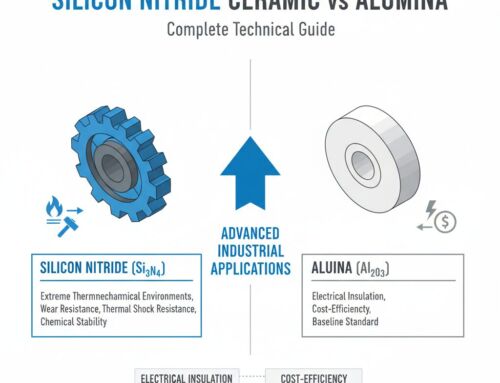
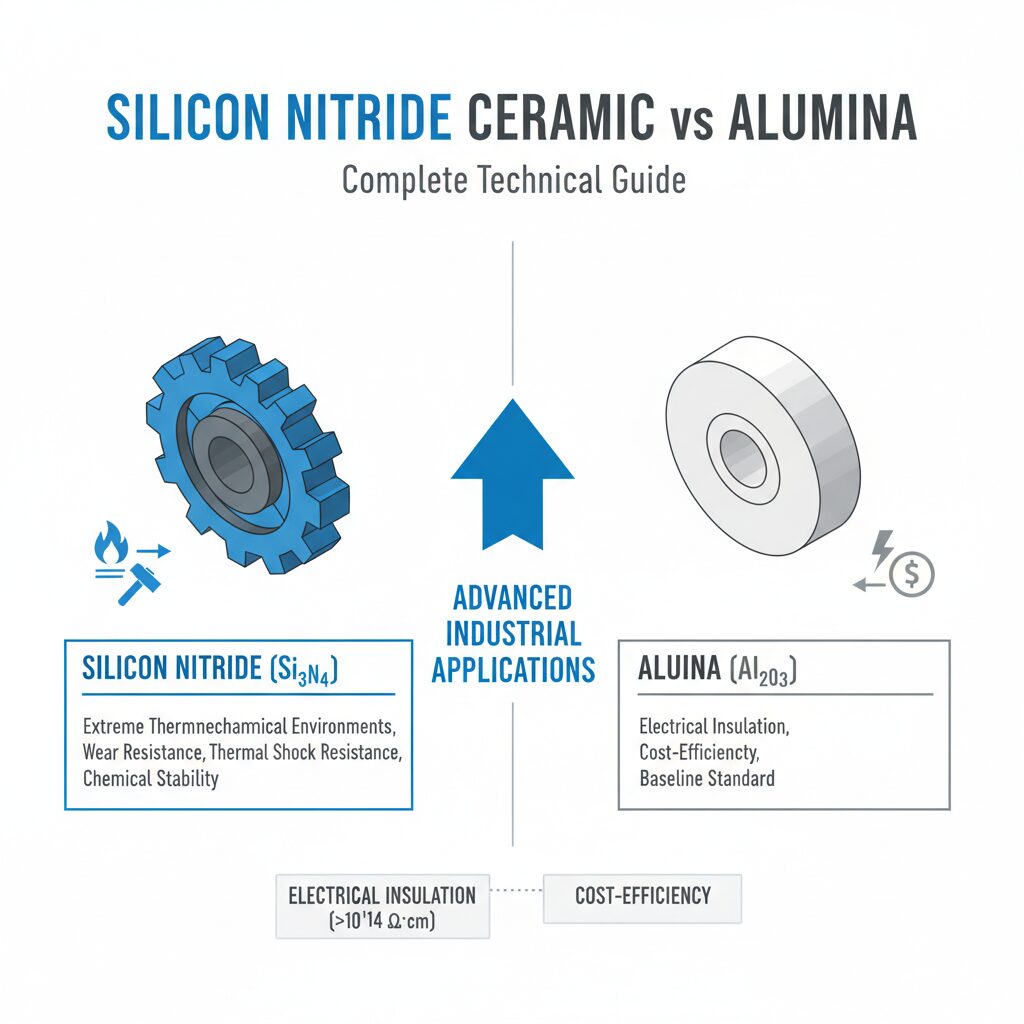
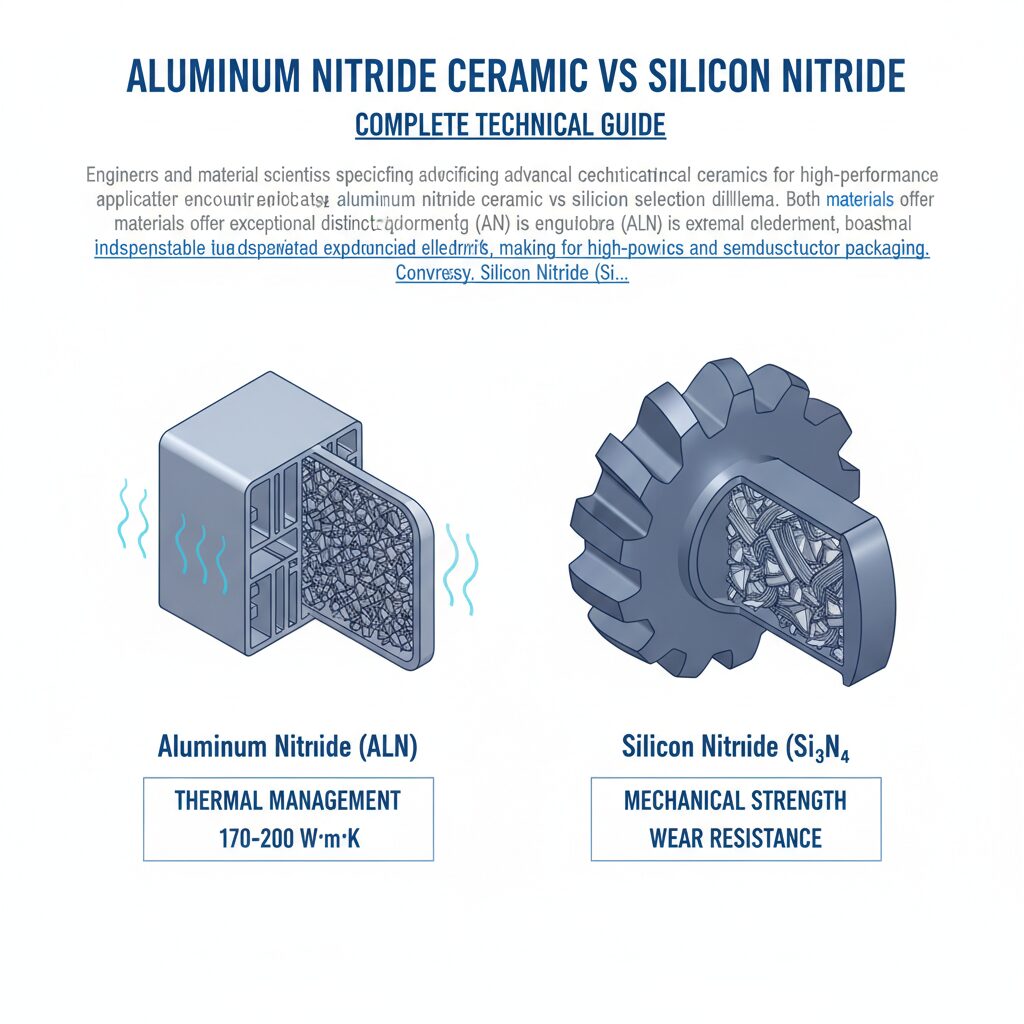
The exceptional performance of silicon nitride stems from its unique covalent bonding and interlocking needle-like (acicular) beta-phase microstructure. This gives the material a distinct edge over both Alumina (Al2O3) and Zirconia (ZrO2) in highly demanding environments.
Exceptional Mechanical Strength & Fracture Toughness
Unlike many technical ceramics that are brittle, Si3N4 exhibits remarkable fracture toughness (up to 7.0 MPa·m1/2). The interlocking β-Si3N4 grains act as a crack-deflection mechanism, preventing catastrophic failure. Furthermore, it retains its high mechanical strength (flexural strength often exceeding 800 MPa) even at temperatures approaching 1,000°C.
Unrivaled Thermal Shock Resistance
Silicon nitride possesses a very low coefficient of thermal expansion (CTE) combined with moderate-to-high thermal conductivity. This combination grants it extreme thermal shock resistance. Components can survive rapid temperature transitions—such as being quenched in water from 1,000°C—without cracking, a feat impossible for most other ceramics.
Chemical Inertness & Corrosion Resistance
Si3N4 is highly resistant to corrosive environments, including exposure to strong acids, alkalis. And particularly molten metals. It is famously non-wetting to non-ferrous molten metals like aluminum, lead. And zinc, making it an ideal material for foundry and metallurgical applications.
Tribological and Wear Properties
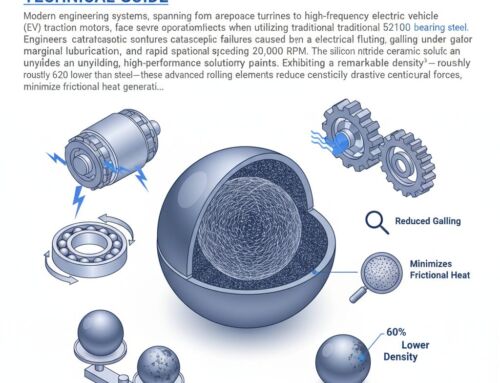
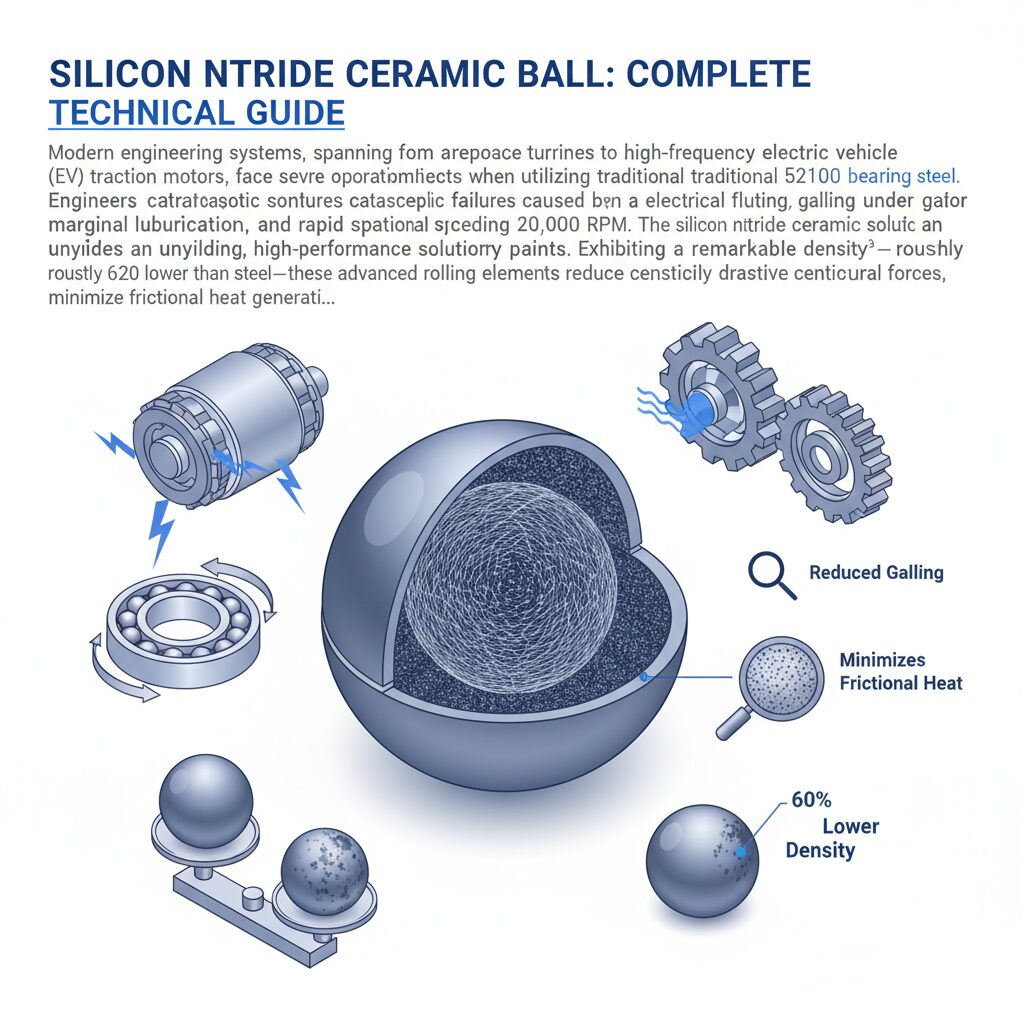
Due to its high hardness (approx. 15 GPa on the Vickers scale) and low coefficient of friction, silicon nitride is highly resistant to abrasive and adhesive wear. This makes it the material of choice for high-speed ceramic bearings and wear-resistant nozzles.
2. Comprehensive Technical Properties Table
Below is a quantitative breakdown of typical Gas Pressure Sintered Silicon Nitride (GPSN), the most common grade utilized for high-performance precision parts.
| Property Category | Specific Property | Einheit | Typical Value (GPSN) |
|---|---|---|---|
| Physical | Dichte | g/cm³ | 3.20 – 3.25 |
| Porosität | % | 0 | |
| Wasserabsorption | % | 0 | |
| Grain Size | µm | 1 – 3 | |
| Mechanisch | Vickers-Härte (Hv) | GPa | 14 – 16 |
| Biegefestigkeit (Raumtemperatur) | MPa | 800 - 1000 | |
| Bruchzähigkeit (K1c) | MPa-m1/2 | 6.0 – 7.5 | |
| Druckfestigkeit | MPa | > 2500 | |
| Elastizitätsmodul | GPa | 300 – 320 | |
| Thermische | Max Operating Temperature (Air) | °C | 1200 – 1400 |
| Wärmeleitfähigkeit | W/m-K | 25 – 35 | |
| Coefficient of Thermal Expansion (20-1000°C) | 10-6/K | 3.2 | |
| Thermal Shock Resistance (ΔT) | °C | > 600 | |
| Elektrisch | Dielektrische Festigkeit | kV/mm | 15 - 18 |
| Volumenwiderstand (bei 20°C) | Ω-cm | > 1014 |
*Note: Properties can vary based on specific sintering processes such as Reaction Bonded (RBSN), Hot Isostatic Pressed (HIPSN), or Sintered (SSN). At Great Ceramic, we tailor the material grade to your exact specifications.
3. Key Applications of Silicon Nitride Components
Because of its unique balance of thermal, mechanical. And chemical properties, Si3N4 is deployed in highly specialized industries:
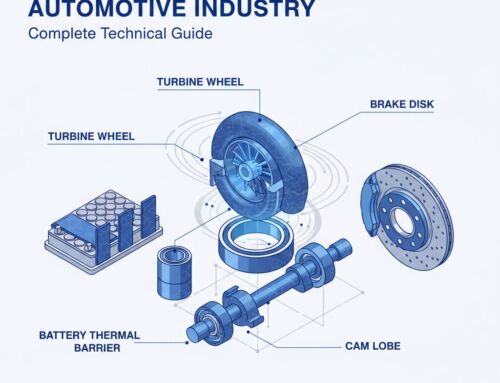
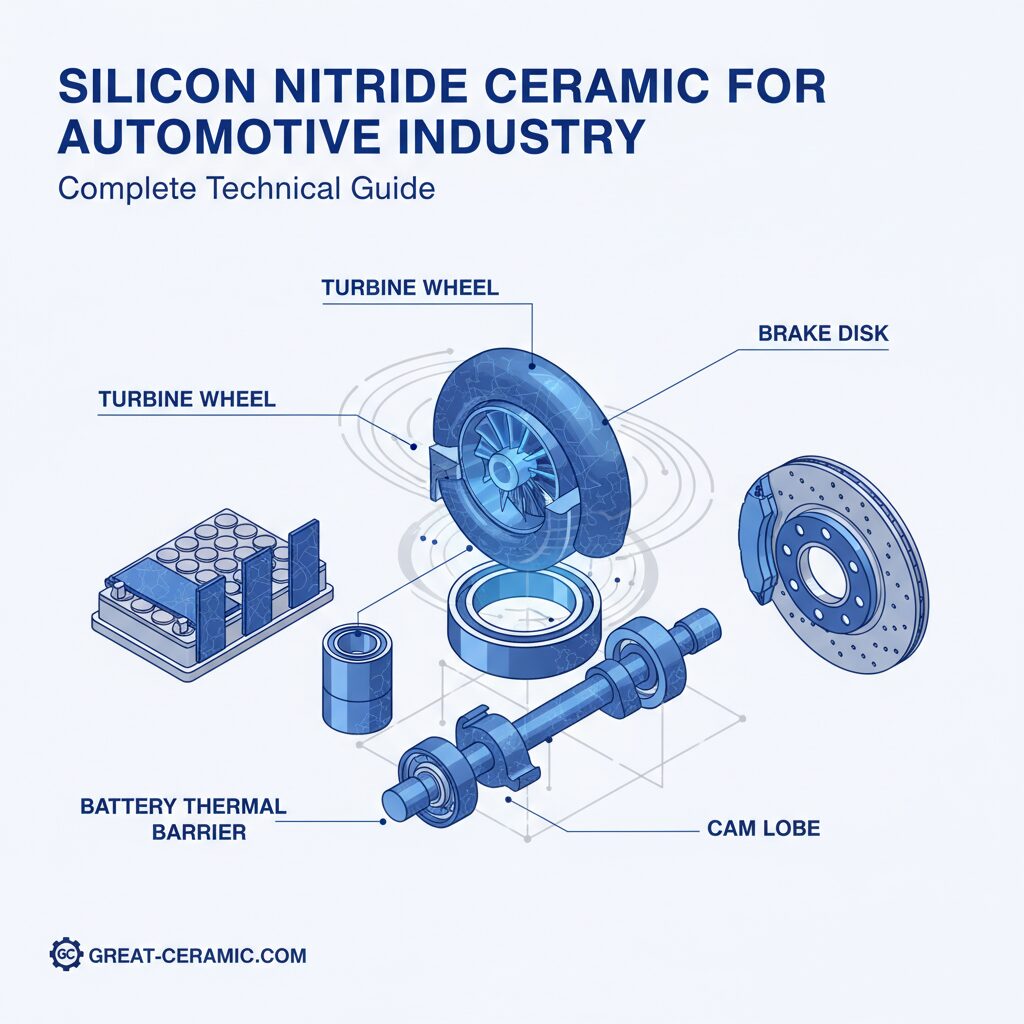
- Automotive & Engine Components: Glow plugs for diesel engines, turbocharger rotors. And engine valves where high temperature and low inertia are critical.
- Luft- und Raumfahrt & Verteidigung: High-speed hybrid ceramic bearings, space shuttle thruster components. And radomes due to its excellent dielectric properties and thermal survivability.
- Halbleiterherstellung: Wafer handling components, centering pins. And electrostatic chucks that require zero particulate generation and high dimensional stability under thermal cycling.
- Metallurgy & Welding: TIG/MIG welding nozzles, induction heating coils. And thermocouple protection tubes for non-ferrous molten metal processing.
4. Precision Machining Considerations for Silicon Nitride
As a senior ceramic engineer, I must emphasize that the very properties that make silicon nitride so desirable—extreme hardness and fracture toughness—also make it notoriously difficult to machine. Great Ceramic leverages decades of specialized expertise to process this material efficiently.
Green Machining vs. Hard Machining
To keep costs manageable, the bulk of machining at Great Ceramic is done in the “green” or “bisque” state (before final sintering) using conventional CNC equipment. Because Si3N4 shrinks by approximately 15-20% during the sintering process, our engineers calculate precise shrinkage coefficients to ensure near-net dimensions post-sintering.
Diamond Grinding & Polishing
Once fully sintered, Silicon Nitride achieves a hardness of up to 16 GPa. At this stage, it can only be machined using specialized diamond grinding wheels and ultrasonic machining techniques. At Great Ceramic, we utilize multi-axis CNC diamond grinding to achieve:
- Tight Tolerances: Down to ±0.002 mm (2 microns).
- Superior Surface Finishes: Ra 0.1 µm or better for sealing faces and bearing surfaces.
- Complex Geometries: Internal bores, precision threads (ground, not cut). And intricate concentricity requirements.
Design for Manufacturability (DFM) Guidelines
When designing Si3N4 parts, avoid sharp internal corners (which act as stress concentrators during sintering and use). Opt for generous radii and chamfers. If threading is required, internal threads should be minimized or replaced with metal inserts where possible, as internal ceramic threads are highly prone to fracture during assembly.
5. Frequently Asked Questions (FAQ)
How does Silicon Nitride compare to Zirconia (ZrO2)?
While Zirconia has slightly higher fracture toughness at room temperature, it loses its strength rapidly above 500°C. Silicon nitride maintains its strength well past 1,000°C and has vastly superior thermal shock resistance due to its lower thermal expansion.
Is Silicon Nitride electrically conductive?
No, standard silicon nitride is an excellent electrical insulator with high volume resistivity. However, specific electrically conductive grades can be engineered by adding titanium nitride (TiN) or other conductive phases if EDM (Electrical Discharge Machining) capability is required.
Can Great Ceramic machine custom Silicon Nitride prototypes?
Yes. Great Ceramic provides end-to-end services, from rapid prototyping to high-volume production. We specialize in custom precision machining based on your CAD drawings, ensuring exact tolerances are met for your specific engineering application.
Why is Silicon Nitride black or dark grey?
The color is typically a result of the sintering aids (like Yttria and Alumina) and the specific atmosphere (usually Nitrogen) used during the high-temperature Gas Pressure Sintering (GPS) process.
Ready to elevate your engineering project? The team at Great Ceramic possesses the advanced materials engineering knowledge and state-of-the-art machining capabilities to bring your Silicon Nitride designs to life. Contact us today to discuss your next high-performance application.
silicon nitride ceramic properties is widely used in advanced ceramic applications.