








Machinable Glass Ceramic Tube for Aerospace: Complete Technical Guide
When engineering components for satellite systems, deep space probes. And high-altitude aviation, material selection dictates mission success. The machinable glass ceramic tube for aerospace provides a critical bridge between the electrical insulation of advanced ceramics and the rapid machinability of traditional metals. Aerospace engineers frequently confront the pain point of protracted lead times and exorbitant tooling costs associated with diamond-grinding conventional sintered ceramics. Furthermore, aerospace environments demand materials that exhibit zero porosity to maintain vacuum integrity at 10⁻⁹ Torr, combined with a coefficient of thermal expansion (CTE) that aligns with metal housings to prevent catastrophic thermal stress fractures across a -200°C to +800°C operating envelope.
By utilizing a continuous matrix of borosilicate glass heavily dispersed with synthetic fluorophlogopite mica crystals, machinable glass ceramic (MGC) eliminates the need for post-machining firing, yielding 0.00% shrinkage. This unique microstructure allows components to be fabricated using standard high-speed steel (HSS) or tungsten carbide tooling. Great Ceramic specializes in leveraging this material to deliver flight-ready, tight-tolerance (±0.005mm) tubular structures in days rather than months. If your engineering team requires rapid prototyping or production of aerospace insulators, contact our engineering team for immediate RFQ evaluation.
Materialeigenschaften
The performance of a machinable glass ceramic tube for aerospace is fundamentally rooted in its bipartite microstructure. Comprising approximately 55% fluorophlogopite mica (KMg₃AlSi₃O₁₀F₂) and 45% borosilicate glass, the material exhibits highly deterministic mechanical and thermal behaviors. The random orientation of the interlocking mica flakes. This typically measure 20 μm in length and 2 μm in thickness, acts as an internal crack-arresting mechanism. When mechanical stress is applied by a cutting tool, microscopic fractures are propagated along the natural cleavage planes of the mica, allowing macroscopic material removal without catastrophic brittle failure. This structural phenomenon results in a Vickers hardness of 250 HV, sitting at the optimal intersection of durability and machinability.
Thermally, MGC excels in environments subjected to rapid temperature cycling. It boasts a maximum continuous operating temperature of 800°C and can withstand unloaded thermal spikes up to 1000°C. The coefficient of thermal expansion (CTE) is exceptionally stable at 9.3 × 10⁻⁶ /°C (measured between 20°C and 300°C). This closely matches the expansion rates of many aerospace-grade sealing metals, including titanium and various stainless steel alloys. Electrically, the material demonstrates exceptional insulation capabilities, featuring a dielectric strength of 40 kV/mm at 25°C and a volume resistivity exceeding 10¹⁶ Ω·cm, making it an ideal substrate for high-voltage aerospace instrumentation.
| Eigentum | Wert | Einheit |
|---|---|---|
| Dichte | 2.52 | g/cm³ |
| Härte | 250 | HV |
| Biegefestigkeit | 94 | MPa |
| Bruchzähigkeit | 1.53 | MPa-m½ |
| Wärmeleitfähigkeit | 1.46 | W/m-K |
| Elektrischer spezifischer Widerstand | >10¹⁶ | Ω-cm |
| Maximale Betriebstemperatur | 800 | °C |
Vergleich mit anderen Keramiken
Selecting the optimal technical ceramic requires a rigorous quantitative comparison across mechanical, thermal. And economic axes. While a machinable glass ceramic tube for aerospace offers unmatched fabrication speed, it represents a specific compromise in ultimate tensile and flexural yield parameters compared to monolithic sintered oxides or nitrides. For example, high-purity Tonerde/”>Tonerde delivers a superior flexural strength of up to 380 MPa and a maximum operating temperature exceeding 1600°C. However, alumina necessitates diamond grinding post-sintering. This exponentially increases fabrication time and cost for complex tubular geometries featuring internal threading or transverse cross-holes. Furthermore, alumina exhibits an inherently higher thermal conductivity (up to 35 W/m·K). This may be detrimental in cryogenic thermal isolation applications where MGC’s low 1.46 W/m·K conductivity is preferred.
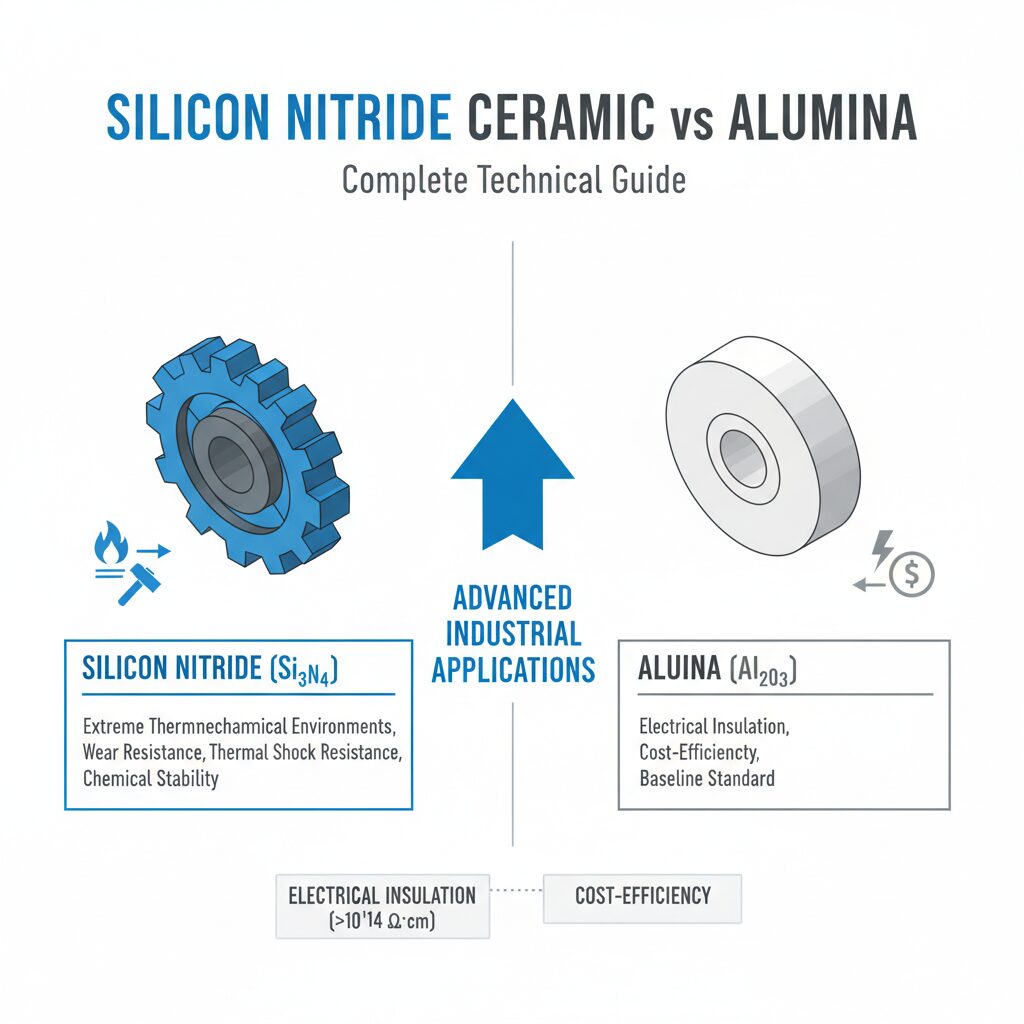
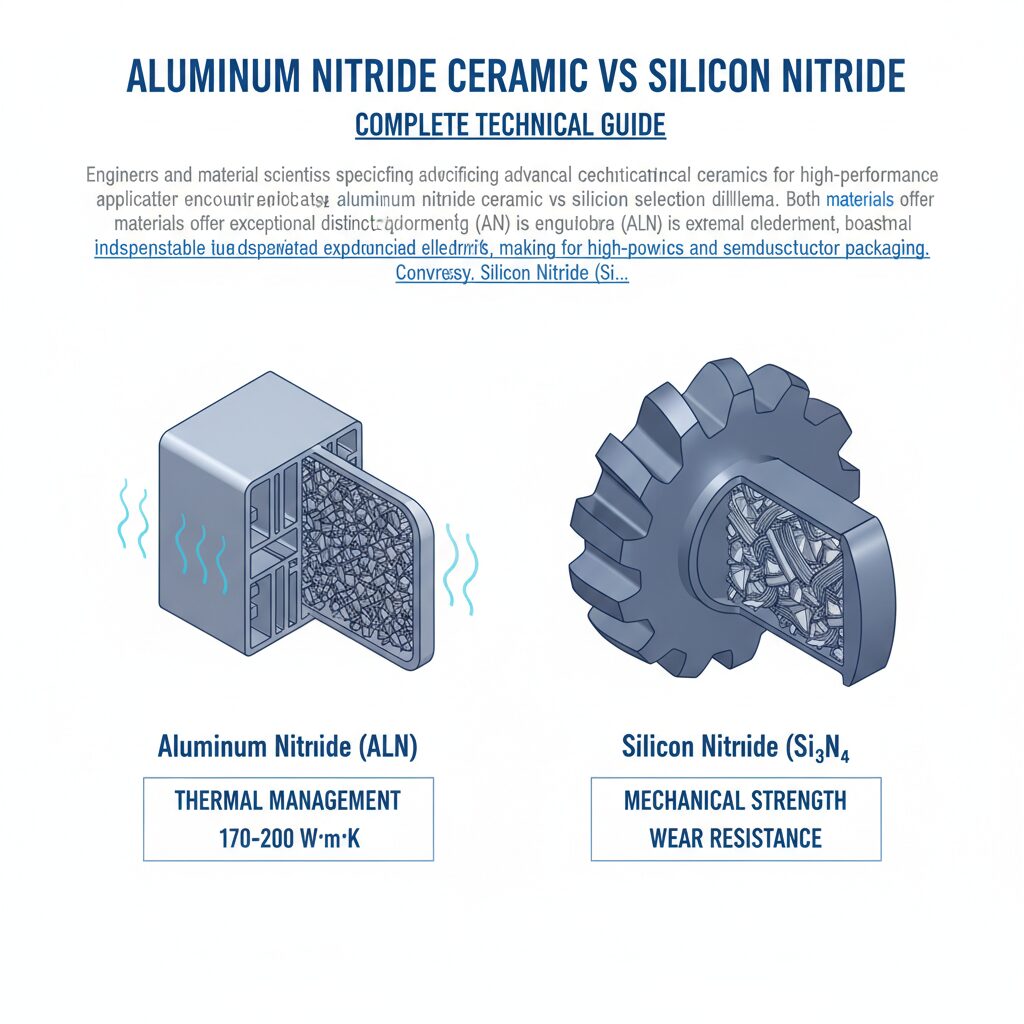
When evaluated against Zirkoniumdioxid (YTZP), MGC lacks the transformative toughening mechanism that gives zirconia its massive 8.0 MPa·m½ fracture toughness and 1200 MPa flexural strength. However, zirconia is roughly 2.4 times heavier than MGC (6.0 g/cm³ vs 2.52 g/cm³), a critical penalty in payload-sensitive aerospace applications where every gram correlates to thousands of dollars in launch costs. Similarly, when compared to Siliziumnitrid. This offers an excellent thermal shock resistance due to its low CTE of 3.2 × 10⁻⁶ /°C, MGC remains significantly more cost-effective for low-to-medium volume production runs. Silicon nitride requires complex hot isostatic pressing (HIP) and intensive diamond tooling, driving the cost factor to an ultra-premium level, whereas MGC’s machinability keeps the overall component cost highly competitive.
| Eigentum | Bearbeitbare Glaskeramik | Tonerde (99,5%) | Zirkonoxid (YTZP) | Siliziumnitrid (Si3N4) |
|---|---|---|---|---|
| Wärmeleitfähigkeit (W/m-K) | 1.46 | 35.0 | 2.2 | 29.0 |
| Härte (HV) | 250 | 1500 | 1250 | 1600 |
| Bruchzähigkeit (MPa-m½) | 1.53 | 4.5 | 8.0 | 6.5 |
| Kosten | Mittel | Niedrig-Mittel | Hoch | Ultra-High |
Anwendungen
- High-Vacuum Sensor Housings: Aerospace instrumentation deployed in Low Earth Orbit (LEO) requires enclosures that absolutely will not outgas. MGC exhibits zero porosity and a helium leak rate of less than 1 × 10⁻¹¹ cc/sec. Engineers choose MGC tubes for sensor housings because they eliminate the risk of volatile condensable materials (VCM) contaminating delicate optics or electronics at 10⁻⁹ Torr vacuum levels.
- Traveling Wave Tube (TWT) Standoffs: Satellite communication systems utilize TWT amplifiers operating at frequencies up to 40 GHz. MGC tubes are selected here due to their highly stable dielectric constant of 6.0 (at 1 MHz) and exceptional dielectric strength (40 kV/mm). This prevents electrical arc-overs in the dense, high-voltage architecture of aerospace RF transmitters.
- Cryogenic Thermal Isolators: Liquid propellant management systems (handling liquid hydrogen at -253°C or liquid oxygen at -183°C) require structural supports that minimize thermal bleed. The MGC tube is optimal due to its exceptionally low thermal conductivity (1.46 W/m·K) and its ability to maintain structural integrity and dimensional stability down to near absolute zero without embrittlement.
- Aerospace Thruster Alignment Spacers: Hall-effect thrusters and ion engines generate localized high-temperature plasma zones. MGC is chosen for spacer tubes because it resists ionizing radiation, does not suffer from dielectric breakdown under continuous electron bombardment. And easily handles continuous adjacent radiant temperatures up to 800°C without geometry degradation.
- Laser Gyroscope Substrates: Ring laser gyroscopes used in inertial navigation systems demand substrates with absolute dimensional stability over massive temperature gradients (-55°C to +125°C standard avionics range). The machinable glass ceramic tube for aerospace is selected because it undergoes zero post-machining shrinkage (0.00% variance), ensuring that the precise laser cavity dimensions (machined to ±0.005mm) remain perfectly static.
Herstellungsprozess
The manufacturing process of a machinable glass ceramic tube for aerospace deviates substantially from the traditional dry-pressing and high-temperature sintering methodologies used for standard technical ceramics. Instead of utilizing refined powders, MGC is created through a precisely controlled glass-melting and subsequent nucleation process known as ceramming. This unique metallurgical-style processing path is what ultimately yields the tightly controlled 55% mica / 45% glass ratio. Strict adherence to thermal profiling is mandatory. a deviation of even ±5°C during the crystallization phase can drastically alter the aspect ratio of the fluorophlogopite crystals, degrading the final machinability and altering the dielectric strength.
Formgebungsmethoden
- Continuous Casting: The raw constituent oxides (silica, magnesia, alumina, potassium oxide. And boron trioxide) alongside fluorine compounds are melted in a platinum-lined crucible at approximately 1400°C. The homogenized viscous glass is then continuously cast into large cylindrical billets or thick-walled tubular blanks. This method ensures a fully dense, zero-porosity structure right from the initial forming stage.
- Extrusion: For tubes requiring specific inner diameter (ID) to outer diameter (OD) ratios out of the furnace, the highly viscous glass melt can be extruded through a die at roughly 1000°C. This forms a continuous semi-hollow profile that is subsequently cut to length before entering the annealing oven to relieve internal forming stresses.
Sintering (Ceramming)
Unlike conventional ceramics that shrink up to 20% during firing, MGC undergoes a phase-transformation process called ceramming without volume change. The annealed glass blank is introduced into a controlled-atmosphere furnace. In the first phase, the temperature is raised to approximately 800°C and held for several hours to promote the nucleation of microscopic fluoride seed crystals. The furnace temperature is then ramped to approximately 950°C – 1000°C. During this secondary holding phase, the fluorophlogopite mica crystals grow outward from the nucleation sites, intersecting and locking into a dense, randomized matrix. The carefully controlled cooling cycle prevents residual thermal stresses, resulting in a blank that is mechanically stabilized.
Endbearbeitung
The final phase leverages the material’s signature capability. Utilizing multi-axis CNC turning and milling centers, the cerammed billet is reduced to the final tubular geometry. To achieve tight concentricity and true geometric tolerances, the ID is typically gun-drilled or bored, while the OD is precision-turned using specific tooling geometries. Because the material fractures at the microscopic level ahead of the cutting tool edge, highly precise internal features such as 0.5mm blind holes, M2 internal threads. And ultra-thin wall thicknesses (down to 0.8mm) can be achieved without the diamond-tooling requirements seen in standard Präzisionskeramikbearbeitung operations. No post-machining firing is required. the part is dimensionally final the moment it leaves the CNC chuck.
Vorteile und Beschränkungen
Vorteile
- Zero Post-Machining Shrinkage: Because the material is fully cerammed prior to final shaping, engineers can design complex tubular structures with absolute confidence that the dimensions machined on the CNC lathe will remain static. Tolerances of ±0.005mm are routinely achievable and maintained.
- Rapid Prototyping Capabilities: Using standard tungsten carbide or HSS metalworking tools, MGC tubes can be fabricated in a matter of days. This bypasses the 6-to-12-week lead times typically required for custom-pressed and diamond-ground oxide ceramics.
- Absolute Zero Porosity: With a measurable porosity of 0.00%, MGC tubes act as perfect hermetic seals. This prevents any outgassing or virtual leaks in ultra-high vacuum (UHV) aerospace environments up to 10⁻¹⁰ Torr, satisfying stringent MIL-SPEC and NASA standards.
- Exceptional Electrical Insulation: Offering a volume resistivity of >10¹⁶ Ω·cm and a stable dielectric constant of 6.0 across a vast frequency spectrum (1 kHz to 8.5 GHz), it effectively neutralizes RF interference and prevents arcing in high-voltage avionics.
Beschränkungen
- Lower Mechanical Yield Strength: With a flexural strength of 94 MPa, MGC is significantly weaker under tension and bending forces compared to monolithic ceramics. Tubes must be designed with appropriate wall thicknesses (minimum 1.0mm recommended) and should not be used as primary load-bearing structural members.
- Vulnerability to Halogen/Acid Etching: While highly resistant to most aerospace solvents and organic compounds, the glass matrix in MGC is susceptible to degradation from hydrofluoric acid (HF) and hot, concentrated alkaline solutions. This can etch the surface and compromise structural integrity.
Überlegungen zur Bearbeitung
The successful fabrication of a machinable glass ceramic tube for aerospace relies heavily on strict adherence to specialized machining parameters. While MGC can be cut with standard metalworking tools, treating the material exactly like steel or aluminum will result in severe tool wear, catastrophic workpiece breakout. And compromised dimensional accuracy. At Great Ceramic, our engineers have developed proprietary machining protocols to guarantee tolerances down to ±0.005mm.
For turning operations on the outer diameter (OD) of an MGC tube, spindle speeds must be tightly controlled. We typically employ cutting speeds between 10 to 15 meters per minute (30-50 sfm) utilizing C2 grade micro-grain tungsten carbide inserts. The cutting tools must be sharpened to a precise geometry: a positive rake angle of 5° to 10° and a generous clearance angle of 15° to 20° are mandatory to minimize cutting forces. Feed rates must be kept exceptionally low, generally between 0.05 mm/rev and 0.12 mm/rev, to prevent sub-surface micro-cracking which can degrade the tube’s 94 MPa flexural strength.
Internal diameter (ID) boring and drilling pose the highest risk of failure during tube fabrication. Because MGC is inherently brittle compared to metals (Fracture Toughness of 1.53 MPa·m½), tool breakout upon exit is a primary concern. To mitigate this, Great Ceramic engineers utilize sacrificial backing plates or precisely programmed feed-rate reductions (slowing by 50%) as the drill tip approaches the exit wall. Peck drilling cycles are strictly enforced to clear the highly abrasive glass-mica swarf from the hole, utilizing deep-hole cycle retractions every 1.5mm to 2.0mm of depth. Copious amounts of water-soluble coolant (flow rates exceeding 15 liters/minute) must be directed precisely at the cutting zone. dry machining will instantly thermally shock the material, leading to localized crazing.
Unlike the arduous diamond-grinding processes required for Siliziumkarbid, MGC tubes can be internally and externally threaded. Threading should always be performed via single-point turning rather than using solid taps or dies. This exert excessive radial forces. When tapping is absolutely required for small blind holes (e.g., M2 or M3), oversized drill tap sizes (yielding roughly a 70-75% thread engagement) must be used to provide adequate clearance for the abrasive chips. By strictly controlling these dynamic parameters—feeds, speeds, tool geometries. And thermal management—Great Ceramic consistently delivers complex, flight-ready aerospace MGC tubes that bypass the extensive lead times of traditional technical ceramics. If your project demands precision, submit your drawings to our team for a comprehensive manufacturability review.
FAQ
What is a machinable glass ceramic tube for aerospace?
A machinable glass ceramic tube for aerospace is a precision-engineered tubular component manufactured from a composite matrix of borosilicate glass (45%) and synthetic fluorophlogopite mica crystals (55%). This unique microstructure allows the material to be machined into complex cylindrical and tubular geometries using standard high-speed steel or tungsten carbide tools, completely eliminating the need for post-machining high-temperature firing. In aerospace applications, these tubes are utilized primarily because they provide the ultra-high electrical resistance (>10¹⁶ Ω·cm), extreme high-vacuum compatibility (zero porosity). And high-temperature tolerance (up to 800°C) of a traditional technical ceramic, but can be rapidly prototyped and manufactured to exact ±0.005mm tolerances without diamond grinding.
What are the main applications of a machinable glass ceramic tube for aerospace?
The primary applications revolve around environments requiring excellent dielectric properties, zero outgassing. And dimensional stability under thermal stress. They are heavily utilized as high-voltage standoffs in Traveling Wave Tubes (TWT) for satellite communications, acting as insulators that prevent electrical arcing in dense UHV (ultra-high vacuum) environments. They are also used as cryogenic thermal isolators in liquid propulsion systems, as the material’s low thermal conductivity (1.46 W/m·K) prevents heat transfer between the spacecraft bus and the cryogenic tanks (-253°C). Additionally, their zero post-machining shrinkage makes them perfect for precise sensor housings, laser gyroscope substrates. And alignment spacers in high-heat ion thruster assemblies where volatile condensation cannot be tolerated.
How does a machinable glass ceramic tube compare to other ceramics?
MGC offers a distinct trade-off: it prioritizes manufacturing speed, zero-shrinkage precision. And high machinability over sheer mechanical strength. Compared to 99.5% Alumina, MGC has a lower flexural strength (94 MPa vs 380 MPa) and a lower maximum temperature threshold (800°C vs 1600°C). However, Alumina requires expensive and time-consuming diamond grinding post-sintering, whereas MGC can be CNC turned and milled rapidly. Compared to high-performance non-oxides like Bornitrid, MGC provides superior structural rigidity and zero porosity (boron nitride is typically porous and absorbs moisture). While materials like Zirconia offer massive fracture toughness (8.0 MPa·m½), they are 2.4 times heavier than MGC, making the glass-ceramic far superior for weight-restricted aerospace payloads where rapid prototyping is crucial.
What are the advantages of using machinable glass ceramic tubes for aerospace?
The most significant advantage is the elimination of post-fabrication firing. This guarantees 0.00% shrinkage and allows for the immediate realization of tight ±0.005mm tolerances. This rapid manufacturability slashes lead times from months down to days. Environmentally, the material offers absolute zero porosity, ensuring a hermetic barrier with a helium leak rate below 10⁻¹¹ cc/sec. This is critical for preventing outgassing in 10⁻⁹ Torr deep-space vacuums. Thermally, the CTE of 9.3 × 10⁻⁶ /°C matches well with aerospace metals like titanium, mitigating thermal shock fractures during extreme orbit temperature fluctuations. Finally, its exceptional dielectric strength (40 kV/mm) and radiation resistance make it a highly reliable insulator in the electromagnetically noisy environments of modern spacecraft.
How is a machinable glass ceramic tube for aerospace machined?
Machining MGC requires precise control over tooling geometry, feed rates. And cooling to prevent microscopic fractures from propagating into catastrophic workpiece breakout. It is typically machined using C2 micro-grain tungsten carbide tools with a 5°-10° positive rake and a 15°-20° clearance angle. Turning speeds are strictly governed around 10-15 m/min, with slow, continuous feed rates (0.05 mm/rev) to ensure the mica chips cleanly without ripping the glass matrix. Copious water-soluble coolant must be used to flush the abrasive swarf and prevent thermal crazing. Great Ceramic excels in this domain. utilizing state-of-the-art 5-axis CNC turning and milling centers, our Präzisionskeramikbearbeitung services execute these strict parameters to consistently yield aerospace-grade tubes with exact concentricity, highly polished surface finishes. And repeatable dimensional accuracies down to ±0.005mm.
Need custom machinable glass ceramic tube for aerospace parts? Kontakt zu Great Ceramic für Präzisionsbearbeitungsleistungen mit engen Toleranzen oder per E-Mail [email protected].
machinable glass ceramic tube for aerospace is widely used in advanced ceramic applications.
Erfahren Sie mehr über Machinable Glass Ceramic Tube For Aerospace und unsere Dienstleistungen im Bereich der keramischen Präzisionsbearbeitung.