







Classification Characteristics Common: Complete Guide

There are many kinds of electronic packaging substrates. And the commonly used substrates are mainly divided into plastic packaging substrates, metal packaging substrates and ceramic packaging substrates. Plastic packaging materials usually have low thermal conductivity and poor reliability. And are not suitable for high requirements. Metal packaging materials have high thermal conductivity, but the general thermal expansion coefficient does not match. And the price is high.
Керамические подложки широко используются в электронной упаковке. По сравнению с пластиковыми и металлическими подложками керамические подложки обладают следующими преимуществами:
(1) good insulation performance and high reliability.
(2) Low dielectric coefficient, high frequency performance.
(3) Low thermal expansion coefficient and high thermal conductivity.
(4) Обладая хорошей герметичностью и стабильными химическими характеристиками, он играет сильную защитную роль для электронной системы.
Therefore, it is suitable for aviation, aerospace and military engineering high reliability, high frequency, high temperature resistance, air tightness of the product packaging. Ultra-small chip electronic components are widely used in the fields of mobile communication, computer, household appliances and automobile electronics, etc.. And their carrier materials are often encapsulated with ceramic substrates.
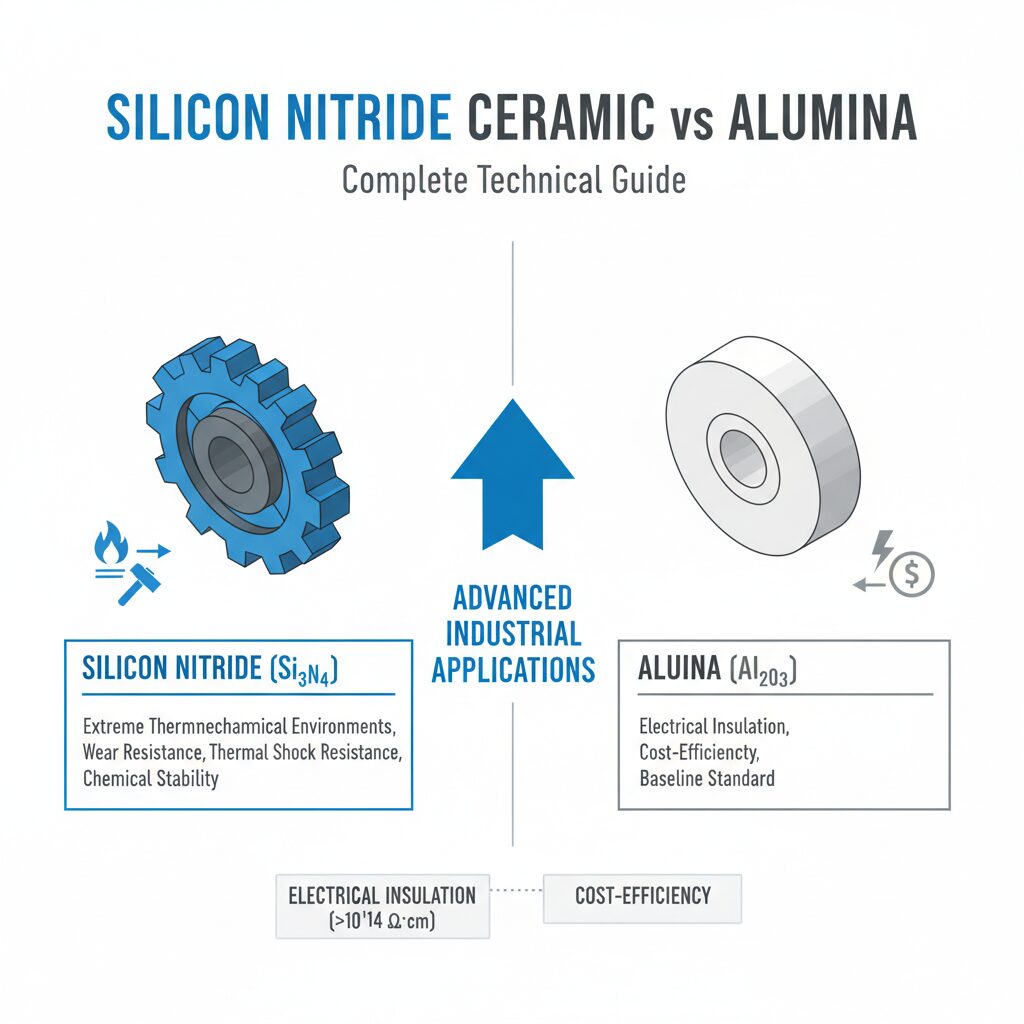
At present, several commonly used ceramic substrate materials for electronic packaging include глинозем/”>alumina (Al2O3), нитрид алюминия (AlN), нитрид кремния (Si3N4), карбид кремния (SiC), нитрид бора (BN), beryllium oxide (BeO).
Керамическая подложка Al2O3
Al2O3 ceramics generally refers to Al2O3 as main raw materials, mainly of alpha Al2O3 crystal phase, Al2O3 content in more than 75% of all kinds of ceramic, it has rich raw material sources, low cost, high mechanical strength and hardness, good insulation performance and good heat shock performance, chemical corrosion resistance, high dimensional accuracy, the advantages of good adhesion with metal, is a kind of comprehensive performance better ceramic substrate materials. Al2O3 ceramic substrate is widely used in electronic industry, accounting for 90% of the total amount of ceramic substrate. And has become an indispensable material for electronic industry.
Используемые в настоящее время керамические подложки Al2O3 в основном являются многослойными. Содержание Al2O3 улучшает электроизоляционные характеристики, теплопроводность и ударопрочность, но в то же время приводит к повышению температуры спекания и увеличению стоимости производства. Чтобы снизить температуру спекания и обеспечить механические и электрические свойства керамических подложек Al2O3, часто добавляют определенное количество спекающего СПИДа, такого как B2O3, MgO, CaO, SiO2, TiO2, Nb2O5, Cr2O3, CuO, Y2O3, La2O3 и Sm2O3, чтобы способствовать спеканию.
Хотя керамическая подложка Al2O3 имеет большую производительность и широкое применение, она ограничена в использовании для высокочастотных, мощных и очень масштабных интегральных схем из-за более высокой теплопроводности по сравнению с монокристаллом кремния.
Керамическая подложка AlN
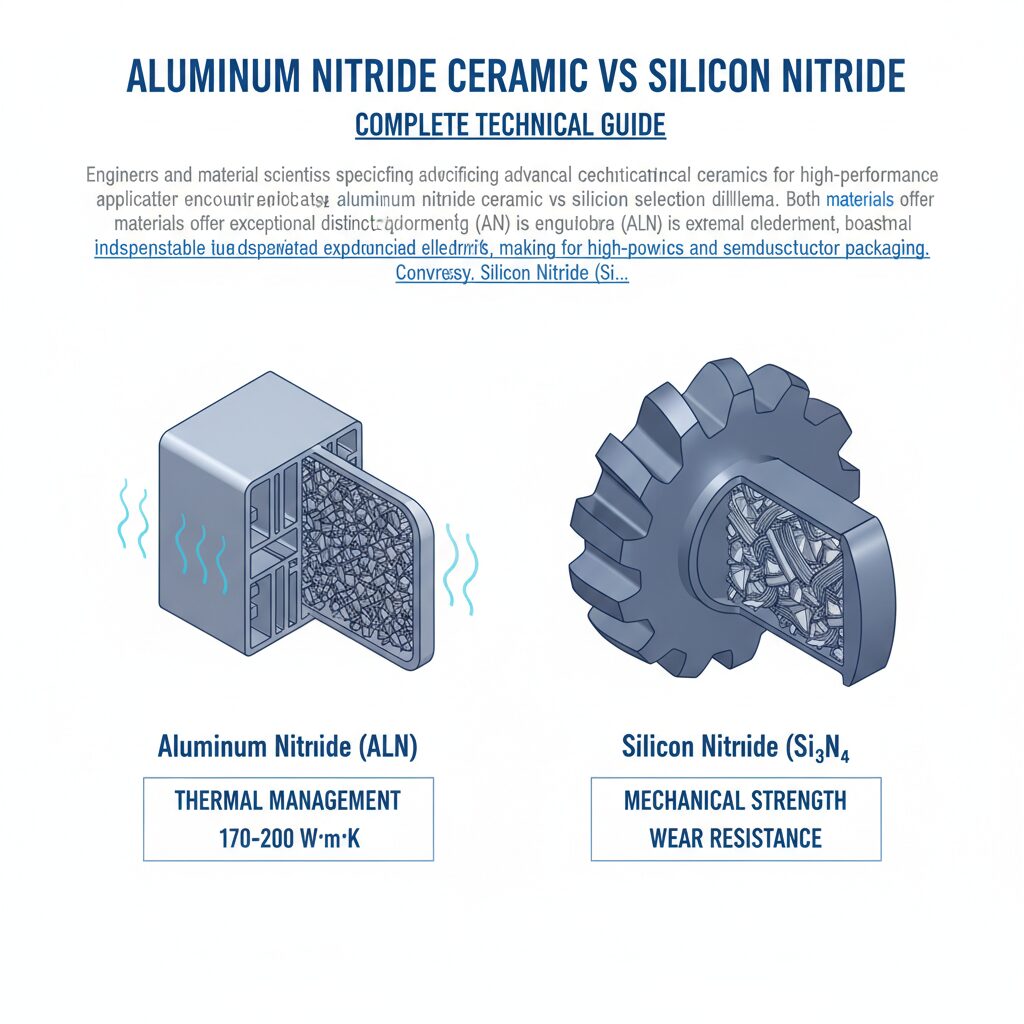
AlN ceramic substrate is a new type of substrate material, the lattice constant of AlN crystals for a = 0.3110 nm, c = 0.4890 nm, hexagonal system, based on [AlN4] tetrahedron structure unit of wurtzite covalent bond compound, good thermal conductivity, a reliable electrical insulation, low dielectric constant and dielectric loss, non-toxic. And match the silicon thermal expansion coefficient and so on a series of excellent features, is considered to be a new generation of high integration semiconductor substrate and the ideal of the electronics packaging materials .
Процесс приготовления порошка AlN, основного сырья для AlN-керамики, сложен, требует больших затрат энергии, длительного цикла и дорогостоящ. Высокая стоимость ограничивает широкое применение AlN-керамики, поэтому керамические подложки AlN используются в основном в высокотехнологичных отраслях промышленности.
Керамическая подложка Si3N4
Si3N4 has three crystalline structures, namely phase, phase and phase, among which phase and phase are the most common forms of Si3N4. And they are all hexagonal structures. Si3N4 has many excellent properties, such as large hardness, high strength, small thermal expansion coefficient, small creep at high temperature, good oxidation resistance, good thermal corrosion performance and small friction coefficient. The theoretical thermal conductivity of monocrystalline silicon nitride is up to 400W/ (m·K). And has the potential to become a high thermal conductivity substrate. In addition, the thermal expansion coefficient of Si3N4 is about 3.0×10⁻⁶℃. This is well matched with Si, SiC, GaAs and other materials, making Si3N4 ceramics a very attractive substrate material for high strength and high thermal conductivity electronic devices [4].
However, Si3N4 ceramics have poor dielectric properties (the dielectric constant is 8.3, the dielectric loss is 0.001~0.1) and high production cost. This limits its application as an electronic encapsulated ceramic substrate.
Керамическая подложка SiC
SiC ceramics have high thermal conductivity. This ranges from 100 w /(m·k) to 400W/(m·k) at high temperature, 13 times higher than Al2O3. Good anti-oxidation performance, decomposition temperature above 2500℃, in the oxidation atmosphere at 1600℃ can still be used. Moreover, the electrical insulation is good. And the thermal expansion coefficient is lower than Al2O3 and AlN. SiC ceramics have strong covalent bond characteristics and are difficult to be sintered. A small amount of boron or aluminum oxide is usually added as sintering AIDS to improve the density. Experiments show that beryllium, boron, aluminum and their compounds are the most effective additives. This can make the density of SiC ceramics reach more than 98% .
However, the dielectric constant of SiC is too high, 4 times that of AlN. And its compressive strength is low, so it is only suitable for low-density packaging but not high-density packaging. In addition to integrated circuit components, array components and laser diodes, etc., it is also used for structural parts with electrical conductivity.
Керамическая подложка BeO
BeO is alkaline earth metal oxides in only six party wurtzite structure, because the BeO has wurtzite and strong covalent bond structure. And the relative molecular mass is low, therefore, have high thermal conductivity, BeO alumina is about 10 times, its thermal conductivity at room temperature can reach 250 w/(m K). And the thermal conductivity of the metal. And under the high temperature, high frequency, its electric performance, good heat resistance, heat resisting impact and delicate chemical stability.
Although BeO has some good properties, its fatal disadvantage is the extreme toxicity of its powder. Long-term inhalation of BeO dust will cause poisoning or even life-threatening. And will cause environmental pollution. This greatly affects the production and application of BeO ceramic substrate [5]. In addition, BeO is expensive to produce. This limits its production and application. Its use is limited to the following aspects: heat sinks of high-power transistors, heat sinks of high-frequency and high-power semiconductor devices, emission tubes, TWTS, laser tubes, klystron, etc. BeO ceramic substrates are sometimes used in avionics and satellite communications for high thermal conductivity and ideal high frequency characteristics.
Керамическая подложка BN
BN can be crystallized in two different forms: hexagonal and cubic. Among them, the cubic crystal BN has high hardness and high temperature resistance of 1500~1600℃. This is suitable for superhard materials. Hexagonal BN can maintain high chemical and mechanical stability at very high temperature under correct heat treatment. The BN material has high thermal stability, chemical stability and electrical insulation, meanwhile, the thermal conductivity of BN ceramics is equal to that of stainless steel at room temperature. And the dielectric property is good. BN has better brittleness than most ceramics, smaller thermal expansion coefficient, strong thermal shock resistance. And can withstand sharp changes in temperature difference above 1500℃.
Both cubic BN and hexagonal BN are prepared under high temperature and high pressure. This are typical covalent bond crystals. Due to its high thermal conductivity, thermal conductivity almost does not change with temperature, small dielectric constant and good insulation performance, BN is applied to radar Windows, tube bases of high-power transistors, tube shells, heat sinks and microwave output Windows. But cubic BN is too expensive to be used in the production of high thermal conductivity ceramic materials. The mismatch between thermal expansion coefficient and silicon also limits its application .
classification characteristics common is widely used in advanced ceramic applications.
Classification Characteristics Common Properties
Часто задаваемые вопросы
What is classification characteristics common?
Classification Characteristics Common is an advanced technical ceramic material known for its exceptional properties including high thermal conductivity, excellent electrical insulation, and superior mechanical strength. Great Ceramic specializes in precision manufacturing of classification characteristics common components.
What are the main applications of classification characteristics common?
Classification Characteristics Common is widely used in semiconductor manufacturing, aerospace components, electronic substrates, medical implants, and high-temperature industrial applications. Its unique properties make it ideal for demanding environments.
How is classification characteristics common machined?
Classification Characteristics Common requires specialized machining techniques including diamond grinding, ultrasonic machining, and laser cutting to achieve precision tolerances. Great Ceramic provides custom classification characteristics common machining services with tight tolerances.